




















Estonia's 300kWh stacked battery storage system for villas | BLOO POWER Home Energy Storage

Project Overview
As Europe's energy transition continues, residential and high-end home energy storage systems are evolving from traditional small-capacity backup power sources into comprehensive home energy systems capable of self-consumption of solar power, electricity price optimization, power outage backup, and energy independence. This project, located in Estonia, developed a 300kWh stacked battery storage system for a large villa with high electricity demand. This system was integrated with the local solar power generation system and the home's AC distribution system to achieve centralized management of the home's energy.
Estonia has been continuously promoting the development of renewable energy, grid flexibility, and energy storage in recent years. The European Commission has pointed out that as the proportion of renewable energy increases, Estonia still needs to further improve the resilience and flexibility of its grid; energy storage is considered an important component supporting energy independence, renewable energy integration, and stable power supply. Estonia's energy development plan also clearly states that while developing clean energy sources such as wind and solar power, solutions such as energy storage are needed to improve the reliability and resilience of the power system.
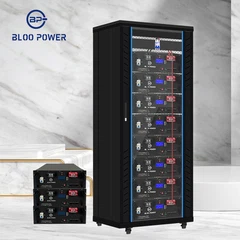
For this large villa, ordinary 10kWh, 20kWh, or even 50kWh energy storage solutions are no longer sufficient to fully meet its needs. Residential homes not only have significant daily basic loads but may also simultaneously operate heat pumps, central air conditioning, electric heating equipment, electric vehicle charging stations, kitchen appliances, entertainment equipment, and other high-power electrical devices. Therefore, the homeowner ultimately chose the BLOO POWER 300kWh modular stacked residential energy storage solution. The system flexibly combines multiple battery modules, providing large-capacity energy storage while retaining the advantages of modular expansion, centralized management, and phased deployment.
The International Energy Agency points out that battery energy storage can respond rapidly within seconds and provide flexibility, peak load support, and backup power capabilities for the grid and users; meanwhile, LFP batteries have become an important technological route for new stationary energy storage applications.
System Configuration
This project utilizes the BLOO POWER 300kWh stacked energy storage battery system, modularly combined according to the villa's actual load, solar capacity, and installation space. The specific number of battery modules can be adjusted based on the rated capacity of the selected individual modules. For example, if 15kWh-class modules are used, 20 modules can form a nominal energy storage capacity of 300kWh. The actual product model, available capacity, maximum charge/discharge power, and cycle life should be based on the final BLOO POWER project technical specifications.
|
Project parameters |
Configuration content |
|
Project location |
Estonia |
|
System type |
BLOO POWER Modular stacked LFP battery |
|
Total energy storage capacity |
300kWh |
|
energy storage unit |
20 × 15kWh stacked LFP battery |
|
Battery Type |
LiFePO4 Battery |
|
application mode |
Photovoltaic energy storage, grid regulation, backup power supply |
|
System life |
≥10 years |
|
EMS management |
Intelligent energy management system |
The overall system operation logic is as follows:
Solar energy is prioritized for power supply → Remaining solar energy charges the battery → Stored energy is prioritized for use at night → When battery capacity is insufficient, it is supplemented by the grid → In case of grid anomalies, backup power is provided to critical or designated loads according to the system design.
Through this energy dispatching method, the 300kWh energy storage system is not just a "large battery," but a crucial core of the villa's energy system. Residential and post-meter energy storage can support a more flexible, reliable, and low-carbon power system, and the efficiency of home energy storage products will have a significant impact on their long-term energy performance.

Project Challenges
1. Large villas have significantly higher electricity loads than ordinary residences.
The primary challenge of this project is the large overall electricity consumption of villas. While ordinary households may primarily focus on lighting, refrigerators, televisions, and a small amount of air conditioning, the energy needs of large villas are more complex. Especially in Estonia's long, cold winters, heating and related electrical equipment can significantly increase overall household electricity consumption. If only small-capacity energy storage batteries are installed, they may not be able to provide sufficient power support for a sufficient period during periods of insufficient solar power generation or power outages.
Furthermore, high-end residences often have multiple loads operating simultaneously. For example, heat pump systems, electric vehicle charging equipment, kitchen appliances, and other household loads may generate significant power demands at the same time. Therefore, the project not only needs to consider a 300kWh energy storage capacity but also must determine the actual continuous output capacity that can be supported based on inverter power, load priorities, and system design.
Key challenges include:
● The load pressure from simultaneous operation of high-power household appliances;
● Increased demand for basic electricity during winter heating and extended periods;
● The need to provide backup power for longer periods in case of power outages or grid anomalies;
● The system must balance high capacity, stability, and future scalability.
2. Solar Power Generation Experiences Significant Temporal Fluctuations
One of the core issues with solar power systems is that the "power generation time" and "power consumption time" are not entirely synchronized. During the day, photovoltaic systems may generate more electricity, while a portion of the load on a large villa may be concentrated in the morning, evening, and night. Without sufficient energy storage capacity, excess solar power may not be fully utilized by the household.
For the Estonian market, the energy transition is driving the integration of more wind and solar power, but renewable energy output exhibits some volatility. Official data also indicates that with the growth of intermittent renewable energy, energy storage is becoming increasingly important for balancing supply and demand.
A large-capacity 300kWh system can significantly improve the local absorption capacity of solar power: when photovoltaic power generation exceeds immediate load demand during the day, excess electricity can be preferentially fed into the BLOO POWER battery system; when solar power declines, the battery then releases power to the household load. This model can reduce the household's reliance on purchasing electricity from the grid during off-peak hours.
The system needs to address the following issues:
● Storing surplus solar power during the day;
● Battery power supply in the evening and at night;
● Variations in photovoltaic output across different seasons;
● Intelligent charge and discharge management based on load and electricity price.
3. High-capacity systems require enhanced safety management capabilities.
300kWh already falls under the category of large-scale residential energy storage configurations; therefore, safety design cannot be simply handled as with ordinary small battery systems. The system needs to be designed from multiple levels, including cell, module, battery management system, communication, temperature monitoring, installation environment, and system protection.
This project adopts a modular stacked architecture. Each battery module is monitored by the BMS, and status management is achieved through system-level communication. The BMS continuously monitors key parameters such as voltage, current, temperature, and SOC, and executes corresponding protection strategies when abnormal trends occur. LFP batteries occupy an important position in the current global new energy storage market due to their suitability for stationary energy storage applications; IEA data shows that LFPs accounted for approximately 80% of new battery energy storage in 2023.
Meanwhile, the actual installation of large-capacity energy storage projects also needs to comply with local building, electrical, fire protection, and grid connection requirements. Standards such as NFPA 855 cover crucial aspects of stationary energy storage systems, including installation, operation, maintenance, and decommissioning. IEEE 2962-2025 also provides recommendations for the installation, operation, maintenance, testing, and replacement of stationary lithium-ion batteries.
Key safety design considerations include:
● Multi-level BMS monitoring and protection;
● Real-time communication of battery module status;
● Appropriate installation space and ventilation design;
● Configuration of protective measures in accordance with local regulations and project requirements.
Solution Highlights
1. 300kWh Ultra-Large Capacity, More Suitable for High-Energy-Consuming Villas
For large villas with numerous high-power devices, large capacity is one of the core values of this project. A 300kWh energy storage capacity can store more solar energy and provide longer-term energy support when solar power is insufficient or the grid experiences problems.
It should be noted that the actual backup time depends on the load power and the available system capacity. Assuming the system's available energy storage capacity is theoretically calculated at 300kWh, and without considering conversion losses, the theoretical power supply time under different average loads is as follows:
|
Average load power |
Theoretical power supply time of 300 kWh |
|
5kW |
Approximately 60 hours |
|
10kW |
Approximately 30 hours |
|
15kW |
Approximately 20 hours |
|
20kW |
Approximately 15 hours |
|
30kW |
Approximately 10 hours |
Actual operating time is also affected by factors such as inverter efficiency, available DoD, battery temperature, load changes, and system standby SOC settings. Therefore, the above data is only used for scheme estimation.
2. Modular Stacking Design for Easier Capacity Planning
Compared to purchasing large energy storage units with fixed capacities in a single transaction, modular stacking systems offer greater flexibility. Owners can configure a 300kWh system based on current electricity demand and can subsequently expand capacity according to product paralleling rules and project design.
This structure is particularly valuable for large villas, as household energy needs are not static: future additions may include electric vehicles, more heat pump equipment, swimming pool systems, or other electrical appliances. Modular solutions allow for more flexible capacity planning.
Advantages of Modular Solutions:
● Combine different capacities according to project needs;
● Facilitate phased investment;
● More flexible capacity expansion later;
● Single-module management facilitates system maintenance.
3. LFP Technology Route, Suitable for Stationary Energy Storage Applications
This project adopts the lithium iron phosphate (LFP) technology route. For stationary energy storage, compared to pursuing maximum energy density, a comprehensive balance between cycle life, safety, cost, and long-term operational stability is more important.
The IEA, in its report "Batteries and Secure Energy Transitions," points out that LFP is nickel- and cobalt-free, has lower flammability, and a longer lifespan, and has already captured a significant market share in the new battery energy storage sector.
Therefore, the BLOO POWER stacked LFP energy storage system is better suited to high-frequency solar charging and discharging scenarios. For example, it can be charged using solar energy during the day and discharged at night; or it can be used in a cyclical manner in conjunction with local electricity prices and energy management strategies.
4. Multi-Energy Synergy for Enhanced Solar Energy Utilization
This system integrates solar energy, energy storage, the power grid, and household loads into a unified whole. Traditional solar systems often prioritize grid connection or reduce power generation when generating surplus electricity during the day; however, a 300kWh energy storage system provides greater local storage capacity for this electricity.
Energy management strategies can be configured according to the specific project, such as:
● Solar Priority Mode: Prioritizes meeting the villa's real-time electricity needs;
● Energy Storage Priority Mode: Prioritizes storing surplus solar energy in batteries;
● Peak Shaving Mode: Uses batteries to reduce grid power purchases during periods of high household load;
● Backup Mode: Reserves a portion of the State of Charge (SOC) for power outages or emergency power supply.
This approach helps homeowners increase their self-consumption of solar energy and enhances the flexibility of their home energy system.
5. Intelligent BMS and Energy Management
Large-scale energy storage systems require more sophisticated management capabilities. The BLOO POWER solution uses a BMS to monitor battery operating status in real time and communicates with the inverter or EMS to achieve charge and discharge control.
The system can focus on managing the following parameters:
● SOC and remaining battery energy;
● Individual cell or module voltage status;
● Battery temperature changes;
● Charging and discharging current;
● System fault and protection status.
IEEE 2962-2025, released in 2025 and officially published in March 2026, also emphasizes the need for systematic management practices in the design, installation, operation, maintenance, testing, and replacement of stationary lithium-ion batteries.
6. Enhancing Estonia's Energy Environment with Increased Home Energy Resilience
Estonia is continuously modernizing its energy system, developing renewable energy, and strengthening grid security. By 2025, the Baltic states will have synchronized with the European continental grid; EU and Estonian policies continue to emphasize the importance of improving grid resilience, flexibility, and energy security.
While home storage cannot replace the entire power system for a single large villa, it can enhance energy resilience at the user end. In the event of short-term grid anomalies, planned maintenance, or other power supply problems, battery systems, designed according to the system's inverters, backup circuits, and local grid connection specifications, can provide backup support for designated critical loads or a wider range of residential loads.
Project Outcomes
Greater Solar Self-Consumption Capacity
The 300kWh large-capacity energy storage allows more solar energy generated during the day to be used within the home, rather than relying entirely on immediate consumption. Especially in large villas with high daily electricity demands, the batteries can shift some daytime power to evening and nighttime use.
Enhanced Home Backup Power Capacity
Compared to typical small-capacity energy storage systems, the 300kWh system offers significantly greater energy reserves. Actual backup time will vary depending on load size, but by prioritizing critical loads, limited energy can be used for essential equipment, thereby improving energy security during power outages.
Reduced Peak-Hour Electricity Purchase Demand
If local electricity pricing structures and project operation strategies are suitable, the system can be integrated with an EMS to utilize battery power during periods of insufficient solar power or high electricity prices, and supplementary power during periods of abundant solar power or low costs. The final economic impact requires project-level calculations based on actual electricity prices, solar power generation, load curves, system efficiency, and operation strategies.
Providing Room for Future Load Growth
The modular design allows for clearer long-term energy planning for large villas. With the future addition of electric vehicles, heat pumps, smart homes, and other electrical devices, energy storage systems can become an important foundation for home energy upgrades.
Results
By deploying the BLOO POWER 300kWh stacked energy storage battery system, this Estonian villa upgraded from a traditional "simply grid-dependent" electricity consumption model to a comprehensive home energy model integrating "solar energy + large-capacity energy storage + intelligent energy management."
The project ultimately yielded the following core values:
First, more abundant energy capacity. The 300kWh system provides a significantly higher energy reserve for a large villa than typical residential energy storage solutions, capable of accommodating more high-power devices and more complex household electricity demands.
Second, improved solar energy utilization efficiency. Some of the surplus solar energy generated during the day can be stored and used when solar energy is insufficient, thereby enhancing local energy utilization capabilities.
Third, enhanced power supply resilience. With a properly designed backup power system that meets local installation and grid connection requirements, the system can provide stronger backup energy support for critical loads.
Fourth, more flexible modular design. The stacked structure allows for capacity combinations based on project needs and provides room for expansion to accommodate future changes in energy demand.
Fifth, adaptation to European energy transition trends. As Estonia continues to promote renewable energy, grid flexibility, and energy storage development, large-scale residential user-side energy storage is becoming an important technological option for enhancing energy autonomy and system flexibility. Official data shows that Estonia has incorporated energy storage into its investment and policy directions related to energy transition and renewable energy development.
Conclusion
The 300kWh stacked energy storage project in Estonia demonstrates the application potential of BLOO POWER residential energy storage systems in large villas and high-energy-consuming homes. For users with large solar systems, heat pumps, electric vehicle charging facilities, and various high-power loads, small-capacity batteries may only address part of their backup power needs, while 300kWh-class modular energy storage solutions can further handle multiple tasks such as solar energy absorption, nighttime power supply, load management, peak shaving, and backup power.
As household energy demand continues to grow, future high-end residential energy storage will no longer focus solely on "installing a battery," but will place greater emphasis on capacity planning, power matching, safety design, system efficiency, intelligent management, and long-term scalability. BLOO POWER, through its modular stacked energy storage architecture, provides large villa users with a more flexible, high-capacity energy solution.
If you are looking for 100kWh, 200kWh, 300kWh, and larger capacity residential energy storage solutions for villas, large homes, or high-energy-consuming households, systems can be customized based on your actual solar installed capacity, daily electricity consumption, maximum load power, and backup time requirements.
Contact information
WhatsApp/WeChat: +86 13691658263
Email: info@bloopower.com