




















780 kWh Hotel Energy Storage Battery Project in Poland | BLOO POWER Commercial and Industrial Energy Storage Solutions

As European hotels and commercial buildings increasingly demand higher standards for energy cost control, renewable energy utilization, and power supply reliability, energy storage systems are becoming a crucial component of commercial microgrids. This project, located in a hotel in Poland, involves the installation of three 261kWh commercial and industrial energy storage units, with a total storage capacity of approximately 783kWh. Through the coordinated operation of energy storage batteries, photovoltaic panels, hotel loads, and the power grid, a more flexible and intelligent energy management system is built for the hotel.
Core Project Configuration: 3 × 261kWh Energy Storage Units = 783kWh
The approximately 780kWh project capacity can meet the hotel's large-scale daily energy regulation needs and provides a foundation for future expansion and microgrid optimization.
Project Information
This project is a commercial and industrial energy storage project for a hotel in Poland. The main objective is to improve the hotel's energy efficiency using a battery energy storage system and establish a more flexible energy dispatch mechanism between photovoltaic power generation, hotel load, and the public power grid. The project utilizes three 261kWh energy storage cabinets, with a theoretical total capacity of 783kWh. Therefore, the project can typically be planned and marketed as a 780kWh-level energy storage system.
Hotels represent a typical commercial mixed-use load scenario. Their electricity demand comes not only from guest rooms but also from restaurants, kitchens, lighting, air conditioning, hot water systems, laundry facilities, public areas, and other electromechanical equipment. Compared to ordinary residential buildings, hotel loads are characterized by higher power consumption, longer operating times, and significant peak-to-valley differences, making energy storage systems more suitable for load management.
Project Basic Configuration
|
item |
Configuration |
|
Application scenarios |
Polish Hotel |
|
Types of energy storage systems |
Industrial and commercial energy storage systems |
|
Single cabinet capacity |
261kWh |
|
Number of energy storage cabinets |
3 units |
|
Total system capacity |
783kWh |
|
System positioning |
Commercial microgrids |
|
Core battery |
LiFePO₄ |
|
Main functions |
Peak shaving and valley filling, photovoltaic power consumption, backup power, energy management |
|
System Expansion |
Supports modular expansion |
For hotels, this configuration is not simply about increasing battery capacity, but about establishing an energy infrastructure that can dynamically adjust based on load, photovoltaic power generation, and electricity price changes through an energy storage system.
Project Challenges: How Can Hotels Cope with Increasingly Complex Energy Demands?
The challenges facing Polish hotels' energy systems go beyond just high electricity costs. With the increasing number of hotel appliances and the continuous operation of high-power equipment such as air conditioning, hot water, and kitchens, their load curves are often more complex than those of typical commercial buildings. Especially after the integration of solar power, there may be higher renewable energy generation during the day, but the hotel's actual load at certain times cannot fully absorb this energy.
The core issue that energy storage systems need to address is to re-match energy between generation and consumption times.
1. Significant Load Fluctuations in Hotels
Hotel electricity demand exhibits distinct temporal characteristics, such as during breakfast and dinner hours, and peak guest return times, which may lead to significant load increases.
2. Intermittent Solar Power Generation
If a hotel has rooftop solar power installed, the solar system may generate a large amount of electricity during the day, but the hotel's actual load may not perfectly match the solar output.
3. Peak Load Control Needed
The simultaneous operation of high-power air conditioning, kitchen equipment, and hot water systems in the hotel can easily create high instantaneous loads.
4. Higher Requirements for Power Continuity
Hotels need to continuously provide stable power for lighting, communications, security, access control, servers, and some critical equipment. Therefore, energy storage systems can also serve as part of the backup energy architecture.
5. Future Energy Systems Need to Be Expandable
As hotels further add photovoltaic, charging facilities, or other electrical equipment, the energy storage system cannot only meet current needs but also needs to reserve space for future capacity expansion.
BLOO POWER Energy Storage Solution
To address the complex energy needs of hotels, BLOO POWER employs a modular commercial and industrial energy storage cabinet + intelligent energy management + microgrid control approach to construct a 780kWh-level energy storage system for hotels.
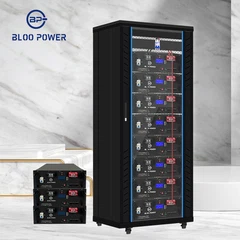
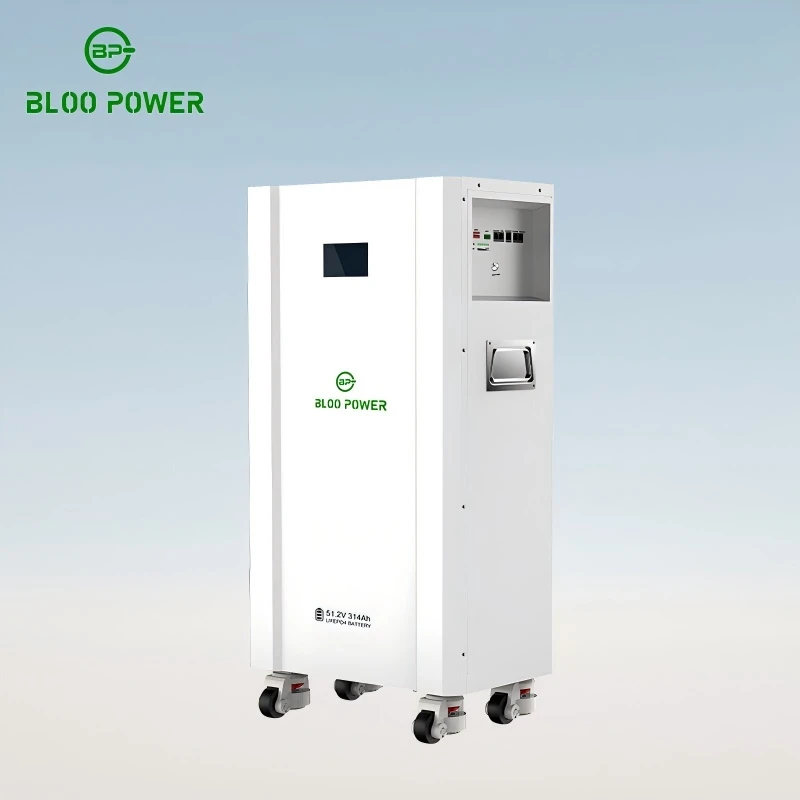
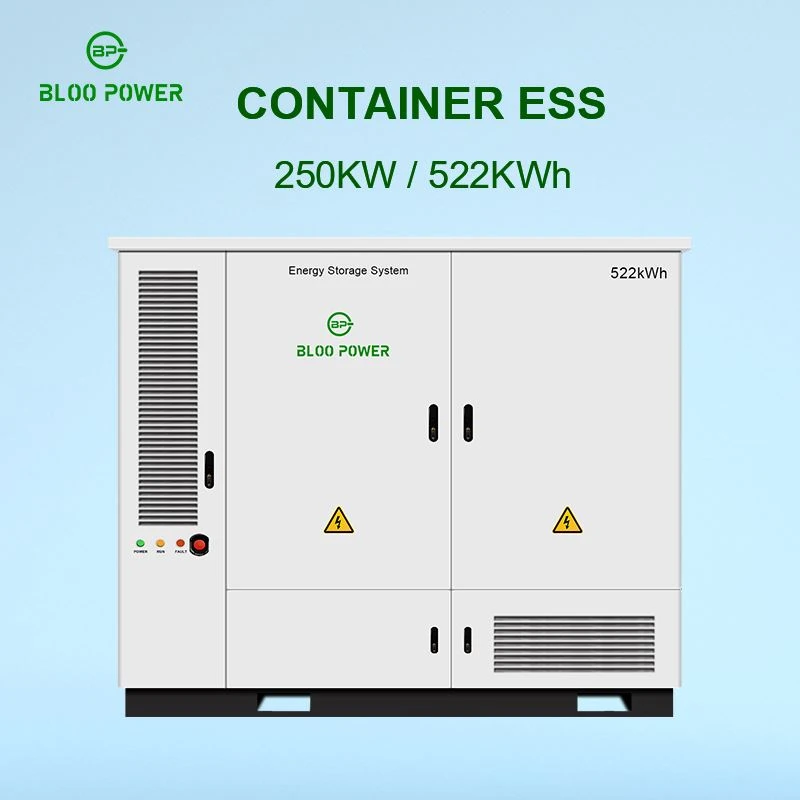
The system consists of three 261kWh energy storage cabinets, each acting as a relatively independent energy storage unit, connected in parallel to form a unified energy storage system.
The advantage of this design is that the energy storage system does not rely on a single ultra-large capacity battery cabinet, but instead achieves capacity through the combination of multiple standardized energy storage units.
The BLOO POWER solution mainly includes:
● 261kWh modular energy storage cabinet
● LiFePO₄ lithium iron phosphate battery system
● Battery Management System (BMS)
● PCS energy storage converter
● Intelligent Energy Management System (EMS)
● Photovoltaic system interface
● Hotel load management
● Grid collaborative control
● Energy storage system safety protection
Through real-time monitoring of key parameters such as individual battery cells, voltage, current, temperature, and SOC by the BMS, and then the EMS formulating charging and discharging strategies based on load and energy price conditions, the energy storage system is upgraded from a simple "backup battery" to an active regulation device in the hotel's energy system.
Why Choose Three 261kWh Energy Storage Units?
3 × 261kWh = 783kWh
This is a crucial system design logic for this project. Although the project is commonly referred to as a 780kWh energy storage project, the rated total capacity of the three 261kWh energy storage units is 783kWh based on actual equipment capacity calculations.
Compared to configuring a single large energy storage unit of approximately 780kWh, using three 261kWh energy storage units offers significant modular advantages.
1. More Flexible Capacity Combinations
The three energy storage units can be uniformly scheduled according to the hotel's actual load, and their operating strategies can be adjusted according to energy demand at different stages.
2. More Suitable for Commercial Project Expansion
Commercial hotels may add new energy vehicle charging stations, heat pumps, photovoltaics, or other electrical equipment in the future. The modular energy storage architecture provides a better foundation for subsequent capacity expansion.
3. Reduced Dependence on Single Equipment
Multiple energy storage units form a distributed energy storage unit, avoiding the entire project's complete reliance on a single ultra-large capacity energy storage unit.
4. Easier Transportation and Installation
For European commercial building projects, equipment transportation, on-site hoisting, equipment room layout, and maintenance space all need to be considered. Multiple standardized cabinets are generally easier to plan on-site than a single ultra-large unit.
5. Easier Operation and Maintenance
Each energy storage cabinet has an independent monitoring and protection system, making it easier for maintenance personnel to locate abnormal equipment and operational status.
261kWh × 3 Capacity Logic
|
Configuration method |
Energy storage capacity |
Features |
|
1 × 261kWh |
261kWh |
Small commercial load |
|
2 × 261kWh |
522kWh |
Medium-sized commercial projects |
|
3 × 261kWh |
783kWh |
This project configuration |
|
4 × 261kWh |
1,044kWh |
MW-level project expansion base |
Therefore, 783kWh is not an isolated capacity figure, but rather the result of modular combination of standardized 261kWh energy storage units.
Smart Microgrid Energy Storage Operation
The key to the true value of a hotel's energy storage system lies not simply in "storing electricity," but in determining when to charge, when to discharge, and when to draw power from the grid based on different energy states.
The BLOO POWER energy storage system can coordinate the hotel's photovoltaic, energy storage, grid, and loads through an EMS (Energy Management System).
A typical operating logic can be designed as follows:
PV Power Generation → Prioritize Hotel Load → Surplus Energy Enters Energy Storage → Energy Storage Discharges During High Load/High Electricity Price Periods → Shortfall is Supplemented by the Grid.
During the Day
After the hotel rooftop PV generates electricity, it first meets the hotel's real-time load. If PV power generation exceeds the hotel's immediate needs, surplus energy can enter the 783kWh energy storage system.
Evening
As solar irradiance decreases, PV output reduces, while the hotel's lighting, air conditioning, and catering loads may remain high. At this time, the energy storage system begins to release electricity.
During Peak Load Periods
The EMS can control the energy storage system's output power according to preset strategies, reducing the instantaneous power drawn by the hotel from the grid, thereby helping to control peak loads.
Nighttime
If there is a significant peak-valley difference in the local electricity price mechanism, the system can formulate a nighttime charging strategy based on electricity prices and load forecasts to prepare for energy regulation the following day.
Hotel energy storage is not just a "battery," but also a smart energy node
For hotels, the value of an energy storage system comes from the combination of multiple energy functions.
|
Function |
Value of the hotel |
|
Photovoltaic consumption |
Increase the proportion of self-generated and self-consumed solar energy |
|
Peak Shaving |
Reduce power demand of the power grid during high load periods |
|
Move to the peak |
Shifting electricity from low-demand periods to high-demand periods |
|
Backup power |
Provide additional power supply for critical loads |
|
Microgrid control |
Coordinating photovoltaics, energy storage, power grid and load |
|
Energy Management |
Realize energy consumption data monitoring and optimization |
|
Expansion Foundation |
Support for future new photovoltaic and load additions |
Therefore, a 780kWh energy storage system can become an important infrastructure for hotels to transform from the traditional "one-way power consumption mode" to the "intelligent energy management mode".
Project Outcomes
By configuring three 261kWh energy storage units, the project achieved a commercial energy storage capacity of approximately 783kWh, providing the hotel with a significant energy buffer.
Firstly, the energy storage system enhances the hotel's utilization of photovoltaic energy. When photovoltaic power generation exceeds the immediate load, excess electricity can be stored in batteries instead of being immediately restricted or fed into the grid at a low value.
Secondly, energy storage helps the hotel cope with peak loads. When air conditioning, kitchen, hot water, and lighting equipment are operating simultaneously, the energy storage can provide auxiliary power according to the EMS strategy, thereby reducing the grid's power draw pressure during certain periods.
Furthermore, the modular energy storage structure gives the hotel better future scalability. As the hotel's energy demand increases, it can be further integrated with photovoltaic, EV charging, heat pump, and other equipment to build a more complete commercial microgrid.
Scalable Solutions for Commercial Microgrids
BLOO POWER's 261kWh energy storage unit is not limited to hotel applications. The same modular architecture can be applied to a variety of commercial and industrial scenarios.
Hotels
Suitable for comprehensive load scenarios such as guest rooms, restaurants, kitchens, central air conditioning, and hot water systems.
Commercial Buildings
Can be integrated with rooftop solar panels, building energy management systems, and charging infrastructure.
Factories
For peak loads generated by production equipment, energy storage is used for power regulation and energy optimization.
Agricultural Facilities
Can combine solar panels, energy storage, and agricultural production loads to improve the utilization rate of renewable energy.
Charging Stations
Energy storage can provide a power buffer for the charging load of new energy vehicles when grid capacity is limited.
Small Commercial Microgrids
Multiple 261kWh energy storage cabinets can be combined according to project scale, gradually expanding from hundreds of kWh to MWh-level energy storage systems.
Expanding from 783kWh to MWh-Level Energy Storage
This project utilizes three 261kWh energy storage units, effectively embodying the modular design concept of the BLOO POWER commercial energy storage system.
If the hotel requires higher capacity in the future, standardized energy storage units can be added, with the overall design incorporating PCS capacity, transformer capacity, load demand, and local grid connection requirements.
For example:
3 × 261kWh = 783kWh
Further expansion:
4 × 261kWh = 1,044kWh ≈ 1.04MWh
Continuing to add energy storage units allows for the gradual construction of an MWh-level commercial energy storage system.
This architecture is particularly suitable for commercial customers with continuously growing energy demands, as companies do not necessarily need to complete all energy storage investment in the first phase of the project but can gradually expand according to load growth and energy strategy.
Conclusion
The 780kWh hotel energy storage project in Poland utilizes three 261kWh BLOO POWER commercial and industrial energy storage cabinets, achieving an actual rated capacity of 783kWh, forming a modular energy storage architecture for a hotel commercial microgrid.
The core of the project is not simply increasing battery capacity by 783kWh, but rather enabling the energy storage system to undertake multiple tasks such as photovoltaic absorption, load regulation, peak management, backup power supply, and energy optimization through the synergy between LiFePO₄ energy storage batteries, BMS, PCS, EMS, photovoltaics, hotel loads, and the grid.
For hotels, commercial buildings, factories, and other high-load commercial scenarios, the 261kWh standardized energy storage cabinet can be flexibly combined with multiple units, expanding from hundreds of kWh to MWh-level energy storage systems. This allows BLOO POWER to not only meet the current needs of the 780kWh-level project but also provide a scalable energy storage foundation for customers to build larger-scale, smarter, and more flexible commercial microgrids in the future.
Contact Information
WhatsApp/WeChat: +86 13691658263
Email: info@bloopower.com