





















High Voltage Grid Scale Battery Storage Capacity 20KWh 30KWh 40KWh 50KWh
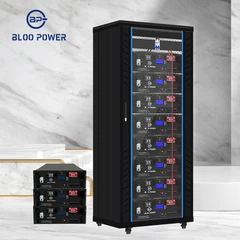
With 80% depth of discharge, up to 8,000 cycles and an intelligent BMS, this high voltage battery storage system is designed for Commercial Energy Storage, Solar Battery Storage, backup power and grid-scale energy storage applications.
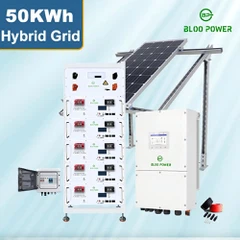
This HV battery energy storage system is packed with a controller that manages 5pcs of 10.24KWh batteries packed all the time. At the top part, the LCD will show battery information that is collected from BMS in real time.
The large scale energy storage system is flexible, if you need more power capacity, just directly add the same model connected by CAN bus protocol, very friendly for the consumers. It's allowed to communicate well with HV Deye, Growatt, Solis, and other three-phase inverters.

Parameter
|
NO |
Model No. |
BP-HP-50KWH |
BP-HP-100KWH | BP-HP-150KWH | BP-HP-200KWH | |||
|
1 |
Rated Voltage |
256V |
358.4V | 512V | 716.8V | |||
|
3 |
Rated Capacity |
200Ah |
280Ah | 300Ah | 280Ah | |||
|
4 |
Rated Energy |
51.2KWh |
100.3KWh | 153.6KWh | 200.7KWh | |||
| 5 | Voltage Range | 200V~292V | 280V~408.8V | 400V~574V | 627.2V~817.6V | |||
|
6 |
Cycles(80% DOD) |
8000 cycles |
8000 cycles | 8000 cycles | 8000 cycles | |||
|
7 |
Depth of Discharge |
80% |
80% | 80% | 80% | |||
|
8 |
Charge Current |
40A |
40A | 40A | 40A | |||
|
9 |
Discharge Current |
40A | 40A | 40A | 40A | |||
|
10 |
Maximum Continuous Charge Current |
160A |
160A | 160A | 160A | |||
|
11 |
Maximum Continuous Discharge Current |
200A |
200A | 200A | 200A | |||
|
12 |
Operation Temperature |
Charge: 0℃~55℃,Discharge: -10~55℃ |
||||||
| 13 | Display | LCD | ||||||
| 14 | Cell Type | LiFePo4 Lithium Ion Phosphate Battery | ||||||
| 15 | Communication | RS485/CAN/RS232 | ||||||
| 16 | Compatibility | Compatible with most of available off-gird/hybird inverters and charge controllers | ||||||
| 17 | BMS | Intelligent battery mangement system | ||||||

Product Features
Apply for residential and industrial ESS, data center, telecom.
Support different currents, voltages, capacities, colors, and packages.
Store excess power and use it for emergency.
Every battery integrated with a BMS, brings safety all the time.
Delivery on time with quality assurance
Scalable 51.2V 200Ah LFP battery for large solar system

What Are the Core Technical Specifications of High Voltage Grid Scale Battery Storage Capacity 20KWh 30KWh 40KWh 50KWh
Systems?

High voltage grid scale battery storage capacity 20KWh 30KWh 40KWh 50KWh units rely primarily on prismatic LiFePO4 cells for inherent thermal stability and long cycle life. Nominal voltages commonly scale with capacity: approximately 204.8 V for 20 kWh configurations, rising to 307–410 V or higher for 30–50 kWh stacks. Usable energy is typically rated at 80–100% depth of discharge (DoD), with recommended continuous charge/discharge currents in the 30–100 A range depending on module count. Round-trip efficiency frequently exceeds 95–97.5% under standard conditions.
Cycle life ratings of ≥8,000 cycles at 80% DoD are standard, supporting design lives of 10–20 years at 25 °C. Communication interfaces such as CAN and RS485 ensure compatibility with leading hybrid inverters. Enclosure ratings of IP54 or IP65 allow indoor or outdoor deployment. These parameters make high voltage grid scale battery storage capacity 20KWh 30KWh 40KWh 50KWh systems suitable for both behind-the-meter commercial loads and front-of-the-meter microgrid contributions.
How Does High Voltage Design Improve Efficiency in Grid Scale Battery Storage Capacity 20KWh 30KWh 40KWh 50KWh Applications?
High voltage operation reduces I²R losses compared with low-voltage (48 V) architectures of equivalent power. For a given power output, higher voltage lowers current, which decreases cable sizing requirements, heat generation, and conversion losses in the power conversion system (PCS). In high voltage grid scale battery storage capacity 20KWh 30KWh 40KWh 50KWh installations, this translates to system efficiencies that support daily cycling for energy arbitrage or solar self-consumption without excessive parasitic drain. Modular stacking further allows capacity expansion while maintaining voltage levels compatible with three-phase commercial inverters. Real-world deployments demonstrate that these systems achieve rapid response times suitable for ancillary services when aggregated.

Safety is paramount. Systems must comply with UL 1973, IEC 62619, UN 38.3, and often UL 9540A for thermal runaway propagation testing. Integrated battery management systems (BMS) provide multi-layer protection against over-voltage, under-voltage, over-current, and temperature extremes. LiFePO4 chemistry inherently offers higher thermal runaway thresholds than NMC alternatives, reducing fire risk. Proper installation requires adherence to local electrical codes, adequate ventilation or liquid cooling where specified, and certified fire-suppression strategies for larger aggregated installations. These measures ensure that high voltage grid scale battery storage capacity 20KWh 30KWh 40KWh 50KWh units meet professional reliability expectations for grid-interactive use.
The photovoltaic power station monitoring system has the following functions:
(1) Operation data collection
Collect parameters such as photovoltaic cell output voltage and current, battery voltage, charge and discharge current, battery temperature, ambient temperature, light intensity, inverter output voltage, etc.;
(2) Fault diagnosis
Detect the operating status of system equipment. When a device fails, an alarm signal can be immediately issued so that maintenance personnel can handle it in time;
(3) Battery management
Select the appropriate charging method according to the working characteristics of the battery to extend the battery life; when the battery is discharged to the termination voltage, the power load is immediately cut off to protect the battery from over-discharge;
(4) Data storage
Store the operating data of the power station. When the system fails, the staff can analyze and handle the system operation failure by viewing the relevant data;
(5) Remote monitoring
It has a remote communication interface to ensure that the remote monitoring center can remotely control the working status of the photovoltaic power station.


Shipping term
For battery products, the transportation is mostly by sea, and shipping time varies from 20 to 60 days depending on the region.
If you have a trusted freight forwarder, we can deliver the goods to your freight forwarder and assist with transportation and customs clearance. If you need our help, our cooperating forwarder will provide the shipping service for you. The forwarder can deliver to the port, in this situation, you need to do the customs clearance, pay the taxes, and pick up the goods by yourself; The forwarder also can deliver to your specific address, in this situation, the forwarder will help to do the customs clearance and tax payment, all you need to do is to receive goods in your place.
Hot Tags: high voltage grid scale battery storage capacity 20kwh 30kwh 40kwh 50kwh, China high voltage grid scale battery storage capacity 20kwh 30kwh 40kwh 50kwh manufacturers, suppliers, factory, lifepo4 battery for inverter, solar power battery for house, Lithium Solar, solar power battery pack, Lithium Ion Battery Rack 20kw
You Might Also Like

100KWH Lithium Battery Energy Storage System

50kwh Advanced Industrial Energy System for Commerci...

High Voltage Industrial Server Rack Battery With Big...

Customizable Commercial Solar Battery Storage System...

Rack Mounted Lithium Ion Battery Storage For Business

50KWH High Voltage Lithium-ion Battery Storage Conta...
Send Inquiry