

















5kWh vs. 10kWh Residential Energy Storage Batteries: How Should an Average Household Choose?
Sep 11, 2026
Leave a message

For households considering the installation of a solar energy storage system, the choice between 5kWh and 10kWh capacities often presents a dilemma. A 5kWh system entails lower costs and requires less installation space, making it well-suited for smaller homes, households with low electricity consumption, and users who only need to back up critical loads. In contrast, a 10kWh system offers extended power supply during the night; it is ideal for households with higher electricity usage, those aiming to maximize the self-consumption of solar energy, or those wishing to power a wider range of appliances during a blackout.
However, it is important to note that a 10kWh system is not necessarily superior to a 5kWh system. The appropriate battery capacity should be determined based on a comprehensive assessment of factors such as daily household electricity consumption, installed solar capacity, backup power requirements, electricity tariff structures, inverter power ratings, and plans for future system expansion. Data from the U.S. EIA indicates that the average monthly electricity consumption for U.S. residential customers in 2024 was approximately 865 kWh-translating to a daily average of about 28.8 kWh. However, actual consumption varies significantly depending on region, home size, heating and cooling methods, and household size; therefore, battery capacity should not be selected based solely on national averages.
What do 5kWh and 10kWh actually represent?
5kWh and 10kWh refer to the energy capacity of an energy storage system, not its output power. A 5kWh rating indicates the battery can store approximately 5kWh of electrical energy, while 10kWh represents roughly double that amount. The actual amount of electricity available for household use is influenced by factors such as DoD (Depth of Discharge), inverter efficiency, BMS (Battery Management System) protection strategies, temperature, and battery degradation. For instance, a LiFePO4 battery with a nominal capacity of 5.12kWh has a theoretical usable energy of approximately 4.10kWh when calculated at 80% DoD; a 10.24kWh battery yields approximately 8.19kWh under the same conditions. Therefore, when comparing products, one should not look solely at the "5kWh" or "10kWh" label on the packaging but also consider rated capacity, usable capacity, maximum continuous charge/discharge power, and actual system efficiency. NREL's residential energy storage models also treat "power capacity" and "energy storage capacity" as distinct parameters; for example, its 2025 ATB utilizes a representative residential energy storage system rated at 5kW/12.5kWh.
● 5kWh: Approximately 5kWh of rated energy storage capacity
● 10kWh: Approximately double the energy storage capacity of a 5kWh unit
● Usable capacity is affected by DoD and system efficiency
● kWh determines "how long power can be supplied," while kW determines "how large a load can be supported"
5kWh vs. 10kWh: What Are the Key Differences?
When comparing solely based on capacity, the advantage of a 10kWh system is straightforward: it stores approximately twice the energy of a 5kWh system. However, in real-world residential applications, a 10kWh system does not necessarily deliver double the economic value in every scenario. For instance, a small household that consumes only 8kWh daily and has occupants at home for most of the day might struggle to fully charge a 10kWh battery over the long term, whereas a 5kWh battery would achieve higher utilization. Conversely, for a household with significant evening power demands-such as air conditioning, refrigerators, water heaters, lighting, and kitchen appliances-a 5kWh battery might deplete quickly, making the 10kWh option preferable for providing a longer duration of power supply during the evening.
BLOO POWER's residential product lineup offers capacities such as 5.12kWh, 6.91kWh, and 10.24kWh. Built on a 51.2V platform and utilizing LiFePO4 battery technology, these systems allow homeowners to select the option that best suits their specific needs.
|
Comparison items |
5kWh Residential Battery |
10kWh Residential Battery |
|
Energy storage capacity |
5kWh |
10kWh |
|
Family-friendly |
Compact/Low power consumption |
Moderate to high electricity consumption |
|
Night battery life |
Shorter |
Longer |
|
Initial investment |
Lower |
Relatively high |
|
Space occupied |
Smaller |
Larger |
|
Power outage backup capability |
Critical load |
Additional household loads |
|
Photovoltaic integration capacity |
medium |
Stronger |
|
Future capacity expansion requirements |
Relatively easy to extend |
More ample starting capacity |
Choose based on actual daily electricity consumption, not house size
This is one of the most important principles when deciding between a 5kWh and a 10kWh system. Many households assume that "a larger house requires a larger battery," but this is not entirely accurate. Energy storage capacity should actually be determined by the amount of electricity that needs to be shifted or held in reserve for use from the battery. The simplest calculation method is: daily storage capacity required ≈ household electricity consumption at night, or the power consumption of critical loads during a power outage. If a household's total daily consumption is only 8–10 kWh with significant daytime usage, a 5kWh system may well meet a substantial portion of the storage needs; conversely, if daily consumption reaches 15–25 kWh with high nighttime usage, a 10kWh system is usually more appropriate. Residential energy data from the EIA also shows significant variations in annual electricity consumption across U.S. states, making a "one-size-fits-all" capacity approach scientifically unsound.
● Daily consumption ≤ 10 kWh: Prioritize 5kWh
● Daily consumption approx. 10–20 kWh: Consider either 5kWh or 10kWh
● Daily consumption > 20 kWh: 10kWh or larger capacity is usually more suitable
● The most accurate method is to review electricity bills from the past 6–12 months.
For which typical households is a 5kWh system most suitable?
For smaller households with limited daily electricity consumption-where the energy storage system is primarily intended to boost the solar self-consumption rate and provide backup power for critical loads (such as refrigerators, lighting, and networking equipment) during outages-a 5kWh system is usually a cost-effective starting point. In this scenario, the household prioritizes using solar energy generated during the day, with any surplus power charging the battery; after sunset, the 5kWh battery powers essentials like lighting, the refrigerator, the TV, Wi-Fi, and select small appliances. There is no need to opt for a 10kWh system right away simply based on the assumption that "bigger capacity is always better."

BLOO POWER 5KWh Wall-Mounted Energy Battery
BLOO POWER's 51.2V 100Ah 5.12kWh wall-mounted LiFePO4 battery is a prime example of a residential module designed for solar energy storage systems. It supports communication protocols such as CAN and RS485, and select models allow for capacity expansion through the parallel connection of multiple units.
● Small homes or apartments
● Households of 1–3 people
● Low average daily electricity consumption
● Primary backup for critical loads (refrigerator, lighting, network equipment, etc.)
Which households are best suited for a 10kWh system?
A 10kWh system is generally more suitable than a 5kWh one for households with high electricity consumption or large rooftop photovoltaic (PV) installations. This is particularly true when there are multiple high-draw loads-such as air conditioners, water heaters, kitchen appliances, televisions, and computers-operating in the evening; a 5kWh battery might be depleted within a few hours, whereas a 10kWh battery significantly extends the duration of battery-powered operation. Furthermore, in regions with peak-off-peak electricity pricing, a 10kWh system allows for storing more electricity during low-rate periods and discharging it during high-rate periods, thereby enabling effective load shifting.
BLOO POWER's 10.24kWh wall-mounted LiFePO4 battery features a 51.2V, 200Ah configuration, offers a cycle life of 8,000 cycles at 80% Depth of Discharge (DoD), and supports an intelligent BMS as well as parallel expansion.

Do not confuse "energy storage capacity" with "load-bearing power"
This is a common oversight when households select energy storage batteries. A 10kWh battery does not necessarily power larger appliances than a 5kWh battery. For instance, a specific 5kWh battery might support a continuous output of 5kW, whereas a 10kWh model-limited by its BMS or inverter-might only deliver lower power. Therefore, if a household intends to simultaneously power appliances such as air conditioners, refrigerators, induction cooktops, and water pumps, it is essential to check specifications like maximum continuous discharge current, continuous output power, and peak power.
Regarding some of BLOO POWER's 51.2V wall-mounted models, the continuous charge/discharge capabilities of the 5.12kWh, 6.91kWh, and 10.24kWh versions differ; thus, selection should be based on matching the battery with the inverter's rated power and the household's load requirements, rather than simply comparing kWh figures.
● kWh: Determines the amount of stored energy.
● kW: Determines the size of the load that can be operated simultaneously.
● Peak Power: Determines the ability to handle the surge current at startup.
● Inverter Power: Determines the actual AC output capability.
How should 5kWh and 10kWh capacities be calculated for backup power during outages?
If a user's primary goal is not peak shaving but rather maintaining power to critical home appliances during an outage, the capacity should be determined by working backward from the "critical loads." For instance, one can designate appliances such as the refrigerator, lighting, Wi-Fi, security cameras, computers, and specific outlets as "backup loads," and then estimate how long these devices need to operate during a power failure.
Assuming an average critical load power of approximately 800W, a 5kWh battery can theoretically provide about 6.25 hours of power (5 ÷ 0.8), while a 10kWh battery offers about 12.5 hours; however, the actual runtime will be shorter when accounting for inverter losses and the fact that batteries cannot be fully discharged. For households requiring backup power for only a few hours, 5kWh may suffice; if coverage for an entire night or longer is desired, a 10kWh system clearly offers a distinct advantage.
● List the devices that must operate during an outage
● Calculate the average power of the critical loads
● Determine the target backup duration
● Finally, calculate the required battery capacity based on these figures
For systems with solar PV, battery capacity should be selected based on the PV system size.
Residential energy storage batteries do not operate in isolation; they typically form part of a complete home energy system alongside solar PV and a hybrid inverter. For instance, if a household installs a 5 kW PV system but has low daytime electricity demand, a significant amount of surplus solar energy may be generated at midday, causing a 5 kWh battery to fill up quickly; a 10 kWh battery, however, would provide greater "solar buffering capacity" to increase the rate of PV self-consumption. Conversely, if the PV system is small, an oversized battery might frequently remain at a low State of Charge (SOC), resulting in poor equipment utilization.
Therefore, it is not advisable to rely on a simple, fixed formula (such as a specific kWh of battery capacity per kW of PV); instead, system design should take into account local solar irradiance, household load profiles, and grid-connection policies. Current residential energy storage modeling by NREL also emphasizes the importance of the ratio between power and energy capacity.
Typical logic flow:
Solar energy → Household load → Surplus electricity → Battery → Nighttime load
In regions with peak-off-peak electricity pricing, a 10 kWh system may offer greater value.
In areas where distinct peak and off-peak electricity rates apply, a battery serves not only as a backup power source during outages but also as a tool for household load shifting. By charging the battery via solar power during the day or from the grid during low-rate periods, and then using that stored energy to power the home during high-rate periods in the evening, households can reduce the amount of electricity purchased at peak prices.
This is where the difference between 5 kWh and 10 kWh systems becomes significant: a 10 kWh system can store more low-cost electricity and supply power over a longer duration during peak-rate periods. However, determining whether a 10 kWh system is the right choice requires an economic analysis based on factors such as the price spread between peak and off-peak rates, the number of daily charge-discharge cycles, system efficiency, and local electricity pricing policies. One should not simply opt for a larger capacity based on the assumption that "higher capacity equals greater savings," as this could lead to inefficient battery utilization.
From an economic perspective, a 5kWh system is not necessarily more cost-effective than a 10kWh system.
Many consumers' initial reaction is: "A 5kWh capacity is only half that of a 10kWh system, so the cost should also be half." In reality, this is not entirely the case. The cost of a residential energy storage system includes not only the battery cells but also the BMS, electrical protection, enclosure, communication components, inverter, installation, cabling, and commissioning. NREL's residential energy storage model accounts for components such as battery packs, bidirectional inverters, supply chain costs, installation labor, and engineering design separately; consequently, increasing capacity does not simply result in a linear cost increase (i.e., adding the exact same cost for every additional 1kWh).
This implies that if the cost per kWh for a 10kWh system is significantly lower-and the household can actually utilize that capacity-installing a 10kWh system upfront may be more economical than installing 5kWh initially and adding another 5kWh a few years later. Conversely, if the budget is limited and actual electricity demand is low, a 5kWh system remains a more prudent starting point.
Choosing between 5kWh and 10kWh also depends on battery cycle life.
Residential energy storage systems are not merely standard backup power supplies; if a charge-discharge cycle occurs daily, the system could undergo approximately 365 cycles per year. Consequently, cycle life is crucial for long-term value. Beyond simply comparing "5kWh versus 10kWh," users should also examine the specific Depth of Discharge (DoD), temperature, and testing conditions under which the manufacturer's rated cycle count is achieved.
For instance, certain BLOO POWER 5.12kWh and 10.24kWh wall-mounted LiFePO4 products are rated for a cycle life of 8,000 cycles at 80% DoD, whereas energy storage batteries from other manufacturers may offer fewer than 8,000 cycles. Therefore, purchasing decisions should be based on the official datasheet, warranty terms, and testing conditions for the specific model, rather than conflating data from different models.
LiFePO4: A Technology Path Worthy of Serious Consideration for Households
For residential energy storage, safety, cycle life, and long-term stable operation are paramount; consequently, LiFePO4 (Lithium Iron Phosphate, or LFP) has emerged as a key technology pathway for stationary residential storage systems. NREL's 2024 and 2025 residential energy storage technology benchmarks are based on lithium-ion batteries, with LFP established as a mainstream chemistry for stationary storage applications. Rather than focusing solely on capacity, homeowners should prioritize cell quality, the Battery Management System (BMS), thermal management, electrical protection, and system certifications.
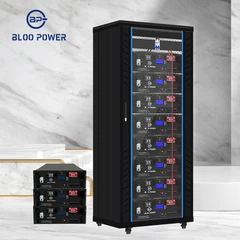
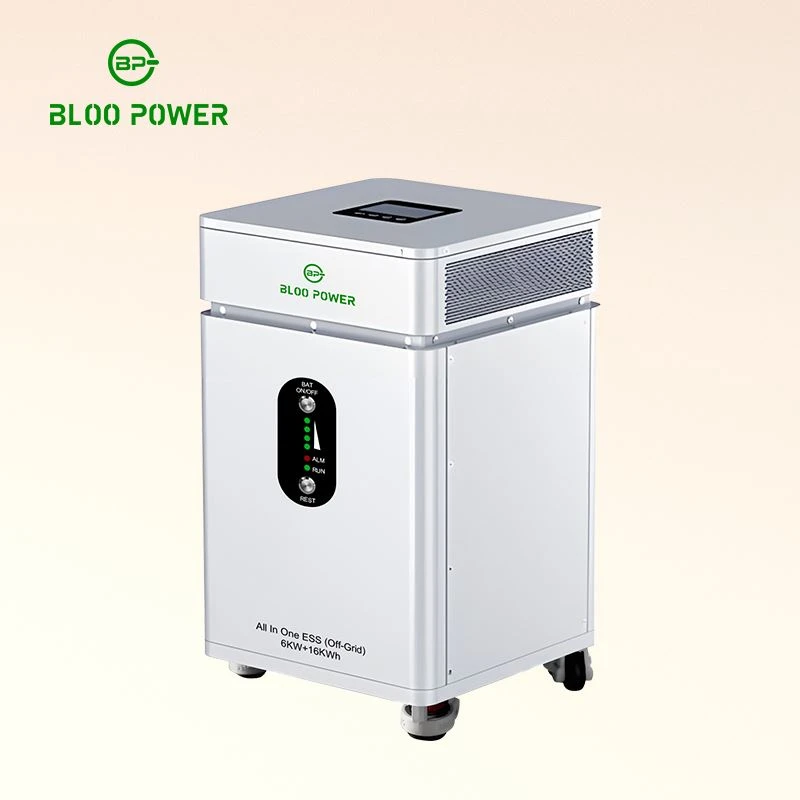
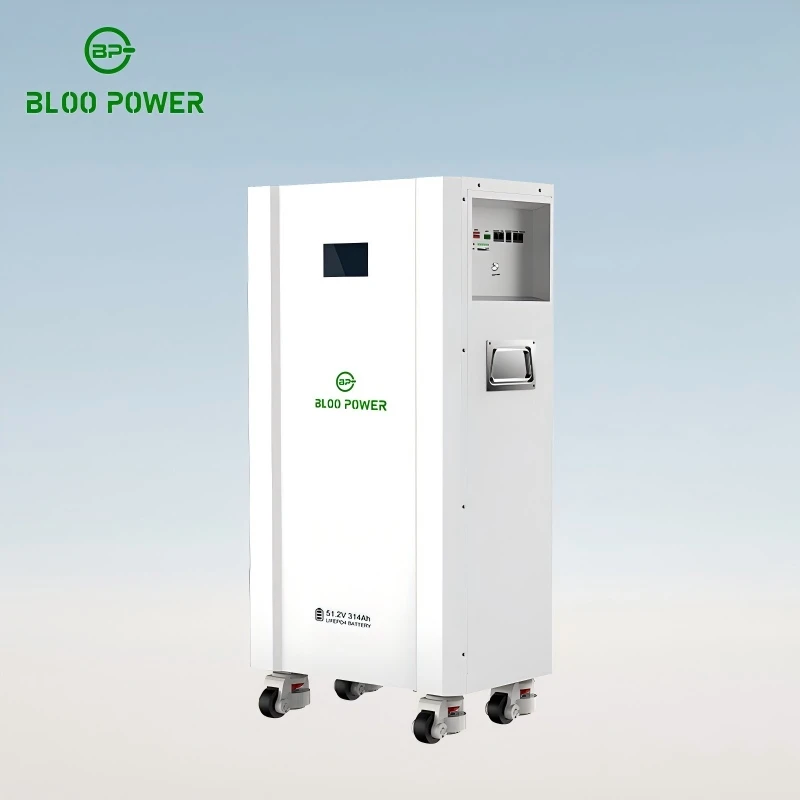
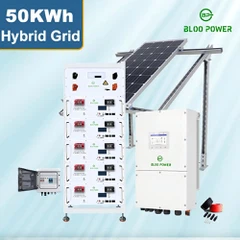
BLOO POWER's residential energy storage products span various capacity levels-including 5kWh, 10kWh, 15kWh, and 20kWh-and are available in multiple form factors, such as wall-mounted, rack-mounted, stackable, and all-in-one designs.
● LiFePO4 offers superior safety and thermal stability
● Suitable for frequent charging and discharging
● BMS handles monitoring of voltage, current, and temperature
● Prioritize comprehensive system safety design when making a selection
Installation space also influences the choice between 5kWh and 10kWh models
If installation space at home is very limited, a 5kWh wall-mounted battery may be easier to accommodate. BLOO POWER's 51.2V 5kWh wall-mounted unit measures approximately 650 × 384 × 142 mm, whereas the 10kWh model measures roughly 680 × 412 × 231 mm; weight also increases significantly with capacity.
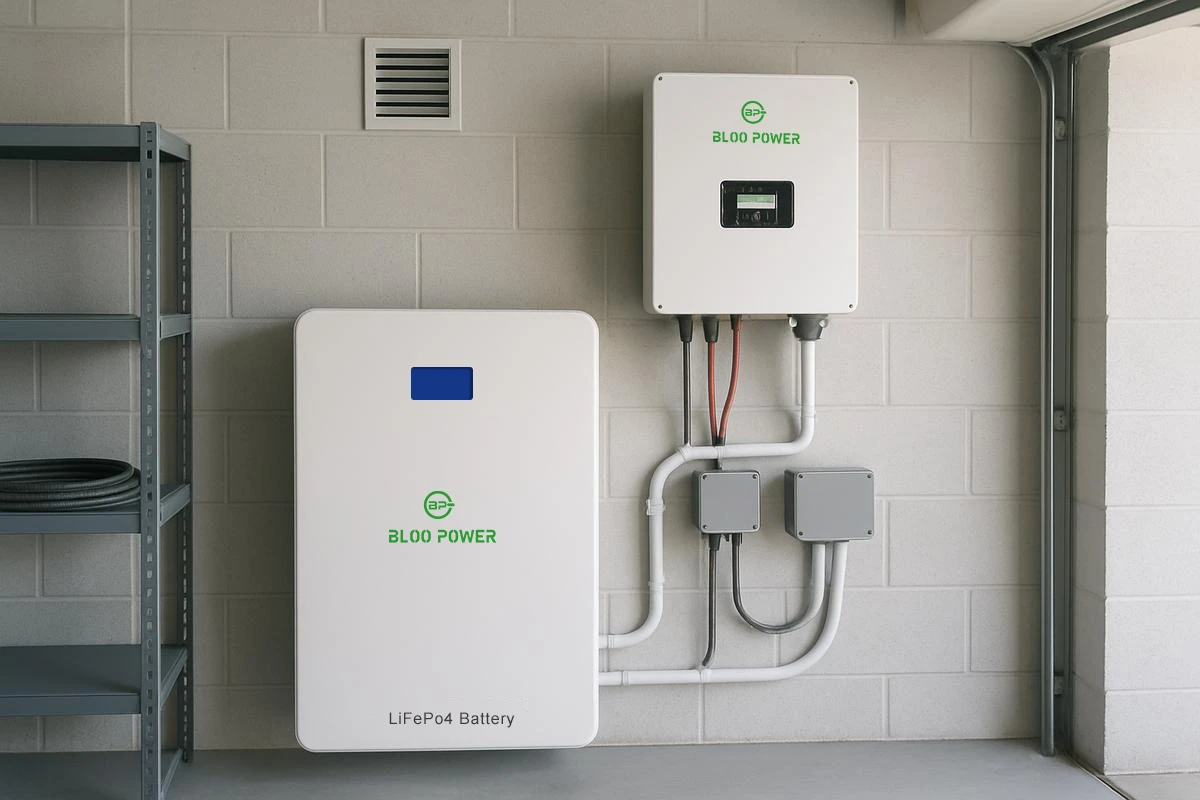
Therefore, when installing in a garage, utility room, basement, or confined storage area, one must consider more than just capacity; factors such as wall load-bearing capacity, installation clearances, maintenance space, ventilation, and local installation codes must also be verified. For households with limited space, a 5kWh wall-mounted unit can serve as a base module; for those requiring higher capacity, a single 10kWh unit or multiple modular batteries can be used to expand the system.
● Available wall area
● Wall load-bearing capacity
● Battery maintenance space
● Local fire and electrical codes
If future capacity expansion is required, 5kWh is actually a great starting point.
For households unable to determine their long-term electricity needs upfront, modular expansion is a crucial design feature. For instance, a household might install a single 5.12kWh battery initially; if they later find the capacity insufficient for nighttime use, they can add another unit to create a system with approximately 10kWh of capacity. This approach reduces the initial investment burden while allowing users to adjust capacity based on actual electricity usage data.
BLOO POWER's 51.2V wall-mounted units support parallel connection of up to 16 units; however, the actual number of units that can be connected in parallel depends on the specific model, BMS communication protocols, inverter compatibility, and system design requirements.
● Phase 1: 5kWh
● Phase 2: Expand to 10kWh
● Phase 3: Further expansion based on household needs
● Before expanding capacity, it is essential to verify battery model and inverter compatibility.
Should an average household choose 5kWh or 10kWh?
By considering factors such as household electricity consumption, solar system size, backup power needs, and budget, a simple decision-making framework can be established. If a household has low daily electricity consumption and aims primarily to maximize solar self-consumption while powering only essential loads-such as the refrigerator, lighting, Wi-Fi, and security cameras-a 5kWh system is usually sufficient. Conversely, if the household has high daily consumption, significant nighttime loads, a large solar installation, or a desire to power more devices during a blackout, a 10kWh system is generally more appropriate. For users unsure of their specific needs, a 5kWh module that supports parallel expansion is a good starting point; actual usage data can then determine whether to increase capacity later.
Quick Selection Guide for Household Capacity
|
Family Background |
Recommended capacity |
Reasons for Recommendation |
|
Suitable for 1–2 people, small homes, and low power consumption. |
5kWh |
Low investment; meets basic energy storage needs. |
|
An average household of 2–4 people |
5~10kWh |
Determined based on the nighttime load. |
|
High electrical loads from air conditioners, water heaters, and kitchen appliances. |
10kWh |
There is a more abundant supply of electricity available at night. |
|
Large-scale residential / High electricity consumption |
10kWh以上 |
Requires longer backup time |
|
Primarily used for backup power during outages. |
5kWh |
Suitable for critical loads |
|
I would like whole-house backup power or long-duration backup power. |
10kWh以上 |
Greater energy reserves |
|
Large-scale installed photovoltaic capacity |
10kWh或以上 |
Improve solar energy absorption capacity |
|
Budget is limited for the time being. |
5kWh+扩容 |
Install first, then expand. |
How do you choose between BLOO POWER's 5kWh and 10kWh products?

Households interested in BLOO POWER's residential energy storage solutions should consider the 51.2V LiFePO4 wall-mounted storage battery. The 5.12kWh model features a 51.2V/100Ah configuration, while the 10.24kWh model utilizes a 51.2V/200Ah configuration; both models support CAN and RS485 communication, intelligent BMS, and parallel connection, and are specifically designed for residential solar energy storage systems.
|
BLOO POWER Products |
5.12kWh Wall-Mounted Battery |
10.24kWh Wall-Mounted Battery |
|
Nominal voltage |
51.2V |
51.2V |
|
Rated capacity |
100Ah |
200Ah |
|
Rated energy |
5.12kWh |
10.24kWh |
|
Battery Type |
LiFePO4 |
LiFePO4 |
|
DoD |
80% |
80% |
|
Cycle life |
8000 cycles* |
8000 cycles* |
|
BMS |
Intelligent BMS |
Intelligent BMS |
|
Communications |
CAN/RS485 |
CAN/RS485 |
|
application |
Home ESS / Solar Storage |
Home ESS / Solar Storage |
|
Expand |
Supports parallel connection |
Supports parallel connection |
*Specific cycle life, charge/discharge currents, IP rating, and the number of units that can be connected in parallel should be based on the latest datasheet and certification documents for the corresponding model.

Efficient energy storage makes energy management smarter and electricity costs more controllable. Looking to create a customized energy storage solution for your project or home? Contact us to unlock a new era of smart energy.
The bottom line: For the average household, "bigger isn't necessarily better"-the ideal choice is a capacity that is "just right" for your needs.
To simplify the decision-making process:
Choose 5kWh if:
1. Daily household electricity consumption is relatively low;
2. The system is primarily for solar self-consumption;
3. You only need backup power for critical loads like the refrigerator, lighting, and internet;
4. Budget and installation space are limited;
5. You wish to gradually expand capacity in the future by connecting units in parallel.
Choose 10kWh if:
1. Daily household electricity consumption is significantly high;
2. Electricity usage is high during the night;
3. There are multiple high-load appliances such as air conditioners, water heaters, and kitchen appliances;
4. You want to increase the solar energy utilization rate;
5. You require a longer backup duration during power outages.
For most average households, I recommend calculating actual electricity consumption before deciding between 5kWh and 10kWh, rather than simply aiming for the largest battery possible. If daily consumption is around 10kWh and the system is mainly for backing up critical loads, 5kWh is a reasonable starting capacity; if daily consumption exceeds 15–20kWh and you want to cover extended nighttime usage or support more loads during outages, 10kWh is usually more appropriate.
For households unable to determine the final capacity immediately, a practical solution is to choose the BLOO POWER 5.12kWh LiFePO4 wall-mounted battery-which supports parallel expansion-and then scale up to 10kWh later based on actual usage data. BLOO POWER's current residential product line covers 5kWh, 10kWh, and higher capacities, allowing for flexible configurations tailored to specific residential energy storage needs.
Send Inquiry