




















Is A Larger Capacity Battery Always Better For Residential Energy Storage?
Aug 28, 2026
Leave a message

Is a larger capacity battery always better for residential energy storage? How should one choose one?
In conclusion: For residential energy storage batteries, larger capacity is not always better. The optimal capacity is one that best suits the household's load, solar power generation, backup needs, and economic model. If the battery capacity significantly exceeds the household's actual electricity demand, problems such as increased investment, incomplete solar charging, and prolonged low battery utilization may arise. Conversely, if the capacity is too small, it may fail to cover critical loads during nighttime power consumption or power outages.
The National Renewable Energy Laboratory (NREL) in the United States clearly states that energy storage systems typically experience diminishing marginal utility as capacity increases. For grid-connected residences, energy storage should generally be considered based on approximately 1-2 days of backup demand, rather than infinitely expanding capacity. Therefore, when selecting residential energy storage batteries, a comprehensive assessment should be made based on multiple dimensions, including daily electricity consumption, timing of electricity consumption, solar power generation, backup power during power outages, and the load capacity of the inverter.

First and foremost, it's crucial to understand that a "large" battery capacity does not equate to a "good" energy storage system performance.
Many households fall into a simplistic logic when choosing energy storage batteries: if 5kWh isn't enough, buy 10kWh; if 10kWh isn't enough, buy 20kWh; and if 20kWh isn't enough, keep increasing the capacity. In reality, battery capacity is just one parameter of an energy storage system and cannot determine its value on its own. For an energy storage system to truly function effectively, it requires a combination of factors including capacity, power output, photovoltaic installations, household load, charge/discharge efficiency, DoD (DoD), electricity usage time, and electricity pricing mechanisms. The U.S. Department of Energy points out that one of the core values of battery storage is transferring solar energy generated during the day to nighttime or during power outages; therefore, battery size must be matched to the household's actual energy needs and the duration of solar energy generation.
Key points to note:
● Rated battery capacity: kWh
● Usable battery capacity: kWh
● Maximum continuous charge/discharge power: kW
● Depth of discharge: DoD
● Round-trip efficiency:
For example, a 10kWh battery, if used at 80% DoD, has a theoretical usable capacity of approximately 8kWh; therefore, "10kWh rated capacity" cannot be simply equated to "providing 10kWh of electricity to a household per day".
Calculate Your Household's Daily Electricity Needs
Your household's daily electricity consumption is one of the most important foundational data points for choosing energy storage capacity. It's not recommended to decide on 10kWh, 15kWh, or 20kWh first and then work backwards to find suitable usage scenarios. Instead, review your electricity bills from the past 6–12 months to calculate your average daily electricity consumption. For example, a household with an average monthly electricity consumption of 300kWh has an average daily consumption of approximately 10kWh; another household with only 150kWh per month has an average daily consumption of approximately 5kWh. Clearly, these two households cannot use identical energy storage capacities. The U.S. Department of Energy also recommends that consumers focus on the actual power generation of the solar system, their household's electricity consumption, and the system configuration, rather than simply relying on the rated capacity of the equipment.
Recommended statistics:
● Average monthly electricity consumption
● Average daily electricity consumption
● Summer/Winter electricity consumption
● Daytime to nighttime electricity consumption ratio
Simple calculation formula:
Average daily electricity consumption = Monthly electricity consumption ÷ 30
For example:
300kWh ÷ 30 ≈ 10kWh/day
This 10kWh does not necessarily mean that a 10kWh battery needs to be installed, as a large amount of electricity in a household may be directly supplied by solar power in real time.
Don't Just Look at "Daily Electricity Consumption," Also Consider "When Electricity is Used"
A crucial function of home energy storage is to address the mismatch between solar power generation and household electricity consumption. The U.S. Department of Energy points out that solar power generation is typically concentrated during the day, while peak household electricity consumption often occurs in the afternoon and evening. Therefore, energy storage can preserve solar energy not immediately used during the day and continue supplying electricity after sunset.
For example, a household uses 12 kWh of electricity daily, of which:
● 5 kWh is used directly during the day;
● 7 kWh is used at night;
● Solar power generates 15 kWh during the day;
● Theoretically, approximately 10 kWh needs to be considered for energy consumption.
Installing around 10 kWh of energy storage might be more reasonable in this case; if a 30 kWh battery is installed directly, but only a small amount of surplus solar power is used to charge it each day, the battery may be in a state of "large capacity but not fully charged" for a long time.
Key Observations:
● Is the household occupied during the day?
● Electricity consumption percentage at night
● Main air conditioner operating time
● Water heater operating time
● EV charging time
Determine Capacity Based on "Backup Power Needs," Not Simply Pursuing Larger Capacities
If the primary purpose of installing energy storage is for backup power during power outages, the logic for capacity selection changes. For example, a household typically uses 15kWh per day, but during a power outage, it doesn't need to run all its appliances, only the refrigerator, lighting, Wi-Fi, computer, security camera, and some small appliances. In this case, the actual backup power required might only be 5-8kWh per day. In this situation, a battery capacity of around 10kWh might be sufficient to power critical loads for a considerable period.
The U.S. Department of Energy's data on solar + energy storage also emphasizes that energy storage can provide backup power during power outages, but the specific system design should be tailored to the actual household load. NREL proposes the concept of "hours of autonomy" to measure how long energy storage can support average loads.
Loads can be categorized as follows:
1. Primary Critical Loads: Refrigerator, Lighting, Internet, Security Camera
2. Secondary Loads: Television, Computer, Washing Machine
3. High-Power Loads: Air Conditioner, Electric Water Heater
Non-Essential Loads: Swimming Pool Equipment, Electric Vehicles, etc.
Battery Capacity and Inverter Power Must Match Simultaneously
This is an issue many consumers easily overlook. Battery capacity addresses "how much electricity can be stored," while inverter power addresses "how much load can be supported simultaneously." The DOE also clearly distinguishes between the energy capacity and power capacity of an energy storage system: the former is usually expressed in kWh, representing how much electricity is stored; the latter is expressed in kW, representing how much power can be provided at a given time.
Assuming a home installation:
20kWh battery + 5kW inverter
Even if the battery still has 20kWh of energy, if multiple high-power devices are started simultaneously in the home, exceeding the inverter's allowable output power, the system still cannot operate all devices at the same time.
Therefore:
Capacity determines range, power determines load capacity.
|
Family needs |
Battery capacity |
Inverter power reference |
|
Basic backup for small apartments |
5–10kWh |
3–5kW |
|
ordinary family |
10–15kWh |
5–8kW |
|
Large apartment |
15–25kWh |
8–12kW |
|
Full-house high-load backup |
≥20kWh上 |
≥10kW |
The above is for selection reference only. The actual design must be determined according to local electrical codes, peak load, and inverter compatibility.
Consider the Battery's "Usable Capacity," Not Just the Rated Capacity
When purchasing energy storage batteries, consumers often see figures like "10kWh," "15kWh," and "20kWh," but what they should really focus on is the usable capacity. This is because lithium batteries typically don't allow for 100% deep discharge in all situations; the system retains a certain State of Charge (SOC) safety window.
For example, a 10.24kWh LiFePO₄ battery, designed with 80% DoD, has approximately:
10.24 × 80% = 8.19kWh
If the system also has inverter conversion losses, the actual amount of electricity delivered to the household load will be further reduced.
BLOO POWER currently offers various household energy storage capacities, including 5.12kWh, 10.24kWh, 14.34kWh, 15kWh, and 20kWh, using the LiFePO₄ technology route, with some products supporting modular expansion.
When purchasing, be sure to ask the following questions:
● What is the Rated Capacity?
● What is the Usable Capacity?
● What is the DoD?
● What is the system efficiency?
Determining if the Battery is "fully utilized" based on the photovoltaic installation capacity
Even with a large battery capacity, it will be difficult to realize its value without sufficient solar energy to charge it. For example, a household with only a 5kW photovoltaic system and a 30kWh energy storage battery may find it difficult to fully charge the 30kWh battery every day under various seasons and weather conditions.
Therefore, the energy storage capacity should be reasonably matched to the scale of the photovoltaic system.
|
PV system |
Household daily electricity consumption |
Possible energy storage range |
|
3kW |
4–6kWh |
Around 5kWh |
|
5kW |
6–10kWh |
5–10kWh |
|
8kW |
10–15kWh |
10–15kWh |
|
10kW |
15–20kWh |
15–20kWh |
|
15kW+ |
20kWh+ |
20kWh or more or modular expansion |
This is not a fixed formula, as solar irradiance, module orientation, shading, and seasonal variations all affect actual power generation in different countries. The DOE also points out that the actual power generation of a solar system is affected by a variety of factors, including system size, roof orientation, and sunlight conditions.
Different Households Should Choose Different Capacity Levels
No single capacity is suitable for every household. For small apartments or homes primarily serving basic needs like nighttime lighting, refrigerators, and internet access, around 5kWh may be sufficient. For average households with air conditioners, refrigerators, washing machines, and kitchen appliances, 10–15kWh is usually more adequate. For villas, homes with backup power, multiple air conditioners, or electric vehicle charging needs, 20kWh or even higher capacity may be required.
BLOO POWER's product series effectively covers different household needs with varying capacity levels. For example, its wall-mounted series includes models with capacities of 5.12kWh, 6.91kWh, and 10.24kWh. The 10.24kWh model features a 51.2V, 200Ah configuration, and the product page indicates 80% DoD and 6500 cycle life.
This can be simply understood as:
● 5kWh: Small households/basic backup
● 10kWh: Average households
● 15kWh: Large households/high-energy-consuming households
● 20kWh+: Villas/whole-house backup power/high self-sufficiency
In areas with peak-valley electricity pricing, capacity should be calculated based on "economic value."
If your area uses peak-valley electricity pricing, your energy storage battery can not only store solar energy but also charge during low-price periods and discharge during high-price periods. In this case, larger battery capacity doesn't necessarily mean higher profits, because the newly added batteries may not have enough low-price electricity or solar energy for sufficient cycling.
The U.S. Department of Energy lists time-of-use pricing as one of the important factors to consider when choosing home energy storage. NREL research also shows that optimizing a solar + energy storage system under different electricity pricing mechanisms can change the system's economic value.
Therefore, in peak-valley electricity pricing markets, the following should be carefully calculated:
● Peak-valley price difference
● Daily cyclable electricity
● Annual cycle count
● Battery degradation
● Charge/discharge efficiency
● Investment payback period
If only a small daily price difference can be utilized, blindly increasing battery capacity may not necessarily yield higher returns.
Consider Your Home's Electricity Consumption Changes Over the Next 5-10 Years
Energy storage systems are not typically replaced after one or two years of use. Therefore, when choosing capacity, it's best not to only consider today's electricity consumption. For example, a household might currently use 8kWh per day, but in the future, they may add electric vehicles, heat pumps, electric water heaters, home office equipment, or more air conditioners, all of which could significantly increase future electricity demand.
Therefore, if your budget allows, choose a modular, scalable energy storage system instead of purchasing an ultra-large capacity from the outset.
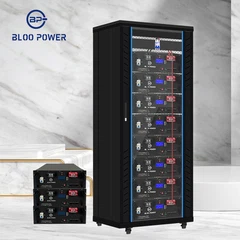
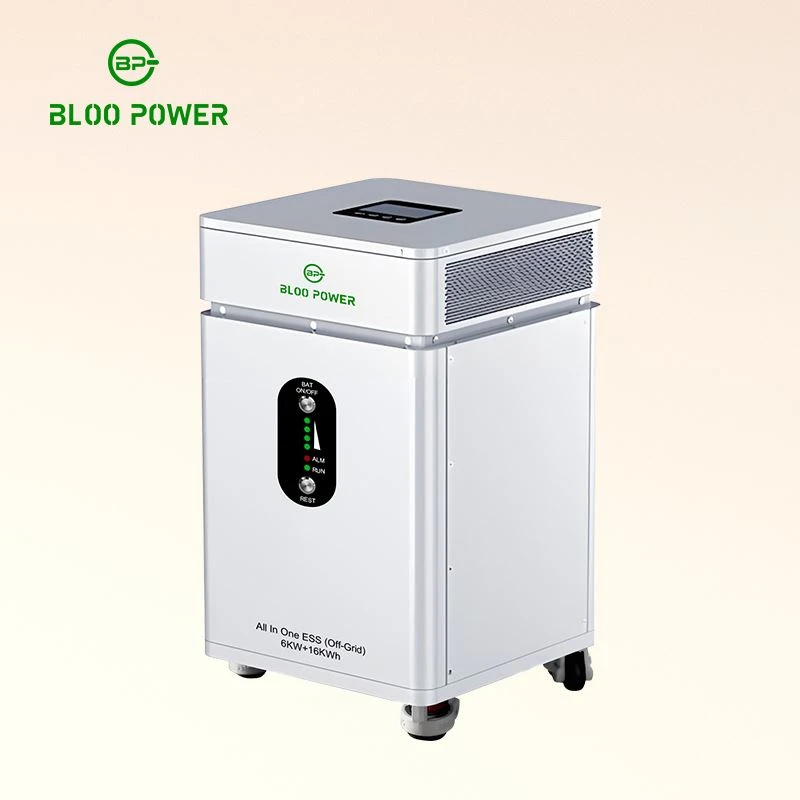
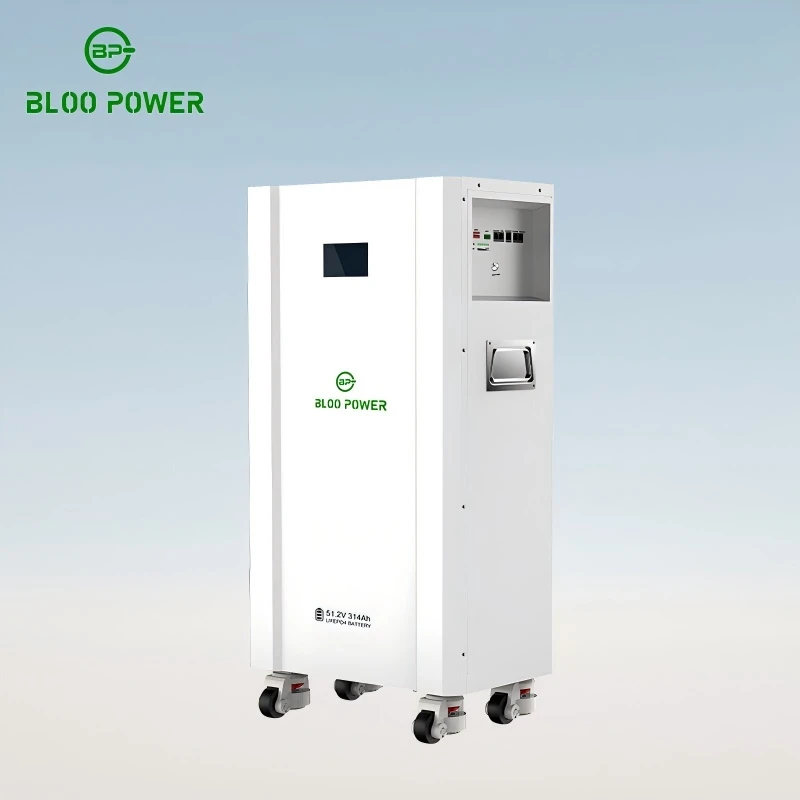
BLOO POWER's home energy storage products include wall-mounted, rack-mounted, stacked, all-in-one, and floor-standing solutions, offering various capacity levels; some products support parallel connection or modular expansion.
For example:
Phase 1: 10kWh
Phase 2: Increase to 15kWh
Phase 3: Expand to 20kWh+ based on new loads such as EVs and air conditioners
This approach is generally easier to manage investment risk than installing 30-40kWh from the start.
Installation Space and House Structure Also Limit "Large Capacity" Solutions
Larger capacity generally means an increase in the number of batteries, their weight, floor space, and installation requirements. This is especially true for wall-mounted energy storage batteries; simply having wall space isn't enough. Wall load-bearing capacity, installation location, ventilation, ambient temperature, and local fire and electrical regulations must be checked.
BLOO POWER, in its 2026 Residential Energy Storage Installation Guide, also emphasizes that installation space, load-bearing capacity, and heat dissipation conditions should be assessed based on different structures: wall-mounted, rack-mounted, and all-in-one.
Therefore, the following should be checked before installation:
● Wall load-bearing capacity
● Battery weight
● Indoor/outdoor installation conditions
● Waterproof and dustproof rating
● Heat dissipation space
● Fire safety and local regulations
For large residential energy storage projects, if the walls are not suitable for installing multiple wall-mounted batteries, rack-mounted or floor-standing solutions can be considered.
LiFePO₄ Batteries: Don't Just Look at Capacity, Cycle Life and Safety Design are Also Important
If two batteries are both 15kWh, but one has a higher cycle life, more comprehensive BMS protection, stronger temperature control, and better communication compatibility, their long-term value may be completely different.
BLOO POWER's residential energy storage products use LiFePO₄ battery technology. Some of their wall-mounted products are advertised as achieving 8000 cycles at 80% DoD and offer BMS protection against overcharge, over-discharge, and overcurrent.
From a long-term investment perspective, the following should be considered:
|
Parameters |
Why it is important |
|
LiFePO₄ |
Focus on safety, cycle performance and long-term stability |
|
BMS |
Manage battery cells and provide protection |
|
DoD |
Determine how much capacity can be used each time. |
|
Cycle Life |
Impact on long-term use value |
|
IP grade |
Affects the ability to adapt to the installation environment |
|
CAN/RS485 |
Impact on inverter communication and system management |
Therefore, "20kWh" in itself does not necessarily prove that a battery is better than "15kWh".
Larger capacity means higher initial investment; calculate ROI.
Increased capacity means increased costs for cells, BMS, cabinets, installation, and electrical equipment. NREL's residential energy storage cost model clearly states that residential BESS costs are affected by both power capacity and energy capacity; therefore, evaluating system economics cannot solely rely on kWh capacity.
Assuming a household:
Uses only 8kWh of energy storage daily.
A 10kWh system would adequately meet demand; a 30kWh system, however, might leave the additional 20kWh underutilized in the long term.
Therefore, the correct calculation should be:
Annual electricity cost savings + backup power value + other benefits - battery system investment cost
Instead of:
"Larger capacity → more savings → more worthwhile purchase"
NREL specifically points out that diminishing marginal utility typically exists as energy storage scales up.
Choosing Capacity Based on Different Usage Goals
Home energy storage needs can be broadly categorized into four types:
① Primarily for reducing electricity bills
Peak-valley price difference + surplus solar power + nighttime electricity consumption
These households may not require particularly large capacity.
② Primarily for increasing solar self-consumption rate
Daytime surplus solar power + nighttime electricity consumption
Capacity is typically designed around the amount of electricity that needs to be transferred from the battery daily.
③ Primarily for power outage backup
Critical load power × backup time
Not the total daily electricity consumption of the entire household.
④ Primarily for energy independence
Average daily electricity consumption + consecutive cloudy/rainy days + solar power generation capacity + backup days
NREL points out that energy storage for grid-connected homes can generally be considered around approximately 1-2 days of self-sufficiency, while off-grid homes may require longer storage times.
How does BLOO POWER help different families configure their energy storage capacity?
BLOO POWER's residential energy storage products cover multiple capacity levels, including 5kWh, 10kWh, 14.34kWh, 15kWh, and 20kWh, and offer different structures such as wall-mounted, rack-mounted, stacked, all-in-one, and floor-standing.
This means that families are not limited to a fixed capacity but can choose different combinations according to their actual needs.
|
Family type |
Daily electricity consumption |
Recommended capacity |
BLOO POWER Ideas |
|
small apartment |
3–5kWh |
Around 5kWh |
5.12kWh wall-mounted |
|
ordinary family |
6–10kWh |
Around 10kWh |
10.24kWh Wall-mounted/rack-mounted |
|
Large apartment |
10–15kWh |
Around 15kWh |
15kWh modular solution |
|
Villa/High Electricity Consumption |
15–20kWh+ |
20kWh+ |
20kWh or parallel expansion |
|
whole house backup power |
20kWh+ |
Design by load |
Modular multi-battery system |
BLOO POWER's 10.24kWh wall-mounted product features a 51.2V, 200Ah configuration, a nominal energy of 10.24kWh, and supports 80% DoD and 8000 cycle parameters.

Ultimately, use the "capacity matching formula" instead of guesswork.
For typical grid-connected households, a relatively easy-to-understand preliminary calculation logic can be used:
Required battery capacity ≈ Electricity needed from the battery at night ÷ DoD ÷ System efficiency
For example:
A household needs 8kWh of electricity from the battery daily;
Assumptions:
● DoD = 80%
● System efficiency is initially estimated at 90%
Then:
8 ÷ 0.8 ÷ 0.9 ≈ 11.1kWh
Therefore, a 10–15kWh energy storage system can be further considered.
However, this is only a preliminary estimate. The final design will require consideration of photovoltaic power generation, inverter power, startup surge, local electricity price, outage duration, ambient temperature, grid connection rules, and installation conditions.
Quick Reference Table for Selecting Residential Energy Storage Capacity
|
Scene |
Recommendation Approach |
Capacity Reference |
|
small apartment |
Basic load + nighttime electricity consumption |
5kWh |
|
ordinary family |
Nighttime electricity consumption + some backup power |
10kWh |
|
3-4 bedroom family |
Air conditioning + kitchen + home appliances |
10–15kWh |
|
Large apartments/villas |
Partial load throughout the house |
15–20kWh |
|
High-energy-consuming villas |
Multiple air conditioners/heat pumps/EVs |
20kWh+ |
|
Off-grid households |
Self-sufficiency in power supply for several days |
Specialized design required |
Note: The above capacities are for reference only and are not a uniform standard.
What size residential energy storage battery should you buy? You can use this method to determine it.
Step 1: Review your electricity bill
Calculate your average daily electricity consumption over the past 6–12 months.
Step 2: Review daytime and nighttime usage
Identify how much electricity storage must provide at night.
Step 3: Review your solar system
Identify how much surplus solar energy can charge the battery each day.
Step 4: Consider power outage needs
Determine whether you only need backup power for the refrigerator, lighting, and Wi-Fi, or if you want full house backup power.
Step 5: Review peak power
Identify the power requirements when appliances such as air conditioners, water pumps, and electric water heaters start up.
Step 6: Review available battery capacity
Don't just look at the rated kWh; look at the actual usable capacity after DoD.
Step 7: Consider the economics
Calculate how much savings you'll get annually by increasing battery capacity.
Step 8: Consider future expansion
If you plan to purchase an EV, heat pump, or add air conditioning in the future, prioritize modular systems with expandable capacity.
In summary: Residential energy storage is not about "the bigger the better," but rather "matching the right capacity to the needs."
From a technical and economic perspective, a larger battery capacity for residential energy storage does not necessarily mean a more advanced system or a higher return on investment. A truly reasonable capacity should simultaneously match the household's daily electricity consumption, nighttime electricity consumption, photovoltaic installed capacity, power outage backup needs, inverter power, electricity pricing mechanisms, installation space, and future electricity consumption growth.
NREL has clearly pointed out that increasing energy storage capacity has diminishing marginal utility; DOE emphasizes that the value of energy storage is closely related to practical application scenarios such as power outage backup, solar energy consumption, and time-of-use pricing.
Therefore, for most households, 5kWh, 10kWh, 15kWh, and 20kWh can be considered as common capacity nodes, and then matched step-by-step according to actual load, rather than directly pursuing the largest battery capacity.
BLOO POWER offers scalable solutions ranging from 5.12kWh to 20kWh and above, including wall-mounted, rack-mounted, stacked, and all-in-one energy storage systems, which can be combined to suit different household electricity consumption and installation environments.
The most important point is:
Don't ask "How big of a battery can I buy?", but rather "How much usable electricity does my household actually need, and can this capacity be fully utilized by solar power and household loads?"
For the average household, a well-matched 10kWh energy storage system is often more valuable than a 30kWh system that is constantly underutilized and never fully charged.
Send Inquiry