












Recommendations For Selecting Residential Energy Storage Batteries
Jul 31, 2026
Leave a message

Recommendations for choosing residential energy storage batteries: A comprehensive guide from capacity, safety, lifespan to system compatibility
Article Overview
With the development of residential photovoltaic systems, smart grids, and fluctuating energy prices, more and more households are installing residential energy storage batteries. This "solar + energy storage" model aims to improve energy self-sufficiency, reduce electricity costs, and provide backup power during power outages. According to data from the International Energy Agency (IEA), battery storage has become one of the fastest-growing energy technologies, with global new battery storage capacity reaching 108GW by 2025, representing a year-on-year increase of approximately 40%. Lithium iron phosphate (LFP) batteries, due to their high safety, long cycle life, and cost advantages, have become a key technology in the energy storage field.
However, for ordinary households, choosing a truly suitable energy storage battery is not simple. It requires comprehensive consideration of multiple factors, including battery capacity, chemistry, protection rating, inverter compatibility, installation method, and after-sales support. This article will analyze key recommendations for selecting residential energy storage batteries from eight core aspects and, combined with the features of BLOO POWER residential energy storage products, provide a systematic selection reference for household users.

First, clarify your household energy needs and choose the appropriate battery capacity.
When choosing a residential energy storage battery, capacity is one of the most important indicators. Many users fall into the misconception that "the larger the capacity, the better." However, in reality, the energy storage capacity should be calculated comprehensively based on the household's daily electricity consumption, photovoltaic installed capacity, backup power needs, and local electricity pricing policies. If the capacity is too small, it cannot meet the needs of nighttime electricity use and backup power during power outages; if the capacity is too large, it will increase the initial investment and reduce battery utilization efficiency.
Typically, an average household consumes about 10-30 kWh of electricity per day. After installing a solar system, the energy storage battery is mainly used to store surplus electricity generated by photovoltaics during the day, which is then released for use at night or during cloudy or rainy weather. Therefore, appropriately matching the capacity is more important than simply pursuing a large capacity.
For example, BLOO POWER offers wall-mounted residential energy storage battery solutions, including 5 kWh, 10 kWh, 15 kWh, and modular combinations of 30 kWh and above, which can be flexibly expanded according to different household needs. For example:
● Small households: 5~10kWh energy storage system
● Typical villas/residential homes: 10~20kWh energy storage system
● High-energy-consuming households or off-grid applications: 30kWh or more energy storage system
● Commercial/residential backup power: 40kWh or more energy storage solution
Residential Energy Storage Capacity Reference Table
| Family type | Daily electricity consumption | Recommended energy storage capacity | Suitable applications |
| Small apartment | 5~10kWh | 5~10kWh | Night lighting, small appliances |
| Ordinary family | 10~20kWh | 10~20kWh | Home all-day energy management |
| Large residential units | 20~40kWh | 20~40kWh | Air conditioner, electric vehicle spare |
| Off-grid residential | ≥ 40kWh | ≥ 40kWh | Long-term independent power supply |
Prioritize Safety-Rich Lithium Iron Phosphate (LiFePO4) Batteries
Residential energy storage systems are typically installed near homes, making safety a crucial consideration when selecting batteries. Currently, the mainstream energy storage batteries on the market primarily utilize two technologies: ternary lithium (NMC) and lithium iron phosphate (LFP).
For home energy storage, lithium iron phosphate batteries are more suitable. Compared to ternary lithium batteries, LFP batteries offer higher thermal stability, a lower risk of thermal runaway, and do not contain high-value metals such as nickel and cobalt, resulting in more stable costs. IEA data shows that LFP has become one of the mainstream technologies in the energy storage market, accounting for a large proportion of newly deployed energy storage projects.
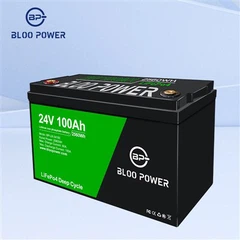
BLOO POWER home energy storage batteries utilize high-safety-grade LiFePO4 cells and are equipped with an intelligent BMS battery management system that monitors voltage, current, temperature, and SOC in real time, improving system operational safety.
Key advantages include:
● High thermal stability, reducing safety risks
● Supports deep cycle use
● Long lifespan design
● Suitable for long-term residential operation
Focus on Battery Cycle Life, Not Just Initial Price
Energy storage batteries are long-term investments. It's crucial to consider the entire lifecycle cost, not just the purchase price. A cheap battery with a short lifespan may need replacement after only a few years, ultimately resulting in higher costs.
Currently, high-quality residential energy storage batteries typically boast a cycle life of over 8000 cycles. If a charge-discharge cycle is performed daily, the theoretical lifespan can exceed 10 years. NREL research indicates that the lifespan of residential energy storage systems is affected by factors such as cycle depth, temperature, and operating mode; therefore, choosing a battery suitable for the application scenario is critical.
BLOO POWER LiFePO4 energy storage batteries offer long-cycle designs in different models, such as:
● 8000+ cycle life
● Supports over 80% Depth of Discharge (DoD)
● Over 10 years design life
● Modular expansion reduces future upgrade costs
Common Battery Performance Comparison
| item | Lead acid battery | NMC | LFP |
| Cycle life | 500~1500 times | 2000~5000 times | ≥8000 times |
| Safety | General | Higher | Excellent |
| Weight | Heavier | Lighter | Medium |
| Energy storage application suitability | Low | Middle | High |
Confirm Battery and Inverter Compatibility
Residential energy storage systems are not standalone devices, but rather comprised of solar modules, inverters, batteries, and an EMS (Energy Management System). Therefore, when purchasing batteries, it is essential to confirm their compatibility with mainstream inverter brands.
Many users find that their batteries cannot communicate after purchase because the battery's BMS protocol is incompatible with the inverter.
When selecting batteries, it is recommended to pay attention to:
● CAN communication protocol
● RS485 communication protocol
● Inverter certification list
● Software upgrade capability
BLOO POWER home energy storage products support connection to mainstream hybrid inverters, catering to the needs of different national markets, such as:
● European 230V single-phase systems
● European three-phase energy storage systems
● US 120/240V split-phase systems
● Asian residential solar-energy storage systems
This open and compatible design helps installers reduce system integration complexity.

Selecting the Protection Rating (IP Rating) Based on the Installation Environment
Many home users overlook the installation environment, but environmental factors directly affect battery life. For example, low temperatures in European winters, high humidity in Southeast Asia, and high temperatures in the Middle East all require different levels of protection.
IP rating represents the device's dust and water resistance:
● IP54: Suitable for indoor environments
● IP65: Suitable for semi-outdoor or humid environments
● IP67: Higher level of protection
If you plan to install in a garage, on a balcony, or near an outdoor wall, it is recommended to choose an IP65-rated product.
BLOO POWER's wall-mounted energy storage batteries feature an IP65 protection design, effectively preventing:
● Dust ingress
● Rain damage
● Corrosion in humid environments
● Outdoor temperature variations
Especially suitable for European residences, island regions, and tropical home energy storage projects.
Choose a Modular Design for Easy Future Expansion and Upgrades
Household electricity needs change over time, for example:
● Adding electric vehicles
● Installing more air conditioners
● Increasing family size
● Increasing photovoltaic capacity
Therefore, modular energy storage systems are more flexible than fixed-capacity products.
BLOO POWER wall-mounted energy storage batteries use a modular design, allowing for capacity expansion through parallel connection of multiple batteries.
For example:
● Three 10kWh batteries form a 30kWh system
● Six 5kWh batteries form a 30kWh system
● Multiple modules can be combined to meet needs exceeding 40kWh
Advantages of this design:
1. Lower initial investment
2. Easier upgrades
3. Simpler installation and maintenance
4. Suitable for the needs of households in different countries
Focus on Battery Management System (BMS) and Intelligent Functions
The BMS is the brain of an energy storage battery, determining its safety, efficiency, and lifespan.
An excellent BMS system can:
● Monitor individual cell status
● Prevent overcharging and over-discharging
● Control temperature
● Balance cell performance
● Improve overall lifespan
Modern residential energy storage systems have evolved from simple energy storage devices into intelligent energy management centers.
BLOO POWER energy storage batteries are equipped with an intelligent BMS system, enabling:
● Precise SOC display
● Remote monitoring
● Fault alarms
● Data communication management
Users can understand their daily power generation, storage, and consumption through the energy management platform.
Consider Brand Strength, Certifications, and After-Sales Service
Energy storage batteries typically need to operate for over 10 years, making brand reliability crucial. Some low-priced products may use inconsistent quality cells, lack complete certifications and after-sales support, posing higher long-term risks.
When choosing a brand, consider the following:
● IEC Certification
● UN38.3 Transport Certification
● CE Certification
● MSDS Safety Documentation
● Product Warranty Policy
BLOO POWER is committed to providing global residential energy storage solutions, with products covering markets in Europe, America, and Asia, and offers:
● Home Energy Storage Batteries
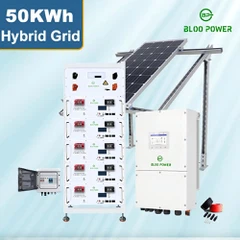
● Photovoltaic Energy Storage Systems
● Hybrid Inverter Solutions
● OEM/ODM Services
For overseas installers, a stable supply chain and technical support are also important factors in supplier selection.
Choosing a Wall-Mounted, Rack-Mounted, or Integrated Solution Based on Application Scenarios
Different home environments require different installation methods.
Wall-Mounted Energy Storage Batteries are suitable for:
● Residential homes
● Apartments
● Space-constrained environments
Advantages:
● Space-saving
● Aesthetically pleasing installation
● Easy to expand
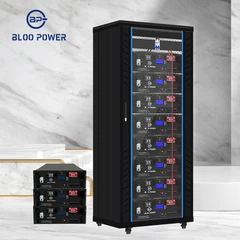
Rack-Mounted Batteries are suitable for:
● Large-capacity residential applications
● Small commercial applications
Advantages:
● Larger capacity
● Easy maintenance
Integrated Energy Storage Systems are suitable for:
● Quick installation
● Outdoor backup power
Comparison Table of Different Energy Storage Solutions
| type | Capacity range | Features | Suitable for users |
| Wall-mounted | 5~50kWh | Space-saving and aesthetically pleasing | Family Home |
| Rack-mounted | 10~100kWh | Strong scalability | Large residential |
| All-in-one | 5~30kWh | Easy to install | Rapid deployment |
Calculate Return on Investment (ROI) Comprehensively, Not Just Focus on Purchase Cost
The ultimate goal of purchasing an energy storage system is to reduce energy costs and increase energy independence.
Factors affecting returns include:
● Local electricity price
● Peak-valley electricity price difference
● Photovoltaic power generation
● Battery capacity
● Usage frequency
For example, in areas with high electricity prices, households can use solar power to charge electricity during the day and use stored energy at night, thereby reducing the need to purchase electricity from the grid.
As global energy storage costs decline, the economics of home energy storage are continuously improving. IEA data shows that the cost of lithium-ion batteries has dropped significantly compared to 2010, which has driven the rapid adoption of energy storage systems.
Conclusion: Choosing the right residential energy storage battery is choosing a future energy lifestyle.
An excellent residential energy storage system is more than just a battery; it's a crucial component of home energy management. When choosing, users should focus on capacity, safety, lifespan, compatibility, protection rating, intelligent management, and brand service.
BLOO POWER provides reliable, efficient, and long-term stable energy storage options for global households through its LiFePO4 safe cells, intelligent BMS, IP65 protection design, modular expansion, and multi-scenario solutions.
In the future, with the continued growth of new energy applications in homes, "solar energy + energy storage" will become an important way for more and more families to achieve energy independence.
Send Inquiry