












Can Residential Energy Storage Systems Be Paired With Inverters From Any Brand?
Jul 28, 2026
Leave a message

With the rapid growth of the residential PV and energy storage markets, an increasing number of households are asking: can residential energy storage batteries be paired with inverters from any brand?
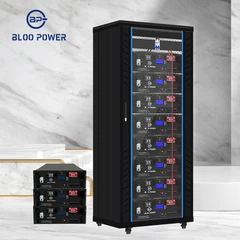
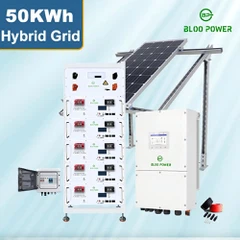
The answer is that, while not all brands are directly compatible in theory, stable operation can be achieved with products that meet specific electrical parameters, communication protocols, and manufacturer compatibility requirements. High-quality energy storage systems currently on the market-such as BLOO POWER's 48V/51.2V wall-mounted batteries, rack-mounted batteries, stackable systems, and all-in-one home energy storage solutions-support mainstream communication protocols like CAN and RS485 and are compatible with many leading hybrid inverter brands; however, final confirmation should always be based on the manufacturer's compatibility list. IEEE has established recommended practices for energy storage BMS interoperability, while international standards such as IEC 62619 define safety requirements for stationary lithium battery systems.

nverters and energy storage batteries are not simply "plug-and-play."
Many users mistakenly believe that any 48V lithium battery can be connected to any inverter; in reality, this is a misconception.
Modern residential energy storage systems are intelligent energy systems. The inverter is responsible not only for DC-to-AC conversion but also for real-time communication with the Battery Management System (BMS), exchanging data such as State of Charge (SOC), battery temperature, cell voltage, charge/discharge limits, and fault alerts.
If communication fails, even if power output is possible, the system may face issues such as:
● Inability to display accurate SOC
● Inability to automatically limit charging and discharging
● Failure to execute UPS switching
● Inability to perform remote monitoring
● Inability to carry out OTA (Over-the-Air) updates
Consequently, high-quality residential energy storage systems prioritize officially certified compatibility solutions rather than relying solely on voltage matching. IEEE recommended practices for stationary energy storage BMS also emphasize the importance of communication interoperability, status reporting, and cybersecurity.
Key Takeaways:
● Voltage matching does not equal compatibility
● Communication protocols are more critical than voltage
● Official compatibility lists are the most reliable reference
● Software compatibility is becoming increasingly important
The first thing to check is whether the voltage matches.
Different inverters support different battery platforms.
Below are the most common platforms for home energy storage.
|
Battery Type |
Common voltages |
Is it mainstream? |
|
24V |
25.6V |
Small-scale off-grid |
|
48V |
51.2V |
★★★★★ |
|
HV |
120V~600V |
Large-scale European residential development |
Currently, over 90% of low-voltage residential energy storage systems worldwide utilize the 51.2V LiFePO₄ platform.
For example, BLOO POWER offers:
● 5kWh wall-mounted batteries
● 10kWh wall-mounted batteries
● 15kWh wall-mounted batteries
● 16kWh rack-mounted batteries
● Modular parallel systems (scalable up to tens of kWh)
These products utilize the standard 48V/51.2V platform, ensuring easier compatibility with mainstream hybrid inverters.
Note:
● Operating voltage ranges must match
● Maximum charging voltages must match
● Discharge cut-off voltages must match
● Current capabilities must meet inverter requirements
Secondly, verify the compatibility of the communication protocols (this is the most critical factor).
For modern energy storage systems, the communication protocol is the true determinant of compatibility.
Current mainstream protocols include:
|
protocol |
Is it mainstream? |
Function |
|
CAN Bus |
★★★★★ |
Top choice among mainstream brands |
|
RS485 |
★★★★★ |
Broad compatibility |
|
Modbus |
★★★★☆ |
There is a significant amount of industrial and commercial activity. |
|
Ethernet |
★★★☆☆ |
Cloud Monitoring |
BLOO POWER energy storage products support:
● CAN
● RS485
● Smart BMS communication
● Multi-brand protocol compatibility (refer to the compatibility list for details)
In the absence of communication:
● SOC cannot be read
● Smart control is not possible
● Current limiting is not possible
● System protection strategies may be affected
IEEE recommended practices also emphasize the importance of interoperability, measurement accuracy, and communication standards between the BMS and external systems.
Third, verify whether the inverter supports the specific battery brand.
Many international brands publish lists of compatible batteries.
For instance, hybrid inverters typically:
● Feature built-in communication protocols for specific battery brands
● Provide compatibility lists
● Update firmware to support new brands
● Undergo joint certification with battery manufacturers
Consequently, it is not necessarily the case that an inverter cannot work with other brands; rather, the setup may require:
● Updating firmware
● Selecting the correct protocol
● Configuring the CAN address
● Importing parameters
BLOO POWER offers protocol adaptation services tailored to project requirements and assists customers in integrating with mainstream inverter brands to enhance system stability.
Fourth, consider whether the BMS can correctly control the inverter.
In a truly high-quality energy storage system, the BMS actually controls the entire charge and discharge process.
For example:
SOC reaches 100% → BMS sends a "stop charging" command → Inverter stops output
SOC is too low → Discharge is restricted → Battery cell lifespan is protected
Temperature is too high → Charging current is reduced → Thermal runaway is prevented
If the inverter fails to recognize the BMS:
Charging might continue, Discharging might continue, Alarms might be triggered, Lifespan might be shortened
Therefore, the coordination between the BMS and the inverter is far more important than a simple power supply connection.
Fifth, consider whether the inverter types are compatible.
There are primarily two architectures for residential energy storage:
|
type |
Features |
Applicable Scenarios |
|
DC-coupled (hybrid inverter) |
Fewer conversions and high efficiency |
New PV-plus-storage system |
|
AC-coupling |
Flexible modification |
Upgrade for existing photovoltaic system |
DC coupling generally offers higher efficiency, whereas AC coupling is better suited for adding energy storage to existing grid-tied PV systems. Studies generally suggest that the choice between the two approaches should be based on whether the project involves a new installation or a retrofit.
When selecting BLOO POWER products, the configuration should be tailored to the household's existing system to maximize return on investment.
Sixth, ensure that safety certifications comply with international standards.
Not only must the inverter be certified,but the battery must also be certified.
Mainstream international standards include:
● IEC 62619
● UN38.3
● CE
● Relevant IEC EMC standards
● Certifications such as UL (required in certain markets)
IEC 62619 specifies safety requirements-including testing and operational specifications-for stationary lithium batteries used in industrial and energy storage applications.
Choosing BLOO POWER energy storage products with international certifications helps improve project acceptance efficiency and long-term safety.
Consider future expansion capabilities.
Many households will eventually add the following systems over the coming years:
Photovoltaics (PV), energy storage, EV charging, and heat pumps.
Therefore, the inverter must support:
● Battery paralleling
● Multi-unit paralleling
● Software upgrades
● Capacity expansion
The BLOO POWER modular energy storage system supports future capacity expansion; users do not need to invest in the full capacity upfront but can upgrade gradually as their energy needs grow.
Prioritize combinations that have been proven in practice.
Truly reliable configurations require more than just matching specifications; they demand validation through extensive project implementation.
It is recommended to prioritize:
● Official manufacturer-compatible combinations
● Configurations with existing installation track records
● Options that include technical support
● Options that include remote commissioning
This approach helps reduce installation and commissioning time while minimizing after-sales risks.
BLOO POWER Recommended Home Energy Storage Solutions:
|
Family needs |
Recommended Products |
Recommended Inverter Type |
|
Small house |
5–10kWh Wall-mounted LiFePO₄ |
3–6kW Hybrid inverter |
|
Ordinary family |
15–20kWh Wall-mounted/Rack-mounted |
5–10kW Hybrid inverter |
|
Large residential |
30–45kWh Modular system |
10–15kWThree-phase hybrid inverter |
Common Compatibility Checklist:
|
Examination Items |
Is it necessary? |
|
Consistent voltage plateau |
✔ |
|
Matching of maximum charge and discharge currents |
✔ |
|
CAN/RS485 Communication compatibility |
✔ |
|
Official compatibility list support |
✔ |
|
Firmware version matching |
✔ |
|
Safety certifications comply with target market requirements. |
✔ |
Summary
Residential energy storage systems cannot simply be paired with any brand of inverter. True compatibility depends on a range of critical factors-such as voltage levels, charge/discharge capabilities, BMS communication protocols, official compatibility certifications, system architecture, and safety standards-rather than merely whether the physical interfaces connect.
For homeowners prioritizing safety, efficiency, and long-term reliability, the most prudent approach is to select energy storage products-such as those from BLOO POWER-that support CAN and RS485 communication, modular expansion, and international safety certifications, and to pair them with proven, mainstream hybrid inverters. Proper system design and officially validated configurations not only enhance energy efficiency, extend battery lifespan, and reduce long-term maintenance costs, but also provide ample flexibility for future capacity expansion and smart energy management.
Send Inquiry