












What Makes A Good Residential Energy Storage Battery And What Guarantees It?
Jul 27, 2026
Leave a message

With global energy price fluctuations, the rapid spread of photovoltaic power generation, and the increasing demand for home backup power, Household Energy Storage Systems (HESS) have become an important part of modern residences. A truly excellent household energy storage system not only means having a larger battery capacity, but also means long-term stability, safety and reliability, intelligent management and complete after-sales guarantee.
According to industry data such as ABB and EnergySage, global home energy storage currently mainly uses lithium-ion (especially LiFePO₄lithium iron phosphate) technology, and is gradually developing towards high security, modularity, smart BMS and long life.

What Makes a Good Residential Energy Storage Battery?
A good residential energy storage battery isn't simply one with the largest capacity; it's about achieving the optimal balance between safety, lifespan, efficiency, stability, and intelligent management. For home users, an energy storage system often needs to be used continuously for over 10 years, making quality far more important than price.
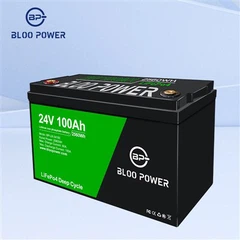
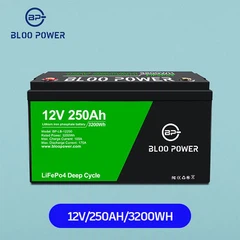
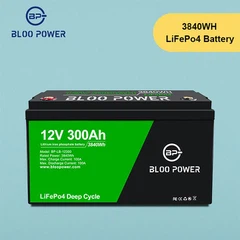
For example, BLOO POWER uses lithium iron phosphate (LiFePO₄) cells, boasting high cycle life, high safety, and low maintenance costs, making it widely applicable in residential photovoltaic systems, off-grid systems, and backup power systems.
Key features include:
● Uses Grade A LiFePO₄ cells
● High cycle life (typically over 6000 cycles)
● Intelligent BMS protection system
● Supports parallel capacity expansion
Safety is the Most Important Core Principle of Home Energy Storage
Home energy storage systems are likely to be in a charging and discharging state every day, therefore safety performance is far more important than capacity.
Excellent energy storage products typically feature:
● Multiple safety designs for battery cells
● Real-time BMS monitoring
● Overcharge and over-discharge protection
● Short circuit and temperature protection
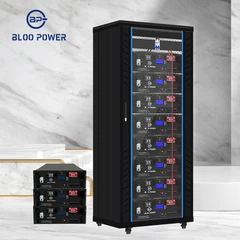
BLOO POWER wall-mounted energy storage, battery cabinets, and stacked products all employ a multi-level protection architecture, supporting real-time monitoring of voltage, current, temperature, and SOC, and reducing operational risks through an automatic shutdown protection mechanism for abnormalities.
Safety protections that an excellent residential energy storage system should possess:
|
Function |
effect |
User benefits |
|
BMS Management |
Real-time monitoring of battery cells |
Extend lifespan |
|
Overcharge protection |
Prevent battery damage |
Improve safety |
|
Over-discharge protection |
Preventing deep discharge |
Maintain capacity |
|
Temperature protection |
Prevent overheating |
Preventing thermal runaway |
|
Short circuit protection |
Automatic disconnection |
Reduce accident risk |
Battery Lifespan Determines Return on Investment Energy storage systems are a long-term investment.
Currently, mainstream LiFePO₄ batteries in the industry generally have a cycle life of 6,000 to 10,000 cycles. With a typical household cycling once a day, this translates to over 15 years of use. Compared to traditional lead-acid batteries, this represents several times longer lifespan and lower lifespan costs.
Excellent products typically possess:
● ≥8,000 cycles
● ≥10-year design life
● Low capacity decay
● Long-term stable output
BLOO POWER's various products utilize high-quality cells to meet the long-term energy storage needs of households.

A Good BMS is the Brain of an Energy Storage System
If the battery cell determines the lifespan, then the BMS is the brain of the entire system.
An excellent BMS can:
● Real-time cell balancing
● Precise SOC calculation
● Automatic fault alarm
● Remote cloud monitoring Without a high-quality BMS, even the best battery cells cannot fully realize their performance.
High Conversion Efficiency Reduces Energy Loss Home energy storage undergoes daily charging and discharging.
Higher system efficiency:
● Higher photovoltaic utilization rate
● More significant electricity cost savings
● Less heat generation
● Longer battery life
Currently, mainstream home energy storage systems typically achieve a round-trip efficiency of over 90%.
Comparison of different battery types:
|
type |
Cycle life |
safety |
Maintenance |
Recommendation Index |
|
lead acid |
500-1000 times |
middle |
high |
★★ |
|
Lithium ternary lithium |
2000-4000 times |
higher |
middle |
★★★★ |
|
LiFePO₄ |
6000-10000 times |
Very high |
Extremely low |
★★★★★ |
Modular Design Makes Future Expansion Easier
Household electricity needs are constantly changing.
For example:
● Adding an air conditioner
● Adding a new energy vehicle
● Adding a heat pump
● Adding photovoltaic modules
Modular energy storage allows for flexible expansion.
BLOO POWER offers:
● 5kWh
● 10kWh
● 15kWh
● 16kWh
Multiple modules support parallel connection, expanding to 30kWh, 45kWh, or even higher capacities to meet the energy needs of different household stages.
A Comprehensive Certification System Ensures Quality
Excellent energy storage products should pass international certifications.
For example:
● IEC Standards
● CE Certification
● UN38.3 Transport Certification
● MSDS
● EMC Testing
These certifications mean that the product has undergone verification in multiple aspects such as safety, electrical systems, and transportation, making it more suitable for international market applications.
After-Sales Support Determines Long-Term User Experience
Purchasing energy storage is not just about buying equipment, but also about purchasing long-term service.
Excellent brands typically offer:
● Product Warranty
● Technical Support
● Online Monitoring
● Software Upgrades
BLOO POWER provides OEM/ODM services to global partners and supports system debugging, technical training, and after-sales support, helping installers and end-users achieve a more stable user experience.
Excellent energy storage systems should also possess intelligent energy management capabilities.
Modern home energy storage has evolved from a "backup battery" to an intelligent energy management platform.
Intelligent systems can achieve:
● Prioritized charging of solar power
● Peak-valley electricity price arbitrage
● Automatic switching during power outages
● Remote monitoring via APP
Through coordinated control of intelligent EMS and inverters, self-consumption rates can be further improved, reducing household energy costs.
Typical configuration of BLOO POWER residential energy storage products:
|
Products |
capacity |
Installation method |
Applicable Scenarios |
|
Wall-mounted battery |
5~16kWh |
Wall-mounted |
Family Home |
|
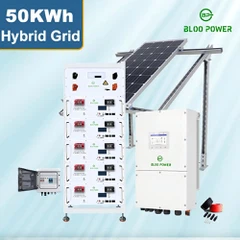
Stacked batteries |
10~45kWh |
Stacking |
Large apartment |
|
rack-mounted battery |
5~30kWh |
server rack |
Villas, small commercial properties |
|
All-in-one ESS |
5~30kWh |
Integrated installation |
Photovoltaic and storage integration |
In summary
A truly excellent residential energy storage system should simultaneously possess high security, long lifespan, high efficiency, intelligent management, modular expansion capabilities, and comprehensive after-sales support. With the increasing global demand for home energy management, energy storage products employing high-quality LiFePO₄ cells, intelligent BMS, and internationally certified designs are becoming mainstream in the market. For families seeking to reduce electricity bills, increase energy independence, and enhance outage protection, choosing a brand like BLOO POWER, which offers wall-mounted, stacked, rack-mounted, and integrated energy storage solutions, allows for flexible configuration of systems ranging from 5kWh to over 45kWh to suit different residential scenarios, providing long-term, safe, and stable clean energy security for the home.
Send Inquiry