

















How to Choose a Reliable Household Energy Storage Lithium Battery | Ultimate Guide 2026
Jul 24, 2026
Leave a message

Introduction: Why is choosing a reliable residential lithium-ion energy storage battery increasingly important?
Driven by fluctuating global energy prices, the rise in extreme weather events, and the rapid adoption of residential photovoltaic systems, more households are installing residential energy storage systems. These systems utilize lithium-ion batteries to store solar energy, enabling benefits such as storing energy during the day for use at night, reducing electricity bills, and providing backup power during outages. Data from the International Energy Agency (IEA) indicates that battery energy storage has become one of the fastest-growing energy technologies; global newly installed battery storage capacity is projected to reach approximately 108 GW by 2025, with Lithium Iron Phosphate (LFP) batteries emerging as a key technology and accounting for the majority of new deployments.
However, the market is crowded with brands offering residential lithium-ion storage batteries, and there are significant disparities in product quality, technical sophistication, safety standards, and after-sales support capabilities. A residential energy storage system is typically designed to operate for over a decade; choosing a low-quality battery can lead to issues such as rapid capacity degradation, heightened safety risks, and difficulties with after-sales service.
Therefore, when selecting a residential lithium-ion energy storage battery, consumers should look beyond price and make a comprehensive assessment based on factors such as cell type, safety features, cycle life, the Battery Management System (BMS), certification standards, brand strength, system compatibility, and after-sales service.

Core Cell Chemistry: Choose Grade A New LFP Cells for Energy Storage
The cell is the core of any household energy storage lithium battery. Its chemical composition determines safety baseline, cycle life and long-term stability, making it the first selection factor for home ESS. Per safety standards for stationary energy storage, Lithium Iron Phosphate (LFP) cells are far more suitable for indoor and semi-outdoor residential installation than ternary lithium cells.
LFP cells achieve thermal runaway onset temperature between 270°C–320°C, while ternary lithium only reaches 150°C–200°C. During nail penetration and extrusion abuse tests, LFP cells merely generate smoke without open flame or explosion, ideal for enclosed spaces such as garages and distribution rooms. Buyers must avoid retired automotive power cells and Grade B/C defective cells, which suffer poor cycling stability and hidden safety hazards.
Strict cell grade verification
Only adopt brand-new Grade A energy storage-specific cells; reject degraded second-life power cells and request official cell datasheets from suppliers.
Standard cycle life benchmark
Under 25°C, 0.5C test conditions, qualified LFP energy storage cells retain 80% capacity over 5,000+ cycles; premium models reach 6,000–6,500 cycles.
Distinguish power cells and energy storage cells
Power cells focus on instantaneous high discharge, unsuitable for daily shallow charge-discharge cycles of household solar storage, leading to accelerated capacity decay.
All BLOO POWER household energy storage products adopt standardized Grade A square LFP energy storage-specific cells. Under standard conditions, cycle life hits 6,500 cycles. Strict factory sorting controls static open-circuit voltage difference within 20mV and internal resistance deviation below 5%, guaranteeing outstanding pack consistency and long-term reliability.

LFP vs Ternary Lithium Cell for Household Energy Storage (25°C Standard Test)
|
Key Parameters |
LFP Energy Storage Cell (Recommended) |
Ternary Lithium Cell (Not Suitable for Home Storage) |
|
Thermal Runaway Starting Temperature |
≥270°C |
150–200°C |
|
Cycle Life (80% EOL, 0.5C) |
5000–6500 Cycles |
2000–2800 Cycles |
|
10-Year Calendar Attenuation |
20%–25% |
32%–40% |
|
Max Stable DoD |
80%–85% |
70%–75% |
|
Abuse Test Performance |
Smoke only, no explosion |
Severe fire & thermal propagation |
Verify Real Usable Capacity, Avoid False Capacity Labeling Traps
Numerous buyers only check nominal kWh printed on the nameplate and overlook a critical principle: nominal capacity ≠ actual usable capacity. Restricted by DoD (Depth of Discharge), BMS protection thresholds, temperature attenuation and internal resistance loss, usable capacity defines how much electricity you can actually store and discharge, directly affecting the ROI of your residential solar battery storage system.
According to global household energy storage industry norms, formal manufacturers must clearly mark usable capacity under standard conditions. Many low-cost batteries exaggerate nominal energy but limit discharge depth, resulting in insufficient available power and lower income from PV self-consumption and peak-valley arbitrage.
1. Confirm official DoD specification: Premium LFP household energy storage batteries support stable long-term operation at 80%–85% DoD; cheap units with outdated BMS often limit actual DoD below 70%.
2. Differentiate continuous power and peak power: Match battery continuous discharge power according to household high-power loads like air conditioners and electric water heaters to prevent power limitation.
3. Check low-temperature performance: Qualified home energy storage lithium batteries maintain ≥80% rated capacity at 0°C, adapting to high-altitude and cold regions.
BLOO POWER BP-HP-10KWH-A wall mounted home energy storage battery features nominal energy of 10.24kWh with official usable capacity of 8.7kWh (85% DoD). All capacity data is fully transparent without hidden restrictions. The 20.48kWh high-capacity version delivers 17.4kWh usable energy, completely eliminating false labeling risks.
Household Power Consumption & Usable Storage Capacity Selection Guide
|
Daily Household Power Consumption |
Recommended Usable Capacity |
BLOO POWER Matching Model |
Core Application Scenarios |
|
5–8kWh |
8–10kWh |
BP-HP-10KWH-A Wall-mounted |
Night PV self-consumption, short-term power outage backup |
|
10–15kWh |
12–16kWh |
16kWh Low-voltage Energy Storage |
PV self-consumption, peak-valley electricity arbitrage |
|
15–25kWh |
20–34kWh |
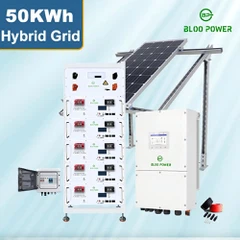
High-voltage Stacked ESS |
Whole-house off-grid, continuous high-power load supply |
|
>25kWh |
34–40kWh |
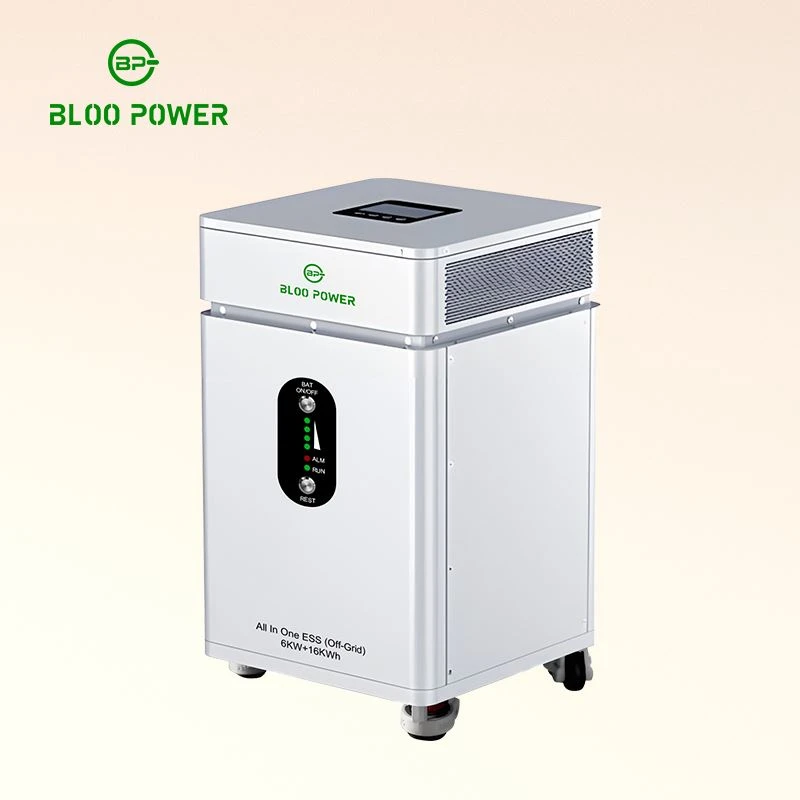
40kWh Integrated ESS |
Villa & high-power residential energy solution |
Evaluate Industrial-Grade BMS – The Intelligent Brain of Battery Packs
BMS (Battery Management System) acts as the core controller of household energy storage lithium batteries. It governs safety protection, cell balancing performance and overall service life. Most budget assembled batteries use simplified BMS with reduced temperature sensors and only passive balancing. Long-term operation creates rising cell voltage deviation, triggering dramatic capacity drop within 2–3 years.
Following GB/T 36276 and international BMS specifications, qualified residential energy storage BMS requires multi-layer safety protection and high-precision monitoring to operate stably under complex household power conditions.
1. Complete safety protection suite: Overcharge, overdischarge, overcurrent, short-circuit, overtemperature and insulation protection; hardware protection response ≤50ms to cut hazards instantly.
2. High-efficiency active balancing technology: Avoid low-efficiency energy-consuming passive balance. Industrial-grade active balance enables energy transfer between cells and maintains cell voltage difference ≤50mV continuously.
3. Global inverter compatibility: Support CAN/RS485 dual communication protocols, compatible with mainstream hybrid inverters, enabling APP real-time monitoring of SOC, cell voltage and temperature data.
BLOO POWER Advantage: BLOO POWER equips self-developed industrial intelligent BMS, with independent temperature sampling for each cell string and 1A high-current active balance module. Voltage sampling accuracy reaches ±8mV, exceeding general industry standards. Perfectly compatible with Deye, Goodwe, Solis and other mainstream inverter brands, supporting remote fault warning and real-time data tracking.
Check Full Set of Authoritative Global Safety Certifications
Household energy storage lithium batteries are classified as special electrical equipment. Complete international certifications serve as core proof of safety and cross-border compliance. Products without complete system certifications may face installation refusal, insurance claim rejection and potential safety risks. Buyers must distinguish cell-level certifications vs full battery pack certifications; system-level certification is the valid compliance credential for end-users.
Global mandatory transport certification
UN38.3 and MSDS, mandatory for sea, land and air shipping, basic qualification for cross-border energy storage trade..
Core stationary energy storage standards
IEC 62619:2022 (worldwide standard for stationary lithium batteries), UL 1973 (North American recognized certification).

High-end safety verification
UL 9540A thermal runaway propagation test, proving single cell failure will not spread across the whole pack for hierarchical safety protection.
Asia market compliance standards
GB 44240-2024 and GB/T 36276-2023.
BLOO POWER Advantage: All BLOO POWER household energy storage lithium batteries obtain full UN38.3, MSDS, CE, IEC 62619 system certifications. High-voltage ESS can provide UL-related test reports. All certification documents are authentic and traceable, meeting compliance requirements for Southeast Asia, Europe, the Philippines and other global markets.
Structural Design, IP Protection & Heat Dissipation Performance
Residential energy storage batteries operate in diverse environments: indoor distribution rooms, eaves, balconies and garages. They must withstand humidity, dust and temperature fluctuations. Optimized mechanical structure, IP rating and thermal design effectively lower failure rates and extend lifespan. Low-cost products feature thin casings, simplified sealing and lack dedicated cooling ducts, prone to damp damage and local overheating.
1. High-standard IP protection rating: Indoor wall-mounted units minimum IP54; semi-outdoor models adopt IP65 dustproof & waterproof grade to cope with variable outdoor climate.
2. Scientific thermal management: Low-voltage wall-mounted systems adopt natural convection cooling; high-voltage stacked ESS uses intelligent temperature-controlled fans to eliminate hot spots and ensure uniform pack temperature.
3. Fire-resistant structural design: Thickened galvanized steel shell, built-in nano fire insulation material and independent cell clearance to suppress thermal runaway spread.
BLOO POWER Advantage: BLOO POWER wall mounted home energy storage battery adopts thick anti-corrosion steel housing with IP65 full protection, supporting indoor and semi-outdoor installation. Internal modular isolation and independent heat duct design prevent heat accumulation and moisture erosion, supporting stable long-term operation in hot and humid overseas regions such as Southeast Asia and the Philippines.
Official Warranty & Global After-Sales Service Capability
A household energy storage system runs 10–15 years, so transparent warranty and reliable after-sales service are critical selection factors. Many suppliers advertise "10-year warranty" but hide restrictive clauses including cycle limits and ambiguous capacity retention standards. Pure trading companies lack independent maintenance capacity, leading to slow troubleshooting and long repair lead times.
1. Clear hierarchical warranty terms: Premium formal manufacturers implement 5-year whole unit warranty + 10-year cell warranty, clearly specifying ≥70% capacity retention after 10 years of usage.
2. Standardized warranty boundary: Confirm no unfair restrictions such as mandatory matching of designated inverters or bans on parallel expansion.
3. Factory-direct service system: Prioritize manufacturers with independent R&D and PACK production lines to avoid service gaps caused by intermediate agents.
BLOO POWER Advantage: With 15 years of energy storage battery R&D and manufacturing experience, BLOO POWER offers industry-leading 5-year whole machine warranty and 10-year cell warranty. Localized service stations are established across Southeast Asia and the Philippines, delivering remote diagnosis, professional commissioning and regional maintenance support to eliminate after-sales concerns.
Inverter Compatibility & Flexible Expansion Capacity
System compatibility and scalability determine long-term value of your home energy storage lithium battery. Many users encounter faulty operation including inaccurate SOC reading, failed peak-shaving charging and off-grid switching errors caused by mismatched BMS communication protocols. Household power loads normally grow with more electrical appliances; expandable design effectively cuts future upgrade costs.
Global inverter protocol adaptation: Built-in BMS supports standard CAN/RS485 communication, seamlessly matching mainstream worldwide inverter brands to realize intelligent system linkage.
Multi-unit parallel expansion: Low-voltage wall-mounted lithium battery supports multiple units parallel connection; high-voltage ESS supports modular stacking for incremental power demand.
Strict parallel specifications: Only allow parallel use of same-batch, same-model brand-new batteries; avoid mixing old & new units which triggers uneven cell voltage and premature failure.
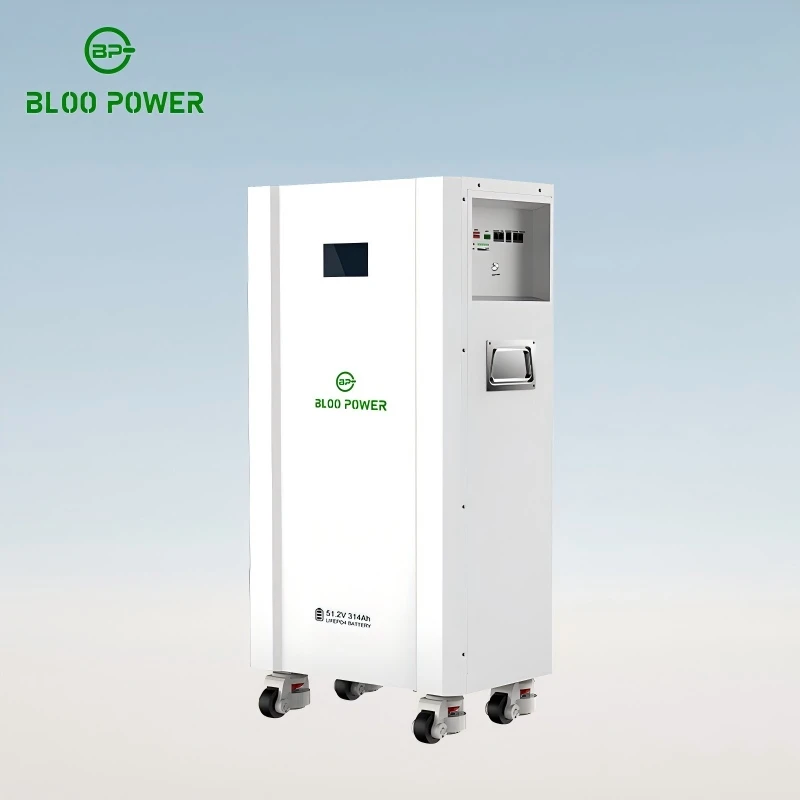
BLOO POWER Advantage: BLOO POWER 51.2V low-voltage series supports up to 16 units parallel expansion. High-voltage stacked ESS flexibly scales from 10kWh to over 40kWh. Products are pre-adapted to mainstream global inverters, supplying one-stop system matching solutions for overseas residential PV energy storage projects.
Full Lifespan Cost Accounting & Rational ROI Evaluation
Most buyers fall into the "lowest-price-only" trap while ignoring hidden costs from short cycle life, rapid attenuation and frequent replacement of inferior batteries. The scientific benchmark for evaluating storage economy is LCOS (Levelized Cost of Storage), rather than initial procurement price. High-quality LFP household energy storage lithium batteries feature long service cycles without mid-term replacement, delivering far superior long-term economy compared with cheap alternatives.
1. Calculate cost based on usable capacity: Stop comparing price per nominal kWh; adopt actual usable capacity as core cost calculation metric.
2. Long-term ROI forecasting: Combine local peak-valley electricity tariffs and PV generation data to calculate power-saving revenue and investment payback cycle within 8–10 years.
3. Quantify safety risk cost: Second-life recycled cells carry high fire hazards; potential property losses far exceed the price gap between different battery products.
BLOO POWER Advantage: BLOO POWER LFP energy storage batteries achieve 8000 long cycles with service life of 12–15 years. Unlike low-grade batteries limited to roughly 3000 cycles, mid-term replacement is unnecessary. For high electricity-price regions including the Philippines and Southeast Asia, system investment can be recovered within 6–9 years, offering outstanding long-term ROI and cost performance.
Final Pre-Purchase Verification & Product Traceability
After parameter screening and solution matching, pre-order verification forms the last barrier against counterfeit goods. Many sellers provide inconsistent products versus online specifications, so formal document inspection and factory testing are mandatory.
Complete document validation: Request product datasheets, full certification reports, cell test reports and official warranty contracts and confirm model consistency.
Physical appearance inspection: Check shell for disassembly marks and intact cell laser coding; reject modified and refurbished energy storage lithium batteries.
72-hour post-install commissioning test: Monitor cell voltage deviation and charge-discharge efficiency continuously for 72 hours to guarantee stable system performance.
BLOO POWER Advantage: Every BLOO POWER household energy storage battery carries an independent serial number for full lifecycle traceability, equipped with complete factory test reports and certification documents. Professional technical teams provide global remote commissioning guidance and technical support to ensure stable operation of every unit.
Conclusion
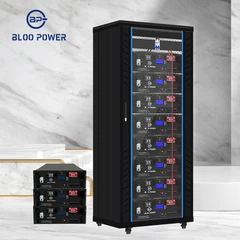
A trustworthy household energy storage lithium battery must satisfy strict standards covering cell quality, real usable capacity, BMS performance, safety certification, environmental adaptability, warranty service, system compatibility and full-lifecycle economy. As a professional global energy storage equipment manufacturer, BLOO POWER leverages independent R&D and manufacturing capacity to supply full-series LFP residential energy storage solutions: wall-mounted low-voltage, rack-mounted, high-voltage stacked and integrated ESS. Complying with international authoritative standards, our products suit global residential PV energy storage scenarios, helping every family achieve energy independence, electricity cost reduction and reliable backup power.
Send Inquiry