



















What Determines the Service Life of a Telecom Base Station Battery?
Oct 26, 2026
Leave a message

Energy storage batteries for base stations are a critical component of backup power systems in telecommunications infrastructure. They primarily serve to provide power to communication equipment during mains power outages; furthermore, depending on the system configuration, they can also be utilized for peak shaving and valley filling, photovoltaic energy storage, and broader energy management. For telecommunications operators, base station constructors, energy storage system integrators, and equipment procurers, the service life of these batteries is a key factor-it not only determines the reliability of the backup power supply but also directly influences the frequency of equipment replacement, total lifecycle costs, and the efficiency of base station operations and maintenance.
The factors affecting the lifespan of base station energy storage batteries extend beyond the batteries themselves, encompassing a wide range of variables such as ambient temperature, depth of discharge, number of cycles, charging strategies, the battery management system (BMS), cell consistency, load characteristics, installation conditions, and the quality of maintenance. In particular, while energy storage systems for base stations that employ lithium iron phosphate (LiFePO₄) batteries generally offer superior cycle life and thermal stability, their actual service life can still be significantly curtailed if they are subjected to prolonged exposure to high temperatures, overcharging, over-discharging, or other suboptimal operating conditions.
This article examines 15 key factors affecting battery lifespan. Drawing on professional standards, publicly available research data, real-world engineering applications, and the specifications of BLOO POWER's base station energy storage products, it provides a systematic analysis of the elements that impact battery longevity, while offering actionable recommendations for product selection, operation, and maintenance.

Types and Design Lifespans of Energy Storage Batteries for Base Stations
Energy storage batteries commonly used in telecommunication base stations include valve-regulated lead-acid (VRLA) batteries and lithium iron phosphate (LiFePO4) batteries. These two types differ significantly in terms of cost structure, energy density, cycle performance, maintenance requirements, and service life. While lead-acid batteries have been widely used as traditional backup power sources for telecommunications, they are prone to capacity degradation, sulfation, and a shortened lifespan when exposed to high temperatures for extended periods or subjected to frequent deep discharges. Lithium iron phosphate batteries are generally better suited for applications requiring higher cycle frequency, longer operational lifecycles, and lower maintenance; however, their actual service life depends on factors such as cell quality, the protection strategy of the Battery Management System (BMS), and operating conditions-it cannot be determined solely by the battery chemistry.
From a product design perspective, cycle life, calendar life, and actual service life are distinct concepts. Cycle life typically refers to the number of charge-discharge cycles a battery can undergo-under specified temperature, charge/discharge rate, and depth-of-discharge conditions-before its capacity drops to a defined threshold. Calendar life refers to the gradual aging of a battery over time, even when it is not frequently cycled, influenced by storage conditions. Actual service life is further shaped by the reliability requirements of the base station's power supply, the necessary backup duration, maintenance conditions, and replacement criteria. Therefore, when procuring energy storage batteries for base stations, it is essential to evaluate a comprehensive set of specifications-including rated cycle count, design service life, warranty terms, capacity retention rates, and the specific test conditions-rather than focusing exclusively on a single cycle-count figure provided in promotional materials.

15 Key Factors Affecting the Lifespan of Base Station Energy Storage Batteries
Ambient Temperature: A Critical Determinant of Battery Aging Rate
Ambient temperature is one of the core factors influencing the lifespan of energy storage batteries used in base stations. Communication base stations are often deployed in outdoor cabinets, mountainous sites, rooftop equipment rooms, remote areas, or locations lacking robust air-conditioning systems. Consequently, batteries may be subjected to prolonged high temperatures, significant diurnal temperature fluctuations, and seasonal thermal variations. For lithium-ion batteries, high temperatures typically accelerate side reactions in the electrolyte, the loss of active lithium, and the growth of interfacial films, all of which lead to a gradual decline in usable capacity. Conversely, low temperatures increase internal resistance and raise the risk of lithium plating during charging. Public research from the U.S. National Renewable Energy Laboratory (NREL) and other battery research institutions indicates that battery degradation is jointly influenced by temperature and charge-discharge operating conditions; therefore, lifespan cannot be evaluated in isolation from specific environmental parameters. During engineering design, it is essential to verify the operating, charging, and storage temperature ranges specified by the cell and battery system manufacturers.
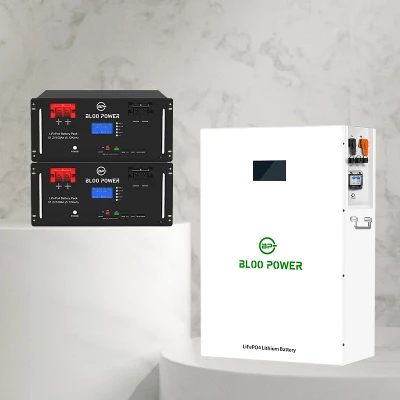
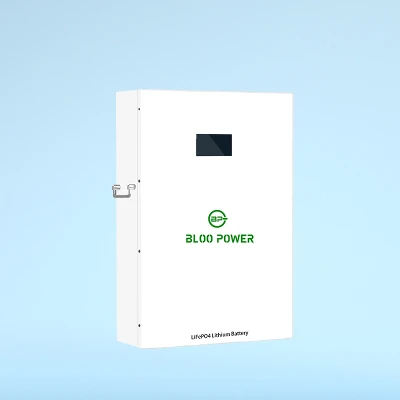
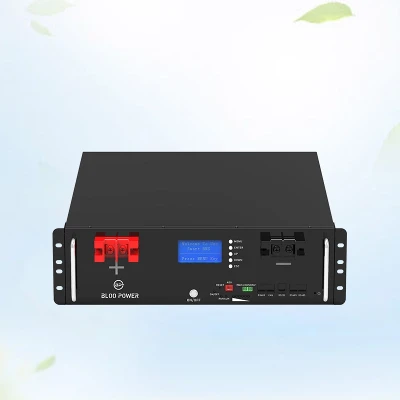
For sites prone to high temperatures, measures such as ventilation, thermal insulation, temperature monitoring, or active thermal management should be implemented. BLOO POWER's 48V LiFePO₄ energy storage solutions for communication base stations allow for the assessment of battery configuration and environmental adaptability based on site-specific requirements; however, the precise temperature limits should always be determined according to the official technical specifications of the chosen model.

Depth of Discharge (DoD): The Significance of Capacity Utilization per Cycle
Depth of Discharge (DoD) refers to the proportion of a battery's usable capacity that is discharged from a fully charged state. For instance, in an idealized capacity calculation, if a 100Ah battery discharges 50Ah, it represents a DoD of approximately 50%; discharging 80Ah corresponds to a DoD of approximately 80%. Generally speaking-assuming the same cell chemistry and comparable testing conditions-frequent, deep charge-discharge cycles tend to impose greater stress on the battery, accelerating degradation compared to shallower cycles. However, reducing the DoD necessitates a larger installed capacity to meet the same backup power requirements. Therefore, the design process must strike a balance between battery lifespan, initial capital investment, and the required backup duration.
For communication base stations, it is advisable to determine battery capacity and discharge cut-off strategies based on factors such as the expected duration of mains power outages, the average load of communication equipment, the local frequency of power interruptions, and the reliability requirements set by the network operator. Taking the 48V LiFePO₄ base station battery from BLOO POWER as an example: if the system design allows for controlling the daily depth of discharge (DoD) within an appropriate range-while maintaining sufficient emergency backup capacity-it is possible to mitigate the impact of frequent deep cycling on battery lifespan. The specific DoD settings should always be determined in accordance with battery specifications, Battery Management System (BMS) limits, and the operational strategy of the project.

Charge-Discharge Cycles: Frequency and Cumulative Throughput Are Equally Critical
While the number of cycles is a key metric for assessing cycle-induced battery aging, it should not be assumed that every single charge-discharge event constitutes a full, complete cycle. In real-world applications, a battery might undergo multiple shallow charge-discharge cycles daily, or it might remain in a "float charge" state for extended periods, discharging only during power outages. By aggregating multiple partial discharges until they equal the battery's rated capacity, one can calculate an "Equivalent Full Cycle" (EFC)-a useful tool for comparing different operational modes. For instance, a cumulative discharge volume equal to 100% of the rated capacity can be approximated as one equivalent full discharge cycle; however, this does not imply that the resulting aging effect is identical to that of a single, continuous full cycle.
Factors such as current rate (C-rate), temperature, state-of-charge (SoC) range, and depth of discharge all influence the outcome. Therefore, when selecting batteries, one should look beyond nominal figures like "6,000 cycles" or "8,000 cycles" and instead verify the specific test conditions-including temperature, DoD, charge/discharge rates, the threshold for "end-of-life" capacity degradation, and the terms of the warranty. For communication sites that frequently engage in self-consumption of solar energy or peak-shaving/load-shifting, the total battery throughput is typically higher than that of sites used solely for emergency backup; consequently, it is essential to apply a lifespan model that aligns with the actual operational profile.
Charging Voltage and Charging Strategy: Addressing Overcharging and Prolonged High SOC
Excessively high charging voltage, inaccurate charging control, or maintaining a high State of Charge (SOC) for extended periods can accelerate the aging of certain battery chemistries. For Lithium Iron Phosphate (LiFePO₄) batteries, charging voltage and current must strictly adhere to the cell manufacturer's specifications; charging parameters designed for lead-acid batteries cannot be applied. In telecommunication base stations, batteries must remain available while the mains power is active. Therefore, the charging strategy must ensure sufficient backup capacity for power outages while preventing the battery from operating outside its permitted voltage range. The system should utilize compatible rectifiers, chargers, or hybrid energy controllers to manage charging, with the Battery Management System (BMS) providing individual cell overvoltage protection, charging current limitations, and necessary temperature-based safeguards. If the system incorporates photovoltaic (PV) input, it is essential to ensure that the PV controller's charging parameters are compatible with the battery system. When selecting configurations for BLOO POWER 48V LiFePO₄ base station energy storage, careful alignment-based on the battery's series-parallel configuration, nominal voltage, maximum charging current, and the specifications of the telecommunication power equipment-is required to prevent persistent battery stress caused by mismatched control parameters.
Over-discharge: A Potential Cause of Irreversible Capacity Loss
During power outages, telecommunication base stations rely on batteries to keep equipment operational. If backup duration is underestimated, the load increases, or a backup generator fails to start in time, the battery may be discharged to an excessively low voltage. For lithium batteries, deep over-discharge can cause individual cell voltages to fall below the manufacturer's specified lower limit, damaging cell performance or even triggering a protection state that prevents the battery from being recharged. Even if the BMS includes a low-voltage disconnect function, risks may persist due to poorly configured protection thresholds, communication failures, or prolonged operation under abnormal load conditions. During the design phase, the required capacity should be calculated based on the power consumption of the telecommunication equipment, the DC bus voltage, the target backup duration, and the usable battery capacity. Furthermore, appropriate strategies-such as low-SOC alarms, tiered load shedding, and backup power switching-must be implemented. For critical communication nodes, it is essential to verify the actual discharge curve during a mains power outage, ensuring that the transition to backup power or the implementation of necessary load management occurs before the battery reaches its low-voltage protection threshold. Effective low-voltage protection not only helps extend battery lifespan but also reduces the risk of service interruptions.
Charge/Discharge Rates and Instantaneous Current: Avoiding Long-Term High-Load Operation
Charge and discharge rates are typically expressed as a "C-rate," which describes the current relative to the battery's rated capacity. For instance, a 100Ah battery discharging at 0.5C yields a theoretical discharge current of 50A, while a 1C discharge rate corresponds to 100A. Base station loads are rarely constant; the battery may be subjected to significant instantaneous currents during events such as the simultaneous startup of communication equipment, the expansion of wireless infrastructure, or the concurrent operation of various auxiliary devices. Sustained high-rate operation increases internal resistance losses and heat generation, which can accelerate battery aging. Furthermore, excessive peak currents may trigger the Battery Management System's (BMS) overcurrent protection, compromising the continuity of the backup power supply. Therefore, when selecting a battery, one must consider not only the rated capacity but also the continuous discharge current, peak current, and the allowable duration for such peaks, while verifying the system against the expected load profile. For the BLOO POWER 48V LiFePO₄ communication base station battery, it is recommended to base the selection on the total power consumption-including rectifier modules, communication equipment, transmission gear, and other DC loads-to ensure that capacity is sufficient and to avoid relying on long-term, overloaded operation to compensate for inadequate capacity. Research by NREL on the techno-economics of energy storage batteries also identifies current, temperature, and cycling conditions as key variables that influence battery degradation.
Battery Management System (BMS): Protection Functions Directly Impact Long-Term Reliability
The Battery Management System (BMS) serves as a critical protection and monitoring unit for lithium-ion battery systems; its performance directly influences battery safety, usable capacity, and long-term reliability. A BMS typically monitors individual cell voltages, pack current, temperature, and State of Charge (SOC). It enforces operational boundaries-as defined by the manufacturer-to provide protection against overvoltage, undervoltage, overcurrent, and overtemperature conditions. Advanced systems may also offer features such as cell balancing, fault logging, alarm communication, and remote status reporting. Issues such as excessive voltage sampling errors, poorly positioned temperature sensors, incorrectly configured protection thresholds, or incompatible communication interfaces can prevent a battery from reaching its full rated capacity or expose it to unnecessary stress during abnormal operating conditions. The international standard IEC 62619:2022 outlines safety requirements for the operation of lithium-ion batteries in industrial applications, including those used in telecommunication base stations, uninterruptible power supplies (UPS), and energy storage systems.
For those procuring batteries for base stations, it is essential to verify the specific BMS protection features, communication protocols, alarm mechanisms, and compatibility with the existing rectifier power system for the particular BLOO POWER battery model. One should ensure that these protection functions have been validated within the complete system, rather than relying solely on a generic claim that a product is "equipped with an intelligent BMS."
Cell Consistency: Variations Among Individual Cells Can Limit Overall Battery Pack Lifespan
Cell consistency refers to the degree of uniformity among individual cells within a battery pack regarding capacity, internal resistance, self-discharge rate, voltage response, and aging rate. Even when cells originate from the same production batch, differences in manufacturing processes, storage conditions, or initial states can lead to significant performance divergence over time. In a series-connected battery pack, a cell with lower capacity or higher internal resistance may reach its lower discharge limit-or its upper charging voltage limit-sooner than others, thereby restricting the usable capacity of the entire pack. If these disparities continue to widen, the BMS may frequently trigger protection protocols, potentially causing the system to cease operation prematurely. Consequently, rigorous cell screening, production traceability, module-level consistency testing, and effective balancing management are all vital steps in extending the lifespan of a battery pack. When procuring BLOO POWER base station energy storage batteries, it is advisable to examine cell specifications, grading standards, production batch management, factory test reports, and capacity verification results. For communication sites requiring multiple battery packs to be connected in parallel, one must also verify that the model, capacity, service life, and State of Charge (SOC) of each pack are consistent; combining battery packs with significant discrepancies in these parameters should be avoided.
Prolonged High State of Charge (SOC): The Impact of Calendar Aging
State of Charge (SOC) represents the ratio of a battery's current remaining energy to its total usable capacity. Unlike cycle aging, calendar aging occurs even when a battery undergoes minimal charging or discharging, and it is primarily influenced by factors such as time, temperature, and SOC. Backup batteries at communication base stations often remain fully charged while awaiting a potential grid power failure; therefore, a low number of monthly charge-discharge cycles does not imply an absence of significant battery aging. The System Advisor Model (SAM) developed by the U.S. National Renewable Energy Laboratory (NREL) explicitly notes that calendar degradation is linked to factors including time, temperature, and SOC.
For lithium iron phosphate (LiFePO4) base station batteries, the optimal standby SOC should be determined based on emergency backup requirements, manufacturer recommendations, and power control strategies-parameters from other lithium-ion chemistries cannot simply be applied here. If a site requires a high backup capacity to be maintained over the long term, risks of aging can be mitigated through proper temperature management, standardized charging control, and periodic capacity verification. When designing BLOO POWER base station energy storage systems, an SOC management strategy can be developed by considering grid reliability, required backup duration, and site-specific operational protocols-thereby minimizing unnecessary stress on the batteries while ensuring reliable emergency power supply.
Base Station Load Characteristics and Backup Duration: Insufficient Capacity Exacerbates Operational Stress
The load power, load fluctuations, and backup duration requirements of a telecommunications base station directly impact the operational intensity and lifespan of its batteries. If battery capacity is undersized, the system may be forced into frequent, deep discharge cycles to meet the required backup duration. Furthermore, if the actual power consumption of the telecommunications equipment exceeds the design specifications, the battery's discharge current and temperature rise may also surpass anticipated levels. Upgrading a base station-such as adding transmission equipment, integrating edge computing hardware, or installing new cooling systems-can alter the original load profile; therefore, initial capacity selection cannot serve as a permanent substitute for ongoing load assessment. Capacity design must account for average and peak loads, DC conversion efficiency, the impact of ambient temperature on available capacity, capacity margins to compensate for battery aging, and the startup time of backup generators or other auxiliary power sources.
Taking a 48V telecommunications base station as an example: a 1kW DC load theoretically requires approximately 20.8Ah of capacity per hour (calculated at 48V, excluding losses and voltage fluctuations). In practice, however, the required capacity must also factor in system efficiency, the allowable Depth of Discharge (DoD), and margins for aging. BLOO POWER can evaluate and recommend an appropriate 48V LiFePO₄ battery configuration based on a site's specific power and backup requirements, ensuring that selection is not based solely on a nominal Ampere-hour (Ah) rating.
Installation Environment and Heat Dissipation: Heat Accumulation, Dust, and Humidity Increase Operational Risks
Base station batteries may be installed in indoor equipment rooms, outdoor protective cabinets, containers, or other space-constrained environments. Inadequate airflow, concentrated heat sources within a cabinet, or cooling paths obstructed by cables or debris can lead to the formation of "hot spots," causing certain battery cells to operate at consistently higher temperatures than others. Additionally, exposure to dust, salt mist, condensation, or high humidity increases the risks of terminal corrosion, degraded insulation, and failure of connection components. For outdoor base stations, the enclosure's Ingress Protection (IP) rating must be appropriate for the local levels of dust, precipitation, and specific installation conditions. It is important to note, however, that an IP rating alone does not guarantee that a battery can withstand all environmental conditions, nor does it imply the presence of active thermal management. During installation, it is essential to adhere to the manufacturer's specifications regarding orientation, spacing, ventilation, and environmental constraints. Proper attention must be given to cabinet drainage, sealing, and the sealing of cable entry points. For BLOO POWER's 48V LiFePO₄ energy storage solutions, the enclosure type and installation method should be selected based on the specific site conditions. If a project is located in an environment characterized by high temperatures, coastal salt spray, or extreme cold, environmental compatibility requirements must be clarified prior to procurement, and the test documentation for the chosen model should be verified.
Compatibility with Charging Power Supplies, Rectifier Modules, and Systems
Energy storage batteries for base stations do not operate in isolation; their service life depends on the synergy between the rectifier power supply, charging modules, DC bus, and monitoring system. Issues such as unstable output voltage from rectifier modules, inadequate current-limiting functions, or a controller's inability to recognize the specific charging requirements of lithium batteries can lead to undercharging, overvoltage risks, frequent disconnections, or inaccurate State of Charge (SOC) estimations. This is particularly critical when replacing traditional lead-acid backup batteries with LiFePO₄ batteries: beyond simply confirming that the nominal voltages match, one must also verify the charging voltage range, maximum charging current, low-voltage disconnection logic, temperature protection strategies, and communication protocols.
Different systems may employ varying control methods for float charging, equalization, and low-voltage recovery. Incorrect configuration can reduce available capacity or even trigger repeated protection-related shutdowns. Before deploying a BLOO POWER 48V LiFePO₄ energy storage system for a communication base station, it is recommended to verify all parameters between the battery and the rectifier power supply, conduct integrated alarm testing, perform power-outage switchover tests, and verify power-restoration functionality-ensuring that all commissioning records are documented. In scenarios involving equipment from multiple brands, reliance should be placed on formal compatibility documentation and on-site verification results, rather than solely on verbal assurances from suppliers.
Capacity Expansion via Parallel Connection and Load Distribution: Avoiding Long-term Overload of Individual Battery Strings
As communication networks expand, base stations may require the addition of battery strings to extend backup duration or increase backup power capacity. While parallel connection can effectively increase total system capacity, it does not guarantee that the current will be distributed equally among all battery strings. Discrepancies in voltage, State of Charge (SOC), internal resistance, cable length, wire gauge, or connection resistance can cause certain battery strings to bear a disproportionately higher share of the charge/discharge current, leading to uneven temperature rises and accelerated, non-uniform aging. Furthermore, connecting battery strings of different models, ages, or states of health (SOH) without prior assessment can result in circulating currents, uncoordinated protection mechanisms, or an widening gap in the service life of individual strings.
Before expanding capacity, it is essential to verify the manufacturer's specifications regarding the maximum number of parallel strings allowed, connection methods, busbar requirements, and the configuration of fuses and circuit breakers. Additionally, ensure that the parameters of each battery string are compatible with the system's control protocols. For BLOO POWER base station energy storage projects, expansion plans should account for the SOH of existing batteries, system-wide current distribution, and accessibility for future maintenance. If replacing some older batteries, the feasibility of mixing new and old units must be carefully evaluated to ensure that the capacity increase does not introduce new operational risks.
Periodic Inspection and Preventive Maintenance: Detecting Capacity Degradation in a Timely Manner
Battery lifecycle management should not rely solely on replacing units after a failure occurs; instead, a framework for periodic inspection and preventive maintenance must be established. When base station batteries remain in a long-term standby state, capacity degradation may not be readily apparent from routine voltage readings-a battery might appear fully charged while no longer being capable of sustaining the required backup duration under a given load. Therefore, maintenance assessments should integrate operational data, alarm history, individual cell voltage variances, temperature distribution, charge/discharge records, and-where necessary-controlled capacity testing.
The frequency of inspections should be determined based on the criticality of the site, the severity of the operating environment, manufacturer recommendations, and the operator's maintenance standards. For critical base stations, remote monitoring systems can be utilized to promptly detect abnormal temperatures, unusual shifts in SOC, or protection-related events, allowing for capacity verification to be conducted without disrupting service operations. Maintenance personnel should also inspect terminal connections, cable insulation, the cleanliness of the cabinet interior, air ducts, and the integrity of waterproof seals. For BLOO POWER battery projects, inspection checklists and alarm-handling procedures can be established based on site-specific management conditions. By comparing capacity test results against historical data, operations and maintenance (O&M) teams can identify performance degradation trends, allowing for battery replacement or capacity expansion before the units fail to meet backup power requirements.
Product Quality, Certification, and Warranty Terms: The Basis for Lifespan Commitments
The service life of a battery is influenced by the quality of raw materials, production consistency, manufacturing processes, factory-gate testing, and the supplier's quality management system. Even when utilizing the same LiFePO₄ chemistry, different cell designs and manufacturing batches may exhibit variations in cycle life, internal resistance growth, and calendar aging characteristics. Consequently, procurement processes should include a review of cell origins, rated capacity test reports, cycle life testing conditions, BMS protection features, product traceability, and warranty terms. It is important to note that cycle counts obtained in a laboratory setting should not be equated directly to the actual service life in the field. The IEC 62619:2022 standard covers safety requirements for the operation of secondary lithium batteries in industrial applications, while IEC 63056:2020 addresses safety requirements for secondary lithium batteries used in energy storage systems, including those for telecommunications and other stationary energy storage applications.
Purchasers must verify that the scope of a product's certification aligns with the specific model in question, as the general scope of a standard does not imply that any given product has been certified under it. For BLOO POWER's 48V LiFePO₄ energy storage solutions for telecommunication base stations, it is essential to evaluate technical specifications, test documentation, warranty periods, capacity retention criteria, and after-sales support policies against project requirements. This ensures a more reliable assessment of risks associated with long-term operation.
Comparison Table of Factors Affecting the Lifespan of Base Station Energy Storage Batteries
The table below summarizes key factors, potential impacts, and engineering management measures to assist telecommunications operators, project integrators, and procurement personnel in conducting technical evaluations.
|
Influencing factors |
Potential impacts |
Recommended Management Measures |
|
Ambient temperature too high |
Accelerate side reactions and capacity fade |
Temperature monitoring, thermal insulation, ventilation, or climate control |
|
Low-temperature charging |
Increases the risk of lithium plating and reduces charging performance. |
Observe low temperature charging restrictions |
|
High depth of discharge |
Increase cyclic aging stress |
Optimize battery capacity and DoD |
|
High frequency charge and discharge |
Increase cumulative throughput and cycle loss |
Develop operational strategies based on actual load. |
|
Abnormal charging voltage |
Causes stress on the battery cell or triggers a protection mechanism. |
Calibrate charging parameters |
|
Over-discharge |
Causes low voltage in individual cells and potential damage |
Configure low-voltage protection and alarms |
|
High-rate operation |
Increase heat generation and internal resistance losses |
Verify continuous and peak currents |
|
BMS Malfunction |
Protection failure or limited available capacity |
Check protection functions and communication |
|
Cell inconsistency |
Limit the capacity of the entire pack to amplify aging disparities. |
Strengthen battery cell screening and balancing management |
|
Poor heat dissipation and improper installation |
Create hot spots or increase the risk of failure |
Optimizing Cabinet Layout and Environmental Management |
|
Insufficient power supply compatibility |
Charging anomalies or repeated triggering of protection mechanisms |
Complete joint debugging of rectifier and battery |
|
Insufficient maintenance |
Failure to detect a decline in capacity in a timely manner |
Regular inspection and capacity testing |
Note: The table describes general engineering trends; the actual degree of impact depends on the cell chemistry, product design, and operating conditions.
How Should Cycle Life and Actual Service Life Be Understood?
Battery suppliers often describe product performance in terms of "cycle life" (the number of charge-discharge cycles); however, this metric cannot be directly converted into an actual service life. According to energy storage lifespan modeling data from the U.S. National Renewable Energy Laboratory (NREL), cycle-based degradation and calendar-based degradation must be considered separately-with the latter influenced by factors such as time, temperature, and state of charge (SOC).
For instance, if a base-station battery is rated for 6,000 cycles under specific test conditions, one can only gauge the practical significance of this figure by accounting for the test temperature, depth of discharge (DoD), charge-discharge rate, and the defined end-of-life capacity threshold. It is incorrect to simply divide 6,000 by the number of annual cycles to determine the battery's expected service life, as calendar aging and specific on-site operating conditions will also significantly impact the final outcome.
|
Evaluation Metrics |
meaning |
Items to Verify During Procurement |
|
Cycle life |
Number of cycles before reaching the specified attenuation endpoint |
Test temperature, DoD, C-rate, cut-off capacity |
|
Calendar lifespan |
Aging that occurs over time |
Temperature, SOC, storage, and standby conditions |
|
Capacity retention rate |
The ratio of the remaining capacity after use to the reference capacity |
Test methods and capacity requirements at the end of the warranty period |
|
Design service life |
Years specified by product design or supplier |
Applicability Conditions, Warranty, and Replacement Criteria |
|
Actual service life |
Number of years the system meets business requirements while in operation |
Load, environment, maintenance, and backup time requirements |
For communication base stations, the ultimate, more critical metric is whether the battery-throughout its service life-can still meet the requirements for backup duration and reliability under a specified load. Even if a battery has not yet reached its theoretical cycle life, it may need to be replaced prematurely if its remaining capacity is no longer sufficient to provide the necessary backup duration.
Products Description
Optimization Process for Base Station Energy Storage Battery Lifespan
Calculate the load, backup duration, discharge current, and required capacity; ensure compatibility between the batteries and the rectifier power supply.
Monitor temperature, state of charge (SOC), voltage, and current to prevent overcharging, overdischarging, and charge/discharge rates that exceed specified limits.
Track alarms, voltage variations among individual cells, temperature fluctuations, and performance during backup discharge to identify abnormal trends in a timely manner.
Periodically inspect electrical connections, the cabinet environment, and capacity retention; plan for battery replacement or system expansion in advance.
Selection and Application Recommendations for BLOO POWER Base Station Energy Storage Batteries
For communication base stations requiring long-term, stable operation, BLOO POWER's 48V LiFePO₄ energy storage batteries serve as an ideal choice for backup power and related energy storage systems. The specific configuration should be determined based on an assessment of the base station's load, required backup duration, charge/discharge frequency, available installation space, and environmental conditions.
It is recommended that project procurement and technical teams carefully evaluate the following aspects:
- Battery Performance: Nominal voltage, capacity, continuous discharge current, cycle life test conditions, and capacity retention requirements.
- Safety Protection: Battery Management System (BMS) features, including overvoltage, undervoltage, overcurrent, and over-temperature protection, as well as relevant alarm and communication functions.
- System Compatibility: Compatibility with existing 48V DC power supplies, rectifier modules, monitoring platforms, and backup power generation systems.
- Installation Environment: Operating temperature, humidity, ingress protection (IP) rating, heat dissipation conditions, and requirements for outdoor installation.
- Total Lifecycle Cost: Initial procurement costs, maintenance expenses, projected replacement intervals, and risks associated with power outages or system failures.
- Quality and After-Sales Support: Product test documentation, applicable certifications, warranty scope, terms regarding capacity degradation, and the availability of technical support.
For specific projects, BLOO POWER can assess and recommend the appropriate 48V LiFePO₄ battery configuration based on the unique requirements of each communication base station. In cases involving remote base stations, sites without access to the main power grid, or stations integrated with photovoltaic (PV) systems, it is essential to further calculate daily energy consumption, solar power generation, backup duration for periods of prolonged overcast or rainy weather, and the overall energy balance of the system. This ensures that the focus remains on the operational efficiency of the entire power supply system, rather than solely on maximizing battery capacity.
Conclusion
The service life of energy storage batteries for base stations is determined by a combination of factors, including battery quality, ambient temperature, depth of discharge, cycle frequency, charging strategy, the Battery Management System (BMS), cell consistency, load characteristics, and the level of maintenance. While lithium iron phosphate (LiFePO₄) batteries offer superior cycle performance and thermal stability, this does not mean that temperature control, charging parameters, and operational management can be overlooked.
For telecommunications base station projects, the most effective approach to lifecycle management begins with proper battery selection during the design phase, followed by continuous monitoring of key parameters during operation, and the timely identification of performance degradation through regular maintenance and capacity verification. Implementing a system-level configuration-such as the BLOO POWER 48V LiFePO₄ energy storage solution-enables project teams to more comprehensively evaluate backup power capabilities, maintenance requirements, and total lifecycle costs.
Frequently Asked Questions
How long does a telecom base station battery actually last?
+
-
At around 25 °C and 80% depth of discharge, a 4,000-cycle LFP module serves eight to ten years on one cycle per day; VRLA on the same site rarely exceeds two to four years. Where the site sits and how often it cycles matter more than the datasheet figure.
Can a lithium battery for energy storage be charged below freezing?
+
-
Not at meaningful current. Charging below 0 °C plates lithium on the anode permanently and creates a safety risk. Discharge often reaches −20 °C while charge starts at 0 °C, so cold sites need a heater, a charge cut-off, or an accepted delayed recharge.
When should a base station battery be replaced?
+
-
Capacity below 80% of rating, internal resistance up 50%, or a cell spread approaching 100 mV. A semi-annual verification discharge is the reliable test; BMS-reported SOH is the practical indicator between tests.
What changes in a lead-acid to lithium battery retrofit?
+
-
Charge voltage, current limit, low-voltage disconnect thresholds, temperature compensation and monitoring points all change, and the autonomy calculation must be re-run because usable depth differs. Keeping old rectifier settings is the most common cause of a retrofit that underperforms.
Can new and old modules be paralleled on the same site?
+
-
Not recommended. Different ages and states of charge create circulating currents that age both strings faster. Expand with matched batches, or use a BMS designed for string-level current sharing, and keep cable lengths equal.
How should a lithium ion battery energy storage system manufacturer be evaluated?
+
-
On process evidence rather than product photographs: batch ageing reports, cell sorting criteria, certificate scope matched to model numbers, declared test frames for every life claim, and a documented telemetry interface. Ask for a reference site in a comparable climate - and for lithium batteries for solar energy storage duty, a site that cycles daily rather than twice a year.
Send Inquiry