



















How Long Can A Residential Energy Storage Battery Last?
Aug 03, 2026
Leave a message

With the rapid development of the global residential photovoltaic energy storage market, more and more families are focusing on a core question: how long can residential energy storage batteries actually last?
In fact, the lifespan of energy storage batteries depends not only on the number of cycles, but also on many other factors such as cell materials, BMS, battery design, temperature, charging and discharging habits, installation environment, and system configuration. Currently, mainstream lithium iron phosphate (LiFePO4) residential energy storage batteries can be used for 10 to 20 years or more under normal conditions, with high-quality products achieving a cycle life of 6,000 to 10,000 cycles or more. Studies show that under typical operating conditions such as 25℃ and 80% DoD, 6,000 cycles is roughly equivalent to one charge-discharge cycle per day for about 16 years, while some LFP cells in laboratory studies have even achieved a cumulative lifespan exceeding 9,600 cycles.

What Determines the True Lifespan of Residential Energy Storage Batteries?
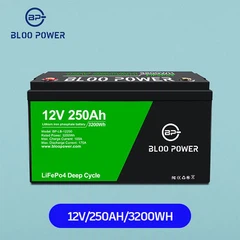
Many consumers believe that the "6000 cycles" advertised by manufacturers represents the battery's lifespan, but this is a misconception. The true lifespan of an energy storage battery comprises two dimensions: **cycle life** and **calendar life**. Cycle life indicates how many full charge-discharge cycles the battery can complete while retaining approximately 80% of its capacity. Calendar life, on the other hand, indicates how the materials will gradually age over time, even with infrequent use. Therefore, an excellent energy storage system requires not only high-quality cells but also an efficient BMS, battery thermal management, and a reasonable operating strategy. For example, the BLOO POWER home energy storage series uses LiFePO4 cells, a smart BMS, and a modular design, which can meet long-term home energy storage needs under reasonable usage conditions.
Key Points:
● Cycle life ≠ Actual lifespan
● Calendar aging also affects capacity retention
● Cell quality determines the upper limit of lifespan
● BMS determines long-term stable operation capability
Why does lithium iron phosphate (LiFePO4) have the longest lifespan?
Currently, the mainstream technology used in the residential energy storage market is LiFePO4 (LFP), whose biggest advantages are its long lifespan and high safety. Compared to ternary lithium (NMC) batteries, LFP has a more stable crystal structure, resulting in slower capacity decay during long-term cycling. Simultaneously, it exhibits better thermal stability and a lower risk of thermal runaway, thus becoming the mainstream technology for residential energy storage globally. Extensive experimental data shows that high-quality LFP batteries can achieve 6000–10000 cycles while maintaining high capacity.
Comparison of Lifespan of Common Energy Storage Batteries:
|
Battery Type |
Cycle life |
Calendar lifespan |
safety |
Home energy storage applications |
|
lead-acid batteries |
500-1500 times |
3-6 years |
middle |
★ |
|
Ternary lithium(NMC) |
3000-5000 times |
8-12 years |
higher |
★★★ |
|
LiFePO4 |
6000-10000 times |
10-20 years |
Extremely high |
★★★★★ |
What factors most easily shorten the lifespan of energy storage batteries?
The biggest factor affecting lifespan is not whether the battery is used daily, but rather how it is used. High-temperature environments, prolonged full-charge and discharge cycles, and frequent high-current charge and discharge all significantly accelerate capacity decay. For example, batteries operating at temperatures above 35°C typically age much faster than those operating at around 25°C. Properly controlling the State of Charge (SOC), avoiding extreme temperatures, and choosing an intelligent management system can significantly extend battery life.
Main influencing factors:
● High-temperature operation
● Deep charge and discharge
● High-frequency, high-rate charge and discharge
● Poor cell consistency
What does the number of cycles actually represent?
The "6000 cycles" advertised by manufacturers usually refers to the number of cycles until the capacity drops to 80% of the rated capacity, not the time when the battery is unusable. In fact, a battery can still be used after 6000 cycles, although its capacity will decrease. Based on one complete cycle per day:
Approximate Service Life for Different Cycle Lifespans:
|
Cycle life |
1 time a day |
Once every two days |
|
3000 times |
Approximately 8 years |
Approximately 16 years |
|
6000 times |
Approximately 16 years |
Approximately 32 years |
|
8000 times |
Approximately 22 years |
Approximately 44 years |
|
10000 times |
Approximately 27 years |
Approximately 54 years |
The above is a theoretical estimate; the actual lifespan is still affected by temperature, DoD, and operating conditions.
How to Extend Energy Storage Battery Life by 5 Years or More?
For many households installing energy storage, the real factor affecting battery life is daily usage habits. Properly controlling the depth of charge and discharge, maintaining ventilation and heat dissipation, and avoiding prolonged storage at 100% full charge can effectively reduce the rate of degradation. In addition, regularly upgrading the inverter and BMS firmware and maintaining balanced system operation are also important measures to extend lifespan. BLOO POWER's wall-mounted and rack-mounted energy storage products support intelligent BMS balanced management, SOC optimization, and remote monitoring, helping users maintain long-term stable operation.
Recommendations:
● Maintain an ambient temperature of 15–30℃
● Avoid prolonged storage at 100% or 0% SOC
● Regularly check connections and heat dissipation
● Use a compatible inverter and original manufacturer BMS
Why Does the BMS Determine Battery Life?
Many users focus on cell brands but overlook the importance of the BMS. The BMS is responsible for cell balancing, overcharge protection, over-discharge protection, temperature monitoring, short-circuit protection, and SOC calculation, making it crucial for the lifespan and safety of the energy storage system. A high-quality BMS effectively reduces the impact of cell inconsistencies, lowers the risk of localized overheating and capacity imbalance, thereby extending the overall battery pack's lifespan.
Main Functions:
● Cell Balancing
● Temperature Monitoring
● Overcurrent Protection
● Communication Management (CAN/RS485)
How does BLOO POWER ensure a long lifespan for its home energy storage products?
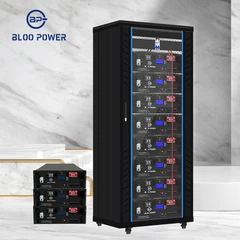
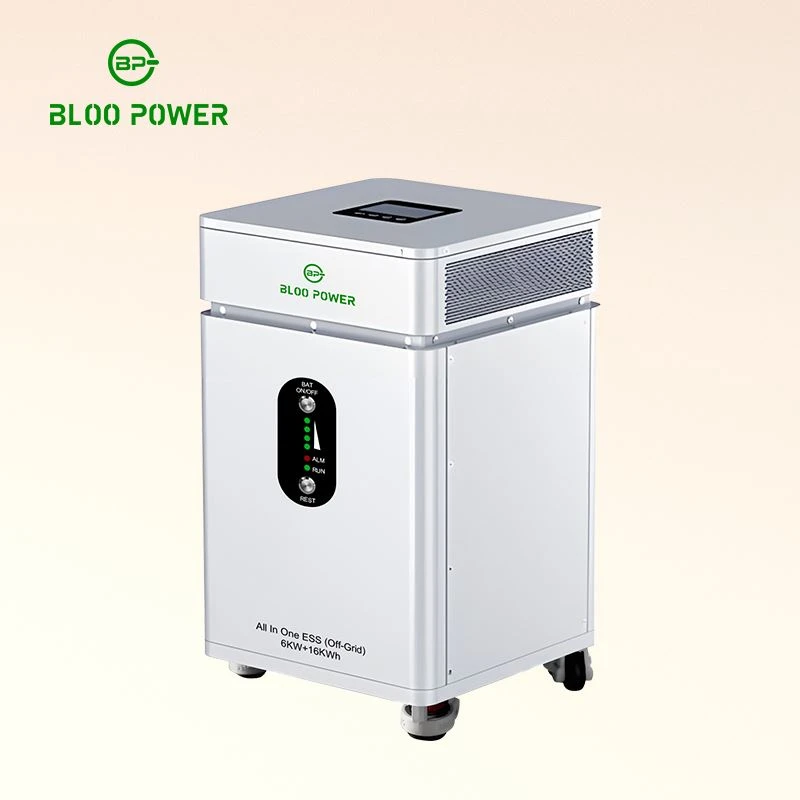
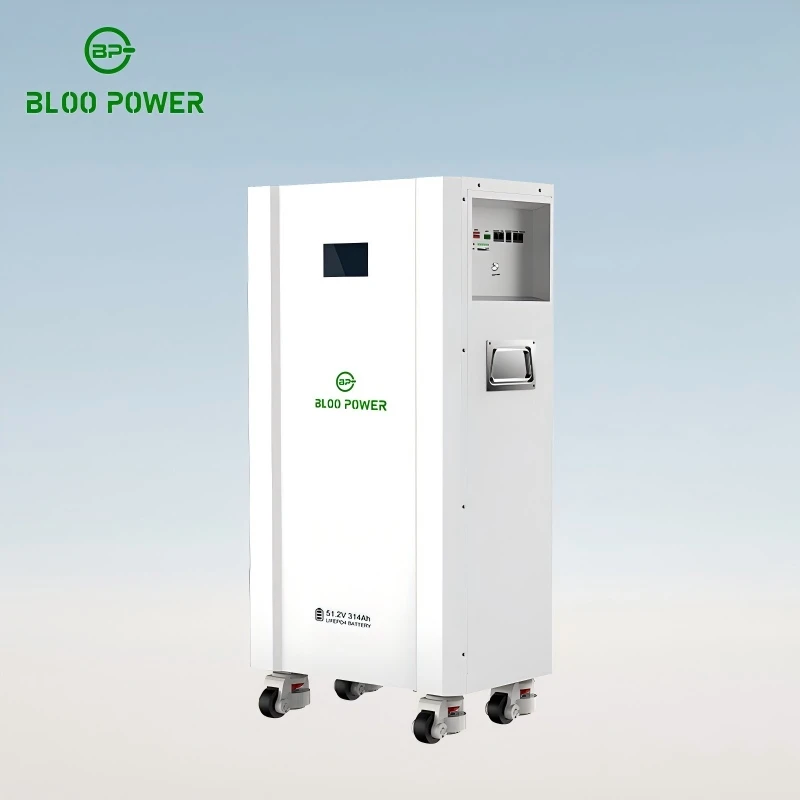
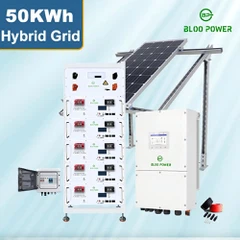
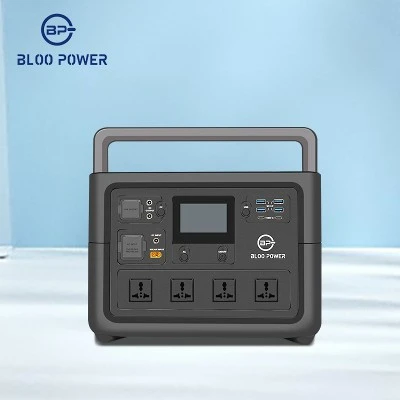
BLOO POWER offers wall-mounted and rack-mounted LiFePO4 energy storage products with capacities of 5kWh, 10kWh, 15kWh, and larger for home energy storage. These can be expanded to 30kWh, 45kWh, or even higher capacities through modular parallel connection. The products utilize high-quality lithium iron phosphate cells, a smart BMS, and IP65 (some models) protection. They are compatible with various mainstream hybrid inverters and suitable for grid-connected, off-grid, and hybrid energy storage scenarios. The modular architecture also reduces individual unit maintenance costs and improves long-term system availability.
Product Advantages:
● Long-life LiFePO4 cells
● Modular capacity expansion
● IP65 outdoor protection (some models)
● Intelligent monitoring and remote management
Can batteries still be used after their lifespan ends?
When the capacity of an energy storage battery drops to approximately 80% of its rated capacity, it is generally considered to have reached its design life. However, this does not mean it cannot be used further. For backup power, low-power household loads, or other energy storage applications, the battery may still be able to provide service. In recent years, LFP batteries have also received widespread attention in the field of secondary use. Studies show that some cells still have certain application value after more than 9,600 cycles and more than 14 years of cumulative use.
Feasible directions:
● Household backup power
● Small off-grid systems
● Secondary energy storage applications
● Professional recycling and reuse
How to Choose a Truly Long-Lasting Residential Energy Storage System?
When choosing an energy storage system, price should not be the sole focus. A comprehensive consideration should be given to cell brand, cycle life, BMS performance, certification standards (such as IEC, UN38.3, CE, etc.), after-sales service, and system compatibility. For users planning long-term use of residential solar energy storage, it is recommended to prioritize products that utilize LiFePO4 technology, support intelligent monitoring, offer modular expansion, and have robust quality control. BLOO POWER provides residential energy storage solutions covering various capacity requirements, meeting diverse application scenarios such as peak shaving, backup power, and improving solar self-consumption rates.
Recommendations for Extending Energy Storage Battery Life:
|
recommend |
Effect |
|
Maintain 20-80% SOC operation |
Reduce cycle loss |
|
Avoid high temperatures and direct sunlight |
slow down the aging process |
|
Use a smart BMS |
Improve consistency |
|
Regular system maintenance |
Extend overall lifespan |
|
Choose LiFePO4 products |
Achieve a longer service life |
In summary, modern residential energy storage batteries, especially those using LiFePO4 technology, can typically achieve a lifespan of 10-20 years or more, with a cycle life of 6,000-10,000 cycles or even higher, under proper design and reasonable usage conditions. The lifespan is truly determined not only by the battery cell itself, but also by the battery management system (BMS), battery management strategy, installation environment, and daily usage habits. For users who wish to invest in their home energy systems long-term, choosing energy storage solutions like BLOO POWER, which employ high-quality LFP cells, intelligent BMS, and modular design, helps achieve higher reliability, longer service life, and lower total lifespan costs. These conclusions are largely consistent with recent research on the cycle life and aging mechanisms of LFP batteries.
Send Inquiry