












What is the Charging Ratio of Residential Energy Storage Batteries?
Jul 09, 2026
Leave a message

In residential energy storage systems, besides parameters such as battery capacity (kWh), battery voltage (V), cycle life, and depth of discharge (DoD), the "charging rate" is also a crucial indicator of battery performance.
Many users see parameters like 0.5C, 1C, and 2C charging rates when purchasing home energy storage batteries, but don't understand what they mean. Simply put: The charging rate (C rate) of a residential energy storage battery indicates how quickly the battery is charged with electrical energy; it's a vital parameter for measuring battery charging capability.
For example:
● 1C charging rate: Theoretically, the battery is fully charged in 1 hour;
● 0.5C charging rate: Theoretically, the battery is fully charged in 2 hours;
● 2C charging rate: Theoretically, the battery is fully charged in 30 minutes.
For residential solar + energy storage systems, choosing the right charging rate can improve solar energy utilization, reduce electricity bills, and extend battery life.

What is the charging rate of a residential energy storage battery?
The charging rate, usually expressed as C-rate, describes the ratio between the battery charging current and the battery's rated capacity.
Calculation formula:
Charging rate (C) = Charging current (A) ÷ Battery capacity (Ah)
Example:
One battery:
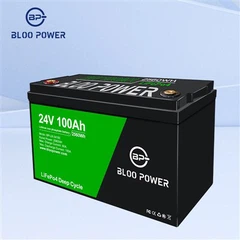
● Battery capacity: 100Ah
●Charging current: 50A
Then: 50A ÷ 100Ah = 0.5C
This means the battery is being charged at a 0.5C rate.
Example:
|
Battery capacity |
Charging current |
Charging rate |
Theory is full of time |
|
10kWh |
50A |
0.5C |
Approximately 2 hours |
|
10kWh |
100A |
1C |
Approximately 1 hour |
|
10kWh |
200A |
2C |
Approximately 30 minutes |
|
20kWh |
100A |
0.5C |
Approximately 2 hours |
What is the relationship between charging rate and battery capacity?
Many consumers easily confuse:
● kWh (capacity) determines how much electricity is stored
● Charging rate (C-rate) determines the charging speed
These are different indicators.
For example: A 16kWh residential energy storage battery:
If:
● 0.5C charging → Maximum charging power approximately 8kW
● 1C charging → Maximum charging power approximately 16kW
In other words, for the same battery capacity, different charging rates will affect how much solar energy it can absorb each day.
Capacity and Charging Rate Relationship Table
|
Battery capacity |
0.5C charging power |
1C charging power |
2C charging power |
|
5kWh |
2.5kW |
5kW |
10kW |
|
10kWh |
5kW |
10kW |
20kW |
|
16kWh |
8kW |
16kW |
32kW |
|
30kWh |
15kW |
30kW |
60kW |
Why is the charging rate important for residential energy storage?
Residential energy storage systems typically consist of:
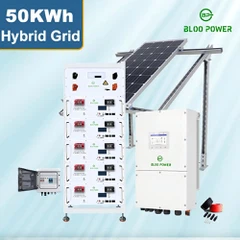
● Solar photovoltaic modules
● Hybrid inverter
● Energy storage batteries
● Household loads.
During the day:
Solar energy → Inverter → Battery charging
At night:
Battery → Inverter → Household electricity
If the battery charging rate is too low, it will lead to:
● Incomplete storage of photovoltaic power;
● Excess energy can only be sold back to the grid;
● Reduced solar energy utilization.
Impact of Different Charging Rates on Residential Energy Storage Systems
Higher Charging Rate:
Advantages:
✅ Faster charging speed
✅ Can be matched with photovoltaic systems with larger power generation capacity
✅ Suitable for peak-valley electricity price arbitrage
✅ Stronger emergency backup power capability
Disadvantages:
❌ Increased battery heat generation
❌ Higher requirements for BMS
❌ May affect cycle life
❌ Increased cost
Performance Comparison of Different Charging Rates
|
Parameters |
0.5C |
1C |
2C |
|
Charging speed |
Slower |
fast |
Very fast |
|
Heat generation |
Low |
medium |
higher |
|
cost |
Low |
medium |
high |
|
Lifespan impact |
smaller |
normal |
more obvious |
|
Home Applications |
★★★★★ |
★★★★★ |
★★★ |

What are the common charging rates for residential energy storage?
Currently, the mainstream residential energy storage batteries on the market mainly use:
● Lithium iron phosphate (LiFePO₄) cells
● Modular battery design
● Intelligent BMS management system
Common charging rates:
|
Application type |
Common charging rates |
|
Ordinary household energy storage |
0.5C |
|
High-performance home energy storage |
1C |
|
High-power backup power system |
1C-2C |
|
Portable energy storage devices |
0.5C-1C |
Most home energy storage products currently use a charging rate of 0.5C-1C, which represents a good balance between performance, lifespan, and cost.
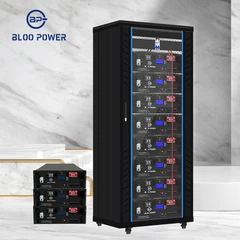
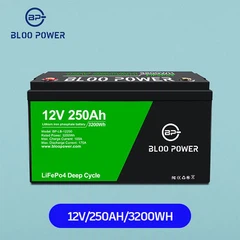
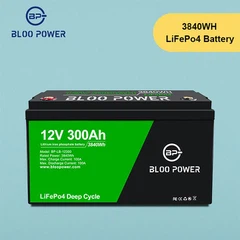
For example, the BLOOPOWER home energy storage system uses highly safe LiFePO₄ battery technology and intelligent BMS control of the charging and discharging process, achieving stable, safe, and long-life operation while meeting the daily energy management needs of households.
How does charging rate affect battery life?
Battery life is mainly affected by:
1. Charging speed
2. Temperature
3. Depth of discharge
4. Number of charge/discharge cycles
High-speed charging:
Increases:
● Internal cell pressure
● Electrochemical reaction rate
● Temperature rise
Long-term high-rate charging may lead to:
● Accelerated capacity decay;
● Reduced cycle life
Relationship between charging rate and battery life
|
Charging rate |
Typical cycle life |
Suitable scenarios |
|
0.3C-0.5C |
6000-10000times |
Home long-term energy storage |
|
1C |
4000-8000times |
Home + Business Applications |
|
2C and above |
2000-5000times |
High power applications |
How to Choose the Appropriate Charging Rate Based on Family Needs?
When choosing a charging rate, consider:
1. Photovoltaic Installed Capacity
For example: Residential Installation:
●10kW Solar System
●20kWh Energy Storage Battery
If the battery only has a 0.25C capacity:
Maximum Charging Power: 20kWh × 0.25 = 5kW
Some solar energy will be wasted.
2. Household Electricity Usage Habits
Typical Households:
● Nighttime Lighting
● Air Conditioning
● Refrigerator
● Electric Water Heater
0.5C is usually sufficient.
High-Load Households:
● Electric Vehicle Charging
● Heat Pump
● High-Power Appliances
Recommendation: 1C or higher.
How to match the charging rate with the inverter power?
The energy storage system does not operate in isolation.
Battery: Determines the energy storage capacity;
Inverter: Determines the input and output power.
For example: 16kWh battery:
|
Battery capacity |
Matching inverter |
|
0.5C |
5-8kW inverter |
|
1C |
8-16kW inverter |
|
2C |
Inverters above 16kW |
If: Inverter power > Battery charging capacity, it will result in:
● Waste of photovoltaic power;
● Limited battery charging.
How to Improve the Charging Efficiency of Residential Energy Storage Batteries?
Methods to Improve Charging Efficiency:
1. Choose High-Quality LiFePO₄ Cells
Advantages:
● High safety;
● Long cycle life;
● Good high-temperature performance.
2. Equip with an Intelligent BMS System
The BMS can:
● Control charging current;
● Prevent overcharging;
● Balance cells;
● Extend lifespan.
3. Rationally Configure Photovoltaic and Energy Storage Capacities
Recommendation:
|
Family size |
PV |
Energy storage |
|
small apartment |
3-5kW |
5-10kWh |
|
ordinary family |
5-10kW |
10-20kWh |
|
High-energy-consuming households |
10-20kW |
20-40kWh |
Summary: How to choose the charging ratio for residential energy storage?
|
User needs |
Recommended charging rate |
|
Lower electricity bills |
0.5C |
|
Improve solar energy utilization |
0.5C-1C |
|
Home backup power |
1C |
|
High-power home |
1C以上 |
|
Pursuing the longest lifespan |
0.5C |
In general: For most home solar energy storage systems, a charging rate of 0.5C-1C is the optimal choice. It balances charging speed, battery life, safety, and economy.
With the development of home photovoltaics, smart grids, and new energy applications, high-performance residential energy storage batteries are becoming an important component of home energy management. Choosing an energy storage system with the appropriate charging rate can not only improve energy efficiency but also help families achieve a more stable, economical, and green energy lifestyle.
Send Inquiry