




















How The U.S. Promotes The Integration Of Clean Energy?
Oct 24, 2026
Leave a message

Massachusetts DPU Adopts Key Revisions to Support Energy Storage Deployment
October 9, 2026 - The Massachusetts Department of Public Utilities (DPU) has adopted revisions to its interconnection standards for distributed energy resources (DERs) to improve how clean energy and energy storage projects connect to the electric grid. The revisions were approved on September 15 under DPU Docket 25-48, drawing in part on technical assistance from the Interstate Renewable Energy Council (IREC), which has supported Massachusetts' efforts in this area since 2019. The updated rules clarify interconnection pathways for energy storage systems and export-limited systems, enhance the screening processes used to evaluate DER interconnection, require utilities to provide specific details when a project fails a screen, and establish a process for developers to modify their applications following such failures. These changes arrive at a pivotal moment for the broader north america lithium-ion battery energy storage market, where rapid deployment of lithium-ion battery energy storage systems is accelerating renewable integration across the region.

Historical Context and Stakeholder Collaboration Leading to Consensus
The Massachusetts DPU first initiated an inquiry into improving interconnection procedures to accommodate energy storage in 2019. IREC facilitated discussions between stakeholders and utility companies to reach a consensus on procedural changes. In early 2020, a consensus document-outlining provisions for export limitations and modifications based on screening and study results-was submitted, though the DPU did not adopt any changes at that time. Subsequently, the Massachusetts Interconnection Implementation Review Group (IIRG) began exploring further procedural updates tailored to energy storage and technical screening; the consensus framework previously developed with IREC's assistance served as the foundation for the recommendations submitted by the IIRG. The revisions include a list of acceptable methods for controlling the export or import of power by energy storage systems-such as the use of Power Control Systems (PCS)-establish allowable response times for these systems, and introduce new definitions for key terms relevant to the interconnection assessment of energy storage. Many of these updates align with national best practices for energy storage interconnection, which IREC developed between 2020 and 2023 under the U.S. Department of Energy-funded BATRIES initiative. This regulatory progress supports the growing role of lithium-ion battery for renewable energy storage by reducing barriers to grid connection for high-performing projects.
Enhanced Screening Processes and Developer Flexibility
The revised rules also adjust the eligibility thresholds for expedited screening processes and update core screening methodologies to align with modern best practices. The new rules require utilities to provide written documentation detailing why an application failed the screening process, including the specific system thresholds or limits that were exceeded. Customers whose projects fail the screening can modify their project designs and resubmit their applications without losing their place in the interconnection queue. Meghan Nutting, Vice President of Regulatory Reform at IREC, noted that these revisions bring greater clarity to the evaluation of energy storage and other distributed energy resources, improve the screening process, and make it easier for high-quality projects to move forward-all while ensuring the grid remains safe and reliable. Kate Tohme, co-chair of the IIRG, stated that these tariff revisions are the result of years of collaboration among industry, utilities, and regulatory partners, achieving 100% consensus based on the work of stakeholders in the DPU 19-55 docket. Such reforms are particularly timely given projections for sustained expansion in the energy storage lithium ion batteries market.
North America Lithium-Ion Battery Energy Storage Market Growth Trajectory
Across North America, the north america lithium-ion battery energy storage market is experiencing robust expansion driven by renewable energy mandates, grid modernization, and falling technology costs. According to MarketsandMarkets analysis, the North America battery energy storage system (BESS) market is projected to grow from approximately USD 10.03 billion in 2025 to USD 19.87 billion by 2030, at a compound annual growth rate (CAGR) of 14.6%. Lithium-ion technologies continue to dominate, retaining the largest market share due to high energy density, strong round-trip efficiency, and ongoing cost reductions. Utility-scale applications are expected to grow at the highest CAGR, while the United States accounts for the majority of regional activity-often exceeding 74% of the North American total in recent assessments. Grid-scale demand for lithium-ion cells in North America is forecast to exceed 200 GWh by 2030 in some projections, underscoring the scale of the energy storage lithium ion batteries market.
Selected North America BESS Market Projections
|
Metric |
Value |
Source / Period |
|
Market size (2025) |
~USD 10.03 billion |
MarketsandMarkets |
|
Projected size (2030) |
~USD 19.87 billion |
MarketsandMarkets |
|
CAGR (2025–2030) |
14.6% |
MarketsandMarkets |
|
U.S. share (approx.) |
>74% |
Various 2024–2025 data |
|
Grid-scale battery demand outlook |
>200 GWh by 2030 |
Avicenne Energy estimates |
These figures highlight how policy updates like those in Massachusetts directly facilitate the deployment of lithium-ion battery energy storage systems needed to meet regional clean-energy targets.
Technological Advances and the Goal of Tripling Energy Storage Capacity
Global and regional efforts increasingly focus on tripling the energy storage of lithium ion batteries and overall capacity to support ambitious renewable energy goals. The International Energy Agency (IEA) has emphasized that achieving a tripling of global renewable capacity by 2030 requires a substantial increase in storage-potentially a sixfold rise in overall energy storage capacity in net-zero pathways, with batteries delivering the majority of that growth. Lithium-ion battery for renewable energy storage remains the dominant solution because of rapid response times, high efficiency, and proven performance in solar-plus-storage and wind-plus-storage configurations. Innovations in lithium iron phosphate (LiFePO4 or LFP) chemistry, larger cell formats, and improved battery management systems continue to lower levelized costs while enhancing cycle life-often exceeding 6,000–8,000 cycles at 80% depth of discharge. These advances make commercial and residential lithium-ion battery energy storage systems more economically viable and technically reliable for grid support services such as frequency regulation, peak shaving, and renewable firming.
Role of Manufacturers Such as BLOO POWER in Expanding Accessible Solutions
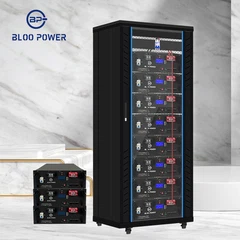
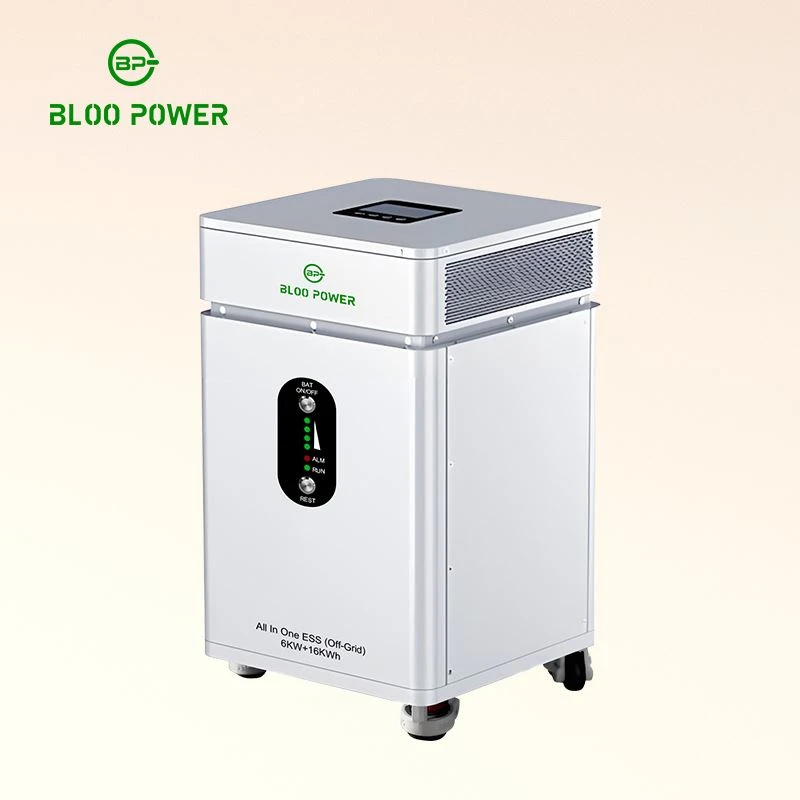
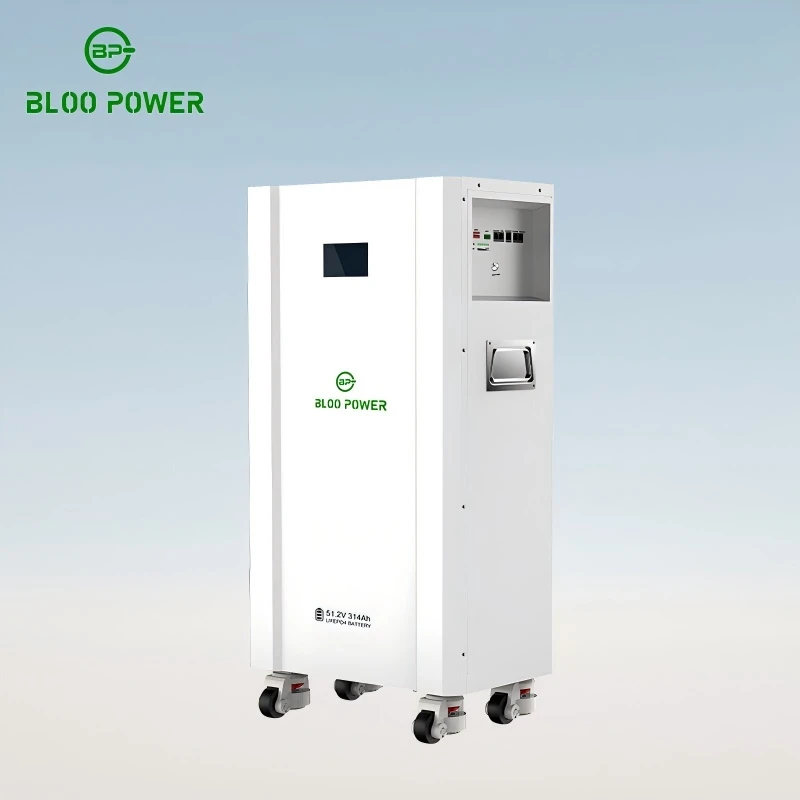
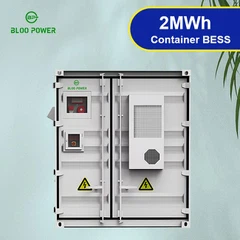
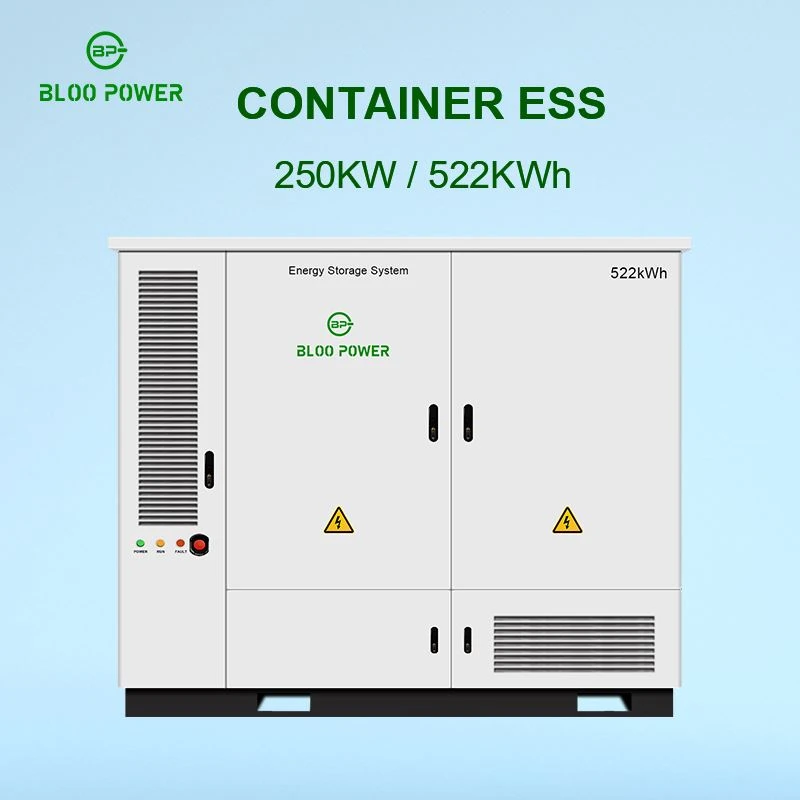
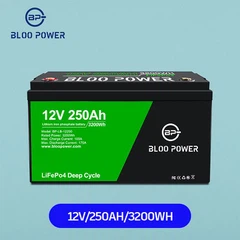
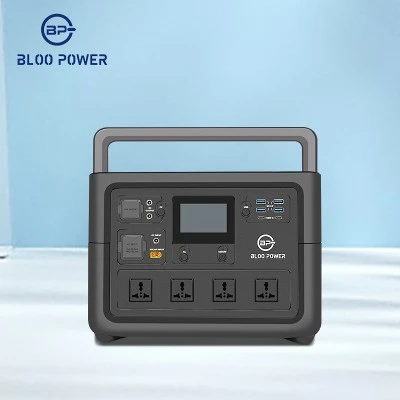
Manufacturers are responding to market demand with scalable products tailored to both residential and commercial needs. BLOO POWER (operated by Zhengde Hanyuan (Shenzhen) Technology Co., Ltd.) offers a range of LiFePO4-based lithium-ion battery energy storage systems, including wall-mounted, stackable, rack-mounted, roller, and all-in-one units with capacities from a few kilowatt-hours to multi-megawatt-hour containerized solutions. Products typically feature long cycle life (6,500+ cycles at 80% DoD in many models), modular expandability (up to 16 units in parallel for certain low-voltage series), and certifications including UN38.3, CE, IEC, and UL-related standards. These systems support solar self-consumption, backup power, peak-valley arbitrage, and hybrid grid-tied/off-grid operation-directly addressing the needs of high-capacity lithium-ion battery energy storage systems for grid integration and distributed applications. Companies like BLOO POWER contribute to the broader energy storage lithium ion batteries market by providing cost-effective, safety-focused solutions that complement utility-scale deployments.
Illustrative Comparison of Lithium-Ion Chemistries for Stationary Storage
|
Chemistry |
Typical Cycle Life (80% DoD) |
Key Strengths |
Common Applications |
|
LFP (LiFePO4) |
6,000–8,000+ |
Thermal stability, cost, longevity |
Residential, C&I, many utility projects |
|
NMC |
3,000–6,000 |
Higher energy density |
Space-constrained or high-power uses |
|
Emerging (e.g., sodium-ion) |
Varies |
Potential cost and supply advantages |
Long-duration or cost-sensitive projects |
LFP currently leads many stationary deployments in North America due to its safety profile and declining costs supported by domestic gigafactory expansion.
Broader Policy and Market Drivers Supporting Continued Expansion
Federal incentives such as the Inflation Reduction Act's investment tax credit for stand-alone storage, state renewable portfolio standards, and grid-operator reforms (including FERC Order 841 and cluster study processes) continue to propel the north america lithium-ion battery energy storage market. In New England, ISO-NE cluster studies are evaluating multi-gigawatt portfolios that include substantial battery capacity, while states pursue ambitious clean-energy targets. Residential and commercial behind-the-meter markets are also expanding, with lithium-ion systems enabling greater self-consumption of rooftop solar and resilience against outages. Analysts project continued double-digit CAGRs for BESS through the early 2030s, driven by data-center load growth, electrification, and the need for flexible resources. These dynamics reinforce the importance of streamlined interconnection rules, such as those newly adopted in Massachusetts, for unlocking the full potential of lithium-ion battery energy storage systems.
Key Elements of Massachusetts Interconnection Revisions (DPU 25-48)
|
Revision Area |
Description |
Benefit |
|
Export/Import Control |
Enumeration of acceptable methods including Power Control Systems (PCS); defined response times |
Clearer pathways for storage and export-limited systems |
|
Screening Process |
Higher eligibility thresholds for simplified screens; updated methodologies aligned with best practices |
Faster evaluation of qualified projects |
|
Failure Documentation |
Utilities must provide written details on specific failed screens and system limits |
Greater transparency for developers |
|
Application Modification |
Ability to redesign and resubmit without losing queue position |
Reduced risk and faster project advancement |
These targeted updates lower soft costs and uncertainty that have historically slowed storage deployment.
Outlook for High-Quality Project Advancement and Grid Reliability
Looking ahead, the combination of refined interconnection standards, strong market growth in the energy storage lithium ion batteries market, and continuous technological improvement positions lithium-ion battery for renewable energy storage as a cornerstone of North America's clean energy transition. Stakeholders emphasize that clearer rules and better data exchange between utilities and developers will allow high-quality projects to proceed more efficiently while maintaining grid safety and reliability. As capacity continues to scale-supporting goals related to tripling the energy storage of lithium ion batteries relative to earlier baselines-the region is better equipped to integrate variable renewables, enhance resilience, and meet rising electricity demand from electrification and digital infrastructure. Ongoing collaboration among regulators, utilities, developers, and technology providers, exemplified by the Massachusetts process and IREC's technical assistance, will remain essential for realizing these benefits at scale.
Send Inquiry