












How To Select Batteries For Energy Storage Installations in 2026?
Jul 21, 2026
Leave a message

Europe's Record-Breaking Battery Storage Growth in 2025
Europe's newly installed energy storage capacity reached a record 36 GWh in 2025, marking the twelfth consecutive year of growth, with utility-scale batteries accounting for more than half of the total for the first time. This surge highlights the rising importance of batteries for solar energy storage market dynamics, as nations seek greater grid flexibility amid expanding renewables.
Top European Battery Storage Markets in 2025 (Approximate New Capacity)
|
Rank |
Country |
New Capacity (GWh) |
Notes |
|
1 |
Germany |
~6.6 |
Leading market |
|
2 |
UK |
~5.2 |
Strong utility-scale growth |
|
3 |
Italy |
~5.0 |
Slight decline in residential |
|
4-5 |
Ukraine/Bulgaria |
~3 each |
New entrants for energy security |
Drivers Behind Utility-Scale Expansion and Market Diversification
The report attributes the expansion of utility-scale storage to rising demand for system flexibility, enhanced opportunities for revenue stacking, falling technology costs, an increase in hybrid solar-plus-storage projects, and growing investor confidence. Solar battery energy storage system deployments benefited significantly from these factors, particularly in hybrid configurations paired with solar PV. Germany, the UK, and Italy remained the top three markets, though their combined share dropped to 47%. Ukraine and Bulgaria entered the top five, each adding nearly 3 GWh, reflecting broader geographical diversification.
Technological Leadership: Li-Ion Solutions in Focus
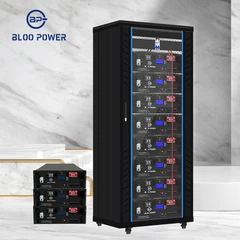
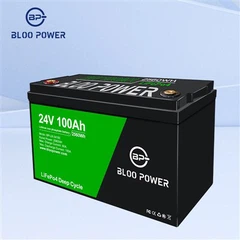
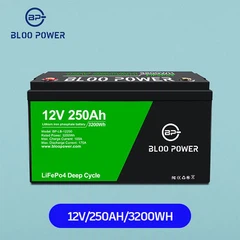
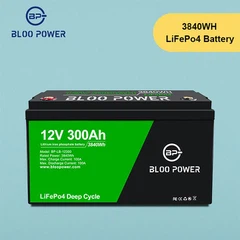
Li ion battery for solar energy storage technologies, especially Lithium Iron Phosphate (LFP), dominate due to superior safety, long cycle life (often 4,000–8,000+ cycles), and cost-effectiveness for stationary applications. Manufacturers like BLOO POWER offer competitive wholesale lithium-ion battery for solar energy storage options, including modular LiFePO4 systems with built-in BMS for residential and commercial use, supporting high-volume deployments across Europe and beyond.
Comparative Analysis of Battery Technologies
Key Lithium-Ion Battery Chemistries for Solar Storage (2026 Benchmarks)
|
Year |
Annual New Installations |
Cumulative Capacity (approx.) |
|
2025 |
36 |
>100 |
|
2026 |
>50 |
- |
|
2030 |
138 |
~580 |
Best Solar Batteries for Energy Storage: Performance Benchmarks
When evaluating options, stakeholders increasingly seek the best solar batteries for energy storage featuring high round-trip efficiency (90-97%), deep depth of discharge, and robust warranties. LFP chemistry leads residential and utility applications for thermal stability and longevity compared to older NMC variants.
Long-Tail Opportunities and Emerging Trends
Additional interest centers on long-tail queries such as "best solar batteries for energy storage in residential hybrid systems," "affordable li ion battery for solar energy storage with high cycle life," "solar battery energy storage system for utility scale projects Europe," "wholesale lithium-ion battery for solar energy storage suppliers 2026," and "batteries for solar energy storage market trends and forecasts 2030." These reflect demand for tailored, cost-effective solutions in diverse settings.
Global Context and Parallel Growth in Other Regions
Beyond Europe, global battery energy storage system (BESS) additions reached significant milestones. In 2025, the world added around 104 GW/257 GWh of new capacity, pushing cumulative totals higher. China leads with massive deployments, while the U.S. and India show accelerating merchant and hybrid projects. Sodium-ion technologies are emerging as complements to lithium-ion, offering potential cost advantages and reduced material dependency.
Policy Recommendations and Future Projections
SolarPower Europe recommends removing barriers to permitting and grid connection, ensuring market access and revenue stacking, providing stable investment conditions, and accelerating deployment through EU instruments. Projections indicate annual installations exceeding 50 GWh in 2026 and reaching 138 GWh by 2030 under a medium-growth scenario, with total capacity growing more than sixfold to approximately 580 GWh.
Market Size, Costs, and Supply Chain Insights
The broader batteries for solar energy storage market continues to benefit from declining costs. LFP cell prices have fallen substantially, supporting payback periods of 3-7 years in many solar-plus-storage setups. BLOO POWER and similar suppliers emphasize OEM/ODM capabilities, certifications (CE, UL, UN38.3), and scalable production for wholesale lithium-ion solutions.
Projected European Annual Installations (Medium Scenario, GWh)
|
Year |
Annual New Installations |
Cumulative Capacity (approx.) |
|
2025 |
36 |
>100 |
|
2026 |
>50 |
- |
|
2030 |
138 |
~580 |
Investment and Innovation Highlights
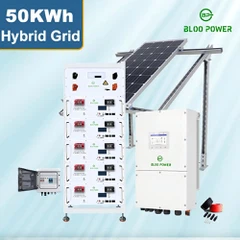
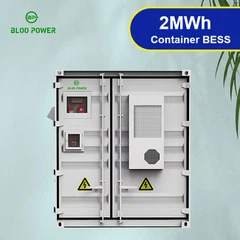
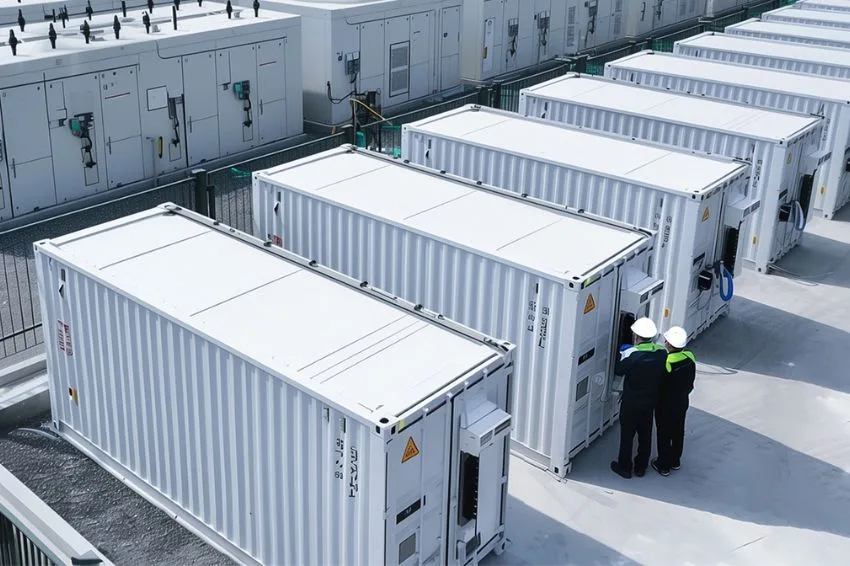
Recent news underscores hybrid solar-plus-storage momentum, AI-optimized systems from leaders like Envision, and partnerships (e.g., Alfen-CATL for sodium-ion). Virtual power plants (VPPs) using residential batteries are transforming grids into active assets. BLOO POWER's stackable and containerized systems exemplify accessible wholesale lithium-ion battery for solar energy storage for global projects.
Challenges and Outlook for Sustainable Growth
While growth is impressive, challenges remain in permitting, supply chain resilience, and achieving full flexibility targets (e.g., EU needs ~750 GWh by 2030 in some scenarios). Continued policy support and technological diversification will be key to unlocking the full potential of solar battery energy storage system solutions worldwide.
This expanded analysis integrates authoritative data from SolarPower Europe, industry reports, and market developments, positioning best solar batteries for energy storage and related solutions as central to the energy transition.
Endnotes / Annotations
GWh: Gigawatt-hour, a unit of energy capacity (1 GWh = 1 million kWh).
Utility-scale: Large front-of-the-meter systems typically >1 MW, connected directly to the grid.
LFP / LiFePO4: Lithium Iron Phosphate chemistry, prized for safety (low thermal runaway risk) and longevity.
BMS: Battery Management System – electronics that monitor and protect battery cells.
Revenue stacking: Participating in multiple electricity markets (e.g., arbitrage, frequency regulation, capacity payments) to maximize returns.
Round-trip efficiency: Percentage of energy recovered after charging and discharging (typically 90%+ for modern lithium systems).
CAGR: Compound Annual Growth Rate.
Data sourced primarily from SolarPower Europe reports (2025-2026) and cross-verified industry analyses. Projections are scenario-based and subject to policy and market conditions.
Send Inquiry