



















Why Does Portugal Require Large-scale Battery Energy Storage Systems To Have Grid-forming Capabilities?
Nov 19, 2026
Leave a message


New Regulatory Decree Strengthens Requirements for Battery Energy Storage Systems
Portugal's Secretary of State for Energy, João Paulo Gil Barroca, has signed a new regulatory decree requiring new battery energy storage systems (BESS) that connect to the Portuguese transmission network-or those with a rated capacity of 45 MW or greater-to possess grid-forming capabilities and provide synthetic inertia. The new regulations, which took effect on October 23, apply to grid connection applications submitted on or after that date. Furthermore, facilities with an installed capacity of 500 kW or more must be capable of automatically switching from charging mode to discharging mode in the event of a drop in grid frequency. Existing facilities are subject to these requirements only if they undergo significant expansion, modernization, or equipment replacement.
Extension of European Grid Codes to Energy Storage Operations
The decree extends the requirements established for power-generating units under European grid connection codes to energy storage systems, covering their operation during discharge, charge, and the powering of auxiliary systems. The obligation for grid-forming capability also applies to facilities connected to the 110 kV (or higher) network, with specific terms to be determined by the grid operator. This requirement further extends to facilities with capacities between 10 MW and 45 MW; however, the technical annexes link the grid-forming requirements for this category to conditions stipulated in grid capacity permits, licenses, or tender documentation. Smaller-scale facilities are required to possess grid-forming capabilities only if explicitly mandated by such documents. Facilities connected to the distribution network must also be capable of operating in a grid-following mode, with the specific operating mode to be determined by the grid operator. These rules position advanced solar storage solutions as essential tools for maintaining Iberian system reliability amid rising renewable penetration.
Technical Parameters Drawn from ENTSO-E Collaboration
The technical parameters are based on a report developed by ENTSO-E (the European Network of Transmission System Operators for Electricity) and the EU DSO Entity, in collaboration with SolarPower Europe, WindEurope, Energy Storage Europe, and the standardization body CENELEC. Facilities must possess sufficient additional power and energy capacity to provide synthetic inertia during frequency deviations ranging from 47.0 Hz to 52.5 Hz, and at rates of change of frequency (RoCoF) of up to 2 Hz per second. The "mechanical start-up time"-a parameter used to determine the level of inertia to be emulated-must be adjustable between 1 and 20 seconds, with a default value of 12 seconds. Additionally, facilities must achieve a damping ratio of at least 10% for power oscillations in the 0.1 Hz to 10 Hz range. Pumped-storage power plants and other energy storage systems capable of providing synchronous inertia are exempt from "grid-forming" requirements. All facilities with a capacity of 1 MW or greater must be technically equipped to provide frequency regulation and restoration reserves, as well as voltage and reactive power control. When a battery is charging, its under-frequency relay is set by default to 49.2 Hz, triggering an automatic switch to discharge mode. Unless otherwise directed by the system operator, facilities must complete any load-switching operations-excluding the activation of reserves-within 10 minutes. Facilities exceeding 1 MW must provide the system operator with real-time monitoring and remote control capabilities; the operator may issue power commands during periods of grid congestion or supply-demand imbalances, though the regulation does not mandate that facilities maintain a specific state of charge (SoC) to respond to such scenarios. High voltage lithium battery systems are particularly well-suited to meet these demanding response times and inertia emulation needs.
National Strategy and Auction Momentum Drive Storage Growth
The Portuguese government introduced these requirements during the revision process for European grid connection codes for generators, anticipating growth in energy storage driven by national strategy and funding tenders under the EU Recovery Plan-initiatives that collectively encompass over 1 GW of projects. The government has stated that this regulation will not hinder implementation once the revised European codes are officially issued. A draft of Portugal's national energy storage strategy, released for public consultation in August, sets a target of 6.9 GW of energy storage capacity by 2030 (approximately 3 GW batteries and 3.9 GW pumped hydro) and highlights grid-forming inverters as a key tool for enhancing the stability of the Iberian power system. The government also announced a dedicated auction for 750 MVA of battery storage capacity, and in June it scheduled a September tender (later postponed and opened in October/November) to coincide with another tender for 300 MW of energy storage paired with renewable energy projects, for a combined 1,050 MVA of grid connection capacity with applications open until December 22, 2026. These new regulations arrive at a time when Portugal's battery storage capacity remains limited; according to the renewable energy association APREN, the country had 20 MW of battery storage in operation as of the end of 2025. In January 2025, the government also awarded €100 million (approximately $112 million) in funding to 43 energy storage projects representing roughly 500 MW.
Table 1: Portugal Energy Storage Capacity Targets
|
Horizon |
Total Storage |
Battery Storage |
Pumped Hydro |
|
End-2025 (actual batteries) |
- |
~20 MW |
~3.5 GW operational |
|
2030 Target |
6.9 GW |
~3 GW |
~3.9 GW |
|
2040 Target |
9.76 GW |
~4.5 GW |
~5.26 GW |
ources: National Energy Storage Strategy (ENAE) technical studies by INESC TEC and partners; APREN data.
Related Developments: Iberian Blackout and Accelerated Deployment
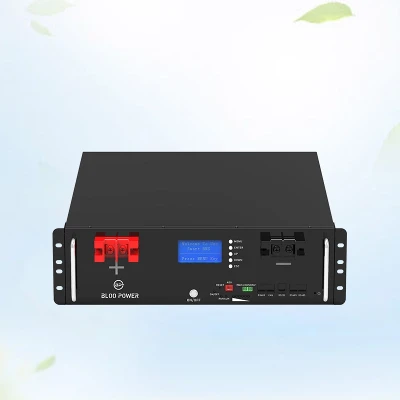
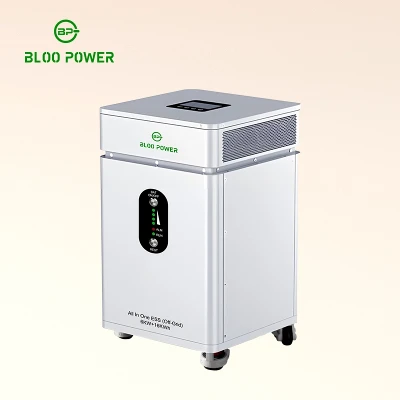
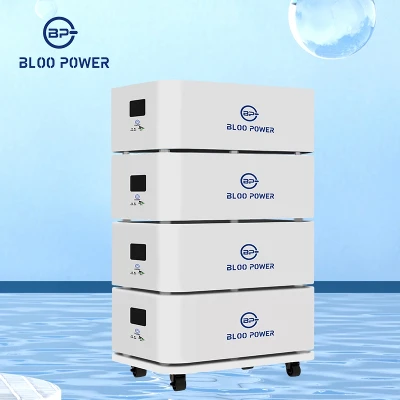
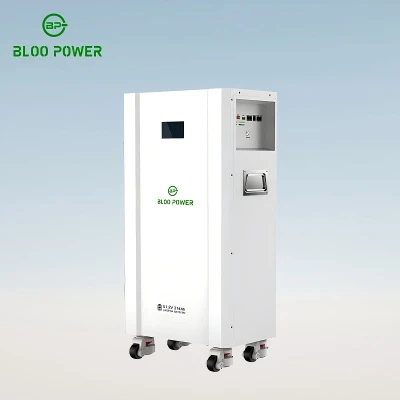
These rules follow the near-total Iberian blackout in spring 2025, which intensified focus on grid reliability and the role of inverter-based resources. Portugal reached approximately 80% renewable generation in early 2026 periods, underscoring the urgency for solar storage solutions that can deliver synthetic inertia. Recent projects illustrate the shift toward lithium iron phosphate solar battery technology, valued for its safety, cycle life, and suitability in high-voltage applications. For example, Prosalia commissioned a 15 MW / 60 MWh system (4-hour duration) at its Albispark solar plant, one of the larger hybrid installations in the country and supported by Recovery and Resilience Plan funding. Sonnedix has brought online hybrid solar-plus-storage projects totaling nearly 70 MWp solar with over 140 MWh of BESS. Providers such as BLOO POWER are positioned to supply high voltage lithium battery and lithium iron phosphate solar battery systems optimized for grid-forming performance, supporting both standalone and co-located configurations that meet the new synthetic inertia and rapid mode-switching requirements. The largest solar battery storage projects emerging in Portugal and the wider Iberian market increasingly rely on these chemistries to deliver multi-hour duration and grid-support services.
Table 2: Key Technical Requirements for Grid-Forming BESS in Portugal
|
Parameter |
Requirement |
|
Frequency range for synthetic inertia |
47.0–52.5 Hz |
|
Maximum RoCoF |
2 Hz/s |
|
Mechanical start-up time (emulated) |
Adjustable 1–20 s (default 12 s) |
|
Power oscillation damping ratio |
≥10% (0.1–10 Hz) |
|
Automatic charge-to-discharge switch |
At ≤49.2 Hz (for ≥500 kW systems) |
|
Minimum size for full reserves & voltage control |
≥1 MW |
|
Grid-forming mandatory |
≥45 MW or transmission connection (≥110 kV); conditional for 10–45 MW |
Based on Decree and ENTSO-E-aligned technical annexes.
Market Context and Long-Tail Opportunities for Advanced Solutions
As Portugal scales toward its 2030 targets, demand is rising for lithium iron phosphate solar battery for grid-forming applications, high voltage lithium battery energy storage systems in Europe, best solar battery store options for large-scale projects, advanced solar storage solutions supporting synthetic inertia, and the largest solar battery storage deployments in Portugal. The 1,050 MVA tenders require minimum 4-hour duration systems in many cases and allocate capacity by grid node, favoring technologies that can provide both energy shifting and ancillary services. BLOO POWER and similar suppliers of high voltage lithium battery platforms are expected to play a role in equipping projects that must demonstrate real-time monitoring, remote control, and the ability to operate in both grid-forming and (where required) grid-following modes. The combination of regulatory certainty, auctioned grid capacity, and prior Recovery Plan funding creates a pipeline that could multiply current battery capacity many times over by the end of the decade.
Table 3: Overview of 2026 Grid Capacity Auctions for Storage
|
Auction Type |
Capacity Offered |
Key Conditions |
Application Deadline |
|
Standalone BESS |
750 MVA |
Min. 50 MVA bid; ≥100% power rating of awarded capacity; typically 4-hour duration |
Dec. 22, 2026 |
|
Renewables + co-located storage |
300 MVA |
Min. 50 MVA; lower relative BESS power requirement (e.g., ≥20%) |
Dec. 22, 2026 |
|
Combined |
1,050 MVA |
Capacity by connection point; municipal revenue sharing |
- |
Sources: Official orders and DGEG tender documents.
Outlook for Solar Battery Store and Grid Resilience
Portugal's proactive stance-moving ahead of the full EU revision of the Network Code on Requirements for Generators-signals that grid-forming capability will become standard for large-scale storage across Europe. By embedding requirements for synthetic inertia, rapid frequency response, and dual-mode operation into connection rules, the country is preparing its network for high shares of solar and wind. Continued deployment of lithium iron phosphate solar battery and high voltage lithium battery systems, supported by solar battery store channels and specialized providers such as BLOO POWER, will be central to realizing the 6.9 GW storage target and enhancing overall system resilience. Stakeholders monitoring the largest solar battery storage opportunities should track both the technical compliance pathways and the evolving auction results through the remainder of 2026 and beyond.
Send Inquiry