












How do Energy Storage Batteries, Inverters, and Solar Panels Work Together?
Jun 23, 2026
Leave a message

Energy storage batteries, inverters, and solar panels together form the core of a modern solar energy storage system.
Solar panels convert sunlight into electricity, inverters convert this electricity into AC power that can be directly used by the household or appliances, and energy storage batteries store excess energy for use at night or during power outages.
Working together, these three components not only improve solar energy utilization but also help users reduce electricity bills, achieving more stable, efficient, and green energy management.

System Overall Structure and Component Subdivision Principles
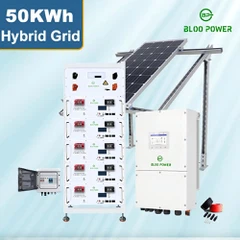
The core three components of the entire system are: photovoltaic modules (solar panels), energy storage lithium batteries, and bidirectional energy storage inverters (PCS). Supporting accessories include: DC combiner boxes, circuit breakers, electricity meters, distribution cabinets, grid interfaces, and household loads.
1. Underlying Working Principles of Each Component
(1) Solar Photovoltaic Panels (Power Generation Units)
The panels are composed of a large number of photovoltaic cells connected in series/parallel, based on the photovoltaic effect: sunlight photons strike silicon semiconductors, exciting electrons to form directional direct current;
● Output characteristics: Pure DC power; voltage fluctuates significantly with light intensity and temperature; high voltage at noon, low voltage in the early morning/evening and on cloudy days;
● Cannot be directly connected to household appliances (household 220V AC power), cannot be directly connected to batteries (voltage mismatch and lack of charging protection will cause bulging and damage);
● Multiple boards connected in series increase the total DC voltage, and connected in parallel increase the total charging current.
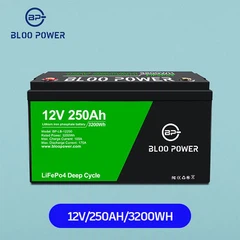
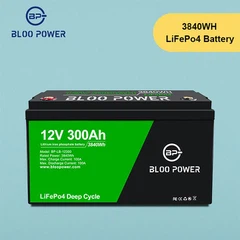
(2) Energy Storage Battery (Energy Storage Unit, Mainstream Lithium Iron Phosphate)
Internally, it consists of cells → modules → battery packs + BMS (Battery Management System):
1) Core functions of BMS: balancing cell voltage, overcharge/over-discharge/overcurrent/high temperature protection, and real-time reporting of remaining SOC;
2) Energy form: can only store and output DC power;
3) Charging: Low-voltage unstable photovoltaic DC power can only be safely charged after being stabilized by the inverter;
4) Discharging: outputs stable DC power to the inverter for inversion and voltage boosting.
(3) Bidirectional Energy Storage Inverter PCS (System Control Core)
Ordinary photovoltaic inverters only convert DC to AC; the energy storage PCS is a bidirectional power converter with two circuits:
1) Inverter Channel (DC→AC): Photovoltaic/battery DC → boost, filter → standard 220V/380V sinusoidal AC power to supply household appliances;
2) Rectifier Channel (AC→DC): Grid AC power → step-down rectification → stable DC power to charge the battery (off-peak electricity storage);
3) Built-in main control chip: Real-time acquisition of photovoltaic power, battery SOC, household load power, and grid voltage; millisecond-level automatic power allocation and switching of operating modes.
Comparison of basic parameters and functions of the three core components:
|
Components |
Energy Type |
Core Functions |
Key Parameters |
Operating Limitations |
|
Solar Photovoltaic Panels |
Outputs DC only |
Solar energy is converted into electrical energy; this is the system's sole source of power generation. |
Peak power, open-circuit voltage, short-circuit current, conversion efficiency |
No electricity is generated without light; the output voltage varies with light and temperature. |
|
Energy storage battery |
Store/output DC power |
Store excess electrical energy for power supply during periods of darkness. |
Capacity kWh, nominal voltage, SOC charge and discharge interval, cycle life |
Overcharging and over-discharging are prohibited; DC charging and discharging is allowed only. |
|
Bidirectional energy storage inverter PCS |
AC/DC bidirectional converter |
Power distribution, voltage regulation, charge and discharge control, grid connection protection |
Rated AC/DC power, bidirectional conversion efficiency, islanding protection, MPPT tracking |
The central hub for coordinated control of photovoltaics, batteries, and the power grid |

Complete Current Flow under 4 Operating Conditions
Condition 1: Sunny Day with Ample Sunlight, Photovoltaic Power Generation > Household Electricity Consumption
1. Solar panels generate fluctuating DC power → collected in DC combiner box → DC input terminal of PCS;
2. PCS first step: converts a portion of the DC power into AC power, prioritizing supply to all household appliances;
3. The remaining excess DC power, after being regulated and current-limited by the PCS, is input to charge the energy storage battery. The BMS monitors the charging current and voltage in real time;
4. Once the battery is fully charged (SOC 100%), the PCS automatically disconnects the charging circuit, and excess power is fed back into the national grid for sale.
Condition 2: Moderate Sunlight, Photovoltaic Power Generation Just Equals Household Load
All DC power from the photovoltaic system is converted to AC power for appliance use. The battery remains idle, neither charging nor discharging, with no grid interaction.
Operating Condition 3: Night/Cloudy/Rainy Day, No Solar Power Generation
1. Solar power has no DC output; the PCS detects a power shortage.
2. A discharge command is sent to the battery BMS; the battery outputs stable DC power to the PCS.
3. The PCS performs inversion, outputting AC power to the household load.
4. When the battery charge drops to the lower limit (SOC 20%), the PCS stops battery discharge and automatically switches to mains power.
Operating Condition 4: Off-Peak Energy Storage (Low Electricity Prices at Night) + Power Outage Backup
1. At night, with no sunlight, the PCS draws AC power from the grid, rectifies it into stable DC power to charge the battery.
2. Sudden Power Outage: The PCS triggers islanding protection, disconnecting from the grid. Only the solar power (with sunlight) and battery operate independently, preventing reverse power transmission that could harm grid maintenance personnel.
3. After the grid is restored, the system automatically synchronizes and reconnects to the grid, resuming normal operation.
Power distribution logic table for four operating conditions:
| Operating conditions | PV output power | Household load power Pl | Battery status | Power grid interaction actions |
| Surplus power generation on sunny days | Pv>Pl | Charging (SOC increase) | Fully charge the first battery, then connect the remaining battery to the internet. | |
| The lighting is just right | Pv=Pl | Let it stand still, neither charging nor discharging. | No electricity entering or leaving the power grid | |
| No solar power at night or on rainy days | Pv=0 | Discharge (SOC decrease) | Automatic switching to mains power when battery is low | |
| Off-peak electricity storage at night | Pv=0 | Charging (battery charging via grid rectification) | Buy and store electricity during off-peak hours, and reduce electricity costs by discharging during peak hours. |
Key Supplementary Core Technologies
1. Maximum Power Point Tracking (MPPT) (Integrated into PCS): Photovoltaic voltage fluctuates greatly. MPPT adjusts impedance in real time, ensuring the photovoltaic panels always output the maximum power under current sunlight, increasing power generation by 15%-30%.
2. BMS and PCS Communication and Linkage: The battery BMS transmits voltage, temperature, and SOC data to the inverter in real time. The inverter adjusts charging/discharging power based on battery status to prevent cell damage.
3. Conversion Loss Explanation: Photovoltaic DC to AC charging loss is approximately 3%-6%; grid AC to battery DC charging loss is 4%-7%. High-quality PCS in the industry achieves a comprehensive conversion efficiency ≥96%.
Comparison of Components in Grid-connected Energy Storage vs. Off-grid Energy Storage Systems:
|
Comparison items |
Grid-connected energy storage system (mainstream for home use) |
Off-grid energy storage system (areas without power grid) |
|
Inverter |
Bidirectional grid-connected PCS with synchronous grid-connection function |
Off-grid energy storage inverter, without grid-connected module |
|
Battery capacity requirements |
It's a bit small; if there's no power, you can switch to AC power. |
Large-capacity batteries need to be matched with all-day power consumption. |
|
Excess power processing |
Electricity is transmitted to the power grid and sold. |
Equipping with a discharge resistor consumes excess power. |
|
Power outage capability |
Island mode short-term independent power supply |
The entire process relies on photovoltaics and batteries for self-sufficiency. |
|
cost |
Medium-strength, suitable for urban users with power grids. |
High altitude, suitable for use in remote mountainous and pastoral areas |
Simplified Summary (for easier understanding and memorization)
1. Photovoltaic panels are responsible for "generating electricity," producing only unstable direct current (DC).
2. Energy storage batteries are responsible for "storing electricity," storing only DC, solving the problem of no power generation at night.
3. The power storage inverter (PCS) is the "dispatch manager," completing the AC/DC bidirectional conversion and automatically distributing power from photovoltaic panels, batteries, and the grid. The entire system cannot operate normally and stably without any one of these components.
Send Inquiry