












How to Choose the Type of Residential Energy Storage Battery from Chinese Manufacturers?
Jun 18, 2026
Leave a message

Currently, the mainstream technologies for residential energy storage are limited to three categories-lithium iron phosphate (LFP) batteries, ternary lithium batteries, and lead-acid batteries-along with the niche sodium-ion battery. Below, we compare them across application scenarios, performance, cost, lifespan, and safety, explaining the differences in plain language.
Classification and Basic Characteristics of Mainstream Batteries
1. Lead-acid batteries (traditional/older models)
● Subcategories: Standard lead-acid, gel lead-acid
● Principle: Traditional electrochemical cells-a technology matured over a century.
● Advantages: Lowest price, decent low-temperature performance, simple maintenance, low risk of short circuits.
● Disadvantages: large size, heavy weight, short cycle life, low energy density, contains lead (not eco-friendly), and poor charge/discharge rates.
● Suitable for: retrofitting older PV systems, simple rural energy storage, and low-cost backup power; largely phased out for new residential installations.
2. Ternary lithium battery (ternary lithium)
● Cathode materials: Nickel-Cobalt-Manganese / Nickel-Cobalt-Aluminum
● Advantages: Highest energy density, smallest size, lightweight, good low-temperature discharge performance, and strong high-current discharge capability.
● Disadvantages: poor thermal stability, relatively low safety, average cycle life, high price, and susceptibility to degradation in high-temperature environments.
● Suitable for: confined spaces, portable energy storage, and small wall-mounted energy storage units; widely used for outdoor mobile energy storage.
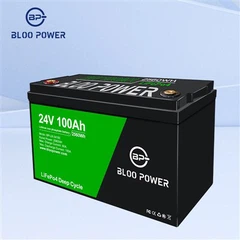
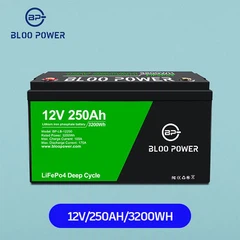
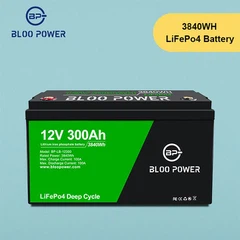
3. Lithium iron phosphate (LFP) batteries (currently the mainstream choice for residential applications)
● Cathode material: Lithium iron phosphate
● Advantages: Superior safety, longest cycle life, high-temperature stability, resistance to overcharge and over-discharge, moderate cost, and eco-friendliness.
● Disadvantages: lower energy density than ternary lithium; slightly poorer low-temperature performance; and a larger volume-to-capacity or weight-to-capacity ratio compared to ternary lithium.
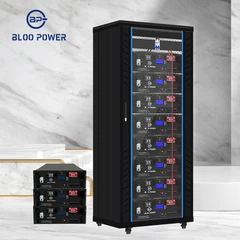
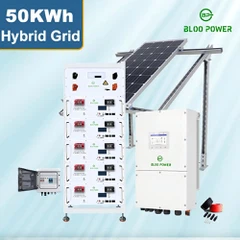
● Applications: Residential PV energy storage, whole-house backup power, and wall-mounted or floor-standing residential energy storage systems (currently accounting for over 80% of the market).

4. Sodium-ion batteries (emerging niche)
● Advantages: Excellent low-temperature performance, good fast-charging capability, abundant raw material reserves, low-cost potential, and high safety.
● Disadvantages: relatively low energy density, cycle life inferior to LFP, and the industry is not yet fully mature.
● Applications: Low-end backup energy storage and pilot projects in extremely cold regions; not yet widely adopted for primary residential use.
Direct Comparison of Key Parameters (Residential Scenario Perspective)
| Comparison Items | Lead-acid battery | Ternary lithium battery | Lithium iron phosphate battery | Sodium-ion batteries |
| Energy Density | Low (clunky | Very tall (petite) | Medium-to-high | On the low side |
| Cycle Life | 300–800 times | 1,000–2,000 times | 8,000–10,000 times | 1,500–3,000 times |
| Safety | Better | General (most vulnerable to high temperatures / punctures) | Optimal | Better |
| Low Temperature performance | Acceptable | Excellent | Generally (capacity decreases significantly at -10℃) | Excellent |
| High-Temperature stability | General | Poor | Excellent | Good |
| Price | Lowest | Slightly high | Medium | Below average (price is decreasing due to mass production) |
| Volume/Weight | Big, Heavy | Small and lightweight | Medium | Medium-to-large |
| Routine Maintenance | Requires regular inspection | Maintenance-free | Maintenance-free | Maintenance-free |
| Suitability for home use | Low (phasing out) | Medium (Portable / Small Capacity) | Extremely high (preferred) | Low (pilot phase) |
How to Choose Based on Scenarios (Implementation Recommendations)
1. Residential Grid-tied/Off-grid PV Systems & Whole-home Emergency Backup Power
Lithium iron phosphate (LFP) batteries are the preferred choice; they are safe, offer a long lifespan, and withstand repeated daily charging and discharging. Ideally suited for long-term home use, they currently represent the industry standard.
2. Portable outdoor energy storage, compact power banks, and installation in ultra-small balcony spaces.
Opt for a ternary lithium battery; it is compact and lightweight, making it easy to move-ideal for short trips or temporary power needs.
3. Ultra-low budget, old-fashioned/basic energy storage, for temporary interim use.
Lead-acid batteries are an option, but they are not recommended for long-term home use; they have a short lifespan, take up a lot of space, and actually incur higher replacement costs in the long run.
4. Extremely cold regions (winter temperatures below -20°C)
You might want to consider sodium-ion batteries or lithium iron phosphate (LFP) batteries equipped with low-temperature heating modules, as the range of standard LFP batteries drops significantly in winter.
Additional Key Misconceptions
1. Volume for the same capacity: Ternary Lithium < LFP < Lead-Acid. For a 5 kWh capacity, lead-acid batteries take up roughly twice the volume of LFP batteries, while ternary lithium batteries are the most space-efficient.
2. Service life profile: For residential energy storage systems cycling once daily, lithium iron phosphate (LFP) lasts 8–15 years; ternary lithium lasts 5–8 years; and lead-acid lasts only 2–3 years.
3. Safety Red Line: The large-scale use of standard ternary lithium batteries in enclosed home spaces is strictly prohibited, as they are prone to catching fire if punctured or overheated; risks are significantly reduced when using products from reputable brands equipped with BMS protection.
Send Inquiry