




















What Does 80% DoD Mean For Residential Energy Storage Batteries?
Aug 31, 2026
Leave a message

What does 80% DoD mean for residential energy storage batteries? This article thoroughly explains the deep discharge of energy storage batteries.
When purchasing residential energy storage batteries, many product specifications will mention "80% DoD," "80% DOD," or "6000 cycles @ 80% DoD." For ordinary household users, this parameter is often more important than simply looking at "10kWh," "15kWh," or "16kWh," because it directly relates to how much electricity a battery can actually use each day, how much capacity needs to be reserved, and how to understand battery cycle life.
Simply put, 80% DoD (Depth of Discharge) means that during a single discharge cycle, 80% of the battery's rated capacity is used, leaving approximately 20% unused. For example, a 10kWh energy storage battery operating at 80% DoD theoretically corresponds to a discharge capacity of approximately 8kWh, not completely depleting the 10kWh. NREL defines DoD as "the percentage of the battery's total energy capacity that has been discharged," and explicitly states that the relationship between DoD and battery life is not a simple linear one.
The following section systematically explains 80% DoD from multiple perspectives, including concepts, calculations, SOC, cycle life, capacity selection, inverters, battery management, economics, and BLOO POWER product applications.

What exactly does 80% DoD mean?
DoD stands for Depth of Discharge, which describes the percentage of usable capacity a battery releases during a single discharge cycle. If a battery discharges from 100% SOC to 20% SOC, then 80% of the capacity has been released, hence the DoD is 80%. Conversely, DoD and SOC can be seen as complementary: under ideal calculation conditions, 100% SOC corresponds to 0% DoD, 20% SOC corresponds to 80% DoD, and 0% SOC corresponds to 100% DoD. NREL also emphasizes that real-world systems need to consider the battery's minimum permissible SOC, as exceeding the manufacturer's specified range may affect battery life or even cause damage.
● SOC: State of Charge, remaining percentage of battery capacity
● DoD: Depth of Discharge, percentage of capacity already discharged
● 80% DoD ≈ 20% SOC after being used from 100% SOC
● Theoretical relationship: DoD ≈ 100% - SOC
Therefore, when you see "80% DoD", do not interpret it as "the battery only has 80% capacity". It describes the allowed or recommended discharge window for this battery. The actual usable capacity must be determined by considering product definition, BMS limits, inverter efficiency, temperature, and battery aging.
Understanding 80% DoD in One Minute Using a 10kWh Battery as an Example
Assume a household has a 10kWh residential energy storage battery, with a rated capacity of 10kWh. If the system operates at 80% DoD, the theoretical battery discharge capacity is:
10kWh × 80% = 8kWh
That is, starting from a fully charged state, under an 80% DoD operating window, the battery can theoretically release approximately 8kWh of energy, while retaining approximately 2kWh of capacity. It is important to note that "8kWh" is the theoretical discharge energy from the battery side. The final amount of energy received by the household from the AC load will be affected by losses from the inverter, wiring, and other auxiliary equipment. Therefore, 8kWh cannot be simply equated to the 8kWh that all household appliances can ultimately use. NREL defines round-trip efficiency as the ratio of output useful energy to input useful energy, which is why system efficiency needs to be considered separately.
|
Battery rated capacity |
DoD |
Theoretical discharge capacity |
Theoretical remaining capacity |
|
5kWh |
80% |
4kWh |
1kWh |
|
10kWh |
80% |
8kWh |
2kWh |
|
15kWh |
80% |
12kWh |
3kWh |
|
16kWh |
80% |
12.8kWh |
3.2kWh |
|
20kWh |
80% |
16kWh |
4kWh |
Therefore, the larger the battery capacity, the greater the actual discharge energy it can provide under the same DoD conditions.
What is the relationship between 80% DoD and SOC?
Many consumers confuse DoD and SOC, but they describe two different states of the same battery. SOC answers "how much of the battery is left," while DoD answers "how much has been used." For example, a battery at 100% SOC means it is theoretically fully charged, and the DoD for this discharge cycle is 0%. If the battery drops to 80% SOC, the DoD is approximately 20%; to 50% SOC, the DoD is approximately 50%; and to 20% SOC, the DoD is approximately 80%. Therefore, BMS and inverters in home energy storage systems typically manage the battery's operating range using upper and lower SOC limits.
● 100% SOC → Approximately 0% DoD
● 80% SOC → Approximately 20% DoD
● 50% SOC → Approximately 50% DoD
● 20% SOC → Approximately 80% DoD
However, in actual products, the battery's health status cannot be judged solely based on the SOC figure. As usage time increases, battery capacity will decrease. When the SOC is displayed at 20%, the actual amount of energy that can be stored may be less than that of a new battery. Therefore, professional energy storage systems usually need to make a comprehensive judgment based on BMS, voltage, current, temperature, cumulative cycles, and SOH (State of Health).
Why are products often labeled "80% DoD + Cycle Count"?
When you see an energy storage battery labeled "6000 cycles @ 80% DoD" or "8000 cycles @ 80% DoD," this actually includes two conditions: first, the number of cycles; and second, the depth of discharge under the tested or rated cycling conditions. In other words, it cannot be simply interpreted as "this battery can cycle 8000 times regardless of usage." Cycle life must be understood in conjunction with DoD, charge/discharge rate, temperature, SOC window, and the manufacturer's specified end-of-life conditions. The U.S. Department of Energy's Energy Storage Cost and Performance Assessment also shows that the cycle life of lithium-ion batteries varies with DoD, and different chemical systems exhibit significant differences in performance.
● 6000 cycles @ 80% DoD
● 8000 cycles @ 80% DoD
● DoD is not cycle life itself.
● Cycle count must be compared in conjunction with test conditions.
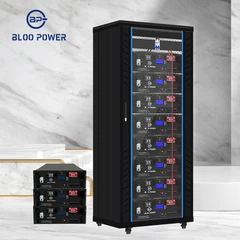
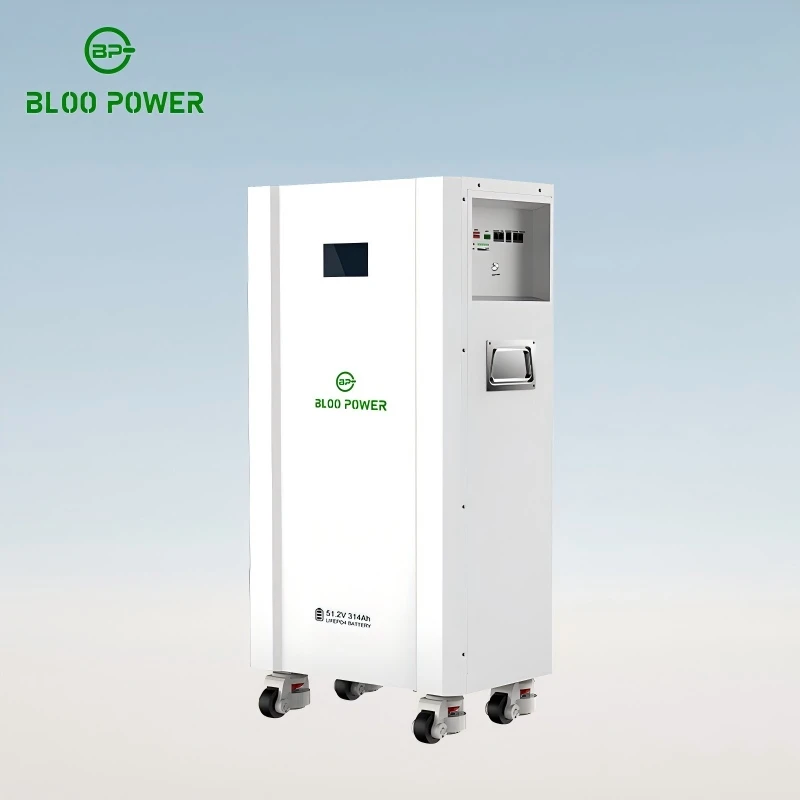
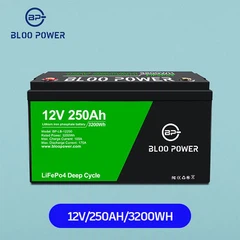
For example, some BLOO POWER 51.2V 314Ah LFP product pages clearly state that 80% DoD corresponds to 8000 cycles; its 16kWh rack-mount products are labeled as 16kWh, 51.2V, 314Ah, and use LiFePO4 cells.
Therefore, when purchasing, don't just ask "how many cycles?", but rather, "at what DoD, what temperature, what charge/discharge rate, and what SOH were the cycle counts obtained?"
Does a lower DoD necessarily mean a longer battery life?
From the perspective of general electrochemical principles and engineering practice, reducing DoD usually helps reduce the battery load per cycle, but it's not accurate to say "the lower the DoD, the better." NREL clearly points out that there is a non-linear relationship between DoD and battery life. Battery life is also affected by factors such as the number of cycles, state of charge (SOC) residence time, and operating temperature. In other words, the lifespan can't be predicted simply by proportionally matching 80%, 60%, and 40% DoD.
● 80% DoD: Releases more stored energy
● 60% DoD: Relatively shallow depth of use per cycle
● 40% DoD: Releases less energy per cycle
● Actual lifespan is also affected by temperature, rate capability, and SOC
For example, a 10kWh battery, if used at only 40% per day, can only utilize about 4kWh per cycle. If a household actually needs 7-8kWh of stored energy per day, then to maintain a lower DoD, a larger battery needs to be purchased. While this reduces the depth of discharge per cycle, it also increases the initial investment. Therefore, the truly reasonable goal of residential energy storage is not to pursue the lowest DoD, but to find a balance between available capacity, lifespan, investment cost, and backup demand.
What impact does 80% DoD have on the selection of residential energy storage battery capacity?
This is one of the most important practical issues for consumers. Assuming a household wants to provide 8kWh of electricity per day through an energy storage system, a simple calculation based on 80% DoD would require a minimum rated battery capacity of:
8kWh ÷ 80% = 10kWh
However, if inverter, line, and system conversion losses are further considered, actual design cannot simply be based on a fixed 10kWh. Instead, a certain margin should be allowed based on system efficiency, reserve capacity, and local operating strategies. NREL's energy storage model also uses DoD as a system design parameter, rather than simply treating the entire rated capacity as usable capacity.
|
The theoretical discharge volume that a family hopes to achieve |
Rated capacity is derived by back-calculating 80% of DoD. |
Engineering design concept |
|
4kWh |
5kWh |
Small Home/Basic Standby |
|
8kWh |
10kWh |
Common ranges for ordinary families |
|
12kWh |
15kWh |
Households with high electricity consumption |
|
16kWh |
20kWh |
Large apartment/high load scenario |
|
24kWh |
30kWh |
High load or long-term standby |
Therefore, seeing "10kWh" does not necessarily mean that there is 10kWh available for use. When purchasing energy storage batteries, it is essential to confirm the manufacturer's stated "rated capacity" and "usable capacity," as well as the corresponding DoD (DoD) conditions for the usable capacity.
What does 80% DoD mean for BLOO POWER's 16kWh battery?
Taking BLOO POWER's 51.2V 314Ah 16kWh LiFePO4 energy storage battery as an example, its rated voltage is 51.2V, rated capacity is 314Ah, and battery energy is approximately 16kWh. It is labeled with 8000 cycles @ 80% DoD; some models also provide a DoD range of 80%~90%.
If we only perform a theoretical calculation based on 16kWh × 80%:
16kWh × 80% = 12.8kWh
This means that under the simple calculation model of "80% DoD," a complete discharge window corresponds to approximately 12.8kWh of battery-side energy. The actual amount usable by a household load depends on inverter efficiency, BMS protection thresholds, temperature, current, and system losses. Therefore, the "16kWh" on the marketing page is not entirely the same concept as the final usable AC power in a household.
● 51.2V rated voltage
● 314Ah rated capacity
● Approximately 16kWh rated energy
● 8000 cycles at 80% DoD (subject to the corresponding model's datasheet)
BLOO POWER's 16kWh rack-mount product supports CAN+RS485 communication and uses LiFePO4 cells, making it suitable for use with residential hybrid inverters to form a home photovoltaic and energy storage system.
Why is DoD (Life on Demand) a Key Concern for LiFePO4 Residential Energy Storage?
Currently, LiFePO4, also known as lithium iron phosphate (LFP), has become a crucial technology in residential energy storage. DoD is of great interest because each charge and discharge cycle involves electrochemical and material changes, and different battery chemistry systems have varying degrees of tolerance to deep cycling. Analysis of energy storage technologies by the U.S. Department of Energy shows significant differences in DoD and cycle life between different lithium-ion systems such as LFP and NMC. Therefore, when comparing products, it is essential to consider "chemical system + DoD + cycle life" together, rather than just comparing a single number.
● LFP has better thermal stability
● DoD affects long-term cycle life
● Different chemical systems cannot be directly compared side-by-side
● It requires combining actual test data from the manufacturer for judgment
BLOO POWER's residential energy storage products use the LiFePO4 battery system and manage battery operation through a BMS (Battery Management System). The publicly available parameters for its 16kWh-class products include indicators such as 80% DoD and 8000 cycles. These parameters are of high reference value for households that need to perform daily photovoltaic peak shifting, nighttime power supply, and power outage backup for a long time.
Does 80% DoD mean "never drop below 20% capacity"?
It's not that simple. 80% DoD is usually a product testing condition, design operating specification, or recommended operating window, not that the battery must never drop below 20% SOC under any circumstances. Whether a system can tolerate deeper discharge depends on the battery manufacturer's specifications, BMS protection strategy, and inverter settings.
It's especially important to note that "80% DoD" and "20% SOC protection lower limit" are not mechanically equivalent in actual products. Manufacturers may use different capacity definitions, SOC calibration methods, and protection strategies. NREL also points out that batteries have a minimum SOC constraint that they can withstand, and system monitoring and settings need to avoid exceeding this limit.
● DoD is a performance/usage parameter
● SOC is a real-time status parameter
● BMS determines the protection boundary
● Final settings should be based on the product manual
Therefore, BLOO POWER clearly specifies 80% DoD, 80%~90% DoD, or other operating ranges. Inverter parameters should be configured according to the official datasheet for that specific model, rather than uniformly setting all models to 20% SOC.
What is the relationship between DoD and battery life?
You can think of a battery as an "energy warehouse that works every day." The more electricity is drawn from it each day, the deeper the DoD in a single cycle; however, battery life is not simply a matter of "80% DoD means half the lifespan compared to 40% DoD." The U.S. Department of Energy's energy storage technology and cost assessments specifically provide cycle life data for lithium-ion batteries at different DoDs, pointing out differences in the cycling capabilities of different chemical systems at 80% DoD.
For example, a set of analytical data in the DOE report shows that under its specific test/assumption conditions, the cycle life data of LFP at 80% DoD differs significantly from that of NMC; the report also emphasizes that data from different sources cannot be directly compared without considering the test conditions. Therefore, 80% DoD is not a "lifespan number," but rather one of the prerequisites for understanding lifespan numbers.
● DoD determines the depth of a single cycle
● The number of cycles describes reusability
● Temperature affects lifespan
● Charge/discharge rate also affects lifespan
This is why when BLOO POWER products advertise "8000 cycles @ 80% DoD," users should understand the entire parameter as a whole, rather than judging from "8000 cycles" alone.
DoD Also Affects the Economics of Home Energy Storage
From an economic perspective, DoD essentially determines how much effective electricity can be released per day for every dollar of battery investment. Assuming a 10kWh battery has a fixed price, operating at 80% DoD theoretically yields 8kWh per day; operating at only 50% DoD theoretically yields 5kWh per day. The former provides more electricity per day but may lead to a deeper cycle; the latter is more conservative in capacity utilization but means that the same household electricity demand may require a larger battery.
Therefore, home energy storage should not only pursue "maximum DoD" but also not blindly pursue "minimum DoD," but should be designed based on the household's electricity consumption curve.
● What is the daily electricity consumption?
● How much electricity can the solar panels generate per day?
● What is the peak-valley electricity price difference?
● How long can the system support the system during a power outage?
NREL's residential energy storage model also incorporates battery usage, cycling, and system lifespan into its economic analysis; its 2024 ATB residential energy storage model assumes an operation of approximately one cycle per day and incorporates battery system degradation into its long-term cost analysis.
Why shouldn't we only look at DoD (Power Over Charge), but also SOH (State of Health) and Cycle Life?
A new battery and a battery that has been used for many years, even if both show 80% DoD, may actually provide different amounts of power. This is because batteries experience capacity degradation. For example, after long-term operation, if the actual usable capacity of a 16kWh battery has decreased, whether the 80% DoD refers to the "current effective capacity" or the "initial rated capacity" will directly affect the user's understanding. Therefore, professional energy storage systems usually also need to pay attention to SOH, i.e., the battery's state of health.
The three concepts can be simply distinguished as:
● SOC (State of Charge): How much power is left?
● SOH (State of Health): The current state of health?
● DoD (Power Over Charge): How much capacity has been used this time?
● Cycle Life: How many cycles under specified conditions can the battery perform?
These four parameters must be considered together. For example, a product stating "8000 cycles @ 80% DoD" does not mean that the battery will suddenly stop working after 8000 cycles, but rather that it has achieved the corresponding cycle performance under the manufacturer's specified testing conditions and end-of-life standards. Different manufacturers may have different definitions of End-of-Life, capacity retention, and testing methods. Therefore, it is best to request a complete datasheet and testing conditions when comparing products. NREL also points out that cycle life usually needs to be understood in conjunction with factors such as battery operating history, temperature, SOC residence time, and DoD.
How should a home energy storage system's DoD be set?
For ordinary households, the DoD setting shouldn't simply be about pursuing a "the higher the better" number. Instead, it should be determined based on daily electricity consumption, backup needs, solar power generation, battery capacity, and the manufacturer's recommendations. If the household primarily uses energy storage to transfer surplus solar power from daytime to nighttime, the system can cycle more regularly based on the daily load. If the household prioritizes backup power during power outages, a higher SOC (State of Charge) retention range can be set, ensuring the battery always has a certain amount of emergency power.
For example, if a household has a 10kWh battery but only needs 5kWh of stored power daily, there's no need to run it at extremely deep DoD every day just to "completely deplete the battery." Conversely, if the household needs more than 10kWh of electricity each night, then increasing the battery capacity should be considered, rather than simply allowing the existing battery to be deeply discharged for extended periods.
● Daily PV Peak Shifting: Focus on daily cycles
● Power Outage Backup: Focus on minimum SOC
● High-Load Households: Consider increasing capacity
● Long Lifespan Requirements: Configure according to manufacturer recommendations
BLOO POWER's 16kWh products support parallel operation of multiple units; for example, the product page indicates a maximum parallel capacity of 16 units. This means that if a single unit's capacity is insufficient, modular expansion can reduce the pressure on a single battery to be in a deep discharge state for extended periods.
How to Choose Between 80% DoD and "100% DoD"?
Many consumers, seeing that LiFePO4 products support higher DoD, wonder: since some products can achieve 90% or even close to 100%, should they be discharged at 100% every day? The answer is usually no. Maximum permissible DoD and recommended daily operating DoD are not entirely the same concept. Manufacturers may allow a product to reach a higher DoD, but operating it to its limit every day for a long time, compared to operating it within a relatively reasonable SOC window, can result in completely different performance in terms of lifespan, reserve capacity, and system control strategies.
DOE's energy storage technology analysis also shows that there is a complex relationship between DoD and cycle life, and the results differ significantly between different technologies.
|
DoD |
10kWh battery theoretical discharge capacity |
Remaining capacity |
Typical characteristics |
|
50% |
5kWh |
5kWh |
Conservative use |
|
60% |
6kWh |
4kWh |
Milder |
|
70% |
7kWh |
3kWh |
Balanced |
|
80% |
8kWh |
2kWh |
Common design metrics |
|
90% |
9kWh |
1kWh |
Higher capacity utilization |
|
100% |
10kWh |
0kWh |
Extremely deep discharge |
Therefore, the reason why "80% DoD" is frequently seen in the energy storage industry is that it provides a relatively representative engineering compromise between usable capacity and long-term use, but the actual optimal value should still be based on the specific battery product specifications and system design.
How to interpret 80% DoD when choosing residential energy storage batteries?
Finally, putting 80% DoD back into the actual purchasing scenario, you'll find it's just one of many parameters for energy storage batteries. Truly professional selection should simultaneously consider cell chemistry, rated capacity, usable capacity, DoD, cycle life, maximum charge/discharge current, BMS functionality, operating temperature, communication protocol, IP protection rating, certifications, and warranty conditions.
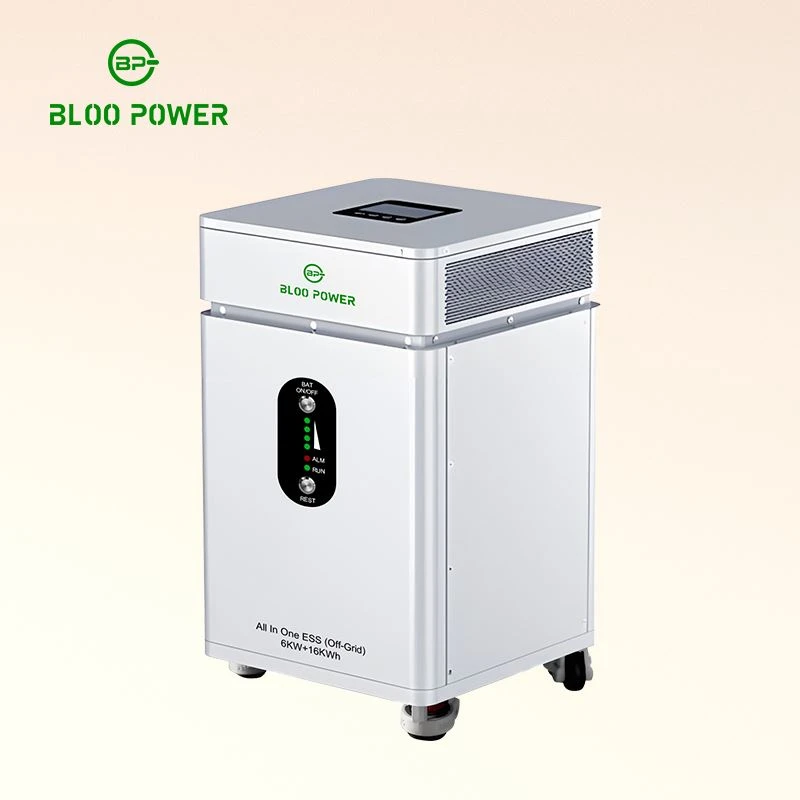
For BLOO POWER products, 16kWh-class products may display parameters such as 51.2V, 314Ah, LiFePO4, CAN/RS485, and 8000 cycles @ 80% DoD; some 16kWh All-in-One products may specify approximately 16.07kWh, 6500 cycles @ 80% DoD, and a 6kW single-phase inverter. This also illustrates that even with seemingly similar capacities, different products may differ in cycle life, system integration methods, and specifications.
When purchasing, it is recommended to focus on confirming the following:
● Capacity: What are the rated kWh and usable kWh?
● DoD: Under what test conditions is 80% DoD defined?
● Lifespan: What are the corresponding DoD, temperature, rate, and SOH for 8000 cycles?
● Compatibility: Can it communicate with the target hybrid inverter via CAN/RS485?
The simplest way to remember 80% DoD
It can be summarized in one sentence:
80% DoD = The battery used approximately 80% of its capacity during this discharge, theoretically retaining about 20% of its capacity.
For example:
10kWh × 80% = 8kWh
16kWh × 80% = 12.8kWh
20kWh × 80% = 16kWh
However, it's crucial to emphasize that this is only a theoretical energy calculation from the battery side. The actual power available to a household AC load also needs to consider factors such as inverter efficiency, BMS protection range, temperature, charging and discharging power, and battery aging. Both NREL and DOE data indicate that DoD, cycle life, efficiency, and degradation need to be evaluated as a whole, not just based on a single parameter.
Diagram showing the relationship between 80% DoD and home energy storage systems

The diagram illustrates how solar panels generate electricity, which is then managed through an inverter and energy storage system. When the battery's state of charge (SOC) drops from 100% to 20%, it corresponds to approximately 80% DoD. Actual systems are also affected by inverter efficiency, BMS limitations, and load power.
A single table to fully understand: DoD, SOC, and available capacity
|
Parameters |
meaning |
10kWh battery example |
|
100% SOC |
Fully charged |
10kWh |
|
80% SOC |
Approximately 20% has been used. |
8kWh remaining |
|
50% SOC |
Approximately 50% has been used. |
5kWh remaining |
|
20% SOC |
Approximately 80% has been used. |
2kWh remaining |
|
0% SOC |
Theoretical complete discharge |
0kWh |
Note: The values in the table are theoretical models for ease of understanding and do not represent that all products will actually be able to operate from 100% SOC all the way to 0% SOC. The actual upper and lower limits should be based on the battery manufacturer's specifications and BMS settings.
BLOO POWER's DoD Applications in Residential Energy Storage Products
For users looking to build a home solar PV energy storage system, BLOO POWER's 51.2V low-voltage LiFePO4 series serves as a typical example for understanding DoD. Our 51.2V 314Ah 16kWh energy storage battery has a nominal capacity of approximately 16kWh and is marked with 80% DoD and 8000 cycles. It also supports CAN and RS485 communication and multi-unit parallel operation.
Additionally, BLOO POWER's 16kWh All-in-One product has parameters of 51.2V, 314Ah, and 16.07kWh, and is marked with 6500 cycles @ 80% DoD. It integrates a 6kW single-phase inverter and can be used in home PV, energy storage, and backup power scenarios.
Therefore, if a user sees "8000 Cycles @ 80% DoD" in the BLOO POWER product specifications,
the correct understanding should be:
This battery's cycle life indicator is described under a specified 80% depth of discharge condition, not that the battery can only be used at 80%, nor that it will immediately cease to function after 8000 cycles.
The actual cycle life performance needs to be determined in conjunction with the manufacturer's specified testing conditions, temperature, charge/discharge rate, and termination capacity/SOH standard, etc.
Conclusion: The real focus shouldn't be on the "80%" itself, but on the complete battery parameter system.
For residential energy storage users, 80% DoD isn't simply a single, higher-than-ideal metric. Its true value lies in helping users understand "how much of the rated capacity can actually be used," "under what conditions the cycle life is achieved," and "what battery size should a household purchase."
For example, a 16kWh BLOO POWER LiFePO4 energy storage battery, under a simple 80% DoD model, corresponds to approximately 12.8kWh of battery-side discharge. If a household actually needs about 10kWh of energy storage per day, then a 16kWh capacity provides a greater operational margin than simply purchasing a 10kWh battery. BLOO POWER products also offer different combinations of 80% DoD with 6500-8000 cycles; therefore, selection should be based on the specific model's datasheet, rather than applying the lifespan parameters of one product to another.
Send Inquiry