




















What is the Role of the BMS (Battery Management System) in Residential Energy Storage Batteries?
Sep 01, 2026
Leave a message

What is the role of the BMS (Battery Management System) in residential energy storage batteries? Why is it so important?
For residential energy storage systems, the battery cells determine how much energy the battery can store, while the Battery Management System (BMS) determines whether these cells can operate safely, stably, and for a long period. This is especially true for residential energy storage batteries using LiFePO4 lithium iron phosphate cells, which typically consist of multiple cells connected in series and parallel to form a battery pack. The voltage, temperature, and state of capacity of individual cells can vary slightly. Without effective BMS management, the battery will struggle to maintain safe operation under complex charging, discharging, temperature variations, and fluctuating household loads.
IEC 62619:2022 sets forth relevant requirements for the safe operation of industrial and stationary lithium batteries, including energy storage systems within its scope. The standard defines a BMS as including current control under overcharge, overcurrent, over-discharge, and overheating conditions. It also requires the BMS to monitor and manage battery status and to influence battery safety, performance, and lifespan through data calculation, reporting, or environmental control.

What is a Battery Management System (BMS) for Residential Energy Storage Batteries?
A BMS can be understood as the "intelligent management brain" inside an energy storage battery. It's not simply a circuit board, but a management system comprised of sensors and data acquisition functions for voltage, current, and temperature, control logic, protection devices, and communication functions. For a LiFePO4 battery pack consisting of 16 or more cells, the BMS needs to understand the real-time operating status of each cell and determine whether it is within the permissible charging, discharging, and temperature range. If an anomaly is detected, it can issue an alarm to the system and cut off or limit the current when protection conditions are met. IEC 62619's description of BMS also explicitly covers key operating areas such as voltage, temperature, and current.
● Real-time monitoring of cell voltage
● Monitoring of battery current and temperature
● Calculation of state data such as SOC and SOH
● Execution of overcharge, over-discharge, overcurrent, and over-temperature protection
Therefore, when consumers see energy storage battery products labeled "Intelligent BMS" or "Smart BMS," what they really need to focus on is not the word "intelligent," but rather what this BMS specifically monitors, protects, communicates with the inverter, and takes measures in case of abnormalities.
Why is a Battery Management System (BMS) so important for residential energy storage batteries?
Residential energy storage batteries typically undergo charging, discharging, and even multiple energy conversions daily. For example, the battery is charged during the day when solar power generates electricity, discharged at night when household load increases, and then cycled again the next day. During this process, the battery experiences voltage, current, and temperature changes. Without continuous monitoring by a BMS, it's impossible to accurately determine whether the battery has reached its safe operating limits. IEC 62619 explicitly includes overcharging, over-discharging, overcurrent, and overheating within the safety scope that a BMS needs to manage.
More importantly, a BMS cannot replace the safety design of the entire energy storage system. A truly reliable residential energy storage system should have a multi-layered protection structure: cell-BMS-inverter-circuit breaker-system control-installation environment.
● Battery cells are responsible for energy storage.
● Battery Management System (BMS) is responsible for monitoring and protection.
● Inverter is responsible for energy conversion and power control.
● External protection devices are responsible for system-level isolation.
● Installation design is responsible for environmental and fire safety.
Data from the U.S. Department of Energy also points out that lithium-ion batteries have potential risks such as overheating, overcharging, and short circuits. Thermal runaway requires a multi-layered approach to management; therefore, the BMS should not be considered the only safety measure.
The Most Basic Function of BMS: Preventing Battery Overcharging
Overcharging is a very important risk in lithium battery management. Overcharging occurs when a battery continues to receive charging current while the cell voltage has reached or exceeded the specified operating range. For battery packs composed of multiple cells connected in series, even if the overall voltage of the pack appears normal, there may be a situation where the voltage of one cell is significantly higher than the others. Therefore, the BMS cannot only monitor the overall voltage of the battery pack but also needs to monitor the voltage of individual cells. When a cell reaches a protection threshold, the BMS can request the charging equipment to reduce the charging current or stop charging, thereby preventing the abnormal cell from being pushed into a dangerous area. IEC 62619 explicitly includes overcharge protection in the relevant safety functions of the BMS.
● Monitoring individual cell voltage
● Monitoring the overall voltage of the battery pack
● Determining whether the charging limit has been reached
● Limiting or cutting off charging in case of abnormalities
This is especially important for home solar energy storage systems because daytime photovoltaic power generation can change rapidly with the weather. The BMS needs to work in conjunction with the inverter, rather than allowing the battery to unconditionally receive all the photovoltaic power.
BMS Also Responsible for Preventing Over-Discharge
The opposite of overcharging is over-discharge. When an energy storage battery continues to discharge to an excessively low voltage range, it can adversely affect the cells. This is especially true for residential energy storage systems: continuous use of electrical appliances at night causes the battery's State of Charge (SOC) to drop. If the system lacks effective low-voltage and low-SOC management, it may continue to discharge. Therefore, the BMS needs to continuously monitor the cell and battery pack status, limiting or stopping discharge once the specified discharge limit is reached.
This is why the "80% DoD" we discussed in the previous issue is directly related to the BMS. Users may see a battery labeled 80% DoD, but what truly determines when the system stops discharging is the BMS protection logic in the product design, the inverter settings, and the manufacturer's specified operating window, not simply a fixed number for the user to judge.
● Preventing cell over-discharge
● Preventing continued discharge at low voltage
● Protecting long-term cell performance
● Working with the inverter to control the minimum SOC
Therefore, it cannot be simply assumed that "a battery labeled 16kWh should necessarily be completely discharged." The actual usable capacity is related to the BMS protection range, DoD, and system efficiency.
How does a BMS perform overcurrent and short-circuit protection?
Energy storage batteries not only encounter voltage issues but also abnormal currents. For example, when a household suddenly starts a high-powered air conditioner, water pump, motor, or other load, the battery's instantaneous output current may increase rapidly. If the charging and discharging current exceeds the battery system's allowable range, it can cause excessive current stress on the cells, electrical connections, and power devices. Therefore, a BMS typically needs to monitor the battery's charging and discharging current in real time and manage it according to the product's specified current range.
IEC 62619 explicitly defines a BMS as including current control under overcurrent conditions and requires that the BMS be used to address factors affecting battery safety, performance, and lifespan.
● Monitor real-time charging current
● Monitor real-time discharging current
● Detect abnormal overcurrents
● Disconnect the circuit in conjunction with relays or other protective devices
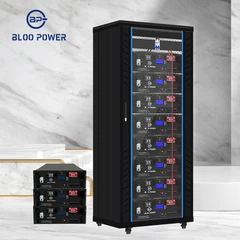
BLOO POWER's publicly disclosed parameters for its 16kWh rack-mounted energy storage battery show that its maximum continuous charging current and maximum continuous discharging current are both 200A, and it is equipped with an intelligent BMS and CAN+RS485 communication. These parameters indicate that the BMS is not only related to "whether there is protection", but also to how much continuous power the battery can operate at.
Why Must a BMS Monitor Battery Temperature?
Temperature is a crucial parameter in lithium-ion battery management. Batteries generate heat during charging and discharging, and ambient temperature also affects battery performance. Prolonged exposure to excessively high temperatures accelerates aging processes; charging at unsuitable low temperatures can lead to internal safety and performance issues within the cell. Therefore, BMS typically uses temperature sensors to continuously monitor the temperature of the cell or battery module and limits charging and discharging based on the temperature status.
IEC 62619:2022 explicitly identifies temperature as a critical factor in cell operating conditions and requires BMS to assess the battery system status to maintain the battery within its specified operating range. The U.S. Department of Energy also points out that lithium-ion batteries are sensitive to extreme temperatures, making temperature a critical factor in energy storage safety management.
● High-temperature charging and discharging protection
● Low-temperature operation protection
● Abnormal temperature alarm
● Provides temperature data for system control
BLOO POWER's 16kWh rack-mount products are rated for charging operating temperature of 0℃~50℃ and discharging operating temperature of -20℃~60℃. Specific model parameters should be referred to the corresponding product specifications.
Why is the cell balancing function of the BMS important?
This is a function that many ordinary consumers easily overlook. A home energy storage battery is often composed of multiple cells connected in series. Even if these cells come from the same batch, it is difficult to guarantee that they are completely consistent in terms of capacity, internal resistance, and SOC. With long-term charging and discharging, this difference may gradually widen. For example, one cell may charge faster than others and reach its maximum capacity first, while other cells are not yet fully charged. If the BMS only looks at the voltage of the entire battery pack, it may not be able to fully identify this individual cell difference.
Therefore, the BMS needs to reduce the state differences between different cells through cell balancing. BLOO POWER's publicly available 16kWh rack-mount product data explicitly mentions the use of a smart BMS and further provides parameters for the active balancing function.
● Reduce voltage difference between cells
● Improve cell consistency
● Increase usable capacity
● Facilitate long-term cycle operation
For 51.2V LiFePO4 batteries with a 16S architecture, balancing management is particularly important because the final performance of the system depends not only on the "strongest cell" but also on the cells in the worst state.
How does the BMS calculate SOC? Why is SOC so important?
SOC stands for State of Charge, which can be simply understood as "how much charge the battery has left." For example, if the system displays an SOC of 80%, users usually understand this to mean the battery has about 80% usable energy. However, actual SOC calculation is not simply based on a voltage value. The BMS typically estimates SOC by combining information from current, voltage, historical data, and battery models, and continuously corrects it based on long-term operation.
BLOO POWER's publicly available information shows that its battery BMS can monitor key parameters in real time, including cell voltage, temperature, current, and SOC.
● SOC determines the displayed remaining charge
● SOC affects charging and discharging strategies
● SOC helps determine reserve capacity
● SOC data can be transmitted to the inverter
If the SOC estimation is significantly inaccurate, problems may occur such as "the display shows 30% remaining, but the battery is quickly depleted" or "the display shows 100%, but the actual capacity is not fully charged." Therefore, the BMS's SOC algorithm and calibration capabilities directly affect the user's experience with the entire energy storage system.
BMS is also responsible for determining SOH (State of Health) to help understand battery health.
Besides SOC (State of Charge), another crucial indicator for energy storage batteries is SOH, or State of Health. While SOC tells users "how much power is left," SOH more accurately answers "how much performance this battery retains compared to a new battery." With long-term cycle use, cell capacity gradually decreases, and internal resistance may change. Therefore, BMS needs to estimate battery health based on historical charge/discharge data, voltage, current, temperature, and capacity changes.
Although different manufacturers use slightly different SOH algorithms, its value is clear: it helps the system understand whether the battery is aging and whether there are abnormal differences between different cells.
● SOC shows "how much is left"
● SOH shows "overall health level"
● SOH can assist in judging degradation
● Long-term data is helpful for operation and maintenance
For long-term cycle-type energy storage products like BLOO POWER, BMS should not only ensure current operational safety but also help the system achieve more stable long-term operation through continuous data management.
Why must the BMS communicate with the energy storage inverter?
Modern residential energy storage systems are no longer as simple as "connecting two wires from the battery to the inverter." Data communication between the battery and inverter typically requires CAN or RS485. The BMS can send information such as SOC, temperature, maximum allowable charging current, maximum allowable discharging current, fault status, and voltage limits to the inverter, allowing the inverter to dynamically adjust its charging and discharging strategies based on the battery's current state. BLOO POWER explicitly states that its energy storage battery BMS exchanges these critical operational data with the inverter via CAN/RS485.
For example:
|
BMS data |
The effect of sending to the inverter |
|
SOC |
Determine the remaining battery power |
|
Maximum charging current |
Limit inverter charging power |
|
Maximum discharge current |
Limit load-side output |
|
Battery temperature |
Adjust or stop charging and discharging |
|
Fault status |
Trigger alarm or shutdown |
|
Voltage limit |
Controlling charge and discharge boundaries |
Therefore, voltage matching does not equate to compatibility. Even if both devices are 51.2V, incompatibility in CAN/RS485 protocols, communication addresses, data definitions, or control logic can lead to issues such as abnormal SOC display, BMS alarms, and inability to charge properly.
How Does a Battery Management System (BMS) Help Extend the Lifespan of Residential Energy Storage Batteries?
Battery lifespan is not determined by a single parameter, but is influenced by various factors such as DoD (Domain of Demand), temperature, charge/discharge rate, SOC (State of Charge) dwell time, and cell consistency. The role of a BMS is to keep the battery within the manufacturer-specified safe operating range as much as possible. For example, preventing overcharging, preventing over-discharging, limiting excessive charge/discharge current, monitoring temperature, and improving cell consistency all help reduce the impact of improper operation on the battery.
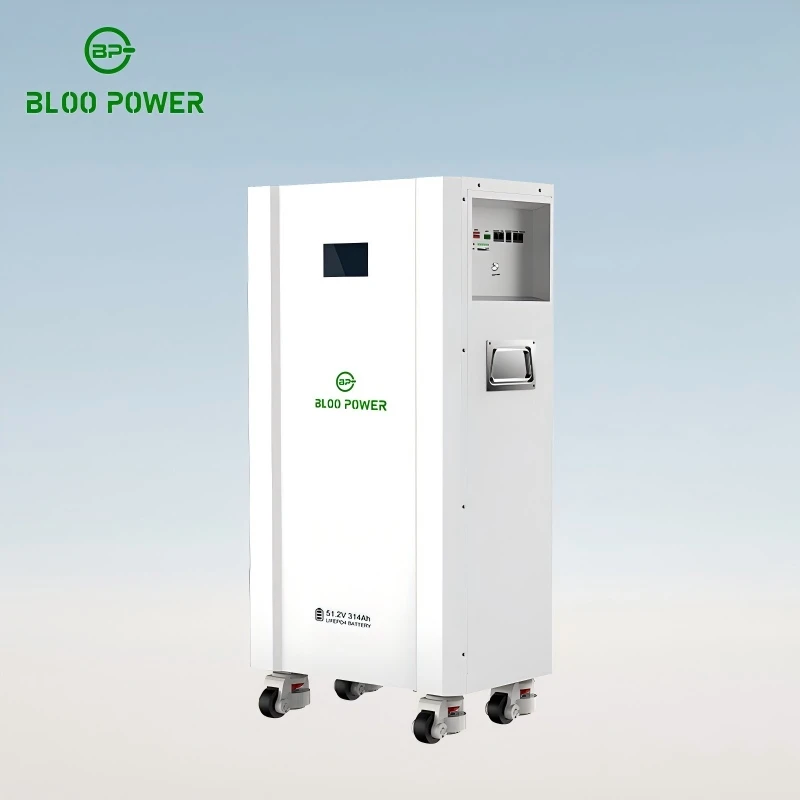
Therefore, when an energy storage battery is labeled "8000 cycles @ 80% DoD," this cycle life data should be understood in conjunction with the BMS. BLOO POWER's 51.2V 314Ah 16kWh rack-mount product is labeled with 8000 cycles at 80% DoD and is equipped with a smart BMS.
This does not mean "the battery will fail immediately after 8000 cycles," but rather that the cycle life is evaluated under the manufacturer's specified testing conditions and lifespan termination standards. Actual lifespan is also affected by factors such as:
● Ambient temperature
● Daily DoD
● Charge/discharge rate
● Cell consistency
● Installation and operating conditions
and other factors.
Why is the Battery Management System (BMS) a crucial component of an energy storage battery safety system?
While lithium-ion batteries boast high energy density, they pose safety risks such as thermal runaway under extreme conditions. Safety data from the U.S. Department of Energy indicates that thermal runaway in lithium-ion batteries can involve rapid self-heating, release of flammable gases, and the risk of fire and explosion, thus requiring multifaceted management measures.
This also means that "having a BMS" cannot be interpreted as "the battery will absolutely not experience any safety issues." A reliable energy storage system should employ multi-layered protection:
The Battery Cell Itself
Selecting compliant LiFePO4 cells and reliable manufacturing processes.
01
BMS
Monitoring voltage, current, temperature, SOC, and other status parameters, and implementing protective measures.
02
Electrical Protection
Configuring fuses, circuit breakers, isolation devices, etc.
03
System-Level Protection
Including inverter control, fault alarms, installation environment, and necessary fire safety measures.
04
IEC 62619:2022 also emphasizes the importance of battery system risk analysis and BMS safety functions.
Overview of BMS Core Functions
|
BMS Functions |
Monitoring objects |
Main purpose |
Significance for home users |
|
Overcharge protection |
Individual/Total Voltage |
Prevent charging from exceeding the limit |
Improve security |
|
Over-discharge protection |
Individual/Total Voltage |
Prevent over-discharge |
Protect the battery cell |
|
Overcurrent protection |
Charging and discharging current |
Limiting abnormally high current |
Prevent abnormal load |
|
Temperature protection |
Cell/Module Temperature |
Controlling temperature risks |
Improve operational stability |
|
Cell balancing |
Individual voltage/SOC |
Reduce cell differences |
Improve capacity utilization |
|
SOC calculation |
Voltage/Current/Historical Data |
Determine the remaining battery power |
Accurately displays battery level |
|
SOH Management |
Data such as capacity/cycle |
Assess health status |
Understanding battery aging |
|
communication |
CAN/RS485 |
Exchange data with inverter |
Achieve intelligent control |
|
Fault alarm |
Multiple operating parameters |
Early detection of anomalies |
Convenient for operation and maintenance |
BLOO POWER's BMS Design: From Individual Cells to Home Energy Storage Systems
BLOO POWER's publicly available 51.2V 314Ah 16kWh rack-mount LiFePO4 product is a typical example of a residential energy storage BMS application. This product uses a 16S LiFePO4 architecture, a rated voltage of 51.2V, a capacity of 314Ah, and a battery energy of 16kWh. Publicly available parameters include 8000 cycles under 80% DoD conditions, CAN+RS485 communication, a maximum continuous charge/discharge current of 200A, and a smart BMS. Product documentation also indicates that it supports parallel expansion of multiple units.
This means the BMS (Battery Management System) is not isolated but integrated throughout the entire energy storage system:
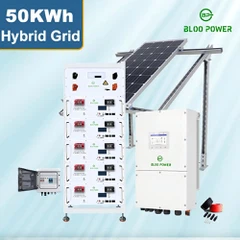
LiFePO4 cells → BMS → CAN/RS485 → Energy storage inverter → Home load
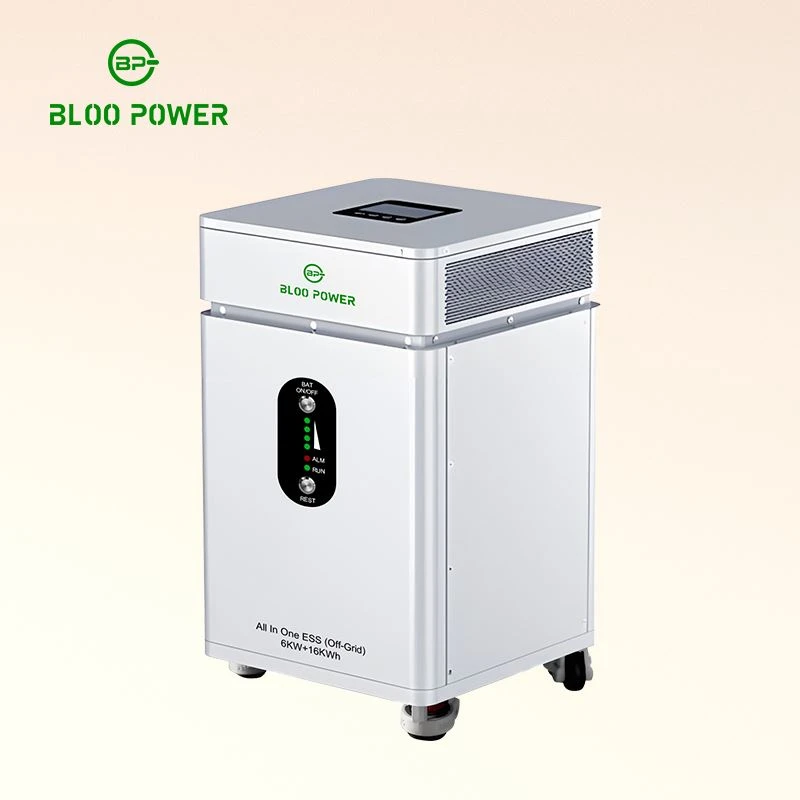
BLOO POWER's publicly disclosed 16kWh All-in-One ESS further integrates a 16.07kWh battery, a 6kW single-phase inverter, a smart BMS, and CAN/RS485 communication into a single system, with product data indicating 8000 cycles under 80% DoD conditions.
For home users who do not wish for complex installations, this integrated design reduces the system integration work between the battery and inverter, while still requiring electrical protection, communication, and commissioning according to the specific installation requirements of each model.
Comparison of BMS parameters for BLOO POWER related products
|
Product Type |
Battery capacity |
Voltage |
BMS |
communication |
Cycle life |
|
10.24kWh Rack-mounted |
10.24kWh |
51.2V |
Intelligent BMS |
CAN+RS485 |
8000 times @ 80% DoD |
|
16kWh Rack-mounted |
16kWh |
51.2V |
Intelligent BMS |
CAN+RS485 |
8000 times @ 80% DoD |
|
16kWh Wall-mounted |
16kWh |
51.2V |
Intelligent BMS |
CAN+RS485 |
8000 times @ 80% DoD |
|
16.07kWh All-in-One |
16.07kWh |
51.2V |
Intelligent BMS |
CAN+RS485 |
8000 times @ 80% DoD |
The above parameters, specific models, batches, and final delivery specifications shall be based on the corresponding datasheet, nameplate, and contract technical agreement.
BMS working principle diagram

From a system architecture perspective, the BMS can be understood as an intelligent control layer located between the "battery cell" and the "inverter":
Battery cell voltage/temperature/current → Real-time acquisition by the BMS → SOC/SOH calculation → Fault diagnosis → Balancing/protection → CAN/RS485 communication → Inverter adjustment of charging and discharging
How to Understand the 10 Most Important Parameters of a Residential Energy Storage BMS?
If you are buying a home energy storage battery, you shouldn't just ask "Does it have a BMS?", but rather inquire about the specific functions of the BMS. A truly worthwhile BMS should at least cover core functions such as voltage, current, temperature, equalization, SOC, and communication.
|
Parameters/functions |
Issues to be aware of |
|
Individual voltage monitoring |
Are each battery cell monitored? |
|
Overcharge protection |
What is the protection threshold? |
|
Over-discharge protection |
What is the minimum working range? |
|
Overcurrent protection |
What is the maximum continuous/peak current? |
|
Temperature monitoring |
How many temperature points are monitored? |
|
Equilibrium method |
Passive equilibrium or active equilibrium? |
|
SOC |
Is the State of Charge (SOC) calculated in real time? |
|
SOH |
Is it possible to assess health status? |
|
communication |
Does it support CAN/RS485? |
|
Fault Log |
Does it support alarms, logging, and remote monitoring? |
For B2B buyers, solar installers, and energy storage project integrators, these parameters are often more important than simply comparing "10kWh or 16kWh".
How to determine if a residential energy storage battery's BMS is reliable?
When purchasing residential energy storage batteries, you can follow these steps:
1. Check for complete BMS protection functions.
At a minimum, confirm that the product has overcharge, over-discharge, overcurrent, short-circuit, and temperature protection. IEC 62619:2022 explicitly includes these safety controls in BMS requirements.
2. Check for individual cell monitoring.
Monitoring only the overall battery pack voltage is insufficient. True battery management requires attention to differences between individual cells.
3. Check for balancing functions.
During long-term operation, cell consistency affects the overall battery pack performance; therefore, balancing functions are crucial. BLOO POWER's publicly available information on its 16kWh products lists intelligent BMS and active balancing functions.
4. Check CAN/RS485 compatibility.
Communication between the energy storage battery and the inverter is critical. BLOO POWER also emphasizes that CAN/RS485 is not only used to read the SOC, but also to transmit critical data such as maximum charge/discharge current, temperature, and fault status.
5. Check if the BMS is compatible with system-level protection.
The BMS is not the only protection device. Professional installations should consider DC circuit breakers, AC side protection, grounding, isolation, installation environment, and local electrical codes.
Why does the Battery Management System (BMS) determine the "intelligence" of a residential energy storage system?
Traditional batteries are more like simple "energy containers," while modern residential energy storage batteries have gradually become intelligent energy devices with sensing, judgment, communication, and control capabilities. The BMS can know approximately how much charge the battery still has, its temperature, its charging and discharging current, and whether there are any differences in cell voltage, and sends this information to the inverter and monitoring platform.
Therefore, the future development of residential energy storage is not simply about increasing battery capacity, but about further improving:
● Battery state estimation accuracy
● Cell balancing capability
● Fault prediction capability
● Inverter communication capability
This is why, when choosing energy storage products such as BLOO POWER, one should not only look at "kWh capacity" and "cycle life," but also pay attention to the BMS architecture.
Conclusion: BMS is not an add-on feature of energy storage batteries, but a core component.
If we compare a residential energy storage battery to a car, then the battery cells are like the fuel, and the BMS is more like the engine control and safety management system. Without an excellent BMS, even using high-quality LiFePO4 cells cannot fully realize the battery's performance and long-term operational value.
A reliable residential energy storage BMS should perform at least the following tasks:
1. Monitor individual cell voltage
2. Monitor total battery voltage
3. Monitor charge/discharge current
4. Monitor cell temperature
5. Prevent overcharging
6. Prevent over-discharging
7. Prevent overcurrent
8. Perform cell balancing
9. Calculate State of Charge (SOC)
10. Assess State of Health (SOH)
11. Record and report faults
12. Communicate with the inverter via CAN/RS485
For BLOO POWER's 16kWh LiFePO4 energy storage products, a 51.2V, 314Ah, 16S cell architecture is used, equipped with an intelligent BMS, CAN+RS485 communication, and supports high charge/discharge currents and multi-unit capacity expansion; some products have a cycle life of 8000 cycles @ 80% DoD.
Therefore, when purchasing residential energy storage batteries, consumers should not only ask:
"How many kWh does this battery have?"
but also:
"What kind of cells does it use? What parameters does the BMS monitor? Is there equalization? What communication protocols does it support? How are overcharge, over-discharge, overcurrent, and temperature protection implemented? Under what DoD and testing conditions was the cycle life obtained?"
This is the truly important way to determine whether a residential energy storage battery is professional, reliable, and suitable for long-term use.
Send Inquiry