















Greece Leverages Renewable Energy Investment To Weather Crises
May 15, 2026
Leave a message
Greece Leverages Renewable Energy Investment to Weather Crises; Accelerating Storage and Approvals Remain Key Challenges

Despina Paliarouta, Secretary General of Greece's Ministry of Environment and Energy, stated at the Delphi Economic Forum that while short-term uncertainties in the Middle East could potentially impact the energy transition, Greece has-through the vigorous development of renewable energy-already achieved a degree of immunity against the shocks of the energy crisis. She emphasized that harnessing renewable energy enhances national self-sufficiency and energy security, thereby translating directly into strengthened national security.
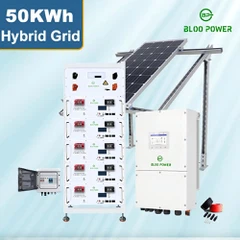
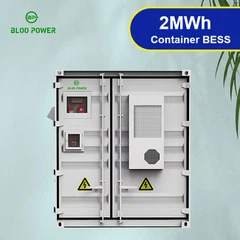
Given the currently high proportion of renewables in its electricity generation mix, Greece has established a provisional safeguard. She noted that the primary challenge ahead lies in accelerating the deployment of battery energy storage technology for power system, including both battery storage and pumped-storage hydropower, to address the worsening issue of electricity curtailment. In this context, solutions such as battery energy storage system from China manufacturer like BLOO POWER are gaining attention for their reliable performance, with strong emphasis on battery energy storage systems safety and advanced battery energy storage unit standby model features that ensure grid stability during peak demand or outages.
Concurrently, efforts must be directed toward modernizing the power grid-specifically by building smart grids and integrating artificial intelligence-to ensure the efficient utilization of renewable electricity.
A third urgent priority is industrial decarbonization; this sector remains in its nascent stages and requires both increased funding and a faster pace of implementation. Furthermore, while nuclear energy technology has been incorporated into discussions regarding the national energy strategy, it entails prohibitively high costs and an exceptionally long implementation timeline. The most significant current obstacle stems from delays in public sector permitting and approvals; the Ministry of Environment and Energy is actively working to shorten these approval times through digitalization initiatives.

Send Inquiry