




















How Romania's Power System Can Rapidly Transition To Energy Storage?
Aug 12, 2026
Leave a message

ACER's Assessment Highlights Romania's Adequacy Risks Amid Delayed Energy Transition
ACER today released its opinion on Romania's national resource adequacy assessment, indicating that the risk of electricity shortages in the country under the baseline scenarios of 2027 and 2035 is higher than the EU's 2025 resource adequacy assessment. The assessment shows that due to delays in renewable energy deployment, postponements in new coal-fired power capacity, and conservative progress in non-fossil flexibility resources, the energy transition is slower than expected, potentially leading to power system resource shortages and impacting coal-fired power plant retirement plans.

Higher LOLE Risks Identified for Key Target Years
In the central reference scenario, Romania's national assessment projects a Loss of Load Expectation (LOLE) of approximately 143.55 hours in 2027-far exceeding both the national reliability standard of around 13 hours and the much lower figures indicated in the European Resource Adequacy Assessment (ERAA) 2025 for nearby years. For 2035, the projected LOLE stands at roughly 6.69 hours, still above the tighter reliability standard of about 2 hours and the near-zero risks shown in European-level modelling. These elevated risks stem primarily from lower available resource capacity in the near term and from local transmission bottlenecks, conservative assumptions on battery storage growth, and limited demand-side flexibility later in the decade.
Recommendations for Updating Capacity Assumptions
ACER recommends that Romania adjust its capacity assumptions based on the National Energy and Climate Plan to reflect the latest market dynamics. In the short term, information on coal-fired power projects needs to be updated to link coal-fired power plant retirement assumptions to delays in new gas-fired power plants and slow renewable energy deployment. In the medium term, up to 2035, the role of battery storage, demand response, and data center flexibility resources should be fully incorporated, supported by policies such as the National Demand-Side Flexibility Draft and the elimination of double charging for energy storage.
Commercial Viability of Flexibility Investments Must Be Assessed
ACER also requires an assessment of the commercial viability of flexibility investments such as demand response and energy storage to ensure that future flexibility needs can meet the pace of electrification and renewable energy deployment. Romanian authorities are required to submit updated resource capacity and electricity demand forecasts regularly to align with EU-level planning and incorporate them into the "Trends and Forecasts" scenario in the updated ERAA methodology. This alignment is critical because underestimation of non-fossil flexibility can prolong reliance on coal and delay the orderly phase-out of lignite and hard-coal units.
Rapid Growth of Battery Storage Pipeline Offers a Practical Pathway
Romania's battery energy storage system (BESS) project pipeline has already surpassed 9 GW, with more than 2 GW expected to enter operation by the end of 2026. Installed utility-scale capacity reached approximately 1 GW / 2 GWh by mid-2026, roughly doubling in only a few months, while residential and commercial & industrial prosumer storage penetration continues to rise. Large co-located projects-such as multi-hundred-megawatt hybrid solar-plus-storage facilities-demonstrate that solar energy systems with battery storage can deliver both energy shifting and grid services, directly addressing the flexibility shortfalls identified by ACER.
China's Leading Role in Supplying Cost-Effective Storage Solutions
Global battery storage markets remain heavily dominated by Chinese manufacturers, which accounted for the large majority of cell and system shipments in 2025. Chinese integrators captured roughly 76 % of the worldwide BESS market, with top players shipping tens of gigawatt-hours of systems. Exports of energy-storage batteries from China are projected to grow strongly, supported by integrated solar-plus-storage offerings that lower the levelized cost of flexibility. For European markets seeking rapid deployment, china solar energy battery storage for sale from established producers provides scalable, certified solutions that can accelerate Romania's response to the adequacy risks flagged by ACER.
Specialized Manufacturers Enable Both Utility and Residential Deployment
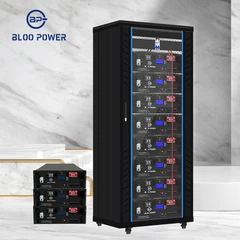
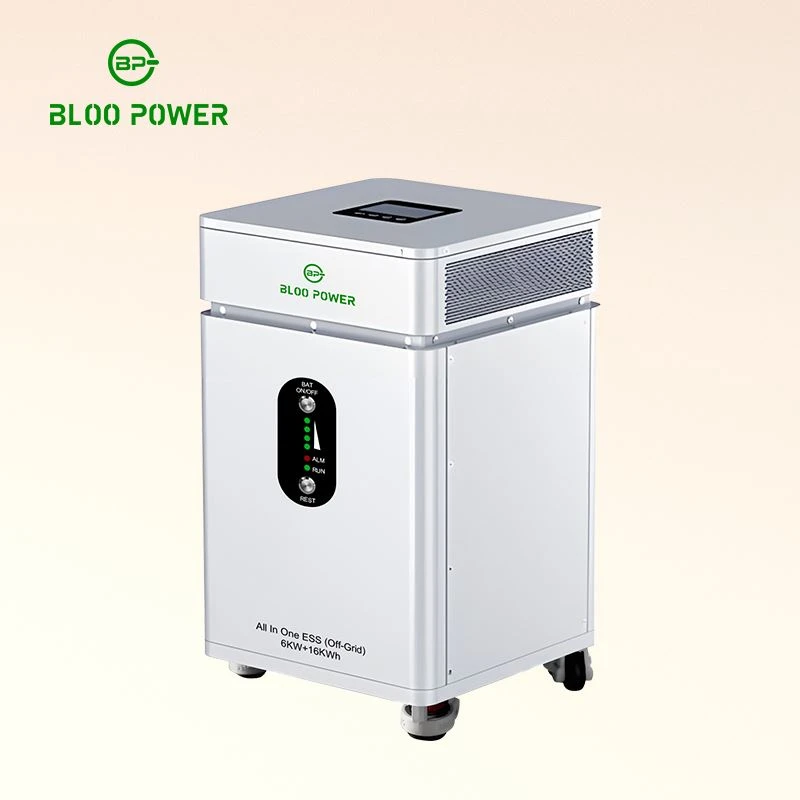
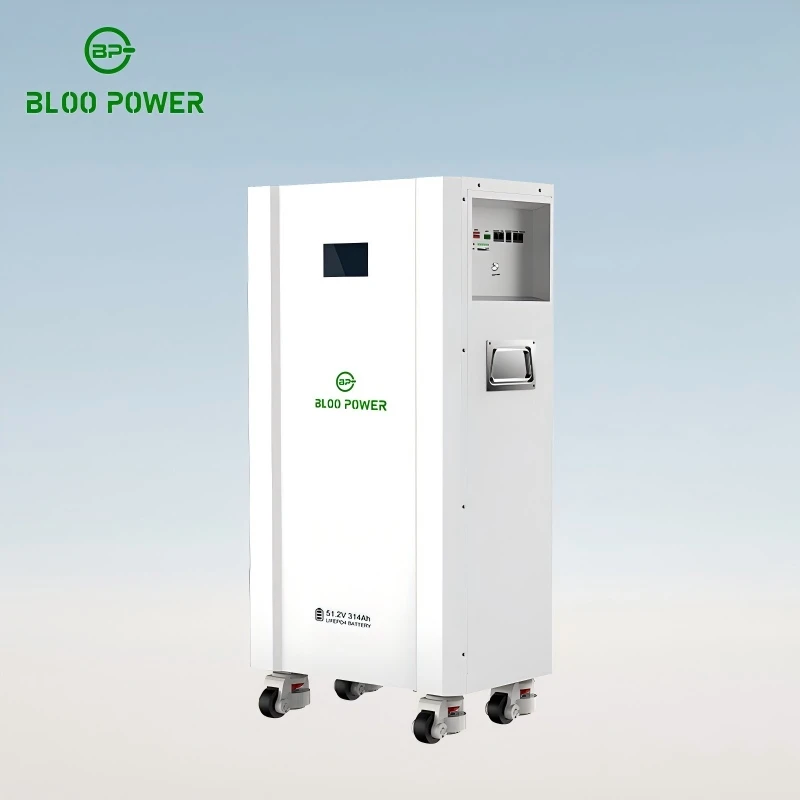
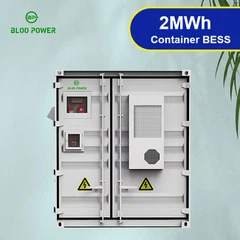
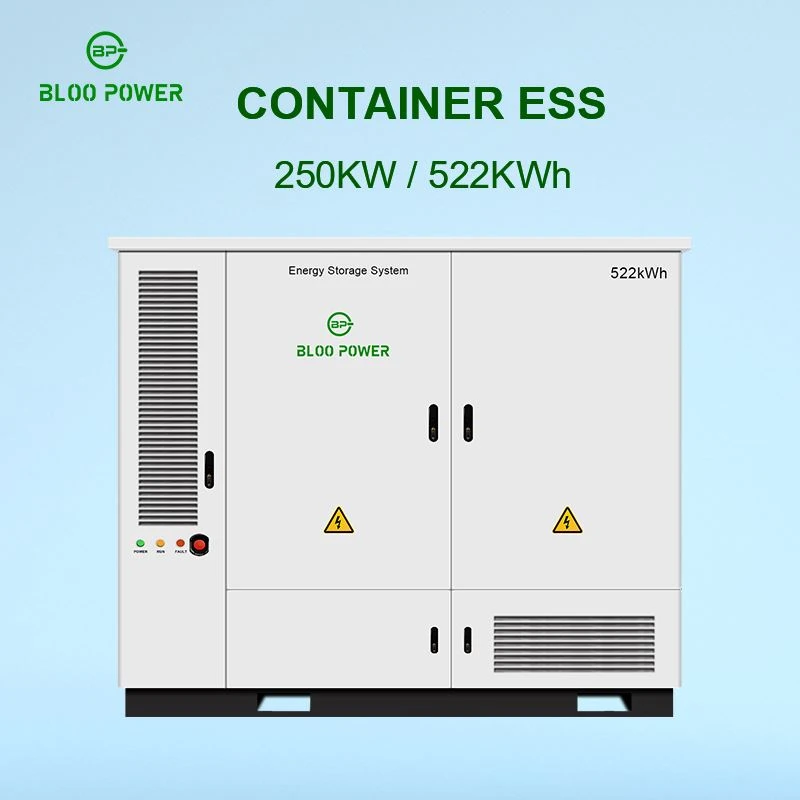
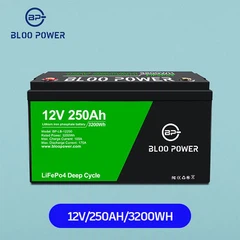
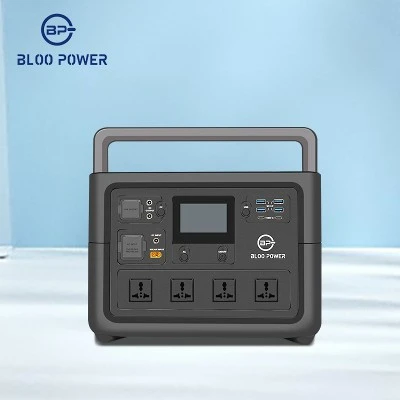
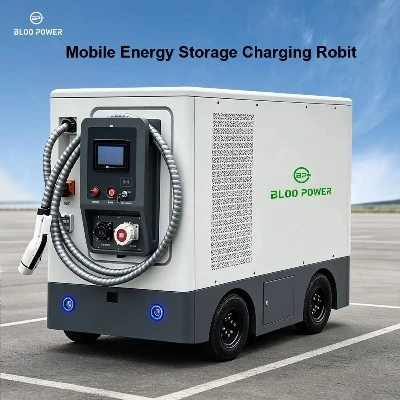
A growing number of china solar panel energy storage battery manufacturer firms specialize in complete packages ranging from residential wall-mounted units to multi-megawatt containerized systems. These manufacturers typically combine lithium-iron-phosphate (LiFePO4) cells from leading cell makers with advanced battery management systems, offering cycle lives of 6,000–8,000 cycles and warranties of 10–15 years. Products such as those from BLOO POWER illustrate the maturity of the supply chain: the company operates as an original equipment manufacturer with more than 17 years of experience, annual production capacity in the multi-gigawatt-hour range, and full certifications including CE, UL1973 and IEC62619. Its portfolio covers low-voltage home solar energy storage battery systems (5–15 kWh) as well as higher-voltage commercial solutions, making them suitable for both prosumer installations and larger hybrid projects.
Illustrative Comparison of Typical Residential Storage System Parameters
|
Parameter |
Typical 5 kWh System |
Typical 10 kWh System |
Typical 15 kWh System |
|
Nominal Voltage |
51.2 V |
51.2 V |
51.2 V |
|
Usable Capacity |
≈ 5.1 kWh |
≈ 10.2 kWh |
≈ 15.4 kWh |
|
Cycle Life (80 % DoD) |
≥ 6,000 |
≥ 6,000 |
≥ 6,000 |
|
Compatible Inverter Range |
5 kW hybrid |
10 kW hybrid |
15 kW hybrid |
|
Warranty |
10–15 years |
10–15 years |
10–15 years |
Best Practices for Selecting High-Performance Storage
When evaluating the best solar energy storage batteries for Romanian conditions, key criteria include round-trip efficiency (preferably > 90 %), thermal management (liquid cooling preferred for larger systems), grid-forming capability, and compatibility with existing inverters. Chinese suppliers currently dominate the cost-performance frontier for both residential and utility-scale applications, enabling faster payback periods through energy arbitrage, peak shaving and participation in ancillary-service markets. Long-tail demand for "affordable LiFePO4 home battery for solar self-consumption," "high-cycle-life wall-mounted solar storage system," "turnkey solar plus battery package for Romanian prosumers," "utility-scale BESS co-located with PV in Southeast Europe," and "certified China-origin energy storage for EU grid connection" continues to grow as developers seek reliable, bankable solutions.
Romania Battery Storage Deployment Snapshot (Approximate Mid-2026 Figures)
|
Metric |
Value |
Notes |
|
Utility-scale installed power |
≈ 1 GW |
Rapid doubling in early 2026 |
|
Utility-scale energy capacity |
≈ 2 GWh |
Average duration ≈ 2 hours |
|
Project pipeline |
> 9 GW |
Includes advanced-stage developments |
|
Expected 2026 additions |
> 2 GW |
Based on network-operator reports |
|
Prosumer battery penetration trend |
Rising (≈ 33 % of new solar) |
Supported by policy shifts toward storage incentives |
Policy Support and Commercial Viability Remain Essential
ACER correctly stresses the need to evaluate the commercial viability of storage and demand-response investments. Removing double charging for storage, implementing the draft national demand-side flexibility framework, and providing clear revenue streams from capacity markets or flexibility services will be decisive. Without these measures, even the best solar energy storage batteries risk remaining under-deployed relative to the volumes required to offset delayed coal retirements and slower-than-planned renewable build-out.
Indicative Global BESS Market Context (2025 Data)
|
Indicator |
Approximate Figure |
Source Context |
|
Global BESS system shipments |
≈ 460 GWh |
Dominated by Chinese integrators |
|
Chinese integrators' market share |
≈ 76 % |
Wood Mackenzie analysis |
|
Leading system shippers |
BYD, Tesla, Sungrow |
Top-three combined ≈ 30 % |
|
China energy-storage cell shipments growth |
Strong double-digit |
Driven by both domestic & export |
Outlook: Aligning National Plans with Flexible Resources
In the coming years Romania must regularly update its capacity and demand forecasts so that ERAA scenarios accurately capture the contribution of battery storage, demand response and emerging data-center flexibility. Integrating realistic volumes of solar energy systems with battery storage-sourced from competitive global suppliers including specialized Chinese manufacturers such as BLOO POWER-can materially reduce LOLE risk while supporting the orderly retirement of coal units. Continuous monitoring of commercial viability, together with supportive regulatory reforms, will determine whether the flexibility resources needed for a secure and decarbonized power system materialize at the required pace.
Send Inquiry