





















What Role Do Large Batteries Play in The UK's Solar Energy Storage Transition?
Aug 15, 2026
Leave a message

UK Battery Skip Rates Fall Sharply in First Half of 2026
In the first half of 2026, the skip rate for grid-scale battery storage in the UK's balancing market decreased compared to previous periods. From January to June 2026, the skip rate for all technologies decreased by 9% compared to the same period in 2025. Specifically, the skip rate for battery storage decreased from an average of 49% in the first half of 2025 to 38% in the same period of 2026, while the skip rate for pumped hydro storage also decreased from 59% to 49%. Skipping refers to the control room selecting more expensive assets to perform balancing operations that could be completed by lower-cost assets (such as grid-scale batteries). Not all skips are avoidable; control room engineers must consider factors such as system constraints, asset availability, and grid conditions.

Complex Causes Behind Persistent Skip Rate Challenges
The UK's National Energy System Operator (NESO) acknowledges that the skip rate problem has long plagued battery asset owners, but points out that its causes are complex and cannot be solved by a single intervention. Operational adjustments and grid specification revisions, including improved communication protocols introduced in November 2025, have already brought about improvements. NESO anticipates further optimization through system, process, and methodological changes, but warns that "the low-hanging fruit" has already been picked. These reforms, including Grid Code modification GC0166 (which introduced new dynamic parameters for limited-duration assets such as batteries), have enhanced visibility of state-of-charge and availability, reducing the historical tendency to favour slower thermal plant.
2025 Marked as a Milestone Year for Grid-Scale Energy Storage Capacity
Amid declining skip rates, the UK government has called 2025 a "milestone year" for grid-scale energy storage. By the end of 2025, Great Britain's grid-scale battery storage capacity reached 7.5 GW, with a record 2.3 GW energised in that year alone and total output of 2.3 TWh at an average 85% efficiency. The target remains 23 to 27 GW by 2030 under the Clean Power 2030 Action Plan. NESO is working with regulator Ofgem to study balancing and dispatch reforms, grid constraint management options, and stronger location investment signals, in line with the new national pricing reform plan. Future changes may include lowering the mandatory participation threshold in the balancing mechanism market and adjusting transaction deadlines. NESO also plans to investigate the reasons for high skip rates on user-side flexibility in heat-constrained areas and publish relevant data in the third quarter of 2026, completing an impact assessment of previous load response actions.
Expanding Role of Large Battery for Solar Energy Storage in the UK Transition
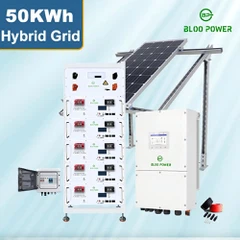
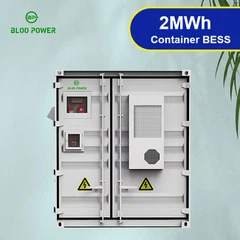
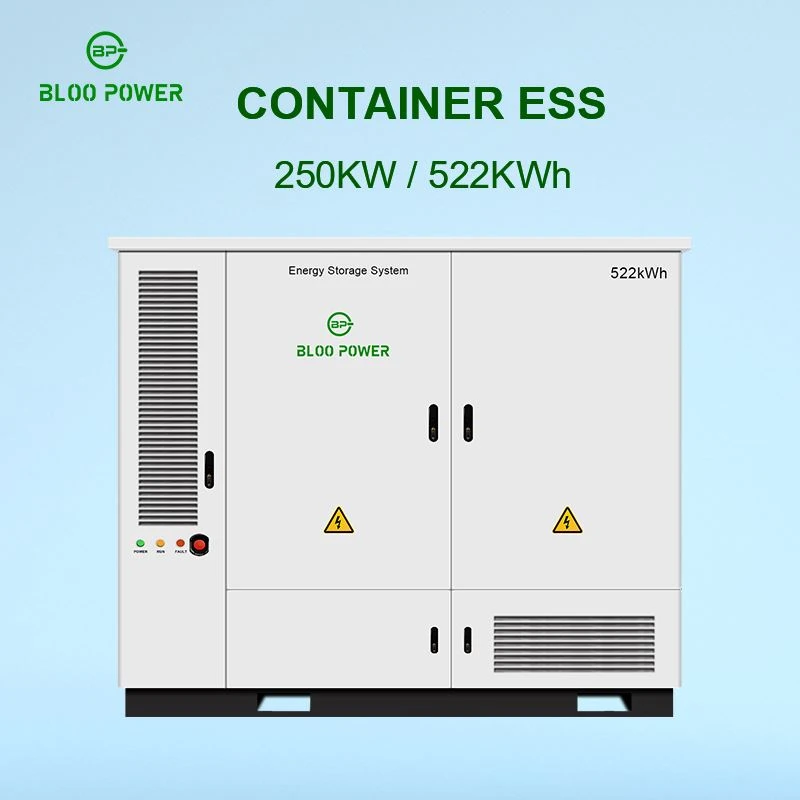
The reduction in skip rates coincides with rapid growth in solar generation and the rising importance of a large battery for solar energy storage. Grid-scale and co-located systems now routinely capture daytime solar surplus for evening discharge, supporting both wholesale arbitrage and balancing services. UK government statistics show that England accounted for 74% of Great Britain battery output in 2025, with Scotland at 24%, reflecting the geographic concentration of renewable resources and storage. A solar energy storage battery bank at multi-megawatt scale enables higher self-consumption of solar output and reduces curtailment, delivering measurable consumer savings-batteries have already saved Great Britain consumers £188 million since December 2024 through balancing mechanism actions and wholesale price suppression.
Advantages of Battery Storage for Solar Energy Systems Become Clearer
The advantages of battery storage for solar energy systems are now quantified across residential, commercial and utility scales. Self-consumption typically rises from 30–55% with solar alone to 75–90% once storage is added. Peak shaving lowers demand charges, time-of-use tariff arbitrage captures the spread between off-peak and peak prices (often 15–36 p/kWh), and island-mode capability provides resilience during outages. Commercial systems of around 100 kWh currently cost £20,000–£40,000 installed after recent 30–40% cost declines. These benefits underpin battery energy storage for enabling distributed solar power generation, allowing rooftop and community solar to contribute flexibility rather than merely intermittent export.
UK Grid-Scale Battery Capacity and Skip Rate Trends
|
Metric |
2025 (H1 or Full Year) |
2026 (H1) |
Target / Notes |
|
Grid-scale battery power capacity |
7.5 GW (end-2025) |
Ongoing growth |
23–27 GW by 2030 |
|
Battery skip rate (average) |
49% |
38% |
Further reductions expected via GC0166 |
|
Pumped hydro skip rate |
59% |
49% |
- |
|
All-technologies skip rate change |
Baseline |
–9% vs H1 2025 |
Operational & code changes |
|
Battery output |
2.3 TWh (full year) |
- |
85% average efficiency |
Portable Solar Energy Storage Battery Options and Residential Solutions
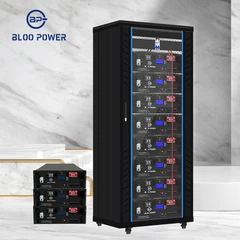
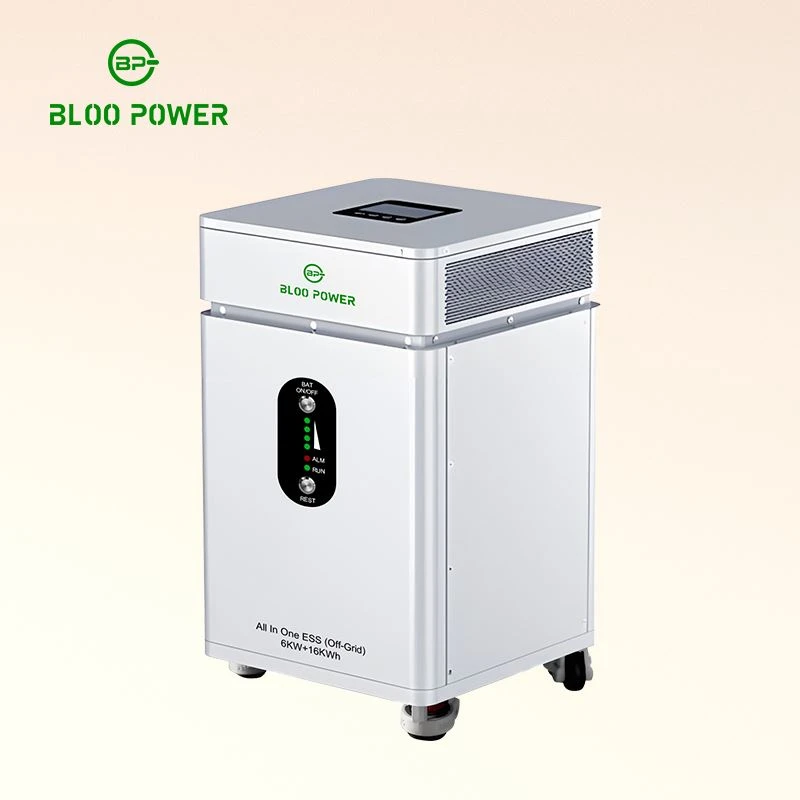
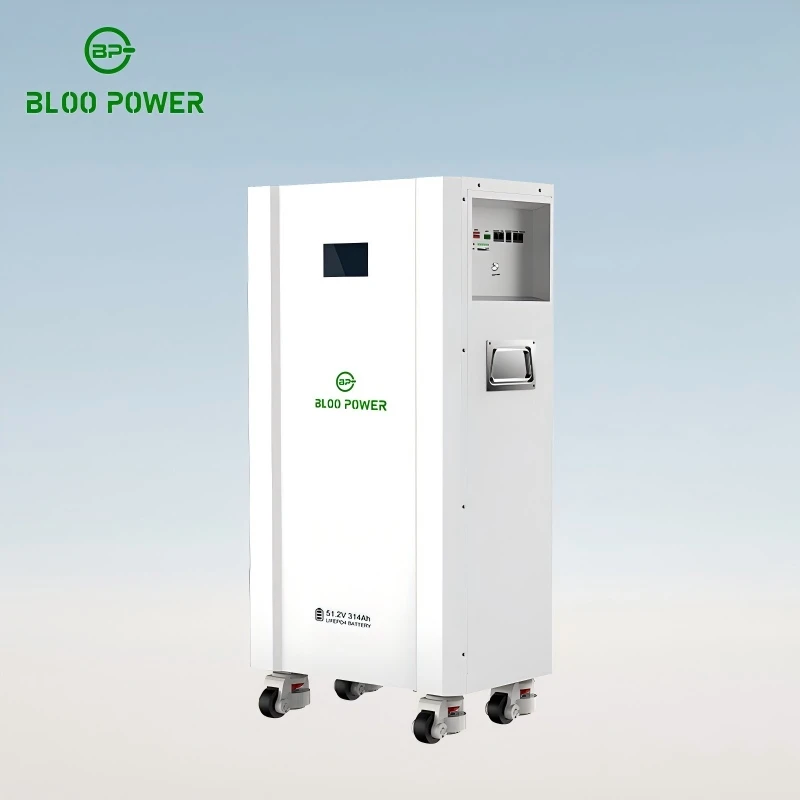
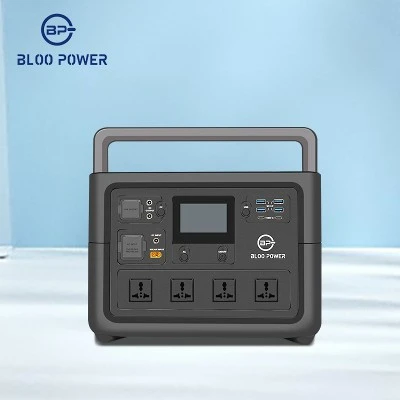
At the smaller end of the spectrum, portable solar energy storage battery options and residential solar energy storage battery bank systems are expanding rapidly. Manufacturers such as BLOO POWER (Bloopower) offer LiFePO4 solutions ranging from compact 1 kWh all-in-one units suitable for off-grid or backup use to stackable 10–80 kWh systems and high-voltage modules. These products feature cycle lives of 6,500–8,000 cycles at 80% depth of discharge, integrated BMS, and compatibility with hybrid inverters-ideal for households seeking energy independence or for distributed generation sites. Long-tail demand is growing for phrases such as "best large scale solar battery storage solutions UK", "residential solar energy storage battery bank costs", "portable solar power station with battery storage", "how battery storage improves solar self-consumption rates", and "distributed solar generation with battery energy storage systems".
Illustrative Advantages and Economics of Solar-Plus-Storage
|
Benefit Category |
Typical Improvement |
Supporting Data (UK 2025–2026) |
|
Self-consumption |
30–55% → 75–90% |
Commercial & residential analyses |
|
Annual bill reduction (example 4–6 kWp + 5–10 kWh) |
£350–£900+ |
Depends on tariff & usage |
|
Consumer savings (system-wide) |
£188 million (Dec 2024–mid-2026) |
Balancing + wholesale effects |
|
Cost decline (commercial storage) |
30–40% since 2022 |
Installed system prices |
|
Cycle life (LiFePO4, e.g. BLOO POWER) |
6,500–8,000 @ 80% DoD |
Manufacturer specifications |
Further Market and Policy Developments Supporting Storage Growth
Beyond skip-rate improvements, 2025–2026 has seen record financing (including multi-hundred-megawatt projects), connections reform that prioritised shovel-ready capacity while removing large volumes of speculative "zombie" projects, and the first cap-and-floor awards for longer-duration storage. Zenobe's 200 MW / 800 MWh four-hour Coalburn project reaching financial close illustrates the shift toward longer-duration assets. NESO's Balancing Mechanism Roadmap continues to target further dispatch optimisation, root-cause analysis of residual skips, and better locational signals under Reformed National Pricing. These measures collectively strengthen the business case for both utility-scale large battery for solar energy storage and distributed systems that enable higher penetrations of solar generation.
Indicative Flexibility Capacity Scenarios (GW)
|
Source |
2024 |
2030 Clean Power Range |
Notes |
|
Batteries |
~6.8–7.5 |
23–27 |
Core target |
|
Long-duration energy storage |
~2.8–2.9 |
4–6 |
Cap-and-floor support |
|
Interconnectors |
9.8 |
12–14 |
- |
|
Consumer-led flexibility |
1.6 |
10–12 |
Includes demand response |
Outlook: From Operational Fixes to Systemic Integration
While skip rates have improved materially, residual constraints-particularly behind transmission bottlenecks-mean that further reforms to market design, data visibility and investment signals remain essential. The combination of falling technology costs, policy targets, and operational learning is positioning battery storage as the key enabler of high solar penetration, whether through multi-gigawatt solar energy storage battery bank installations or through scalable residential and portable solutions offered by suppliers such as BLOO POWER. Continued monitoring of skip rates, consumer savings and capacity deployment will determine how quickly the UK can convert its renewable resource into firm, flexible power.
Send Inquiry