




















How To Promote The Reform And Development Of Energy Storage in Brazil?
Aug 16, 2026
Leave a message

Proposal Seeks to Rebalance Cost Allocation for Brazil's First Battery Capacity Auction
The Brazilian government is considering a proposal to adjust the cost-sharing method for the country's first battery storage auction. Bill PL 3.716/2026, submitted by Federal Representative Arnaldo Jardim, aims to abolish the provision in Law No. 15.269 that requires power generation companies to solely bear the cost of contracted battery storage capacity. The proposal argues that battery storage should follow the same cost-sharing framework as other capacity solutions, with costs shared by all participants in the power industry. This reform is viewed as critical ahead of the December 2026 auctions, which are expected to contract several gigawatts of capacity under 15-year contracts starting in August 2028.

Industry Associations Rally Behind Equitable Cost Distribution
Industry associations including Abeeólica, Abiape, Absae, Absolar, and Apine support this adjustment, arguing that current rules introduce uncertainty into upcoming battery storage auctions. These associations state that the flexibility and capacity services provided by battery storage systems benefit consumers, power generation companies, transmission operators, distribution companies, and the entire power system; allocating costs solely to power generation companies would distort the economy, reduce inter-technology competition, and drive up electricity prices as costs are passed down the supply chain. The bill's explanation states that the adjustment will not abolish the existing regulatory framework for capacity contracts, as Brazilian electricity law already stipulates that costs can be shared between end users and power generation companies. ABSAE has emphasized that treating batteries equally with other resources such as gas or coal plants is essential for auction success.
Regulatory Framework and Auction Structure Take Shape
Brazil's first-ever auction of battery storage capacity is scheduled for December. Two separate tenders will be held: LRCAP 2026 – National Storage on 2 December (restricted to projects meeting BNDES local-content criteria) and LRCAP 2026 – Storage on 4 December (open to all eligible projects). The Brazilian Bureau of Energy Storage and Technology (ABSAE) has submitted recommendations to regulators, including clarifying rules for stand-alone and co-located storage projects, localization requirements, and maintaining 15-year contract terms commensurate with the expected lifespan of the assets. Technical requirements include a minimum 30 MW availability, four consecutive hours of discharge capability, minimum overall efficiency of 85%, and a maximum of two full cycles per day (capped at 366 cycles annually). Preliminary registrations have already exceeded 260 GW for the first tender and 280 GW for the second, with strong concentration in the Northeast region.
Massive Investment Potential Underscores Strategic Importance of Storage
The proposal cites research estimating that Brazil could deploy approximately 71.8 gigawatt-hours of storage capacity between 2025 and 2034, requiring an investment of approximately 77.2 billion reais (US$14 billion), of which approximately 36 billion reais are related to capacity reserve projects connected to the national grid. Industry groups say clearer regulations and predictable auction rules are crucial to attracting investment and accelerating the deployment of battery storage in Brazil. Behind-the-meter commercial and industrial systems are projected to account for roughly 45% of this capacity (32.3 GWh), while front-of-meter capacity reserve applications will contribute about 42% (30.2 GWh). Battery prices are expected to fall a further 28% by 2034, supporting broader adoption.
Growing Demand for Battery Storage Systems for Solar Energy Across Segments
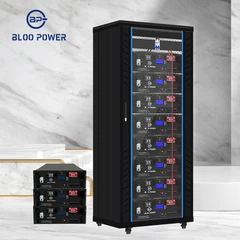
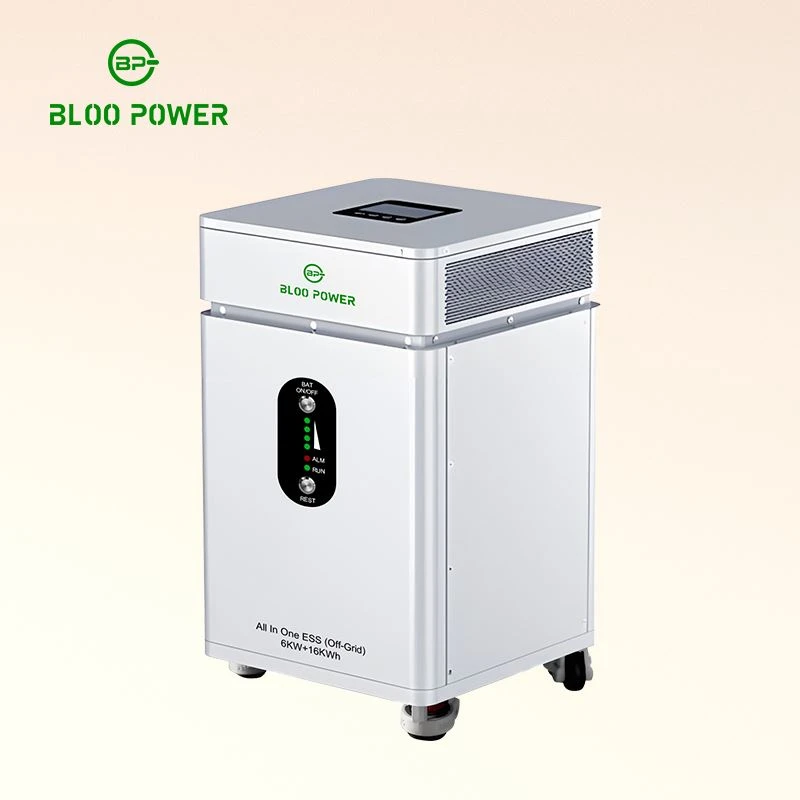
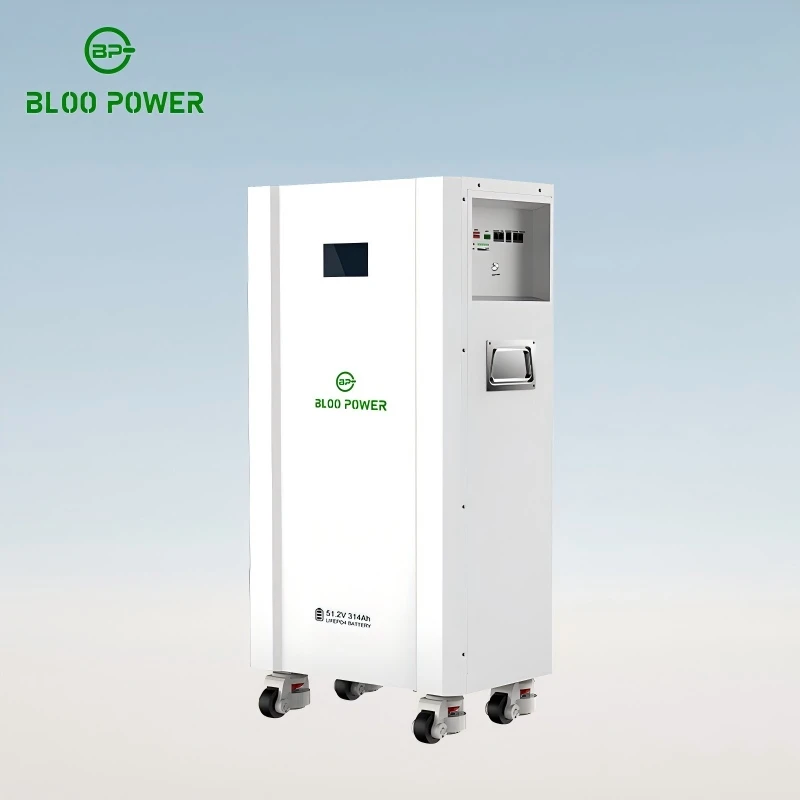
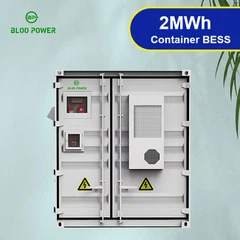
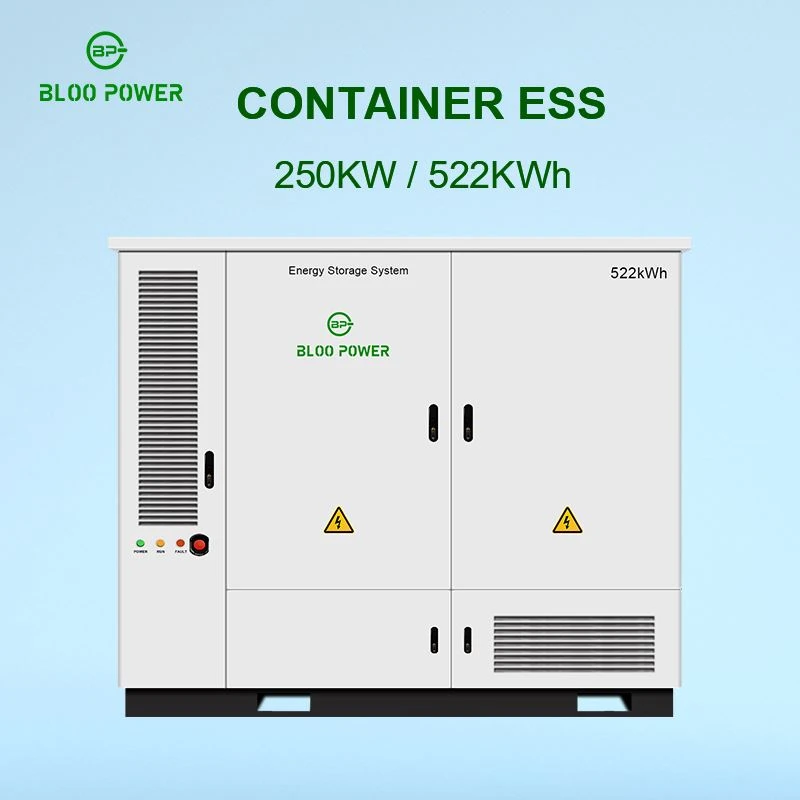
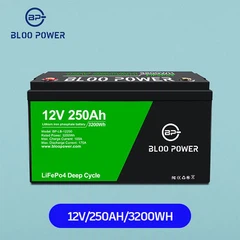
The rapid expansion of solar generation in Brazil-already exceeding 50 GW and projected to continue strong growth-has created structural challenges of midday surplus and evening shortfalls. Battery storage systems for solar energy are emerging as the primary solution for shifting energy, reducing curtailment, and providing firm capacity. Utility-scale BESS solar battery energy storage system manufacturer activity is accelerating, with companies preparing projects for the December auctions. At the distributed level, demand for energy storage batteries for rooftop solar panels is rising among commercial, industrial, and residential users seeking peak-shaving and self-consumption gains. Chinese suppliers of china lithium-ion battery for solar energy storage, including specialists such as BLOO POWER, are well-positioned to supply both large-scale and modular solutions. A typical mid-sized commercial installation might deploy a 48kw solar energy storage battery configuration (or multiples thereof) to optimize rooftop solar output and reduce demand charges.
Brazil Battery Storage Market Projections to 2034
|
Segment |
Projected Capacity (GWh) |
Share of Total |
Key Drivers |
|
Behind-the-meter (C&I) |
32.3 |
~45% |
Peak tariff reduction, self-consumption |
|
Front-of-meter (capacity reserve) |
30.2 |
~42% |
System security, auction contracts |
|
Off-grid / other |
9.3 |
~13% |
Remote systems, resilience |
|
Total |
71.8 |
100% |
Investment ~R$77.2 billion |
Role of International Manufacturers and Local Content Requirements
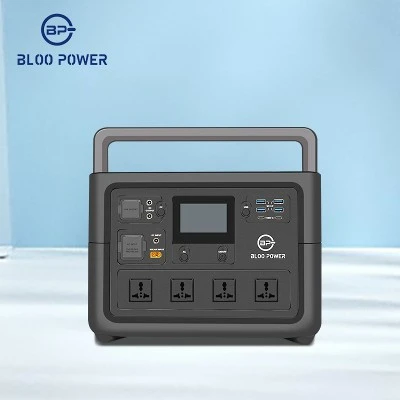
Long-tail interest is growing in phrases such as "best 48kW commercial solar battery storage systems Brazil", "BESS manufacturers for utility-scale solar Brazil auction", "China lithium-ion battery suppliers for rooftop solar storage", "energy storage batteries for Brazilian distributed solar generation", and "BLOO POWER LiFePO4 solutions for solar energy storage". As a bess solar battery energy storage system manufacturer, BLOO POWER offers LiFePO4-based systems ranging from residential and portable units to commercial-scale solutions suitable for pairing with rooftop arrays or larger solar farms. Local-content requirements in the first December auction aim to stimulate domestic manufacturing while the open auction ensures competitive pricing and technology access. Companies such as WEG have already secured BNDES financing for BESS production facilities, signalling the industrial opportunity.
Key Parameters of Brazil's First Battery Capacity Auctions (LRCAP 2026)
|
Parameter |
Details |
|
Auction dates |
2 December (national content) & 4 December (open) 2026 |
|
Contract duration |
15 years |
|
Supply start |
1 August 2028 |
|
Minimum power |
30 MW availability |
|
Duration requirement |
4 consecutive hours per cycle |
|
Cycles |
Up to 2 full cycles/day, max 366/year |
|
Efficiency |
Minimum 85% overall |
|
Remuneration |
Fixed annual payment for availability (IPCA-adjusted) |
|
Registered interest |
>260 GW (first tender), >280 GW (second) |
Broader Market Momentum and Economic Benefits
Beyond the utility-scale auctions, Brazil's distributed storage market is already accelerating. Greener data indicate cumulative BESS sales reached approximately 1.9 GWh by the end of Q1 2026, with 504 MWh ordered in that quarter alone. Capex for a representative 500 kW / 1,000 kWh system has fallen more than 50% since 2020. Each gigawatt of battery capacity contracted is estimated by ABSAE to deliver annual system cost savings of around R$4.6 billion compared with equivalent thermal capacity, primarily through reduced fuel costs and lower curtailment. These dynamics strengthen the case for both large battery storage systems for solar energy and smaller energy storage batteries for rooftop solar panels.
Illustrative Cost and Performance Trends for Lithium-Ion Storage in Brazil
|
Metric |
Recent / Projected Value |
Implication |
|
Capex reduction (2020–2025) |
~53% |
Improved project economics |
|
Further price decline to 2034 |
~28% |
Wider C&I & residential adoption |
|
Typical commercial system example |
48 kW / multi-hour |
Peak shaving & solar self-consumption |
|
System efficiency target (auction) |
≥85% |
Competitive with global standards |
|
Consumer / system benefit |
R$4.6 bn savings per GW/year vs thermal |
Strong economic rationale |
Outlook: From Regulatory Clarity to Large-Scale Deployment
Successful resolution of the cost-sharing debate through PL 3.716/2026, combined with transparent auction rules and sustained cost declines, positions Brazil to convert its abundant solar and wind resources into firm, flexible power. International china lithium-ion battery for solar energy storage suppliers, including BLOO POWER, together with emerging local manufacturers, will play a central role in delivering both utility-scale BESS and distributed solutions. Clearer regulations and predictable 15-year contracts are expected to unlock the projected R$77 billion investment pathway and support Brazil's energy security as renewable penetration continues to rise.
Send Inquiry