












How Spain Is Advancing Energy Storage Solutions in Island Regions
Aug 22, 2026
Leave a message

Spanish Push for Stable Power in Island Territories Opens New Opportunities for Advanced Energy Storage Solutions
Overview of Spain's Second Competitive Bidding Round for Firm Power Capacity
The Spanish Ministry for Ecological Transition and the Demographic Challenge (MITECO) has launched the second round of competitive bidding for firm (stable) electricity capacity in non-peninsular territories. The process plans to allocate 820.5 MW of installed capacity to meet projected electricity supply needs by 2031, with the large majority located in the Canary Islands. This follows the resolution of the first competitive procedure earlier in 2026, which awarded more than 1,450 MW across the same territories and is expected to mobilize over €500 million in investment.
The new tender aims to award remuneration to power plants totaling more than 820 MW, covering the Canary Islands, Balearic Islands, Ceuta, and Melilla. During a visit to the Canary Islands, Energy Secretary Joan Groizard emphasized to local working groups and the regional government that these measures promote renewable energy integration, strengthen supply security, and reduce dependence on external (primarily fossil-fuel) energy sources. According to the updated five-year outlook from Red Eléctrica de España (the Spanish electricity system operator), all non-peninsular territories require additional firm capacity due to anticipated economic growth. The specific allocation is: Balearic Islands 80 MW, Gran Canaria 320 MW, Tenerife–La Gomera 230.5 MW, Lanzarote–Fuerteventura 95 MW, La Palma 52 MW, El Hierro 10 MW, Ceuta 1 MW, and Melilla 32 MW.
Eligible participants include new manageable generating units, new investments in existing units, and regulatory extensions of the service life of existing facilities. Selection prioritizes techno-economic criteria focused on total cost savings, while requiring carbon emissions not exceeding 550 grams of CO₂ per kWh, self-sufficiency considerations, and suitable grid-connection locations. The proposal raises technical thresholds to incentivize more efficient components; the Canary Islands specifically encourage replacement of aging generating units; penalties apply to units that would be over 40 years old in 2031; and new facilities must be capable of using at least 5 % renewable fuels when available. Public objections to the bidding framework could be submitted until 5 August.
Regulatory Reforms Creating a Framework for Power Storage and Hybrid Projects
In parallel, the Ministry is soliciting public opinions on two important regulatory reforms: a dedicated power-storage framework and a revised remuneration formula for renewable energy generation in non-peninsular territories. The draft amendment to Royal Decree 738/2015 establishes a clear legal framework for hybrid power-generation projects and independent energy-storage systems. The goal is to increase system flexibility, raise the capacity for renewable energy integration, and progressively displace fossil-fuel generation. For the first time, the average marginal generation price of the Canary Islands' electricity system will be published, enabling energy storage to compete directly with traditional fossil-fuel plants through market mechanisms.
Dispatch of independent batteries will be determined by the system operator via price signals, while hybrid photovoltaic and wind projects paired with batteries will apply a "hot vacancy factor" designed to incentivize storage discharge precisely when additional fossil generation would otherwise be required. The renewable-energy remuneration reform replaces the daily local price in non-Iberian Peninsula territories with the average Iberian market price of the previous year. This change improves revenue predictability, encourages new investment, and helps prevent plant shutdowns during periods of zero or negative electricity prices. Objections to the draft reforms could be submitted until 4 August.
These reforms align with broader Spanish and European efforts to treat energy storage as a public-utility asset, streamline permitting for hybrid projects, and accelerate the deployment of both grid-scale and behind-the-meter batteries.
Growing Global Demand for Lithium-Based Solar Energy Storage Solutions
The Spanish initiatives form part of a worldwide acceleration in energy-storage deployment. Global battery energy storage system capacity reached approximately 301.7 GW in 2025, up 66 % from 182 GW in 2024. China alone accounted for nearly half of the global total (about 144 GW) and more than half of new additions. Lithium-ion chemistries, particularly lithium iron phosphate (LiFePO₄), dominate the market because of their safety, cycle life, and cost trajectory.
For residential and small commercial applications, the combination of rooftop solar with a home solar system lithium battery energy storage unit has become one of the most effective ways to increase self-consumption, provide backup power, and reduce reliance on expensive or unreliable grid electricity. Homeowners and installers increasingly seek a li-ion battery for solar energy storage that offers high cycle life, integrated battery-management systems, and modular expandability.
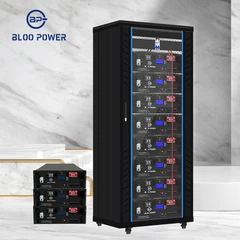
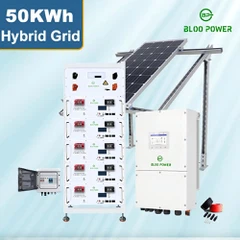
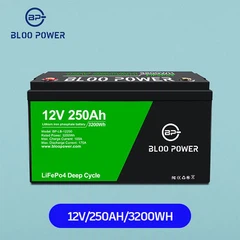
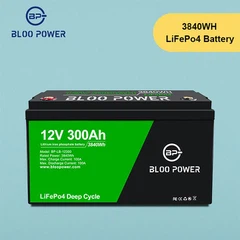
China remains the leading production base for these technologies. A growing number of specialized firms operate as a china solar energy battery storage system manufacturer, supplying both domestic and export markets with competitive pricing and rapid technological iteration. One such manufacturer is BLOO POWER, a Shenzhen-based company with more than 17 years of experience in battery technology. BLOO POWER produces a wide range of LiFePO₄ solutions, including low-voltage (12 V–96 V) and higher-voltage series, wall-mounted and rack-mounted packs, and all-in-one hybrid systems suitable for both on-grid and off-grid applications. The company reports an annual production capacity of approximately 2 GWh and has served more than 90,000 customers worldwide.
Practical Advantages of Modern Lithium Battery Packs for Residential Solar
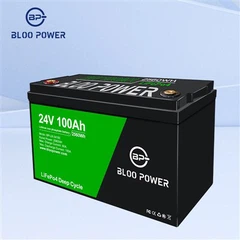
A well-designed lithium battery pack for home energy solar storage system typically delivers 5–30 kWh of usable capacity, supports thousands of charge–discharge cycles (often 6,000+ for quality LiFePO₄ cells), and incorporates advanced BMS protection against over-charge, over-discharge, temperature extremes, and short circuits. These packs can be stacked or paralleled, allowing owners to start with a modest system and expand as needs grow.
Price transparency and competitive sourcing have made a discount solar energy storage battery more accessible than only a few years ago. System-level costs for residential lithium storage have declined substantially, driven by cell-price reductions, manufacturing scale, and improved power-conversion efficiency. Buyers looking for the best china solar battery storage system for off-grid homes or affordable lithium ion battery packs for residential solar storage now routinely evaluate Chinese manufacturers that combine Tier-1 cells (often from CATL, BYD, EVE or similar), robust BMS designs, and international certifications (CE, UL1973, IEC 62619, UN38.3, etc.).
BLOO POWER positions itself in this segment by offering OEM/ODM customization, sample support, and multiple shipping terms (EXW, CIF, DDP). Its product range includes IP65-rated wall-mounted units, stackable 48 V modules expandable from 5 kWh to 30 kWh, and higher-capacity commercial systems-making it a practical option for European island markets that need both reliability and cost-effectiveness.
Capacity Allocation Table for the 2031 Non-Peninsular Tender
|
Territory / Subsystem |
Allocated Capacity (MW) |
|
Balearic Islands |
80 |
|
Gran Canaria |
320 |
|
Tenerife–La Gomera |
230.5 |
|
Lanzarote–Fuerteventura |
95 |
|
La Palma |
52 |
|
El Hierro |
10 |
|
Ceuta |
1 |
|
Melilla |
32 |
|
Total |
820.5 |
Source: Spanish Ministry for Ecological Transition announcements and Red Eléctrica outlooks (2026).
Illustrative Comparison of Common Residential Storage Chemistries
|
Parameter |
LiFePO₄ (LFP) |
NMC / NCA |
Lead-Acid (for reference) |
|
Typical cycle life |
4,000–8,000+ |
2,000–4,000 |
500–1,500 |
|
Depth of discharge |
80–100 % |
80–90 % |
50 % |
|
Thermal stability |
Excellent |
Good (requires careful BMS) |
Moderate |
|
Energy density |
Moderate |
High |
Low |
|
Cost trend (2024–2026) |
Rapidly declining |
Declining |
Stable / rising |
|
Preferred use case |
Home & commercial solar |
High-energy mobile / EV |
Legacy backup |
Global Battery Energy Storage Capacity Snapshot (2025)
|
Region / Country |
Approximate Installed BESS Capacity (GW) |
Share of Global Total |
|
China |
~144 |
~48 % |
|
United States |
Significant (combined with China ≈ 2/3) |
- |
|
Rest of World |
Remaining balance |
- |
|
Global Total |
~301.7 |
100 % |
Data compiled from industry statistical reviews for 2025.
Market Implications for Island Grids and Homeowners
Isolated or weakly interconnected grids such as those in the Canary Islands face unique challenges: limited interconnection capacity, high renewable penetration targets, and the need to retire aging thermal plants. Hybrid solar-plus-storage projects and independent battery systems directly address these issues by providing firm capacity, frequency response, and the ability to shift solar generation into evening peak hours. The new Spanish framework that allows storage to compete on published marginal prices and that rewards discharge during high-fossil periods creates a clear commercial signal for both utility-scale and distributed assets.
For individual households and small businesses, a high capacity home energy storage system with LiFePO4 paired with rooftop PV can dramatically raise self-consumption rates and provide multi-hour backup during grid disturbances-common concerns on islands. When sourced from an established china solar energy battery storage system manufacturer such as BLOO POWER, buyers can obtain a cost effective discount solar energy storage solutions 2026 package that includes long warranties (often 10–15 years on batteries) and modular designs that scale with future needs.
The combination of policy reform in Spain, continued cost declines in lithium batteries, and mature manufacturing capacity in China is therefore expected to accelerate the deployment of both grid-connected and residential storage across Europe's island territories and beyond. Stakeholders-utilities, project developers, installers, and homeowners-now have clearer regulatory pathways and a wider range of technologically mature, competitively priced products from which to choose.
The regulatory window opened by Spain's second firm-capacity tender and the accompanying storage-framework reforms, together with the availability of high-performance, cost-competitive lithium solutions from manufacturers such as BLOO POWER, create a timely opportunity to accelerate the energy transition in Europe's island territories while delivering tangible benefits for homeowners seeking reliable home solar system lithium battery energy storage.
Send Inquiry