



















Latin American Energy Storage Market Reaches A Critical Juncture
Feb 16, 2026
Leave a message
Latin American Energy Storage Market Reaches Critical Juncture: Executives Assess Price Trends and Regional Project Dynamics
According to data from the International Renewable Energy Agency, battery prices decreased by 89% between 2010 and 2023. The latest data from the Latin American Energy Organization shows that the levelized cost of energy storage for battery storage systems is currently in the range of US$140 to US$300 per megawatt-hour. Executives from five companies-Trina Storage, Sungrow, JA Solar, Gotion High-Tech, and Ampere Energy-assessed the pricing dynamics of the Latin American battery energy storage market, noting that prices are relatively stable at this stage but require close monitoring of factors that could drive future changes.

Vicente Walker, Head of Latin America and the Caribbean at Trina Storage, stated that the significant decrease in battery prices in recent years has made projects economically viable and easier to integrate with renewable energy sources. He expects prices to stabilize in the short term without significant fluctuations. Marcos Donzino, Sales Manager for Southern Latin America at JA Solar, anticipated that the industrial ecosystem will consolidate due to competition for high-efficiency systems, a process that could put downward pressure on prices in the coming years. Herman Rotter, Energy Storage Sales Manager for Latin America at Gotion High-Tech, warned that lithium price dynamics are crucial and emphasized the need to differentiate between commercial and industrial solutions and utility-scale projects. Marcel Peralta, Head of Latin America at Ampere Energy, pointed out that rapid technological advancements and China's expanding manufacturing capacity are improving global supply conditions, supporting project development in the region.
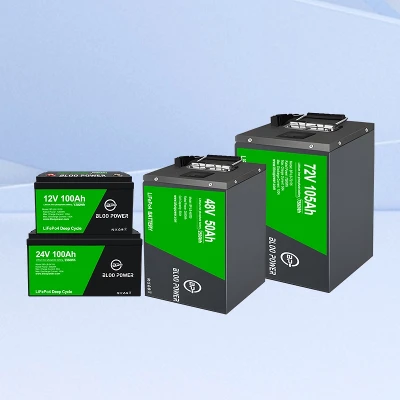
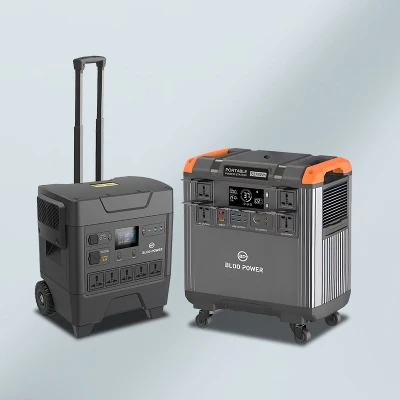
Jorge Alvarado, Sales Manager for Energy Storage and Inverters at Sungrow, emphasized the importance of non-price factors. The company has secured over 10 GWh of projects in the region, with 3.1 GWh already commercially operational, 3 GWh under commissioning, and another 4 GWh guaranteed for delivery before the first quarter of 2026. In terms of market trends, Chile leads the region with nearly 2 GW of operational battery energy storage projects, 7.5 GW under construction or testing, and an additional 27 GW in various stages of development. Brazil is preparing its first dedicated energy storage auction, "LRCAP 2026 – Energy Storage," scheduled for April 2026, with supply expected to begin in 2028. After awarding over 700 MW in the Alma GBA tender, Argentina plans to launch a new tender called Alma SADI, potentially adding 500 to 600 MW of battery storage to replace mandatory power generation at critical grid nodes. The Mexican government has approved 20 private projects totaling 3,320 MW of renewable energy generation and 1,488 MW of energy storage capacity. Central American and Caribbean countries such as Guatemala, Panama, the Dominican Republic, and Honduras are advancing tenders exceeding 4,000 MW, with energy storage increasingly becoming a core technological component of energy management. This broad regional demand opens opportunities for a wide range of technology providers, including companies like BLOOPOWER, to bring their specialized solutions to the market.

In summary, the future of battery energy storage prices in Latin America will not follow a single path. Some factors point to relative stability, while others, particularly lithium prices, could trigger a new round of increases. At the same time, increasing competition, technological innovation, and market maturation are driving potential structural cost reductions, at least for companies that can maintain efficiency and scale their operations. How each party positions itself within this new balance will be decisive for the next phase of energy storage deployment in the region.
Send Inquiry