












What Challenges Do Solar And Energy Storage Projects in The United States Face?
Aug 23, 2026
Leave a message

Progress in US Regional Grid Interconnection Reforms Amid Persistent Challenges for Solar and Storage Projects
While regional grid operators in the US have made progress in grid connection reforms, solar, storage, and hybrid projects still face long wait times, cost uncertainty, and competition for limited transmission capacity. According to a report prepared by Grid Strategies and the Brattle Group for Advanced Energy United (the Generator Interconnection Interim Progress Report, released around mid-2026), the seven regional transmission system operators-Southwest Power Pool (SPP), Midcontinent Independent System Operator (MISO), PJM Interconnection, California Independent System Operator (CAISO), ISO New England (ISO-NE), New York Independent System Operator (NYISO), and ERCOT-have advanced substantially in the past 18 months through cluster studies, readiness requirements, automation, and compliance with FERC Order No. 2023. However, there is no strong evidence yet that overall grid connection speeds have improved meaningfully, with median project timelines from interconnection request to commercial operation often exceeding five years.
Dominance of Solar and Battery Storage in Near-Term US Capacity Growth
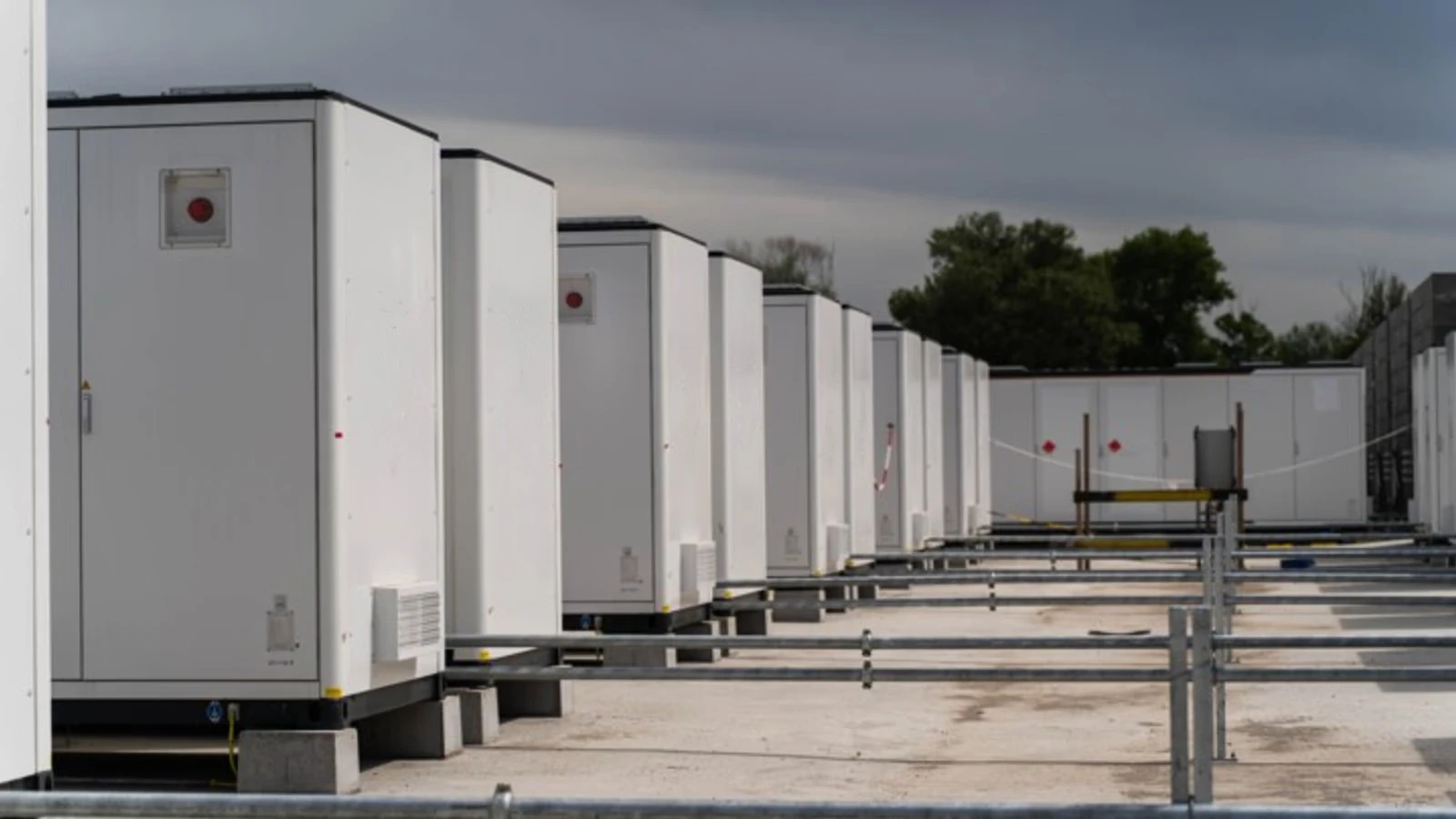
Solar and storage continue to dominate recent US electricity growth. The US Energy Information Administration (EIA) projects that developers will add a record 86 gigawatts (GW) of utility-scale generating capacity in 2026, with solar accounting for approximately 51% (around 43–44 GW) and battery storage for 28% (around 24 GW). A SEIA and Wood Mackenzie report notes that solar and storage accounted for 91% of new US generating capacity in the first quarter of 2026, including about 7.8 GW of new solar capacity. Battery storage installations alone reached strong levels, with roughly 3.3 GW / 8.4 GWh added in Q1 2026 (including significant utility-scale volumes). By mid-2026, operational US utility-scale battery storage capacity approached 52 GW after rapid growth averaging about 70% annually in recent years, with further plans for tens of GW more through 2028.
Scale of the Remaining Interconnection Queue and Technology Shifts
Berkeley Lab data shows that by the end of 2025, approximately 8,200 projects were actively seeking grid interconnection, involving about 1,312 GW of generating capacity and approximately 749 GW of storage capacity. Overall active queue volume declined around 10% year-over-year due to high withdrawals and fewer new requests in some categories. In 2024 trends carried forward, the solar grid connection queue decreased by roughly 11.9% (to levels around 956 GW in earlier snapshots, with further adjustments), stand-alone storage decreased by about 7.2%, and hybrid projects by 19.2%, while natural gas capacity in queues rose sharply (around 72% or more in subsequent updates, reaching over 250 GW by end-2025). These shifts reflect both reform-driven "queue cleansing" of less-viable projects and rising interest in thermal resources amid demand growth from data centers and electrification.
Approximate US Utility-Scale Capacity Additions Planned for 2026 (EIA Data)
|
Technology |
Planned Additions (GW) |
Share of Total |
|
Solar |
~43–44 |
~51% |
|
Battery Storage |
~24 |
~28% |
|
Wind |
~12 |
~14% |
|
Natural Gas & Other |
Remaining |
Balance |
|
Total |
~86 |
100% |
Role of Flexible Interconnection and Cost Barriers for Battery Projects
The Advanced Energy United report highlights that flexible grid connection services can accelerate deployment by leveraging the ability of batteries to operate within specified interconnection limits, potentially allowing faster integration of lithium ion batteries for solar energy storage without full traditional upgrades. Cost uncertainty remains a major obstacle: network upgrade costs for exiting projects have averaged around 70% of total interconnection costs in analyses, with average upgrade costs often ranging from hundreds of dollars per kW depending on project size and location. This uncertainty disproportionately affects developers of battery-energy-storage-system solar hybrids and stand-alone storage.
Recommended Priority Reforms Across Regions
The report recommends five priority reforms: (1) grid connection entry fees based on planned transmission capacity for greater predictability; (2) improved replacement and residual/surplus interconnection processes; (3) more economical reliability solutions (including non-wires alternatives); (4) increased automation and transparency of study results; and (5) improved reporting after signing generator interconnection agreements. These aim to reduce both time and cost risks for the large pipeline of solar-plus-storage projects.
Regional Progress Snapshots and Variations in Implementation
SPP is advancing an integrated Consolidated Planning Process using predictable per-megawatt costs (such as the GRID-C fee structure), with the key challenge being rate affordability; its fast-track processes have primarily benefited thermal resources so far. MISO faces a large backlog and is implementing reforms including zonal queue caps (e.g., linked to load percentages), stricter readiness criteria, and tools toward shorter study timelines; innovative concepts like zero-injection agreements could particularly help co-located storage. PJM's first post-reform cycle received 811 requests totaling about 220 GW, including roughly 105.8 GW of natural gas, 67.5 GW of storage, and 14.8 GW of solar (plus hybrids). CAISO is applying zonal caps, scoring criteria, heat maps, and constraint mapping to guide projects toward available capacity, with notable interest in energy-only interconnection. ERCOT stood out with approximately 1,965 active requests totaling around 453 GW as of April 30, 2026, no significant study backlog, and stronger 2024 performance attributed partly to its "connect and manage" approach and major transmission investments. ISO-NE and NYISO manage smaller but still challenging transition clusters focused on cost/timing certainty.
High-Level Snapshot of Active US Interconnection Queue (End-2025 Berkeley Lab Data, Approximate)
|
Category |
Capacity (GW) |
Notes |
|
Total Generation |
~1,312 |
Includes solar, wind, gas, etc. |
|
Storage |
~749 |
Predominantly batteries |
|
Active Projects |
~8,200 |
Seeking interconnection |
|
Year-over-Year Change |
~–10% |
Driven by withdrawals |
Global Supply Chain Support: High-Quality Lithium-Ion Solutions from Specialized Manufacturers
Amid these US deployment bottlenecks, reliable supply of high-performance lithium ion batteries for solar energy storage becomes critical for projects that do clear the queue or pursue behind-the-meter and distributed applications. Manufacturers offering china solar energy battery storage wholesale options help developers access cost-effective, scalable systems. Products carrying CE certification lithium ion battery for solar energy storage meet rigorous European safety, electromagnetic compatibility, and performance standards (often alongside UL, IEC, UN38.3, and others), facilitating international deployment and bankability.
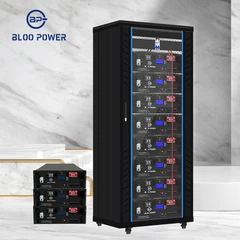
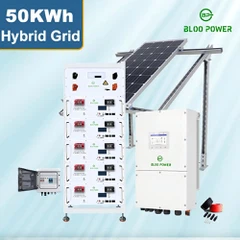
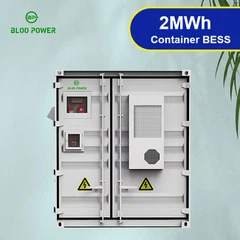
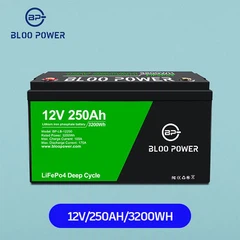
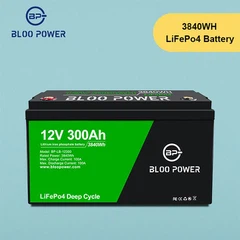
Leading providers operate as a full bess solar battery energy storage system factory, producing containerized, rack-mounted, wall-mounted, and all-in-one systems based primarily on lithium iron phosphate (LFP) chemistry for superior safety and cycle life (commonly 6,000–8,000+ cycles at 80% depth of discharge). One established example is BLOO POWER (Zhengde Hanyuan Technology, Shenzhen), a manufacturer with over 16–17 years of experience, annual production capacity on the order of 2 GWh, a sizable production base, and service to tens of thousands of global customers. Their portfolio spans residential, commercial & industrial, and utility-scale battery-energy-storage-system solar solutions, including modular high-voltage stackable batteries, 100–500+ kWh systems, and larger containerized BESS with integrated BMS, PCS, and EMS. These support both grid-tied hybrids and off-grid applications while enabling flexible interconnection strategies.
Illustrative BLOO POWER BESS Product Characteristics (Based on Public Specifications)
|
Model/Example |
Nominal Energy |
Chemistry |
Cycle Life (approx.) |
Key Features |
Typical Use Case |
|
215 kWh Containerized |
215 kWh |
LFP |
8,000 @ 80% DoD |
IP54/55, CAN/RS485, modular |
C&I / small utility |
|
Rack/Wall-Mount Series |
5–20+ kWh |
LFP |
6,500–8,000 |
Stackable, independent BMS |
Residential / C&I |
|
Larger Modular Systems |
100–500+ kWh / MWh-scale |
LFP |
High cycle |
Air/liquid cooling options |
Commercial / hybrid solar |
Long-Tail Opportunities and Market Alignment
Developers seeking high-performance lithium ion batteries for utility-scale solar energy storage benefit from modular designs that align with flexible interconnection. Reliable china solar energy battery storage wholesale suppliers for global markets lower capital costs and shorten lead times. Systems with CE certification lithium ion battery for solar energy storage systems ensuring safety ease permitting and insurance. Choosing a top bess solar battery energy storage system factory offering modular solutions supports rapid scaling. Finally, advanced battery-energy-storage-system solar hybrid projects accelerating deployment can leverage surplus interconnection rights and zero-injection concepts to bypass some traditional barriers.
Outlook: Bridging Interconnection Reforms with Proven Storage Technology
Successful implementation of the recommended reforms, combined with continued growth in certified, factory-produced lithium-ion BESS, will determine how quickly the large pipeline of solar and storage projects can contribute to grid reliability and decarbonization. As US operators refine processes and Chinese manufacturers such as BLOO POWER expand high-quality wholesale supply of CE-certified systems, the pathway from queue position to commercial operation can shorten, supporting the record capacity additions already underway.
Send Inquiry