




















How are Energy Storage Batteries Charged?
Aug 11, 2026
Leave a message

A Comprehensive Analysis of Energy Storage System Charging: Principles, Methods, Processes, and Precautions
Overview: The Essence of Charging Energy Storage Batteries-Converting Electrical Energy into Chemical Energy
Charging an energy storage battery is a process involving power electronics, a Battery Management System (BMS), battery cell materials, and an Energy Management System (EMS). Simply put, the energy storage system draws power from solar sources, the public grid, or other supplies. Through an inverter or charge/discharge control device, the system converts alternating current (AC) or direct current (DC) into a charging current that meets the battery's specifications. This drives lithium ions to migrate from the positive electrode and embed themselves into the negative electrode material, thereby storing electrical energy. Modern residential and C&I (commercial and industrial) energy storage systems typically utilize Lithium Iron Phosphate (LiFePO₄) batteries. Valued for their high safety, long cycle life, and excellent thermal stability, LiFePO₄ batteries have become a key technology in the solar energy storage sector.
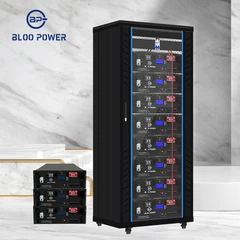
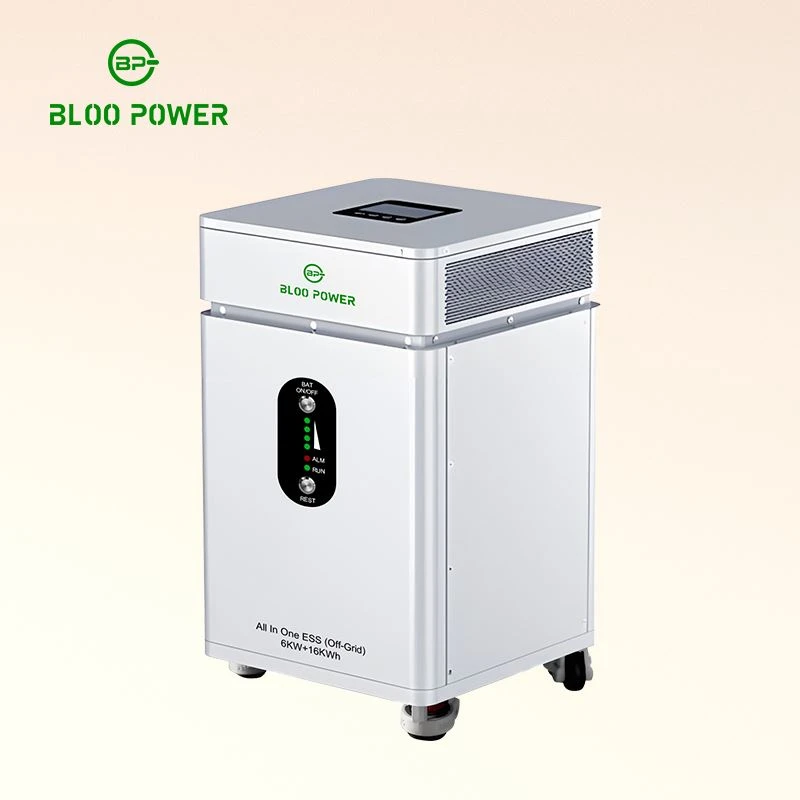
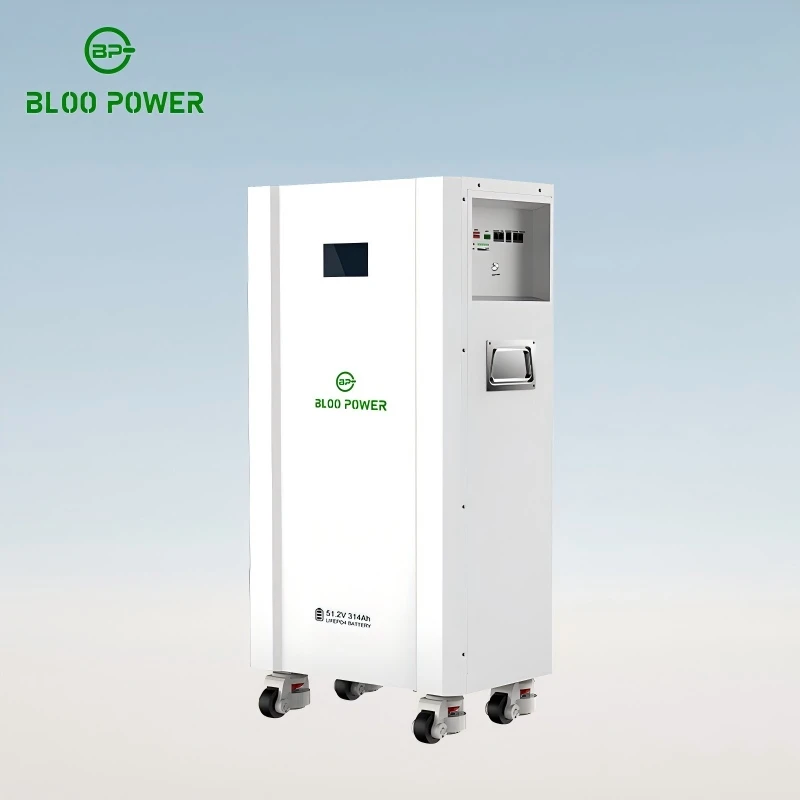
BLOO POWER energy storage products utilize high-safety LiFePO₄ battery technology combined with an intelligent BMS. This system dynamically adjusts charging strategies based on parameters such as battery voltage, current, temperature, and State of Charge (SOC), ensuring a safer and more efficient energy storage experience for users.

Key topics include:
● Basic principles of energy storage battery charging
● Process of charging energy storage batteries via solar power
● Methods for charging energy storage batteries from the grid
● How inverters control the charging process
● How the BMS ensures charging safety
● Calculating charging times for batteries of different capacities
● Factors affecting charging efficiency
● BLOO POWER energy storage system charging solutions
Basic Operating Principles of Energy Storage Battery Charging
The core process of charging an energy storage battery is the conversion of electrical energy into chemical energy. When an external power source supplies current to the battery, an electrochemical reaction occurs internally: lithium ions are released from the cathode material, migrate through the electrolyte and separator to the anode, and are stored within the anode structure. As an increasing number of lithium ions intercalate into the anode, the battery's State of Charge (SOC) rises until it is fully charged.
Taking the currently mainstream lithium iron phosphate (LFP) battery as an example, the charging process requires precise control of voltage and current; otherwise, battery performance may degrade, or safety risks may arise. Consequently, energy storage systems do not simply "apply power to charge"; instead, they achieve intelligent management through the coordinated operation of the BMS, PCS (Power Conversion System), and EMS. Research indicates that the charging of lithium-ion batteries typically involves stages such as constant current, constant voltage, and charge termination, with varying requirements for current and voltage control at each stage.
Key processes:
● Cathode releases lithium ions
● Lithium ions migrate to the anode
● Electrical energy converts to chemical energy
● BMS monitors status in real-time
How do solar systems charge energy storage batteries?
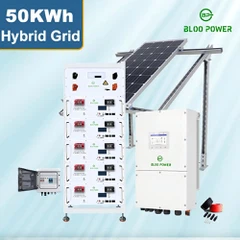
For residential solar-plus-storage systems, solar energy is the most common charging source. During the day, solar modules generate direct current (DC); after optimization by an MPPT controller or hybrid inverter, this energy is first supplied to household loads, with any surplus power directed to the energy storage battery for later use.
For example, in a home equipped with a BLOO POWER 30kWh wall-mounted energy storage system, the system can automatically execute the following process when solar output is high during the day:
Solar panels → Hybrid inverter → BMS → Energy storage battery
At night: Energy storage battery → Inverter → Household loads
This mode maximizes solar energy utilization and increases energy self-sufficiency.
According to analysis by the International Energy Agency (IEA), a key focus in the development of high-efficiency battery systems is improving energy conversion efficiency and charge-discharge management capabilities.
Characteristics of solar charging:
|
item |
illustrate |
|
Energy sources |
Photovoltaic solar energy |
|
Is a connection to the power grid required? |
Uncertain |
|
Biggest advantage |
Lower electricity costs and increase energy independence. |
|
Suitable Scenarios |
Homes, farms, and off-grid areas |
BLOO POWER Typical Solutions:
● 5kWh wall-mounted home energy storage battery
● 15kWh modular wall-mounted battery
● 30kWh & 45kWh home energy storage systems
● 100kWh C&I (Commercial & Industrial) energy storage cabinet
How does the grid charge energy storage batteries?
In addition to solar power, energy storage batteries can also be charged directly from the public grid. This method is widely used in regions such as Europe and the United States, where there is a significant difference between peak and off-peak electricity prices.
For example:
During off-peak hours (low rates): Grid → Hybrid Inverter → Energy Storage Battery
During peak hours (high rates): Energy Storage Battery → Household Loads
Users reduce electricity costs by charging when rates are low and discharging when rates are high.
BLOO POWER residential energy storage systems support integration with hybrid inverters and can be configured according to local electricity pricing policies:
● Peak/Off-peak pricing mode
● Automatic charging mode
● Backup power mode
● Maximum solar utilization mode
What role does an energy storage inverter play during the charging process?
An energy storage inverter is a critical device that connects the power source, the battery, and the load. It is responsible not only for converting between AC and DC power but also for controlling the charging power.
For example:
Household 220V AC: AC → DC → Battery storage
Battery power supply: DC → AC → Household appliances
High-quality hybrid inverters can automatically adjust charging strategies based on:
● Battery SOC (State of Charge)
● Current load
● PV output
● Grid status
BLOO POWER systems can be paired with inverters of various power ratings, such as:
|
System capacity |
Recommended Inverter Power Rating |
|
5kWh |
3kW-5kW |
|
15kWh |
5kW-8kW |
|
30kWh |
6kW-12kW |
|
≥100kWh |
C&I PCS |
How does the BMS ensure safe charging for energy storage batteries?
The BMS (Battery Management System) acts as the brain of the energy storage battery. It is responsible for monitoring the status of each individual cell, including:
● Voltage
● Current
● Temperature
● SOC (State of Charge)
● SOH (State of Health)
According to IEEE standards, modern BMS units continuously monitor battery status and safeguard the battery by regulating charging and discharging conditions.
During the charging process, the BMS performs the following key functions:
Overcharge prevention
Reduces the charging current when the battery reaches its maximum voltage.
01
Cell balancing
Prevents individual cells from reaching full charge prematurely.
02
Temperature protection
Reduces power output or halts charging if abnormal temperatures are detected.
03
Fault protection
Detects anomalies and cuts off the circuit.
04
BLOO POWER LiFePO₄ batteries feature an intelligent BMS design that enhances system safety and cycle life.
What stages are typically involved in charging energy storage batteries?
Lithium battery charging is generally not a single, continuous process but is carried out in stages.
Stage 1: Pre-charging
When the battery charge level is very low, the system uses a low current to restore the battery's state.
Stage 2: Constant Current (CC) charging
This is the primary charging stage, during which the battery rapidly absorbs energy.
Stage 3: Constant Voltage (CV) charging
Once the voltage reaches a set value, the system reduces the charging current.
Stage 4: Charge termination
The BMS stops charging once it determines that safety criteria have been met.
|
stage |
Features |
Purpose |
|
Pre-charge |
Low current |
Protect low-battery cells |
|
Constant current |
Fast charging |
Increase capacity |
|
Constant pressure |
Reduce the current |
Prevent overcharging |
|
Finish |
Stop inputting |
Extend lifespan |
How is the charging speed of an energy storage battery calculated?
The charging time for an energy storage battery is primarily determined by:
Battery capacity (kWh) ÷ Charging power (kW)
For example:
For a 30 kWh battery:
If charging at 6 kW: 30 ÷ 6 ≈ 5 hours
If charging at 12 kW: 30 ÷ 12 ≈ 2.5 hours
Actual time is also influenced by:
● Conversion efficiency
● Temperature
● State of Charge (SOC)
● BMS limitations
Example:
|
Battery capacity |
Charging power |
Theoretical time |
|
10kWh |
5kW |
About 2 hours |
|
30kWh |
6kW |
About 5 hours |
|
100kWh |
25kW |
About 4 hours |
What factors affect the charging efficiency of energy storage batteries?
The charging efficiency of an energy storage system is not a fixed value; it is influenced by several factors.
Battery materials
LiFePO₄ features a stable structure, making it suitable for long-term cyclic use.
Temperature environment
Temperatures that are too low or too high can affect charging efficiency.
Charging rate
Excessively high rates may increase stress on the battery.
Equipment conversion efficiency
Inverter efficiency directly impacts the final amount of stored energy.
BLOO POWER products enhance overall system performance through:
● High-quality battery cells
●Intelligent BMS
● High-efficiency inverter matching
● Modular design
Selection of Energy Storage Battery Charging Methods for Different Scenarios
Different user requirements determine the choice of charging method.
|
User Type |
Recommended charging method |
|
Ordinary family |
PV-priority + grid-assisted |
|
Villa residents |
Photovoltaics + Peak-Valley Electricity Pricing |
|
Farm |
PV + 100kWh Energy Storage Cabinet |
|
Factory |
BESS Intelligent Dispatch |
For example, a U.S. farm installing a BLOO POWER 100kWh commercial and industrial energy storage system can charge using solar energy during the day and discharge it at night, thereby reducing reliance on diesel power generation and cutting peak electricity costs.
How can the energy storage battery charging system be properly maintained?
Proper maintenance is essential to ensure the long-term operation of energy storage batteries.
Recommendations:
1. Regular inspections
Check:
● SOC status
● Alarm information
● Communication status
2. Maintain a suitable installation environment
Avoid:
● High temperatures
● Humidity
● Direct sunlight
3. Regularly upgrade the system
Includes:
● BMS software
● Inverter firmware
● EMS strategies
4. Avoid prolonged periods at full charge or low charge
Maintaining an optimal SOC range helps extend battery lifespan.
Summary of Advantages: BLOO POWER Energy Storage System Charging Solutions
BLOO POWER provides comprehensive energy storage solutions for residential, commercial, and industrial users worldwide, including:
● Wall-mounted LiFePO₄ residential energy storage batteries
● Modular 15kWh energy storage systems
● 30kWh/45kWh residential energy systems
● 100kWh commercial and industrial energy storage cabinets
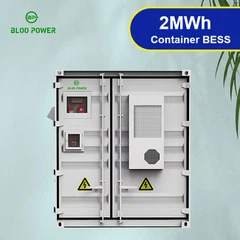
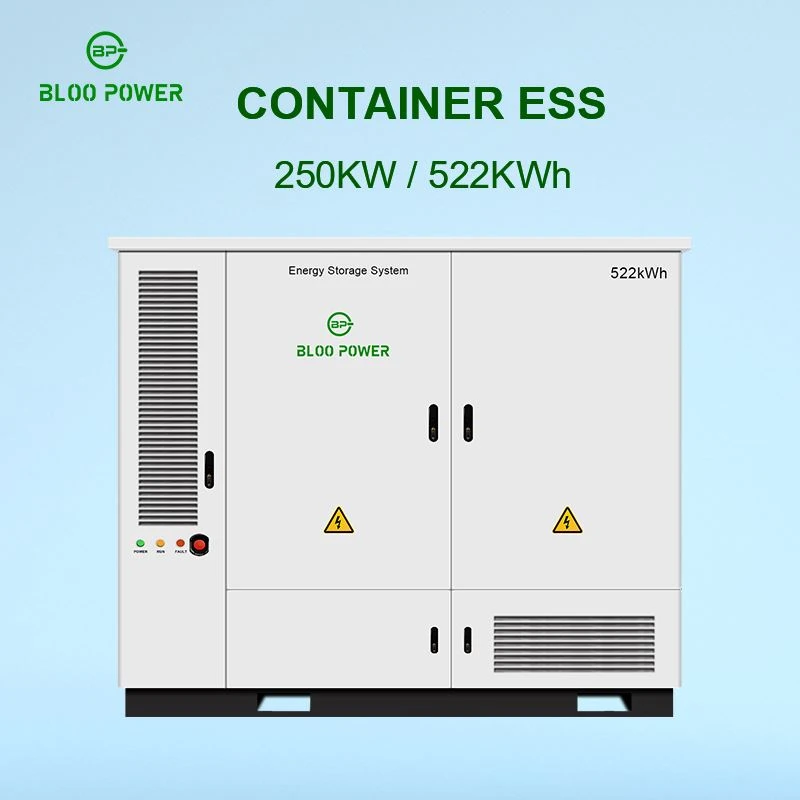
● MWh-scale containerized energy storage systems
Product Features:
|
Advantages |
illustrate |
|
LiFePO₄ technology |
High safety, long lifespan |
|
Smart BMS |
Real-time protection |
|
Modular design |
Supports capacity expansion |
|
Compatible with multiple energy sources |
Photovoltaics, power grid, diesel engines |
Conclusion: Proper Charging Determines the Lifespan of Energy Storage Systems
Charging an energy storage battery is not merely a matter of connecting to a power source; it is an intelligent process coordinated by battery cells, a battery management system (BMS), an inverter, and an energy management system (EMS). Proper charging methods not only improve energy efficiency but also extend battery lifespan.
For residential users, choosing BLOO POWER wall-mounted energy storage batteries enables efficient solar energy utilization, provides backup power during outages, and reduces electricity costs. For commercial users, BLOO POWER BESS systems help enterprises achieve peak shaving and valley filling, optimize energy management, and maximize the use of new energy sources.
As the global new energy sector rapidly expands, safe, efficient, and intelligent energy storage and charging technologies will become a crucial foundation for energy management in both homes and businesses.
Send Inquiry