




















How to Ensure the Compatibility of Inverters in Household Energy Storage?
Aug 07, 2026
Leave a message

Household energy storage systems do not simply connect "solar panels + batteries + inverters". Especially when using lithium iron phosphate (LiFePO₄) batteries, the voltage range between the inverter and the battery, maximum charge and discharge current, BMS communication protocol, CAN/RS485 interface, communication line sequence, firmware version, parallel logic and local power grid standards will all affect whether the system can operate stably.
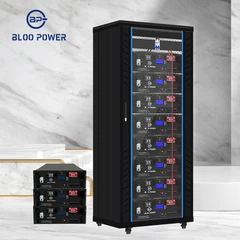
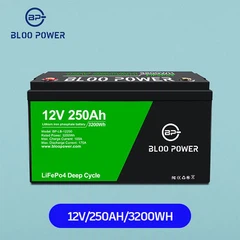
Therefore, when choosing a household energy storage inverter, you cannot just look at single parameters such as "48V battery" and "6kW inverter", but should conduct systematic compatibility verification. Taking BLOO POWER's 51.2V LiFePO₄ household energy storage products as an example, some of its products provide CAN, RS485, and RS232 communication interfaces; the 15kWh-class products are nominally 51.2V, have an operating voltage of 40-58.4V, and support CAN/RS485/RS232 communication. This means that the specific inverter model, communication protocol, and parameter settings still need to be further confirmed for actual matching, and compatibility cannot be determined based on the interface name alone.

First confirm the battery nominal voltage and the inverter battery voltage range
The first threshold for inverter compatibility is voltage. Many users see "48V battery" and "48V inverter" and think that the two must be connected. This is actually not rigorous enough. "48V" is usually just a nominal voltage. The actual battery voltage will change when it is fully charged, operating normally, and when it is close to low SOC. Therefore, what the inverter really needs to match is the actual operating voltage range of the battery. For example, the operating voltage range of some BLOO POWER 51.2V LiFePO₄ products is 40~58.4V or 44.8~58.4V. The allowed battery input range of the inverter must cover this range, and the charging cut-off voltage, low-voltage protection voltage and other parameters must also meet the battery BMS requirements.
Key points to check:
● Battery nominal voltage: 48V, 51.2V, 96V or high-voltage battery, etc.
● The actual operating voltage range of the battery.
● DC battery input range allowed by the inverter.
● Maximum charge voltage and minimum discharge voltage.
Core principle: Don't just match the "48V/51.2V" label, but match the full voltage operating window.
Check the maximum charging and discharging current of the inverter and battery
After the voltages are matched, the current must also be checked. The larger the inverter power, the higher the current demand on the battery side is usually. For example, in a 48/51.2V low-voltage energy storage system, if the inverter output power reaches 12kW, the battery side may require a very large current when working at full power. Therefore, it cannot be simply assumed that "15kWh battery + 12kW inverter" will be able to operate stably for a long time. The product data of BLOO POWER's 15.36kWh all-in-one machine shows that its maximum charging current is 100A and its maximum discharge current is 150A; these parameters must match the maximum battery charging and discharging current of the inverter.
Need to check:
● Inverter maximum charging current.
● Maximum discharge current of the inverter.
● The continuous charge and discharge current allowed by the battery BMS.
● Whether the battery peak current and continuous current meet the requirements respectively.
If the current required by the inverter exceeds the BMS allowed value, the system may experience power limitation, BMS protection or even inverter failure. Therefore, power matching is actually a comprehensive matching of "voltage + current + time", rather than just looking at kW.
Typical parameter matching examples
|
Check items |
BLOO POWER 51.2V Battery example |
Inverter needs confirmation |
|
Nominal voltage |
51.2V |
Support 48V/51.2V battery |
|
Working voltage |
About 40V~58.4V |
DC input range coverage |
|
Maximum charging current |
Some products are 100A |
≤Battery allowable value |
|
Maximum discharge current |
Some products are 150A |
≤Battery allowable value |
|
Communication |
CAN/RS485/RS232 |
Protocol must match |
The data is subject to the specific BLOO POWER product model and final technical specifications.

Don't directly equate "support CAN/RS485" with compatibility.
This is a very common misunderstanding in household energy storage installation. CAN and RS485 are essentially communication interface/physical layer related technologies first, which does not mean that two devices can definitely communicate as long as they have CAN or RS485. What really determines the success of communication includes communication protocols, data frame definitions, register addresses, baud rates, device addresses, data formats, and master-slave device logic.
At present, many energy storage batteries transmit information such as SOC, voltage, current, temperature, charge and discharge limits, and fault status to the inverter through CAN or RS485. Relevant technical information also clearly points out that even if both the battery and the inverter support CAN or RS485, if the protocol, line sequence, firmware and parameters do not match, normal communication may still not be possible.
So you need to confirm:
● CAN or RS485?
● What specific communication protocol is used?
● What is the baud rate?
● How to set CAN ID or RS485 address?
● Battery and Inverter Who is the communication host?
Remember: the same interface ≠ the same protocol ≠ system compatibility.
Focus on checking BMS communication protocols and data definitions
BMS is a very critical "information bridge" between energy storage batteries and inverters. The battery BMS is not only responsible for overcharge, over-discharge, over-current, over-temperature and other protections, but can also send information such as SOC, SOH, battery voltage, current, temperature and allowed charge and discharge current to the inverter.
If the inverter cannot correctly read this information, problems such as abnormal SOC display, premature charging stop, incorrect discharge limit, and frequent alarms may occur. Especially for LiFePO₄ batteries, the use of closed-loop BMS communication allows the inverter to dynamically adjust the operating strategy based on the real-time status of the battery, rather than relying entirely on fixed voltage thresholds.
Some BLOO POWER 51.2V energy storage products provide CAN, RS485, and RS232 communication interfaces, which provide an interface basis for the integration of different energy storage systems. However, in the end, agreement confirmation and debugging still need to be carried out according to the specific inverter brand and model.
It is recommended to confirm before installation:
● Does the inverter have an official battery compatibility list?
● Whether the specific battery model of BLOO POWER is in the list.
● BMS protocol name and version.
● Data definition of SOC, SOH and charge and discharge limits.
● What protection strategy will the system adopt when communication anomalies occur?
Check the communication line sequence instead of using network cables casually
In actual projects, communication failure is sometimes not a protocol problem, but a misconnection of the communication line. Many energy storage devices use RJ45 interfaces, but RJ45 is only a connector form and does not mean that the pin definitions of all devices are the same.
For example, some devices may implement CAN-H/CAN-L through some pins in RJ45, and other pins are used for RS485-A/RS485-B, and the pin definitions of different brands of devices may be different. If you connect it directly with an ordinary network cable, it may cause communication failure, or even cause equipment risks in the case of incorrect wiring.
Some inverters do integrate CAN and RS485 functions in the same RJ45 interface, but the specific pin assignment still needs to be confirmed according to the device manual.
Before installation, you must confirm:
● RJ45 pin definition.
● CAN-H/CAN-L position.
● RS485-A/RS485-B position.
● Whether GND needs to be connected.
● Whether original factory or designated communication cables must be used.

Check the inverter firmware and battery BMS versions
Many users only pay attention to the hardware parameters when purchasing equipment, but ignore the software version. In fact, energy storage inverters and BMS are both smart devices with software logic. Even if two devices are theoretically compatible in terms of hardware interface, voltage and communication protocol, if the inverter firmware version is too old or the battery BMS adopts a new protocol version, SOC abnormalities, communication interruptions or parameter reading errors may occur.
Especially for the same inverter brand, different models, different market versions, and different firmware versions may support different battery communication protocols. Therefore, the installer cannot simply judge based on "this brand can be equipped with it before, so it can be equipped with it now".
It is recommended to establish a version checking system:
● Record the specific model and serial number of the inverter.
● Record the current inverter Firmware version.
● Record the BMS master control version.
● Confirm whether the manufacturer has recommended firmware.
● Re-verify communication and protection parameters after upgrade.
Confirm the single-phase/three-phase of the inverter and the grid system
Just because a battery is compatible with an inverter, doesn't mean the entire home electrical system is compatible. Residential energy storage projects also need to consider single-phase/three-phase, rated voltage, frequency, and local grid regulations.
For example, European residential systems usually involve 220-240V, 50Hz single-phase or three-phase systems; North American residential systems often involve 120/240V split-phase systems. Therefore, for the same "12kW hybrid inverter", the electrical structure of the product in different regions may be completely different.
BLOO POWER currently also provides product solutions for different markets. For example, its information includes 110V/240V, 12kW+30kWh energy storage systems for North American residences, and 12kW+30kWh solutions for European 220V applications.
Must confirm:
● Single phase or three phase.
● 110/120V, 220/230/240V and other voltage standards.
● 50Hz or 60Hz.
● Whether to support split-phase output.
● Whether it meets local grid connection requirements.
Confirm whether the inverter meets the local grid connection standards
If the household energy storage system needs to be connected to the grid, then compatibility is not only "compatibility between the battery and the inverter", but also includes compatibility between the inverter and the local power grid.
Taking the U.S. market as an example, UL Solutions pointed out that UL 1741 is applicable to inverters, converters, controllers and interconnection system equipment used in distributed energy sources, and related tests may involve grid interconnection standards such as IEEE 1547. UL 9540 conducts a more comprehensive system-level assessment of energy storage systems, including charging and discharging, protection, control, and communication between devices.
Therefore, for BLOO POWER energy storage projects exported to markets such as the United States and Europe, the corresponding certification and grid connection requirements should be verified according to the target country, state/region and specific installation environment, rather than just looking at general certificates such as CE and IEC.
Key points to confirm:
● Local grid connection standards.
● Inverter certification.
● Battery and ESS certification.
● Power grid company's requirements for grid-connected equipment.
● Fire protection and electrical regulations of the installation location.
Check whether the MPPT voltage range matches the solar module
Inverter compatibility includes not only the "battery side" but also the solar panel side. Hybrid inverters usually connect PV modules, batteries and AC loads at the same time, so the PV side MPPT parameters also need to be verified.
For example, data on some of BLOO POWER's integrated energy storage products show that its MPPT operating range can reach 60-180Vdc and is equipped with a 48Vdc battery input. This means that the installer needs to determine whether the PV input falls within the inverter MPPT range based on the solar module's Voc, Vmp, temperature-corrected voltage, and the number of series connections.
Key points to check:
● PV maximum input voltage.
● MPPT operating voltage range.
● Maximum current of each MPPT.
● Number of photovoltaic modules in series.
● Whether Voc exceeds the limit at extremely low temperatures.
Therefore, a truly compatible household energy storage system should simultaneously satisfy:
PV module ↔ MPPT ↔ Inverter ↔ Battery BMS ↔ Household load ↔ Grid
Instead of just checking the battery and inverter.
Confirm the capacity expansion logic of parallel connected batteries and inverters
Many households may only install 10 to 15kWh batteries during the first installation, but hope to expand to 20kWh, 30kWh or even higher capacity in the future. Therefore, compatibility should also consider future expansion.
For example, BLOO POWER provides 5kWh modular products and 15kWh energy storage products, and has a 30kWh energy storage solution. If multiple batteries are connected in parallel, it is necessary to further confirm the communication method between the batteries, master-slave BMS settings, address allocation, current sharing, and whether the inverter allows a corresponding number of batteries to be connected in parallel.
Check when expanding:
● Maximum number of batteries connected in parallel.
● Whether the batteries must be of the same model.
● Whether the same batch or similar SOC is required.
● How to set up the master and slave batteries.
● Can the inverter recognize the total capacity after expansion.
We cannot simply think that "if there are more batteries, the capacities will be added directly". Electrical connections, BMS communications and control logic must be supported simultaneously.
Confirm the charge and discharge control logic of the inverter and BMS
A truly reliable energy storage system does not require the inverter to always charge the battery according to a fixed voltage and current, but requires dynamic control based on the information provided by the BMS.
For example, when the battery temperature is too high, the SOC reaches the limit value, or certain protection conditions are triggered, the BMS may require the charging current to be reduced or even stop charging; when the SOC is too low or the battery reaches the discharge limit, the BMS may also require the inverter to reduce output.
Therefore, compatibility testing needs to verify not only "can communication", but also:
● Whether the SOC is displayed accurately.
● Whether the charging current limit is implemented correctly.
● Whether the discharge current limit is correctly implemented.
● Whether temperature protection can be delivered.
● Whether BMS fault information can trigger inverter protection.
UL Solutions' introduction to UL 9540 also clearly points out that energy storage system evaluation not only covers the electrical part, but also involves charging and discharging, protection, control and communication between devices.
Don't ignore standby, off-grid and EPS/Backup function compatibility
The core purpose of many households purchasing hybrid inverters is not to simply save electricity bills, but to continue to power refrigerators, lighting, network equipment, air conditioners and even critical medical equipment after a power outage. Therefore, it is necessary to check whether the inverter and battery can work normally in off-grid/backup mode.
Not all grid-connected inverters can independently establish a stable AC grid after a power outage. The system must have corresponding Backup/EPS or grid-forming capabilities, and it needs to be confirmed that the battery can continue to provide sufficient power to the inverter in an off-grid state.
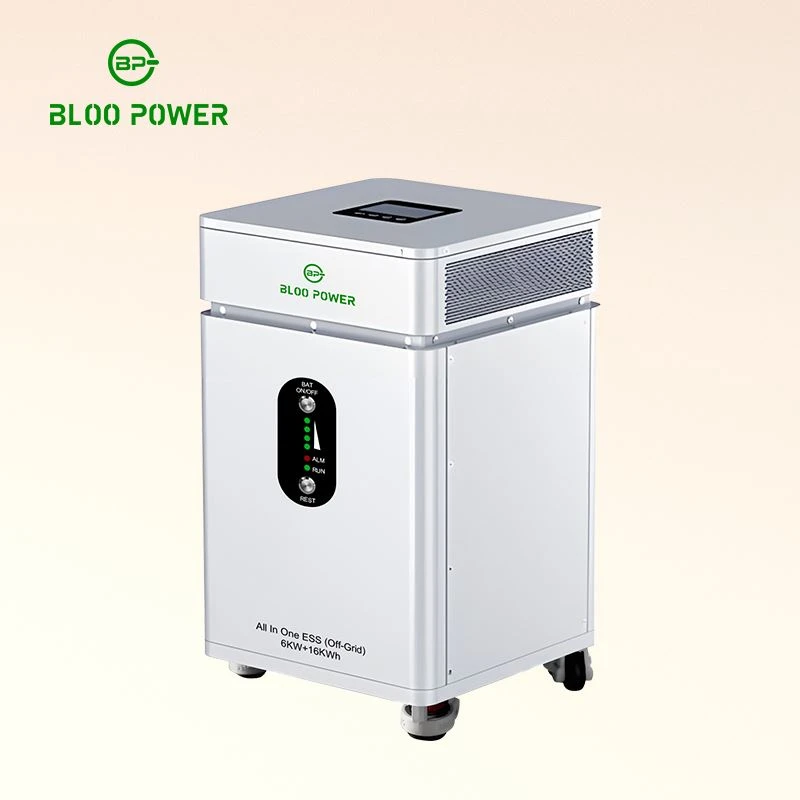
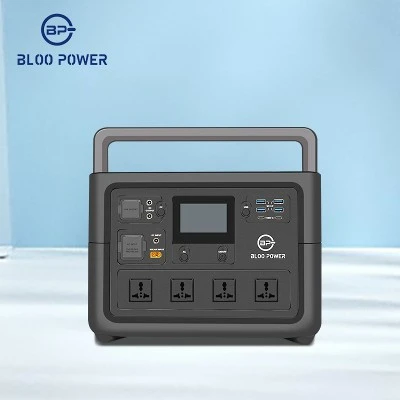
BLOO POWER's 6kW+16kWh all-in-one product is positioned for integrated energy storage applications. Integrating LiFePO₄ batteries, inverters, MPPT, etc. into one system can reduce some system integration links. For split systems, it is more necessary to complete the joint verification of the inverter, battery and backup circuit during the project design stage.
Key points to confirm:
● Whether to support EPS/Backup.
● Power failure switching time.
● Off-grid startup capability.
● Maximum continuous power when off-grid.
● High power motor starting capability.
Be sure to conduct "actual compatibility testing" before installation
If the project is large-scale, or a third-party inverter is used, the most reliable way is not to just read the product brochure, but to conduct actual prototype testing.
It is recommended to use a target inverter + a BLOO POWER target battery for testing before bulk purchasing to check the complete process from startup, communication, charging, discharging to protection triggering.
Recommended testing process:
|
testing phase |
Test content |
Qualification standards |
|
① Power on |
Battery and inverter start-up |
No abnormal alarm |
|
② Communication |
CAN/RS485 connection |
Correctly read SOC, voltage, etc. |
|
③ Charge |
PV/grid charges batteries |
Current is within BMS limits |
|
④ Discharge |
The battery supplies power to the load |
Stable power |
|
⑤ Protect |
Analog SOC/Temperature/Current Limit |
The inverter responds correctly |
|
⑥ Power outage |
Simulating grid outage |
Backup/EPS is normal |
|
⑦ Recover |
Grid restoration |
The system automatically resumes normal operation |
This "test first, then bulk purchase" approach can significantly reduce installation rework, communication failures and after-sales risks in overseas projects.
Inverter and BLOO POWER battery compatibility checklist:
|
Compatible items |
Parameters that must be confirmed |
importance |
|
Battery voltage |
48V/51.2V/high voltage and working range |
★★★★★ |
|
Charging current |
Inverter ≤ BMS allowed value |
★★★★★ |
|
Discharge current |
Inverter ≤ BMS allowed value |
★★★★★ |
|
BMS communication |
CAN/RS485protocol |
★★★★★ |
|
Communication line |
RJ45 pin,CAN-H/L,RS485-A/B |
★★★★★ |
|
Firmware |
Inverter/BMS version |
★★★★☆ |
|
Single phase/three phase |
Matches the home power distribution system |
★★★★★ |
|
Frequency |
50Hz/60Hz |
★★★★☆ |
|
PV input |
Voc,Vmp,MPPT scope |
★★★★★ |
|
Parallel expansion |
Maximum number of batteries |
★★★★☆ |
|
Backup/EPS |
Operation ability during power outage |
★★★★☆ |
|
Grid connection certification |
UL/IEC/local grid codes |
★★★★★ |
How do BLOO POWER products reduce the difficulty of inverter compatibility?
For home users and solar installers, an important idea is to give priority to the "battery + inverter" combination that has been verified by the manufacturer, rather than trying to solve compatibility issues after installation.
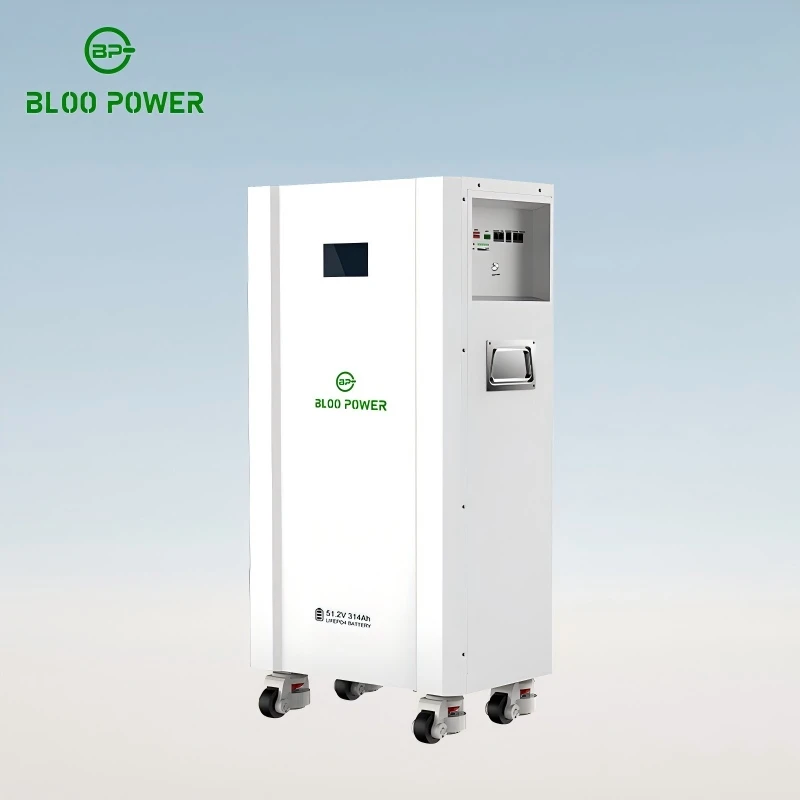
Some of BLOO POWER's household energy storage products use 51.2V LiFePO₄ battery architecture and provide communication interfaces such as CAN, RS485 and RS232. For example, its 15kWh class product information shows a nominal voltage of 51.2V, a nominal capacity of 15.36kWh, and supports CAN/RS232/RS485 communication.
At the same time, BLOO POWER also provides:
● 15kWh household energy storage battery
● 48V/51.2V LiFePO₄ energy storage products
● 6kW+16kWh integrated energy storage system
● 12kW+30kWh household energy storage system
● 110/240V North American energy storage solution
● 220V European household energy storage solution
Among them, the 6kW+16kWh product integrates inverter, battery, MPPT, BMS and other functions; the 12kW+30kWh product is aimed at higher power residential and light commercial applications.
For solar installers, the value of such products is not just "large capacity", but the ability to reduce the problems of protocols, line sequences, parameters and after-sales responsibilities that arise when combining equipment from different brands.
The most recommended compatibility verification process for solar installers
The inverter compatibility verification of the entire household energy storage project can be summarized into the following process:
① Determine household load → ② Determine PV power → ③ Determine battery capacity → ④ Determine battery voltage → ⑤ Determine inverter power → ⑥ Check charge and discharge current → ⑦ Check CAN/RS485 protocol → ⑧ Check communication line sequence → ⑨ Confirm Firmware → ⑩ Check grid connection standards → ⑪ Check Backup function → ⑫ Prototype test → ⑬ Batch installation
The advantage of this is that most compatibility risks can be discovered before the system is actually installed.
5 common "looks compatible, but may actually be incompatible" situations
1. 48V battery + 48V inverter
"looks": an exact match.
"Actual": Also check the battery operating voltage range, maximum charge and discharge current, and BMS protocol.
2. There is CAN on both sides
"Appears": direct communication is possible.
"Realistic": CAN is only part of the interface/communication technology, and also needs to match the protocol, data definition, ID and configuration.
3. Both sides are RJ45
"It seems": ordinary network cable can be connected.
"Actual": RJ45 pin definitions may be different and must be confirmed according to the instructions of both parties.
4. The battery capacity is large enough
"It seems": 30kWh battery + 12kW inverter must be fine.
"Realistic": Also depends on the BMS maximum continuous discharge current and the inverter starting/peak power requirements.
5. All products have CE/IEC certification
"Appears": Proven compatibility.
"Actual": Product certification and system compatibility are two different concepts. UL Solutions pointed out that UL 9540 is a system-level energy storage safety standard and covers charging and discharging, protection, control and equipment communication.
Conclusion: Real "compatibility" is system-level compatibility
The compatibility of inverters in household energy storage systems is by no means simply confirming that "the voltages are the same" or "both have CAN interfaces". A reliable system needs to meet both:
Voltage compatibility + current compatibility + power compatibility + BMS compatibility + communication protocol compatibility + line sequence compatibility + Firmware compatibility + PV input compatibility + grid compatibility + Backup compatibility + safety standard compatibility.
Especially for solar installers, the safest approach is to ask battery suppliers to provide official compatible inverter lists, communication protocol descriptions, communication line definitions, BMS parameter tables, and actual test support, and conduct prototype verification before bulk purchase.
BLOO POWER's 51.2V LiFePO₄ household energy storage products already provide a variety of communication interfaces such as CAN, RS485, RS232, etc., and cover different application solutions such as 15kWh battery, 6kW+16kWh integrated system, and 12kW+30kWh. For overseas residential projects that require inverters of different brands, it is recommended to directly confirm the specific battery model + specific inverter model + communication protocol + target country with BLOO POWER during the project design stage, and use the actual compatibility test results as the basis for final selection, rather than judging solely based on the product name.
Send Inquiry