




















How can Users Properly Use Energy Storage Batteries to Extend Their Lifespan?
Aug 13, 2026
Leave a message

With the increasing demand for solar power generation and home backup power, residential energy storage batteries have become an important component of more and more home energy systems. Whether it's wall-mounted, rack-mounted, or integrated home energy storage systems, users want batteries to operate stably for extended periods and have their actual lifespan maximized. However, battery lifespan is not solely determined by the cell itself. Temperature, depth of charge/discharge, charge/discharge rate, state of charge (SOC), installation environment, and inverter matching all significantly impact long-term capacity degradation. Research shows that lithium-ion battery aging is closely related to temperature, charge rate, depth of discharge, SOC, and cycle conditions.
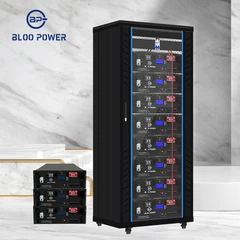
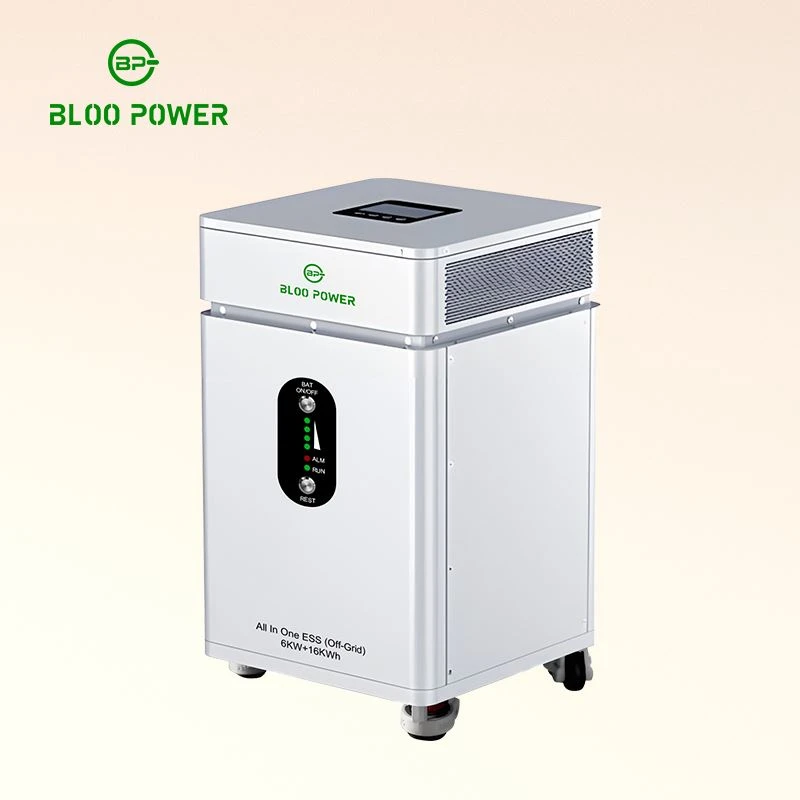
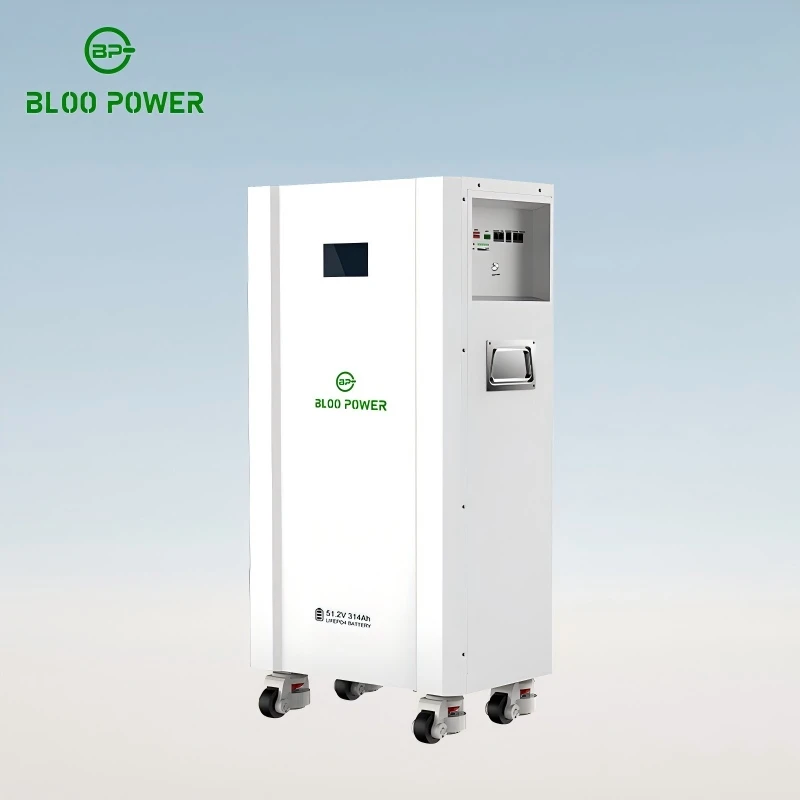
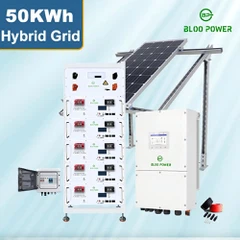
For residential energy storage systems using LiFePO4 (lithium iron phosphate) technology, the correct approach is not simply to "use as few batteries as possible," but rather to reduce unnecessary electrochemical stress through reasonable system parameter settings, while still meeting the needs of home self-consumption, peak shaving and valley filling, power outage backup, and off-grid power supply. BLOO POWER offers wall-mounted batteries, rack-mounted batteries, and integrated energy storage solutions for home energy storage applications. Users should refer to the datasheet, BMS protection logic, and official installation requirements of the specific model when using the product.
Avoid Maintaining 100% Charge for Extended Periods; Set a Reasonable State of Charge (SOC) Operating Range
Many users believe that "the more fully charged the battery, the better," and therefore expect their solar energy systems to charge their household storage batteries to 100% daily and maintain this state for extended periods. In reality, a full charge itself isn't necessarily a mistake, but prolonged high SOC increases calendar aging stress on some lithium-ion batteries. Research on LiFePO4/graphite batteries also shows that temperature variations and high SOC conditions affect aging behavior. Therefore, for households that don't require 100% backup capacity daily, daily SOC limits and backup SOC should be set reasonably based on actual electricity needs and the product's allowable control range, rather than leaving the battery in extreme conditions for extended periods.
● For daily self-consumption mode, a reasonable SOC limit can be set according to the product manual.
● Only increase the backup capacity in situations such as typhoons, blizzards, or increased power outage risks.
● Prolonged full-charge idleness is more likely to cause calendar aging problems than normal charging and discharging.
● The specific SOC settings must comply with the allowable range of the BLOO POWER battery BMS and the matching inverter.
| Use cases | SOC strategy recommended | Significance of life management |
| Daily solar energy use | Set a reasonable upper limit based on the product's permissible range. | Reduce long-term high SOC stay |
| Peak-valley arbitrage | Set a reasonable charge/discharge window | Avoid unnecessary extreme cycles |
| Areas with frequent power outages | Maintain a high standby SOC | Prioritize ensuring power supply reliability |
| Long-term travel | Set according to manufacturer's storage requirements. | Reduce the risk of aging during idle periods |
Avoid Frequent Deep Discharge to System Minimum Capacity
Another common misconception about residential energy storage batteries is the idea of "using up" the battery every day, believing that only by completely discharging the battery can the investment be fully utilized. In reality, the greater the depth of discharge (DOD), the greater the electrochemical stress the battery typically experiences during a single full cycle. Research and battery life models generally list DOD as a crucial variable affecting cycle aging; some studies indicate that higher DOD usually leads to faster capacity decay, and NREL-related battery life studies also list DOD as a key aging factor to consider. Therefore, the correct approach is not to artificially pursue the extreme limit of 0% to 100% daily cycles, but rather to maintain a reasonable safety margin through the BMS and inverter.
● It is not recommended to artificially bypass the BMS's low SOC protection function.
● Set a reasonable minimum SOC based on the household's nighttime load.
● Large-capacity systems can reduce the relative daily DOD by increasing battery capacity.
● The specific allowable DOD should strictly adhere to the corresponding BLOO POWER product specifications.
For example, if a household needs 15kWh of battery power per day, configuring only a small-capacity battery may result in the system operating in a deep cycle for an extended period. However, if the energy storage capacity is appropriately increased based on the load, the relative DOD for the same 15kWh of electricity consumption may decrease. It is important to note that increasing capacity is not necessarily suitable for all projects, and users should still comprehensively consider investment costs, solar power generation, inverter power, and actual load.
Control Charging and Discharging Power to Avoid Prolonged Operation at Extremely High Rates
The battery life in residential energy storage systems is also related to the current and charge/discharge rate. Battery research shows that charging C-rate, depth of discharge, and temperature all contribute to the battery aging process. When household loads suddenly increase, such as when air conditioners, electric ovens, water heaters, electric vehicle chargers, and other high-power devices start simultaneously, a small energy storage system may require the battery to operate at high power for extended periods. Frequent high-current operation increases internal battery heat and electrochemical stress. Therefore, during the design and usage phases, battery capacity and inverter power should be appropriately matched to the peak household load.
● Avoid subjecting small-capacity batteries to excessively high-power loads beyond design specifications for extended periods.
● Set reasonable maximum charging and discharging currents.
● When there are many high-power loads, system capacity and power should be rematched first.
● Use inverter and BMS communication control; manually disabling the factory current limit is not recommended.
When configuring BLOO POWER's wall-mounted, rack-mounted, and home energy storage solutions for a project, the installer should design the system based on the specific battery model, the number of batteries connected in parallel, and the inverter parameters. In particular, for multi-battery parallel systems, it should not be assumed that "more batteries mean unlimited current." Communication, current collection, cabling, circuit breakers, and the rated operating range of each module still need to be considered.
Install the battery in a suitable temperature environment, avoiding high temperatures and extreme low temperatures.
Temperature is a crucial factor affecting the performance, safety, and lifespan of lithium batteries. Research by NREL and other institutions shows that the aging behavior of lithium-ion batteries is highly sensitive to temperature, and the effects of temperature vary depending on the chemical system and operating conditions. For residential energy storage, the most common problems are installing batteries on walls exposed to prolonged sunlight, in enclosed high-temperature equipment rooms, or near boilers or other heat sources. Excessively high ambient temperatures can accelerate side reactions and capacity decay; excessively low temperatures can lead to increased internal resistance and decreased charging performance. Therefore, extending battery life is not about simply memorizing a fixed temperature number, but about strictly adhering to the charging, discharging, and storage temperature ranges specified in the product datasheet.
● Avoid installing the battery in locations exposed to prolonged sunlight.
● Do not place the battery in close contact with boilers, radiators, water heaters, or other high-temperature equipment.
● Ensure the installation space has adequate ventilation and heat dissipation.
● Whether charging is permissible in low-temperature environments should be determined by the product's BMS and official specifications.
| Environmental factors | Potential impact | Recommended management method |
| Prolonged high temperature | Accelerated calendar aging and chemical side effects | Avoid heat sources and direct sunlight. |
| Frequent temperature fluctuations | Increase the complexity of operating conditions | Maintaining relative environmental stability |
| Extreme low temperature charging | May affect charging performance and lifespan | Use the low-temperature protection specified by BMS. |
| Insufficient heat dissipation space | Heat accumulation | Reserve space according to the installation manual |
Prioritize the use of full BMS protection functions; do not manually disable protection logic.
BMS, or Battery Management System, is a crucial component for the long-term stable operation of modern residential energy storage batteries. It not only monitors the voltage, current, and temperature of individual cells or battery modules but also performs overcharge, over-discharge, overcurrent, short-circuit, and temperature protection according to system design. Users attempting to obtain more "usable power" by modifying protection thresholds, bypassing low-voltage protection, or using unofficial forced charging methods may actually shorten battery life and increase system risk. The correct long-term usage should allow the BMS to perform its protective function and coordinate between the battery and power devices through normal inverter communication.
● It is not recommended to modify core BMS protection parameters not authorized by the manufacturer.
● After over-temperature or overcurrent alarms occur, the cause should be investigated first.
● Frequent protection actions indicate a possible configuration problem in the system.
● Regularly check the BMS communication status and whether the inverter can correctly read data.
For BLOO POWER residential energy storage solutions, users should prioritize using communication methods compatible with the product and officially supported system configurations. The purpose of the Battery Management System (BMS) is not to limit battery usage, but to strike a balance between usable capacity, output performance, and long-term lifespan. If the system frequently and automatically cuts off output or repeatedly displays abnormal SOC readings, you should contact the installer or technical support immediately, rather than continuing to operate by disabling protection functions.
Select a Compatible Inverter and Correctly Configure Battery Communication Parameters
The compatibility between the battery and inverter directly affects the charging voltage, current, SOC identification, and the proper execution of protection logic. If the communication protocol or battery type is set incorrectly, the inverter may fail to accurately obtain BMS information, potentially leading to unreasonable charging strategies, inaccurate SOC display, or frequent protection activation. Therefore, extending the lifespan of residential energy storage batteries requires more than just focusing on the battery itself; it is essential to ensure the proper coordination of the entire system's "battery-BMS-inverter-EMS".
● Use inverter models explicitly supported or verified by the manufacturer.
● Correctly select the lithium battery communication mode and interfaces such as CAN/RS485.
● Do not connect products with different voltage platforms incorrectly.
● Firmware upgrades and parameter modifications should be performed according to the manufacturer's technical requirements.
BLOO POWER's official product information covers applications such as home energy storage, wall-mounted batteries, rack-mounted batteries, and integrated energy storage. In actual projects, whether a specific battery and inverter are compatible still needs to be based on the compatibility list, technical protocol and installation information of the corresponding model. It cannot be judged that they can be used directly just because they are both "48V" or "both are lithium batteries".
Avoid Prolonged Full-Load Operation and Maintain a Reasonable Power Margin in the Battery System
Many households design their energy storage systems based solely on their average daily electricity consumption, neglecting instantaneous power demands. For example, a household's total daily electricity consumption may not be high, but if multiple high-power devices are frequently started simultaneously, the battery and inverter may still experience frequent high-power output. Prolonged full-load operation increases current and heat; therefore, from the perspective of extending lifespan, the system should have a certain capacity and power margin, rather than operating under extreme conditions every day.
● Select inverter power based on maximum simultaneous load.
● Select battery capacity based on actual daily electricity consumption.
● It is recommended to use high-power devices during off-peak hours.
● Multi-battery parallel systems should ensure that all modules participate in balanced operation.
Taking the BLOO POWER modular residential energy storage solution as an example, as the household load increases, the capacity can be expanded according to the specific product's parallel capability and official requirements. The value of reasonable capacity expansion lies not only in increasing backup time but also in potentially reducing the relative load borne by a single battery module over a long period. However, capacity expansion must use battery modules that are of the same specifications, meet the requirements, and are officially approved. Batteries of different brands, capacities, or aging levels cannot be mixed and matched at will.
Reduce Unnecessary High-Frequency Charging and Discharging, and Rationally Plan Solar Energy and Electricity Consumption Strategies
Extending battery life does not mean completely reducing cycles, as energy storage batteries are inherently designed for charging and discharging. What truly needs to be avoided are ineffective cycles without economic or practical value, such as those caused by incorrect parameter settings leading to multiple small-amplitude, frequent, and meaningless charge-discharge cycles throughout the day. Research shows that cycle count, SOC history, cycle depth, and current conditions all collectively affect long-term capacity degradation. Therefore, home energy management systems should prioritize operation according to the logic of "solar energy first for loads-reasonable charging of remaining power-discharging at set times and under set conditions."
● Rationally set up self-consumption, standby, or peak-valley arbitrage modes.
● Avoid parameter conflicts that cause frequent battery charging and discharging.
● Develop operating strategies based on local electricity prices and solar power generation patterns.
● Regularly check the battery power curve and cycle count throughout the day.
For example, if the inverter, due to parameter settings issues, causes the battery to immediately discharge to a load after charging and then recharge from the grid, it may create an unnecessary "internal cycle." Users can view the charging and discharging curves through the monitoring platform. If abnormally frequent power switching is found, the installer should be asked to check the EMS, inverter operating mode, and time period settings.
Do not arbitrarily disconnect power and store batteries during long-term idle periods; manage them according to the manufacturer's storage requirements.
Some households only use energy storage systems during power outages, so the batteries may be in a low-usage state for extended periods throughout the year. It's important to note that batteries will undergo calendar aging even without cycling; therefore, "completely unused" does not mean "never degraded." The SOC, temperature, and storage time during storage can all affect battery status. Studies have clearly identified SOC history and temperature as important factors affecting lithium-ion battery life. Therefore, for long-term absences or seasonal use, strictly follow the specific product manual for storage management.
● Set the long-term storage SOC according to the official requirements.
● It is not recommended to leave batteries idle for extended periods at extremely low SOC levels.
● Avoid prolonged exposure to 100% full charge and high temperatures.
● Regularly check the system status and perform maintenance as required by the manufacturer.
For BLOO POWER energy storage batteries, specific storage SOC, permissible storage temperature, and whether periodic recharging is required should be based on the user manual and technical documents of the actual product model. Products with different capacities, structures, and BMS strategies may differ, so it is not recommended to directly apply the storage parameters of other brands of batteries.
Maintain a good installation environment and prevent dust, moisture, and mechanical damage.
Battery life is affected not only by internal electrochemical factors but also by the external installation environment. Residential energy storage systems should avoid prolonged exposure to moisture, corrosive environments, and large amounts of dust exceeding the product's protection rating. For systems installed in garages, basements, equipment rooms, or outdoor areas, the risks of ventilation, water accumulation, sunlight, salt spray, and mechanical impact must also be considered. Especially for outdoor applications, even if the battery has some IP protection capability, the location and environmental requirements in the product installation manual cannot be ignored.
● The installation location should avoid water accumulation and prolonged dampness.
● Do not pile up debris around the battery, which may impede heat dissipation.
● Regularly inspect the casing, cables, and terminals.
● Avoid impacts to the battery equipment from vehicles, heavy objects, or construction activities.
From a safety perspective, product testing and installation standards for energy storage systems are increasingly emphasizing thermal runaway propagation and risk assessment under different installation environments. UL 9540A is one of the important test methods for assessing the thermal runaway fire propagation behavior of energy storage systems and is closely related to system safety assessments in relevant building and fire protection codes. Therefore, proper installation and use not only help extend lifespan but also help reduce long-term operational risks.
Regularly check SOC, temperature, alarms, and capacity changes; establish preventative maintenance habits.
Residential energy storage batteries typically do not require the complex daily maintenance of traditional mechanical equipment, but "maintenance-free" does not mean "never needing inspection." Users can regularly check SOC, battery temperature, charge/discharge power, alarm codes, and historical operating data through the inverter display, mobile app, or energy management platform. If a significant decrease in available capacity, abnormally long charging time, frequent over-temperature protection activations, or significant differences in SOC among multiple battery modules are observed, troubleshooting should be conducted promptly.
● Review key operating data monthly.
● Pay close attention to recurring similar alarms.
● Observe for significant differences between different modules.
● Maintain installation, maintenance, and fault records.
NREL's battery life research tools and related studies emphasize that battery degradation is related to historical operating conditions such as temperature, SOC, current, cycle depth, and frequency in actual applications. Therefore, long-term storage of operating data is of practical value, helping installers determine whether capacity degradation is due to normal aging or abnormal degradation caused by environmental, parameter, or equipment malfunctions.
Choose the right model according to your actual household needs; insufficient capacity will also shorten the long-term lifespan.
Finally, and most easily overlooked, is the importance of choosing the right model before purchasing a residential energy storage system. Many batteries experience significant performance degradation prematurely, not entirely due to product quality issues, but also because the system capacity was chosen too small from the outset. For example, a household that requires a large amount of electricity at night, experiences frequent power outages, and has multiple high-power loads may be subjected to prolonged deep cycling, high-rate charging and discharging, and frequent cycling if only a very small energy storage system is installed. Conversely, properly configuring capacity and power will allow the system to operate within a range more aligned with its design goals.
● Calculate the required available power based on the household's daily power consumption.
● Determine the inverter power based on peak load.
● Determine the backup capacity based on the duration of power outages.
● Reserve space for future increases in loads such as air conditioning and electric vehicles.
| Family needs | Energy storage design focus | Life management recommendations |
| Ordinary solar energy for personal use | Improve daytime solar energy utilization | Controlling invalid loops |
| Frequent power outages | Increase backup power | Reasonably retain SOC |
| High-power home | Improve system output capability | Reduce single module load |
| Off-grid or weak grid areas | Emphasis on capacity and redundancy design | Avoid long-term extreme operation |
| Future load growth | Choose a scalable solution | Reserved modular expansion capability |
BLOO POWER's home energy storage products cover wall-mounted, rack-mounted, and integrated energy storage, allowing for the selection of appropriate solutions based on actual household load, solar capacity, and future expansion needs during project design. A system truly beneficial for extending lifespan is not simply choosing the largest capacity or pursuing the lowest purchase price, but rather achieving a reasonable balance between battery capacity, inverter power, solar power generation, cycle strategy, and backup requirements.
Conclusion: Extending the lifespan of residential energy storage batteries hinges on avoiding prolonged extreme operation.
In general, the lifespan management of residential energy storage batteries can be summarized as: avoiding prolonged high temperatures, avoiding unnecessary extreme SOC, controlling excessively deep cycling, reducing prolonged high-rate operation, ensuring proper BMS operation, correctly matching the inverter, reducing ineffective cycles, managing long-term idle periods, and promptly identifying anomalies through continuous monitoring. Battery lifespan is never determined by a single parameter, but rather by the combined effects of temperature, SOC, DOD, charge/discharge rate, cycle frequency, and time.
For BLOO POWER residential energy storage systems using LiFePO4 technology, proper use of BMS protection, installation according to official requirements, use of a matching inverter, and reasonable configuration of home energy management strategies are crucial for achieving long-term stable operation. Users also need to understand that the cycle count or design life advertised in product specifications are usually performance indicators obtained under specific test conditions. Actual household lifespan is affected by ambient temperature, daily cycle count, DOD (Design for Discharge), load power, and installation conditions. Therefore, the most scientific approach is not simply to "fully charge and then fully discharge the battery every day," but rather to ensure the battery operates stably for a long period within its specified operating window.
During the final installation and parameter settings, always refer to the official datasheet, installation manual, BMS communication requirements, and inverter compatibility documentation for the corresponding BLOO POWER model. If the system exhibits abnormal heating, odor, smoke, casing damage, repeated alarms, or inability to charge or discharge normally, immediately follow the product safety instructions to shut down and isolate the system, and contact a professional installer or manufacturer technical support. Users are advised against attempting to disassemble the battery casing for repairs themselves.
Send Inquiry