




















How Long Can a 48V 200Ah Battery Sustain the Operation of a Base Station?
Sep 29, 2026
Leave a message

What this guide answers
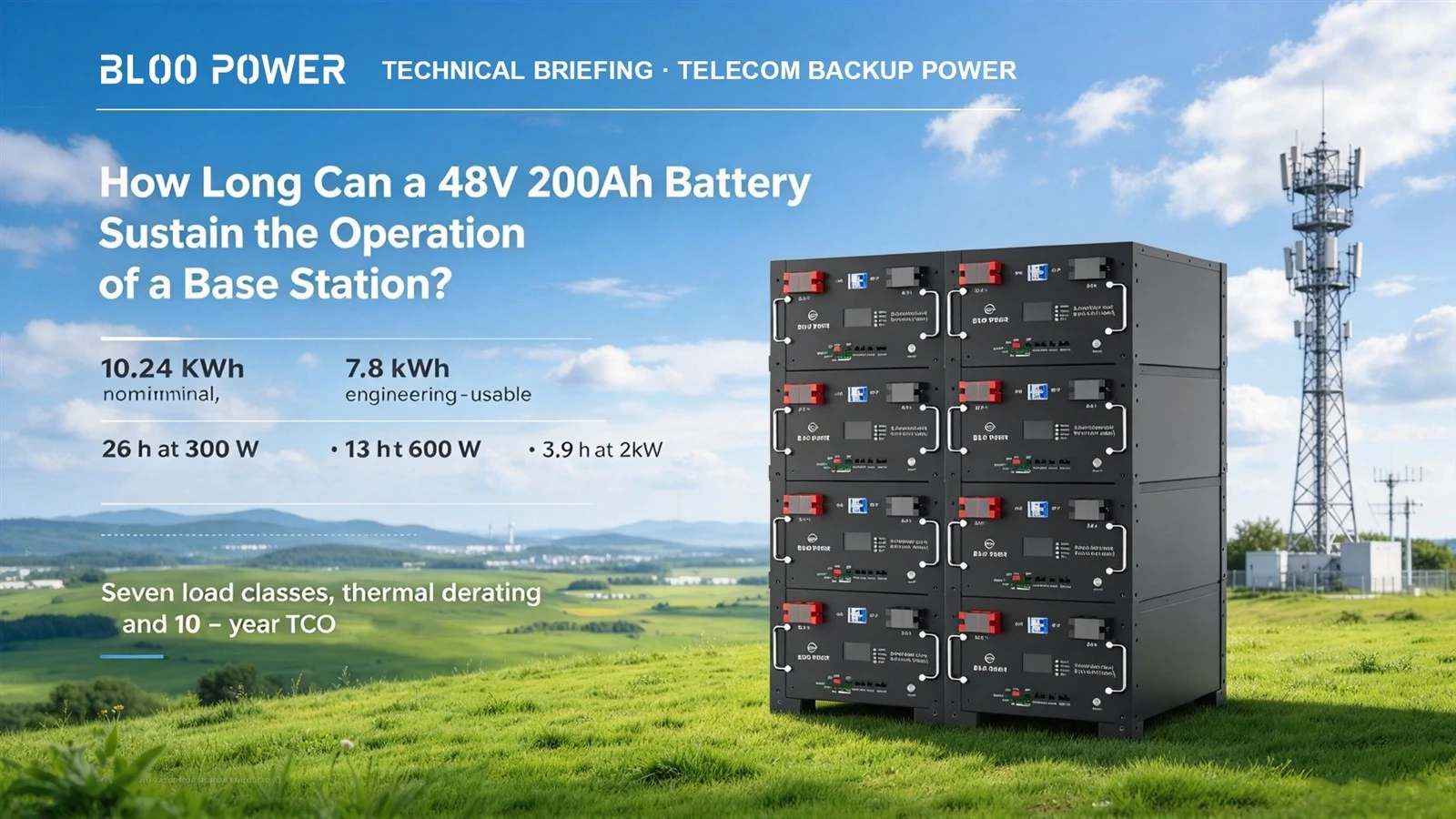
- A 48V 200Ah LiFePO4 string delivers roughly 7.8 kWh of usable energy at 25 °C and a discharge rate below 0.5C. Every runtime figure below follows from that single number.
- Runtime is 7.8 kWh ÷ load in kW. A 300 W micro cell gets about 26 hours; a 2 kW single-system 5G macro gets 3.9 hours; a 4 kW shared site gets under 2 hours.
- US federal rules once required 8 hours at cell sites. That rule was stayed, then abandoned - but California now mandates 72 hours in high fire-threat districts, and the EU runs a voluntary Code of Conduct covering 2G–5G base stations.
- Temperature is the second half of the calculation: at −20 °C a LiFePO4 string retains about 65% of nameplate capacity, turning a compliant site into a non-compliant one each winter.
- A single module's 100 A continuous discharge ceiling (about 4.8 kW) is a hard limit. Above it, paralleling is mandatory - and paralleling is not simple addition.
Why Have 48V and 200Ah Become the Building Blocks?
Two curves converge at the 48V/200Ah mark: the load curve of the radio access network (RAN) and a DC power convention that predates the smartphone by a century.
Recent industry tracking data from the GSMA (Global System for Mobile Communications Association) indicates that mobile operators consumed approximately 300 TWh of electricity in 2024-accounting for about 1% of global electricity consumption. Of this, 75%–80% was consumed by the radio access network, with base stations and their supporting infrastructure (rectifiers, cooling systems, and backhaul networks) accounting for the vast majority. Energy costs are by no means a negligible line item on the balance sheet: the GSMA and its research arm, GSMA Intelligence, note that energy costs represent 20%–40% of telecom operators' operating expenses; excluding site lease fees, energy costs account for 80%–90% of network-related expenditures. The organization also identifies the replacement of lead-acid batteries with lithium-ion batteries as a key measure for significantly improving network energy efficiency. This serves as a useful starting point, demonstrating that the rationale for adopting this battery chemistry stems from more than just vendor marketing.
Load figures themselves have also risen sharply. According to the ETSI ES 203 700 standard, the total RF power for "complex macro base stations" (supporting multiple frequency bands, Massive MIMO technology, and multi-operator sharing) ranges from 8,000 to 24,000 W, while "simple macro base stations" range from 3,000 to 6,000 W; micro cells operate at 30–250 W, and picocells at 10–50 W. In practical application, a 5G macro base station configured with a single carrier (100 MHz) requires approximately 2 kW of DC bus power when accounting for the energy consumption of baseband, transmission, and monitoring systems; for sites shared by multiple operators, the power requirement can even exceed 4 kW. In contrast, the power requirements for similar 4G sites a decade ago were well below 1 kW.
Telecom network equipment is typically powered by a DC power system with a nominal voltage of -48V (utilizing a negative-ground configuration); this standard was originally established to mitigate electrolytic corrosion in buried copper cables and enhance system fault tolerance. Rectifier racks convert mains AC power into -48V DC, allowing the battery bank and the load to operate in parallel on the same busbar for float charging while simultaneously powering wireless communication and transmission equipment. Consequently, the battery provides zero-switchover backup power, eliminating the need for inverter switching or static switch operations. This architectural standard is defined within the Telcordia GR series, including GR-513-CORE for AC/DC power systems, GR-151-CORE for rectifiers, and GR-63-CORE and GR-1089-CORE for NEBS physical and electrical protection requirements.
The characteristics of Lithium Iron Phosphate (LiFePO4) batteries align almost perfectly with this busbar voltage range. A LiFePO4 battery pack configured with 16 cells in series (16S) has a nominal voltage of 51.2V, a float charge voltage between 54V and 56V, and a discharge cutoff voltage (the voltage when cells are nearly depleted) of 43.2V; this entire voltage range falls well within the operating limits of standard -48V rectifier racks. Therefore, LiFePO4 battery packs can typically replace Valve-Regulated Lead-Acid (VRLA) battery packs directly, without requiring modifications to the rectifier modules.
Nameplate Parameter Calculation
48 V × 200 Ah = 9.6 kWh. For a 16-series (16S) LiFePO4 battery pack, the nominal voltage is 51.2 V; therefore, the same 200 Ah capacity corresponds to an energy of 10.24 kWh. Quotations, tender documents, and technical specifications often use these two standards interchangeably. It is crucial to clarify which reference voltage is being used before performing calculations, as this can result in a 6.7% difference in the final outcome.
Backup Duration for 48V 200Ah Battery Based on Load
In actual site applications, the backup duration depends entirely on the site's DC current consumption. The table below is based on standardized conditions: an ambient temperature of 25°C and a 90% depth of discharge (discharging from a full float-charge state to the secondary low-voltage cutoff point of 43.2V), with conversion losses and design margins already accounted for. Based on these parameters, the usable energy per module is approximately 7.8 kWh. Data for both dual-module and quad-module configurations is also included in the table, allowing for quick reference based on the site's criticality level.
Table 1 - 48 V / 200 Ah battery backup time by site load class (25 °C, 90% DoD, efficiency and design margin applied)
|
Site type (DC-side load) |
Load |
DC current |
1 module |
2 parallel |
4 parallel |
|
Micro cell / remote radio / DAS |
300 W |
6.3 A |
≈ 26.0 h |
≈ 52 h |
> 100 h |
|
4G single-band macro + backhaul |
600 W |
12.5 A |
≈ 13.0 h |
≈ 26.0 h |
≈ 52 h |
|
4G three-sector / multi-band macro |
1,000 W |
20.8 A |
≈ 7.8 h |
≈ 15.6 h |
≈ 31.2 h |
|
5G single-system macro (100 MHz) |
2,000 W |
41.7 A |
≈ 3.9 h |
≈ 7.8 h |
≈ 15.6 h |
|
5G multi-band + backhaul + monitoring |
3,000 W |
62.5 A |
≈ 2.6 h |
≈ 5.2 h |
≈ 10.4 h |
|
5G multi-operator shared site |
4,000 W |
83.3 A |
≈ 1.9 h |
≈ 3.9 h |
≈ 7.8 h |
|
Shelter site including cooling load |
5,000 W |
104.2 A |
≈ 1.6 h |
≈ 3.1 h |
≈ 6.2 h |
Calculation basis: Usable energy 7.8 kWh = 200 Ah × 48 V × 90% DoD × 0.95 (string-to-load efficiency) × 0.95 (design margin). Color coding: Green = well above the 3-hour reference standard; Blue = meets the standard; Amber = below the standard-consider parallel connection or load shedding before finalizing specifications.

Figure 1 - Runtime falls hyperbolically with load; the upper portion of the 2- and 4-module curves is clipped at the 20-hour ceiling (4 modules below 2 kW, 2 modules below 1 kW run off the chart). Read the three marked points: 1 module at 2,000 W ≈ 3.9 h, 2 modules at 3,000 W ≈ 5.2 h, 4 modules at 4,000 W ≈ 7.8 h. Load classes follow ETSI ES 203 700's base station power categories. The 3-hour reference line is the China Tower published site standard, shown as regional evidence rather than as a universal target - see section 11 for the US and EU equivalents.
Reasons Why Engineering Calculations and Lead-Acid Battery Parameter Tables Are Inapplicable
The figure of 7.8 kWh is not a marketing claim. It is derived from a capacity sizing method used by telecommunications operators for two decades-a method incorporated into Chinese national standards YD/T 5040 and GB 51194, and structurally similar to the approach found in the Telcordia GR-513-CORE standard:
|
Q ≥ K · I · T ⁄ ( η · [1 + α (t − 25) ] ) Q = required string capacity (Ah) K = safety factor, taken as 1.25 I = load current (A) T = required discharge time (h) η = discharge capacity factor α = temperature coefficient (per °C): 0.006 for discharge rates ≥10 h, 0.008 for 1–10 h, 0.01 below 1 h t = minimum ambient temperature at the battery: 15 °C for heated rooms, 5 °C for unheated |
One parameter of particular interest is η, the discharge capacity coefficient. For a 200 Ah VRLA (Valve-Regulated Lead-Acid) battery bank, reference values are as follows: 0.40–0.48 for the 0.5-hour discharge rate, 0.55 for 1 hour, 0.61 for 3 hours, 0.75 for 4 hours, 0.88 for 8 hours, and 0.94 for 10 hours-with the coefficient reaching 1.0 only at the 20-hour discharge rate. In practical terms, a VRLA battery with a nominal capacity of 200 Ah can deliver approximately 110 Ah of actual energy during a 1-hour discharge. This phenomenon is described by Peukert's law and is the primary reason why VRLA battery banks often underperform relative to their nominal ratings during actual power outages.
Lithium iron phosphate (LiFePO4) batteries behave differently. Between discharge rates of 0.1C and 0.5C, capacity loss is typically less than 2%; consequently, the η coefficient table used for lead-acid batteries is entirely inapplicable-applying it to lithium battery banks would severely underestimate their actual performance. For this reason, this guide uses energy (rather than ampere-hours) as the basis for calculations. The physical formula is as follows:
Usable Energy = Rated Capacity × Average Discharge Voltage × Depth of Discharge × Round-trip and Conversion Efficiency.
200 Ah × 48 V × 90% × 0.95 = 8.21 kWh; applying an additional design margin factor of 0.95 yields a result of 7.8 kWh.
The Origin of the "90%" Figure
Telecom DC power systems employ a two-stage load-shedding mechanism. The first stage is Low Voltage Load Disconnect (LLVD), which typically activates when the voltage approaches 45.5 V, disconnecting non-critical loads (such as cooling equipment, lighting, and security cameras). The second stage is Battery Low Voltage Disconnect (BLVD), which activates when the voltage approaches 43.2 V, cutting off power to transmission and monitoring systems to protect wireless communication equipment. For a 16-series (16S) LiFePO4 battery pack, a voltage of 43.2 V corresponds to a cell voltage of 2.7 V, a point at which the battery is essentially fully depleted. As the voltage drops from the 54 V float voltage to this cutoff level, the battery pack can deliver approximately 90%–95% of its rated capacity; this figure represents the depth of discharge used in this analysis.
A lesson worth carrying over from the VRLA (Valve-Regulated Lead-Acid) battery era is that the value of the parameter α depends on the discharge duration; consequently, the adverse effects of low temperatures are more pronounced during short-duration, high-rate discharges than during long-duration, low-rate discharges. Lithium batteries follow the same physical principles for the same underlying reason: at low temperatures, the diffusion rate of lithium ions within the electrolyte and electrodes decreases, leading to increased internal resistance, which causes the terminal voltage to reach the cutoff threshold more rapidly. As a result, the actual low-temperature runtime is often shorter than the predicted value calculated based solely on capacity derating. Section 10 addresses this topic in detail.
Micro cells, remote radio units and DAS - about 300 W
This is where a 200 Ah module looks almost absurdly oversized, and where it earns its keep for a different reason. A micro cell, a remote radio unit on a strand mount, or a distributed antenna system head-end typically draws 200–400 W on the DC side. ETSI ES 203 700 puts micro cells at 30–250 W and picocells at 10–50 W, so 300 W is at the high end of the class. At that load the string discharges at just 0.031C - effectively a 30-hour rate, the gentlest condition a battery ever sees.
The arithmetic: 7.8 kWh ÷ 0.3 kW = about 26 hours from one module, about 52 hours from two. Both figures exceed what any operator's availability model asks for, which changes the right way to design the site. Rather than treating the battery as insurance that is tested twice a year, it becomes sensible to treat it as a daily energy buffer - charging in the low tariff window and discharging into the site load during peak hours.
How much is that worth? At 300 W, one module cycles about 3.6 kWh per day if it runs a single full swing. In markets with a wide peak–off-peak spread, that is a genuine - if modest - revenue line, and it is one that a diesel generator can never earn. But the tariff arbitrage changes which specification matters: cyclic life, not calendar life, becomes the replacement driver. BLOO POWER's BP-BSB series is rated at ≥4,000 cycles at 80% depth of discharge, which is roughly ten years of daily cycling; pushed to 100% depth of discharge the rating drops to ≥2,000 cycles, or about five and a half years. The same hardware has a ≥8,000 cycle rating at 50% depth of discharge - twenty-two years, by which point the calendar life of the electronics, not the cells, is the binding constraint.
The design conclusion is counterintuitive: for an arbitrage site, deliberately under-cycling the string is the higher-return strategy. Running a shallow 50% swing on a larger string delivers a similar daily throughput with roughly four times the service life. Sites that want both capacity and cycling headroom should specify two modules and a 50% depth-of-discharge limit in the BMS configuration, not one module cycled to the floor.
Legacy 4G single-band macro - about 600 W
This is the most numerous site class in most mature networks and the easiest duty a 200 Ah string will ever face. A single-band 4G macro with one baseband unit, three remote radio heads, an IP/MPLS backhaul terminal and an environmental monitoring unit lands at roughly 500–700 W on the DC bus, so take 600 W. Current is about 12.5 A, a 0.063C discharge - a long, slow drain that costs essentially nothing in rate-related capacity.
The result is about 13 hours. To judge whether that is generous or marginal, it helps to know what outages actually look like. Distribution-level fault outages cluster heavily in the 0–3 hour band; multi-hour outages are usually weather events affecting a whole region rather than a single feeder. A 13-hour runtime is therefore roughly four times the upper edge of the common outage distribution - enough that a truck roll with a generator becomes optional rather than mandatory for the majority of incidents.
That produces a useful and slightly awkward procurement conclusion: for legacy 4G sites on a reliable grid, a single 200 Ah module is over-specified. Consider the substitution it enables. A 48 V / 500 Ah VRLA string - which sounds like more than twice the capacity - delivers only about 12 kWh usable once the 50% depth-of-discharge constraint and the discharge-factor derating are applied. Replacing it with a single 200 Ah lithium module holds usable energy roughly flat while cutting installed weight from roughly 400 kg to 65 kg (143 lb).
That weight difference is not a comfort feature; it is the difference between a two-person job with a lifting frame and a one-person job with a hand truck. BLOO POWER's BP-BSB-10KWH-3U base station battery is a 3U module measuring 500 × 442 × 130 mm (19.7 × 17.4 × 5.1 in) at that 65 kg figure, so a single technician can complete a module swap without a crane, a second body, or a site visit scheduled around both. There is one genuine exception worth naming: a climate-controlled shelter at a steady 25 °C is the one environment where VRLA reaches its nameplate 8–10 year design life, and the ten-year cost comparison in section 14 narrows considerably there.

4G multi-band macro - about 1 kW
Add a second frequency band, or a third sector, and the remote radio head count doubles. DC-side load moves into the 900–1,200 W range. Take 1,000 W: 20.8 A, a 0.104C discharge, still comfortably in slow-drain territory. Runtime is about 7.8 hours.
7.8 hours is worth its own discussion because it straddles two psychologically important lines. It clears a typical overnight outage - say 22:00 to 06:00 - with nothing to spare, which means an overnight trip will not take the site down. But it falls well short of a full day. At a site in a storm-prone region that experiences two separate interruptions in the same 24 hours, a single module will hold the first and lose the second, and the second is the one that generates the trouble ticket.
The standard engineering response is to combine one module with an early load shed. Raising the LLVD setpoint from 45.5 V to about 46.5 V forces non-critical loads off earlier and typically extends radio-side runtime by 8–12% at zero capital cost. The catch is that the change has to be validated on the network management side: the radio equipment and the backhaul terminal must both tolerate the lower bus voltage without resetting.
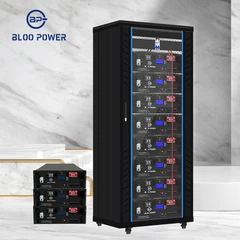
Where the site also carries an enterprise SLA circuit, the more defensible answer is two modules. Usable energy doubles to 15.6 kWh, runtime at 1 kW reaches about 15.6 hours, and - more importantly for an SLA - a single module failure still leaves 50% of capacity in service rather than zero. BLOO POWER's expandable rack-mount base station battery supports up to 16 identical modules in parallel, so moving from one to two modules is one additional 3U slot and one communications cable, not a new battery cabinet and a site survey.
5G single-system macro - about 2 kW
The load curve steepens here. A single-carrier 100 MHz 5G macro - 64T64R or 32T32R massive MIMO, one baseband unit, backhaul and monitoring - commonly draws 1,800–2,200 W on the DC side, because the active antenna unit alone accounts for 1,200–1,800 W. Take 2,000 W. That is 41.7 A, a 0.21C discharge, and a runtime of about 3.9 hours.
This is the class where the phrase "just enough" does real damage. 7.8 kWh ÷ 2 kW = 3.9 hours sits only 30% above a 3-hour target. In engineering practice, a 30% margin on a battery is not a margin - it is a coincidence. Three independent effects eat into it. First, ageing: a lithium string in float service degrades slowly, but reaching 90% of nameplate after five years is normal and entirely within specification. Second, temperature: below 0 °C the usable capacity collapses toward 80% and below (section 10). Third, load growth: carrier aggregation and the wider rollout of reduced-capability (RedCap) device support both increase the number of active transmit chains at the site.
Sizing note for 5G single-system sites
Do not size against the measured load alone. The 1.25 safety factor embedded in the industrial sizing method exists precisely for this case. Working backwards from a 2 kW load and a 3-hour target with K = 1.25 gives a required usable energy of 2 × 3 × 1.25 = 7.5 kWh - which a single 200 Ah module clears by 0.3 kWh. If measured load exceeds about 2.1 kW, or the site's design minimum temperature is below 0 °C, go to two modules. The cost of the second module is trivial next to the cost of a coverage outage at a shared site.
Multi-band and shared 5G sites - 3 to 5 kW
This is the most difficult class, and the one where a single 200 Ah module is simply the wrong specification. A multi-band 5G macro - say a mid-band carrier plus a low-band carrier for coverage - with backhaul, environmental monitoring and lighting reaches roughly 3,000 W. A site shared between two or three operators, each running its own 5G system from the same DC plant, can exceed 4,000 W, and a shelter site with a cooling load approaches 5,000 W. That matches ETSI ES 203 700's "complex macro base station" category, which it defines at 8,000–24,000 W of aggregated RF power spanning multiple operators and frequencies.
Against Table 1: 3,000 W gives about 2.6 hours per module, 4,000 W gives about 1.9 hours, and 5,000 W leaves about 1.6 hours. All three fall below a 3-hour target, so a single-module design is non-compliant by construction in this class.
There is a less obvious failure mode hiding in the same numbers. At 4,000 W the string draws 83.3 A; at 5,000 W it draws 104.2 A. The BLOO POWER BP-BSB-10KWH-3U is rated at 100 A continuous discharge and 200 A maximum continuous discharge. At 5 kW, a single module has crossed its continuous rating and the BMS will trip on overcurrent. At that point the runtime question is moot - the battery does not discharge at all, and the site goes down at the moment the grid does. This is a spec that should be treated as a hard veto, not a soft limit.
The practical sequence is therefore screen on power first, then verify on energy. For a 4 kW site, two modules in parallel put roughly 42 A on each string - a comfortable 0.21C - give 15.6 kWh usable and a runtime of about 3.9 hours, clearing a 3-hour target with real margin. For a 5 kW site, three modules (28.8 kWh, about 35 A each) give roughly 5.8 hours, which leaves room for ageing and a cold snap. The paralleling details - current sharing, circulating current and disconnect sequencing - are in section 13.
Off-grid and bad-grid sites: backup becomes primary
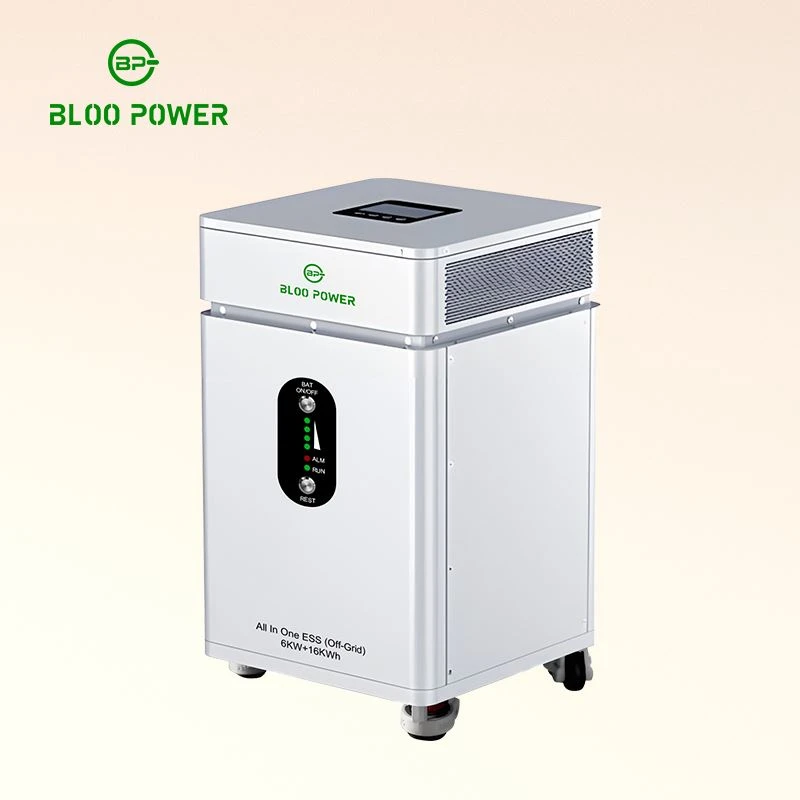
The calculation logic changes completely in this class. At the first five site types the battery is a standby asset that may discharge a handful of times a year, so calendar life rather than cyclic life sets the replacement interval. At an off-grid mountain, island, border or pipeline-monitoring site with no viable grid connection, the battery is the storage element of a solar-plus-storage system and completes a full cycle most days of the year.
The economics here are unusually well documented. GSMA reports that energy can reach 60% of operating cost at off-grid towers, and that converting a diesel site to a hybrid arrangement saves close to US$17,000 per site per year against roughly US$42,000 of upfront cost, with payback inside three years. GSMA also counted roughly 2.5 billion litres of diesel and gasoline consumed across mobile operators in 2024 at an estimated US$3 billion, with operators in Sub-Saharan Africa alone burning around 0.5 billion litres and tower companies a further 0.9 billion. Against a fuel line item that size, battery sizing stops being a capital question and becomes an operating-cost question.
The conventional sizing that follows from that is generous by standby standards: sites below 3,000 W with an 8–10 hour autonomy target are typically specified with 48 V / 400–600 Ah (about 20–30 kWh), and sites around 5,000 W with a 15–24 hour target with 48 V / 800–1,200 Ah (about 40–60 kWh). In 200 Ah modules that is two to three and four to six parallel modules respectively.
Physically, the module format is what makes this work rather than the chemistry. The same 3U unit can start at one module and grow with the array, whereas a VRLA bank must be replaced as a set to stay within the same manufacturer, capacity and age - a restriction that most telecom standards make explicit and that exists because of circulating current between mismatched strings. Two site-specific cautions apply. First, transport: at altitude, on islands or on a mountainside, a 65 kg module can be lifted by hand or by small drone, and a 400 kg VRLA bank cannot. Second, and far more dangerous in practice, low-temperature charging: the BP-BSB series is rated for −20 °C to 65 °C operation, but charging LiFePO4 below 0 °C is prohibited across the chemistry because it plates metallic lithium on the anode. A high-altitude site that does not provide a heated enclosure will charge nothing during the day and still be flat at night - the classic off-grid lithium failure. Size the enclosure heater into the array, and count its consumption in the autonomy budget.
Temperature and discharge rate: the two missing discounts
The 7.8 kWh in Table 2 is a 25 °C number. Real sites run from −40 °C in a northern winter to 55 °C inside a sealed outdoor cabinet in summer, and over that span the correction is large enough to reverse a specification decision.
The low-temperature penalty is electrochemical, not mechanical. As temperature falls, electrolyte viscosity rises, lithium-ion diffusivity drops, and charge-transfer resistance climbs - so terminal voltage sags sooner and hits the disconnect threshold before the cells are actually empty. Published measured ranges put LiFePO4 at roughly 50–70% of nameplate capacity at −20 °C, depending on the discharge rate, and around 90% at 0 °C. It is worth stating the other half of that comparison plainly, because it is the one lithium vendors usually omit: VRLA retains more than 70% of its capacity at −20 °C. Lead-acid is the better cold-weather performer, and that is a real reason it survives in high-latitude and high-altitude networks. This analysis uses LiFePO4 retention of 65% at −20 °C, 80% at −10 °C and 90% at 0 °C.

Figure 2 - Cold is the weak point, heat is the strong point. At −20 °C usable capacity falls to 65% and a 2,000 W site's runtime drops from 3.9 to 2.5 hours - below a 3-hour target. The same site therefore passes in summer and fails in winter, which is why cold-climate sites must be sized against the design minimum temperature rather than the annual mean. Above 45 °C capacity barely moves; what heat does attack is service life. Data basis: LiFePO4 retention bands from published battery comparison studies (50–70% at −20 °C); this analysis uses the conservative midpoint. VRLA's >70% retention at −20 °C is the steelman case for lead-acid in cold climates and is stated as such.
The second discount is discharge rate. The highest row of Table 1 draws 0.52C, at which point internal resistance causes terminal voltage to sag faster and the block yields 3–6% less energy than at 0.2C. High-rate discharge also self-heats the cells, and inside a sealed outdoor cabinet that heat has nowhere to go - raising cell temperature, which shortens calendar life, and moving the BMS closer to a temperature-based protection trip. This is the second reason section 13 recommends paralleling rather than simply accepting the runtime penalty: splitting current across modules directly improves the rate condition and reduces the thermal load per unit.
What the rules actually require: FCC, CPUC and the EU
It is common to see "the FCC requires 8 hours of backup at cell sites" quoted as settled fact in vendor literature. It is not settled, and the real history is more useful to a buyer than the shorthand. After Hurricane Katrina knocked out more than 1,000 cell sites across the Gulf Coast, the FCC's Katrina Panel found that the dominant cause of failure was power and fuel logistics - not wind or flood damage. In 2007 the Commission adopted Order 07-177 requiring a minimum of 24 hours of emergency backup power at central offices and 8 hours at cell sites, codified as 47 CFR § 12.2 and applying to roughly 220,000 cell sites.
The wireless industry challenged it. CTIA filed suit in the D.C. Circuit (CTIA v. FCC, No. 07-1475), joined by other carriers; the court stayed the rule in February 2008. The same year the Office of Management and Budget rejected the associated reporting requirements under the Paperwork Reduction Act. The rule was abandoned and has never been enforced. There is no currently enforced federal mandate requiring backup power at US cell sites. The most frequently cited "FCC backup power rule" today, 47 CFR § 9.20, applies only to consumer premises equipment for interconnected VoIP - a home modem or adapter - and says nothing about towers. The distinction matters because a specification written against a rule that does not exist is unenforceable, and a contractor who knows that will price accordingly.
What does bind is state-level. In July 2020 the California Public Utilities Commission adopted a wireless resiliency decision requiring facilities-based wireless providers to implement 72 hours of backup power to maintain minimum service levels during disasters and grid outages, for facilities in Tier 2 and Tier 3 High Fire-Threat Districts, with twelve months to comply and annual resiliency plans filed with the Commission. The CPUC permitted near-term diesel generation but directed providers to explore renewable backup. The rationale is quantitative: CalOES reports that around 88–90% of 911 calls in the state now originate from wireless devices. For a 72-hour target at a 2 kW site, a single 200 Ah module is nowhere near sufficient - the arithmetic points to roughly four to five parallel modules, which is exactly the kind of sizing decision this class of mandate forces.
Europe takes a different route: no runtime mandate, but a voluntary efficiency framework that does cover base stations. The European Commission's Joint Research Centre publishes the Code of Conduct on Energy Consumption of Broadband Equipment, currently at version 9.1 (EUR 40275, 2025), and the scope explicitly includes radio base stations from 2G through 5G alongside customer premises and optical line termination equipment. The same JRC programme operates separate Codes of Conduct for AC uninterruptible power systems and for data centres, and in January 2026 the Commission published an EU Code of Conduct for the sustainability of telecommunications networks, referenced in the 2026 Digital Networks Act proposal. The practical consequence for procurement is that efficiency and monitoring capability - not just capacity - become part of a defensible tender specification in the EU market.
What to design against
There is no single global answer. A defensible approach is to set the target from the worst realistic outage for the site's location rather than from a headline rule: the common distribution-level outage band of 0–3 hours covers routine incidents, and regional mandates or wildfire, hurricane and chronic grid-instability exposure then set the extended figure. Where a jurisdiction does impose a number, size against it with the 1.25 safety factor applied on top - not instead of it.
LiFePO4 against VRLA on the same nameplate
This is the most persistent misunderstanding in backup sizing. Two strings both labelled "48 V 200 Ah" will not deliver the same runtime. The gap is concentrated in three places: permissible depth of discharge, the discharge capacity factor, and temperature behaviour.
LiFePO4 versus VRLA at identical 48 V / 200 Ah nameplate, in cell site backup service
|
Parameter |
LiFePO₄ |
VRLA (AGM / gel) |
Effect on runtime |
|
Design depth of discharge |
80–100% |
≤ 50% |
VRLA usable energy halved |
|
Usable energy at 200 Ah |
7.8–8.6 kWh |
4.3–4.8 kWh |
≈ 1.8× in favour of LiFePO₄ |
|
Discharge capacity factor |
Under 2% rate penalty |
0.55 at 1 h, 0.61 at 3 h |
VRLA loses nearly half at high rate |
|
Energy density |
120–180 Wh/kg |
30–50 Wh/kg |
3–4× weight penalty for VRLA |
|
Capacity retained at −20 °C |
≈ 50–70% |
> 70% |
VRLA favoured in cold climates |
|
Behaviour above 45 °C |
Capacity stable |
Life halves per 10 °C rise |
LiFePO₄ favoured in hot climates |
|
Cycle life |
≥ 4,000 at 80% DoD |
400–600 at 50% DoD |
Sets replacement frequency |
|
Round-trip efficiency |
95–98% |
80–85% |
Affects solar yield and energy cost |
|
Recharge time |
≈ 2–3 h at up to 1C |
Typically 5 h+ at 0.2C |
Matters during repeat outages |
|
Maintenance |
Maintenance-free, BMS + SNMP telemetry |
Periodic inspection, terminal cleaning, equalisation |
Drives truck-roll cost |
|
Upfront cost |
≈ 1.6–2.5× VRLA |
Lower |
Sets the initial budget gate |
LiFePO4 parameters from BLOO POWER BP-BSB series published specifications (48 V / 51.2 V, 100 / 150 / 200 Ah; ≥2,000 cycles at 100% DoD, ≥4,000 at 80%, ≥8,000 at 50%; −20 °C to 65 °C operating range) and published comparative studies. VRLA discharge capacity factors from the YD/T 5040 / GB 51194 sizing tables; other VRLA parameters from general VRLA technical literature and the comparison studies cited in Sources.
Reduced to a single number: at a 2,000 W 5G single-system site, a 200 Ah VRLA string holds for about 2.2 hours; a 200 Ah LiFePO4 string holds for about 3.9 hours. That is the origin of the differing sizing coefficients in telecom procurement practice, where lithium strings are commonly specified at a nameplate-capacity-to-load-current ratio of ≤ 5 and lead-acid strings at ≤ 6 - different divisors, used deliberately, to compensate for the different fraction of nameplate each chemistry can actually release. Recognising that removes an entire category of argument about whether a delivered string "meets the capacity".
The steelman case for lead-acid deserves equal space. In a genuinely cold network - annual minimum below −10 °C - a VRLA bank retains more usable capacity and does not require a heated enclosure, whereas a lithium string needs one, and the heater's consumption must be counted inside the autonomy budget because it is drawing from the same battery it is protecting. That can create a negative feedback loop in long outages: heating drains the pack, which lowers the energy available to heat. At a small number of high-latitude or high-altitude sites, VRLA remains the correct engineering choice. The decision should follow the site's temperature record, not a general preference for one chemistry.
Parallel expansion: 9.6 kWh to 41 kWh
When one module is not enough, the instinct is to add another. Telecom DC plants are unusually strict about how that is done. The relevant standard language is blunt: strings of different manufacturers, different capacities, different models and different ages must not be paralleled. The reason is circulating current. Two strings differing by 0.5 V in open-circuit voltage will drive tens of amps through each other on the strength of internal resistance difference alone, which wastes usable capacity and ages both strings faster than either would age alone.
LiFePO4 is more forgiving because the BMS can manage current split at module level - but only when the modules are identical in model, batch and state of charge at the moment of connection. BLOO POWER designs the BP-BSB series for up to 16 modules in parallel, which at 10.24 kWh each spans 10 kWh to 164 kWh and covers everything from single-site backup to a clustered microgrid. The practical configuration ladder is shown with the full module specification below.
BLOO POWER BP-BSB base station rack battery: specifications and parallel configuration ladder
|
Item |
BP-BSB-5KWH-3U |
BP-BSB-7KWH-3U |
BP-BSB-10KWH-3U |
|
Nominal voltage |
48 V / 51.2 V |
48 V / 51.2 V |
48 V / 51.2 V |
|
Series configuration |
15S / 16S |
15S / 16S |
15S / 16S |
|
Rated capacity |
100 Ah |
150 Ah |
200 Ah |
|
Rated energy |
5 kWh |
7 kWh |
10 kWh |
|
Voltage range |
40–58.4 V |
40–58.4 V |
40–58.4 V |
|
Charging method |
CC / CV / CP |
CC / CV / CP |
CC / CV / CP |
|
Charge current |
50 A |
50 A |
100 A |
|
Discharge current |
50 A |
50 A |
100 A |
|
Max continuous charge |
100 A |
100 A |
200 A |
|
Max continuous discharge |
100 A |
100 A |
200 A |
|
Weight |
40 kg / 88 lb |
58 kg / 128 lb |
65 kg / 143 lb |
|
Dimensions (W×D×H) |
440×400×130 mm |
480×400×130 mm |
500×442×130 mm |
|
Form factor |
3U rack |
3U rack |
3U rack |
|
Operating temperature |
−20 to 65 °C |
−20 to 65 °C |
−20 to 65 °C |
|
Communications |
RS485 / CAN |
RS485 / CAN |
RS485 / CAN |
|
BMS capability |
SNMP supported, with remote monitoring and management; over-charge, over-discharge, over-current, short-circuit and over-temperature protection |
||
|
Cycle life |
≥ 2,000 cycles at 100% DoD · ≥ 4,000 at 80% · ≥ 8,000 at 50% |
||
|
Recommended configuration |
1 module: micro cells, DAS and 4G single-band sites · 2 modules: 3-hour target up to ≈3.9 kW · 4 modules: 3-hour target up to ≈7.8 kW, or ≈7.8 h at 4 kW |
||
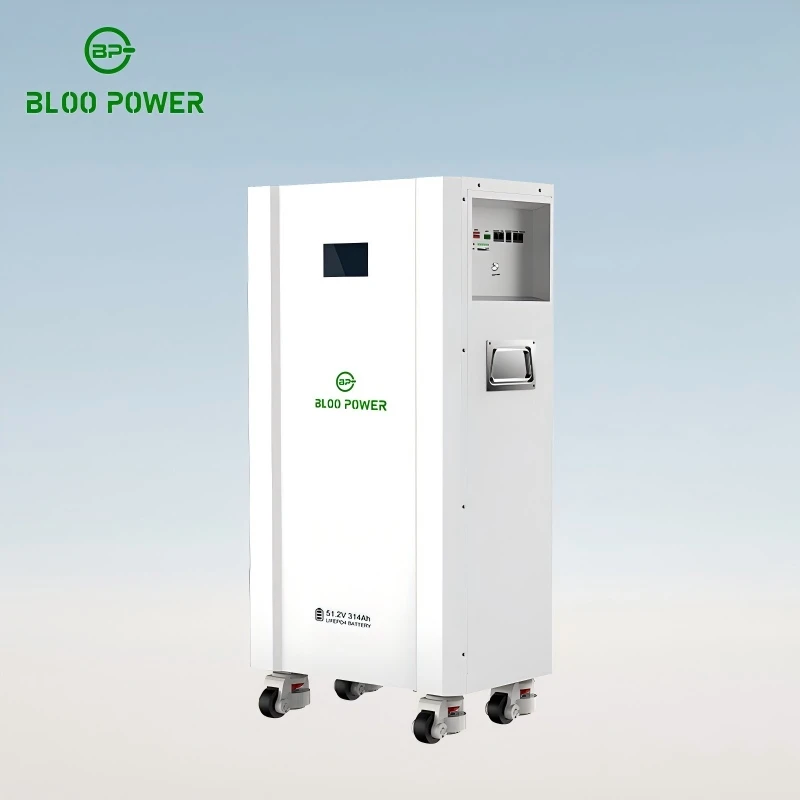
Source: BLOO POWER product page "Impressive Rack Mounted Battery Pack 48V 3U Compact Device". The same series includes a floor-standing variant, BP-HP-10KWH-B (48 V / 200 Ah, 78 kg, 480 × 450 × 266 mm, 15-year design life, 8,000 cycles at 100% DoD, CAN / RS232 / RS485), for sites with more installation space and higher cycle-life requirements.
Three engineering details decide whether a parallel installation behaves as designed. Commissioning: bring every module to within a few percent state of charge before closing the parallel contactors, then run one full equalisation cycle; skipping this is the usual cause of a string that "runs hot" from day one. Wiring topology: the RS485 bus must be daisy-chained rather than star-branched, or reflections will corrupt telemetry on the longest drop. Disconnect thresholds: with more capacity on the bus, voltage falls more slowly under the same load, so the existing LLVD and BLVD setpoints no longer correspond to the load-shed timings they were tuned for. They need re-baselining in the network management system, not left as they were.
Ten-year cost of ownership
Runtime is a technical metric that decides whether a design passes acceptance. Total cost of ownership is a commercial metric that decides whether it was worth building. On the same purchase order they frequently point in opposite directions - published comparisons put lithium's upfront cost at roughly 1.6 to 2.5 times that of lead-acid, while also placing its service life at 5–8 years against 3–5 for VRLA in cyclic service and its round-trip efficiency at 95–98% against 80–85%.
The comparison below holds usable energy constant at about 10 kWh. Lead-acid therefore requires a 48 V / 400 Ah configuration - because it can only be cycled to 50% depth of discharge without sacrificing life - while the lithium side needs one 51.2 V / 200 Ah module. Assumptions are listed beneath the chart, including the currency basis.

Figure 3 - VRLA totals about US$5,270 over ten years, of which US$2,650 is replacement (two events, in years 4 and 8). LiFePO4 totals about US$1,930 with no replacement.
Assumptions (regional note). Unit costs are Chinese-market installed engineering prices, shown here converted at ¥7.1 = US$1: VRLA 48 V / 400 Ah initial ¥8,600 (≈US$1,210), each replacement ¥9,400 (≈US$1,325), O&M ¥600/yr (≈US$85), thermal load ¥400/yr (≈US$56); LiFePO4 51.2 V / 200 Ah initial ¥7,200 (≈US$1,015) plus a one-off ¥3,000 (≈US$425) enclosure shading retrofit, O&M ¥150/yr (≈US$21), thermal load ¥200/yr (≈US$28). Energy priced at ¥0.7/kWh (≈US$0.10/kWh); tariff-arbitrage revenue excluded. North American and EU installed costs typically run 1.8–2.5× these figures once labour, permitting and freight are added, so the absolute values should not be carried across markets - the ratio between the two technologies is what transfers. At a climate-controlled site in a mild region where VRLA achieves its full 8–10 year design life, the gap narrows to roughly 30%.
The driver is not the upfront price - it is replacement frequency. In cell site float service, VRLA's calendar life matters more than its cycle life: in a 25 °C shelter it can approach its 8–10 year design life, but inside an outdoor cabinet that reaches 45 °C in summer, the life-halves-per-10 °C rule can pull real service life down toward three years. Published return-on-investment analyses put lithium's payback at years 3 to 4 for sites with daily cycling, extending to years 5 to 7 for pure standby duty at fewer than ten discharges a year. That is the honest framing of who this technology is for: hot climates, high-outage regions, sites with daily cycling or tariff arbitrage, and - critically - sites where a truck roll is expensive.
Where 200 Ah stops making sense
A sizing guide that only endorses is advertising. Four cases rule a 200 Ah module out, and they are cheaper to identify at the specification stage than at final acceptance testing.
the module's power ceiling arrives before its energy ceiling
The 100 A continuous discharge rating caps a single module at roughly 4.8 kW at 48 V; the 200 A maximum continuous rating raises the instantaneous figure to about 9.6 kW but that is not a duty rating. At a 5 kW site a single module will trip on overcurrent and deliver zero runtime. Any site above about 4 kW must be designed with parallel modules from the outset.
01
extended autonomy beyond eight hours.
Remote, island, border and weak-feeder rural sites routinely specify 8–12 hours or more; at 2 kW that means 16–24 kWh usable, i.e. two to three modules at minimum. It is also worth knowing that in extended outages the binding constraint is often cabinet thermal capacity rather than battery energy: a string discharging for hours adds its own losses to ambient, and cabinet interior temperature can run 10–15 °C above ambient. That is a recurring cause of summer long-outage failures even where the energy budget was correct.
02
cold sites without provision for heating.
Charging LiFePO4 below 0 °C is prohibited because it plates lithium on the anode, and a site with a design minimum below −10 °C cannot be served by an unheated lithium string - winter runtime falls below 2.5 hours at 2 kW and the battery cannot recharge until it warms. Options are a heated enclosure with the heater load explicitly budgeted, a different chemistry, or accepting that winter performance is the design case.
03
power-type duty. 200 Ah is an energy-optimised format
it is built for long, gentle discharges. It is the wrong choice for impulse loads such as lift motors, high-power radio transmitters or welding equipment at a site, and for grid frequency-regulation services where ramp rate and response accuracy are the specification. Those applications need a high-rate cell design, and the correct answer is a different product - not more modules in parallel.
04

Send us the site DC load in kW, the design minimum ambient temperature, the required autonomy and the existing cabinet dimensions. BLOO POWER engineers will return a module count, a paralleling scheme, LLVD/BLVD setpoint recommendations and a ten-year cost model, using the same basis as this guide.
Send Inquiry