




















How to Choose All-in-one and Split-type Residential Energy Storage Batteries From Chinese Manufacturers?
Jun 24, 2026
Leave a message

Complete Buying Guide for Integrated Photovoltaic and Energy Storage Systems vs. Split-Type Residential Energy Storage Batteries
With the increasing prevalence of residential solar PV systems and the growing volatility of electricity prices, more and more households are focusing on residential energy storage systems, hoping to achieve energy self-sufficiency, reduce electricity costs, and improve power supply reliability during power outages through energy storage batteries. When purchasing an energy storage system, consumers often face a crucial choice: is an integrated energy storage battery more suitable, or is a modular energy storage battery more advantageous?

These two solutions differ significantly in terms of installation methods, system scalability, maintenance costs, and applicable scenarios. Understanding their respective characteristics and advantages and disadvantages can not only help users choose an energy storage solution that better suits their family's needs but also improve the system's return on investment. This article will analyze the differences between integrated and modular residential energy storage batteries from multiple perspectives to help you make a more informed choice.
Basic Definitions
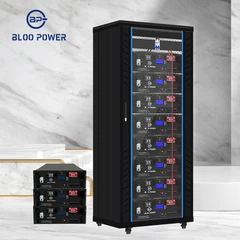
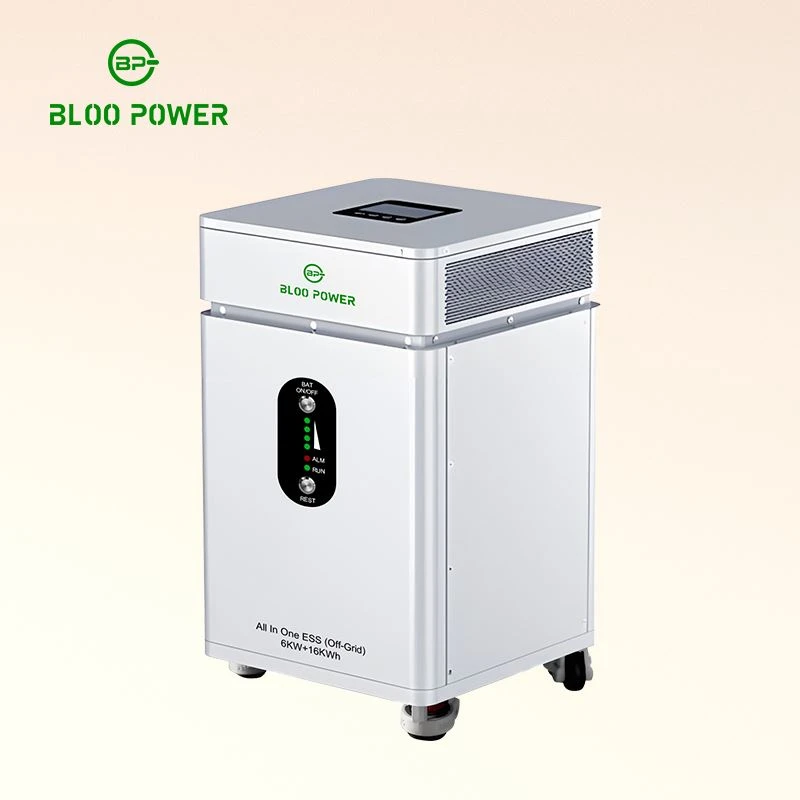
1. All-in-One Photovoltaic Storage Unit: A single cabinet integrates a photovoltaic MPPT, a bidirectional PCS inverter, a lithium battery pack, a BMS, and an EMS energy management system. Photovoltaics, batteries, and inverters are all built-in, with factory-matched hardware and software. It only requires external photovoltaic panels, household loads, and the power grid to operate. The mainstream solution is DC coupling.
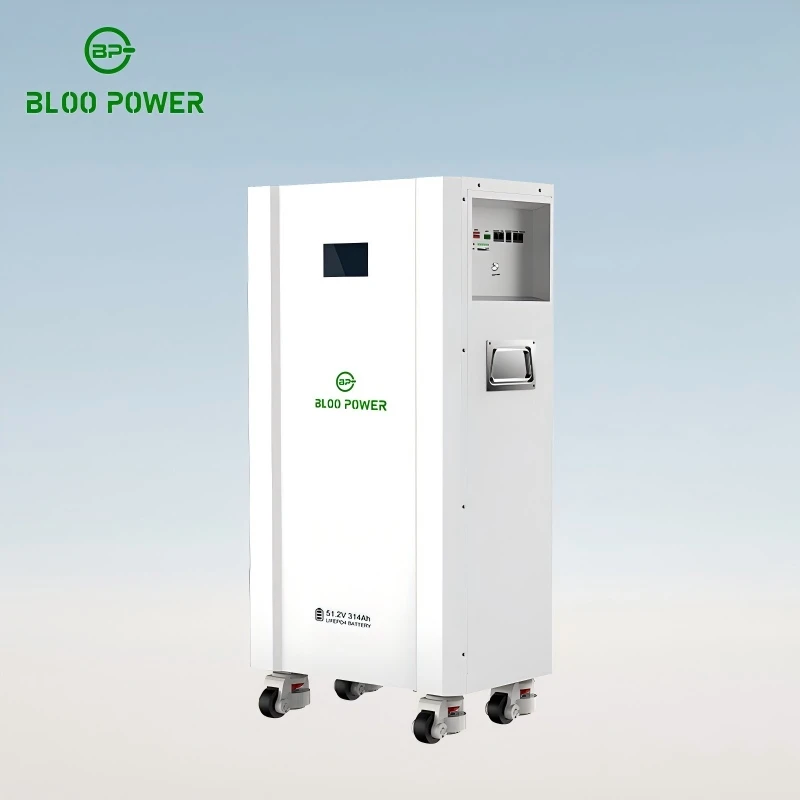
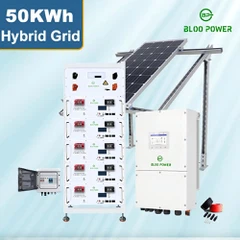
2. Split-Type Energy Storage (Separate PCS + Battery): Two independent units: one bidirectional energy storage PCS inverter + an independent lithium battery cabinet. They are placed separately and wired separately. Two topologies are available: DC coupling (photovoltaics directly connected to the PCS DC terminal) and AC coupling (existing photovoltaic inverter connected to the grid before connecting to the PCS). Components can be replaced and expanded individually.

Comprehensive Comparison of Core Performance, Cost, and Operation & Maintenance
|
Comparison Dimensions |
All-in-one ESS |
Separate PCS + independent battery |
|
System Structure |
Single-cabinet integration of MPPT + PCS + BMS + battery |
The inverter and battery cabinet are completely separated, forming two independent sets of equipment. |
|
AC/DC coupling |
Mainstream DC coupling, low conversion loss |
DC coupling / AC coupling dual schemes are available |
|
System efficiency |
Cycle efficiency 95%~98%, few conversion levels |
DC coupling is 93%~96%; AC coupling is 90%~93%, resulting in an additional AC/DC conversion loss. |
|
Installation wiring |
The wiring is extremely simple, with photovoltaic power input and AC power output; on-site commissioning can be completed within 30 minutes. |
Multiple sets of DC/AC cables need to be matched with the communication protocol, requiring 2-4 hours of debugging. |
|
Space occupied |
Compact size, single floor-standing/wall-mounted unit, clean appearance. |
Two units would take up more wall/floor space and require more piping. |
|
Initial procurement costs |
The total price of the whole machine is lower for the same power capacity, with no additional charges for bundled products. |
Purchasing equipment separately is cheaper, but labor and auxiliary material costs are higher, resulting in a higher overall investment. |
|
Expansion flexibility |
The upper limit is fixed (≤30kW and ≤100kWh per unit). Expansion can only be achieved by connecting the entire unit in parallel; individual batteries cannot be added. |
Flexible: Capacity can be expanded by stacking battery packs individually, and later upgraded to high-power PCS and added photovoltaic panels. |
|
Fault tolerance |
Single point of failure causes complete unit shutdown; inverter failure renders battery synchronization unusable. |
The components are independent; if the inverter fails, the battery retains its charge, requiring only the PCS to be replaced, thus preserving the battery's lifespan. |
|
Heat dissipation and lifespan |
The inverter generates heat, which is then transferred to the battery. The overall lifespan of the unit is 10-15 years. |
The battery and inverter have independent heat dissipation and do not interfere with each other, resulting in an overall system lifespan of 15-20 years. |
|
Repair and replacement costs |
If any module fails, the entire unit will likely be sent back to the factory, resulting in high repair costs. |
Replace only the faulty component; there's no need to replace the entire battery pack, resulting in lower long-term maintenance costs. |
|
Monitoring operations |
A unified app, a single backend, and support for only one brand's after-sales service. |
With two sets of monitoring systems for the inverter and battery, cross-brand pairings can easily lead to unclear after-sales responsibilities. |
Detailed Explanation of the Advantages and Disadvantages of Integrated Energy Storage
Advantages
Convenient and hassle-free
All units are factory-matched and debugged, eliminating compatibility risks, shortening installation time, and reducing labor costs;
01
Higher energy efficiency
DC direct-coupled architecture allows photovoltaic DC power to directly charge the battery, eliminating one AC conversion step and saving 5%~8% of electricity annually;
02
Aesthetically pleasing and space-saving
Single cabinet design, neat wiring, suitable for indoor and balcony wall mounting;
03
Single after-sales service
The entire unit is from a single brand, eliminating the need to differentiate between inverter/battery responsibility for faults, enabling one-stop repair.
04
Disadvantages
Limited Expansion
Single-unit power and battery capacity are capped; future capacity increases require purchasing an entire integrated unit, leading to high costs.
01
High Risk of Single-Point Failure
Damage to internal PCS or control boards can cause the entire energy storage system to shut down completely, preventing individual battery discharge.
02
Heat Dissipation Interference
Continuous inverter heat generation accelerates cell aging, reducing the overall lifespan of the unit by 3-5 years compared to integrated units.
03
High Maintenance Costs
Highly integrated internal modules prevent individual inverter replacement; frequent failures necessitate returning the entire unit to the factory.
04
Detailed Explanation of the Advantages and Disadvantages of Split-Type Energy Storage
Advantages
1. Extremely Flexible Capacity Expansion: Within the PCS power limit, battery packs can be added year by year, starting with a small capacity and increasing capacity as needed later;
2. Independent Components and Strong Fault Tolerance: Inverter failure, the batteries remain intact; only the PCS needs to be replaced, and the original batteries continue to be used, ensuring no asset waste;
3. Longer Lifespan Due to Heat Dissipation Separation: The battery cabinet and inverter are physically separated, preventing heat generation from affecting each other and slowing down cell degradation;
4. Compatible with Existing Solar PV: If you already have a solar PV system, you don't need to remove the old inverter; simply add AC-coupled PCS energy storage, saving on retrofit costs;
5. High Cost-Effectiveness for Long-Term Operation and Maintenance: After 10 years, the aging inverter can be replaced separately without having to replace the expensive lithium batteries.
Disadvantages
1. High initial construction costs: Purchasing two sets of equipment + multiple sets of cables, cable trays, circuit breakers, and auxiliary materials doubles installation time;
2. High system compatibility threshold: Cross-brand PCS + batteries are prone to communication abnormalities and charging/discharging logic disorders. It is recommended to use products from the same brand;
3. Larger space occupation: Two cabinets, exposed piping, less aesthetically pleasing than an all-in-one unit;
4. Two monitoring systems: Inverter and battery data are viewed separately via APP, cumbersome operation, and cross-brand after-sales service can easily lead to finger-pointing.
One-stop purchase solutions for different scenarios
Solution 1: New house renovation, small apartment, short-term use (5-10 years) → All-in-one unit
Applicable: 80-120㎡ commercial housing, no capacity expansion plans, seeking low installation costs and a clean appearance. Recommended configuration: 5-15kW all-in-one unit, 10-20kWh built-in battery, DC coupled grid connection, basic peak-valley arbitrage + power outage backup.
Option 2: Existing solar panels in older homes, self-built houses, intended for use over 15 years, planned expansion → Split-type
Suitable for: Existing solar panels that don't need to be removed, future additions of new energy vehicle charging stations, electric heating, and high-power loads in guesthouses.
● Retrofitting existing solar panels: Choose AC-coupled split-type PCS + independent battery cabinet;
● New self-built solar panels: Choose DC-coupled split-type solution, balancing efficiency and expansion.
Option 3: Off-grid/remote areas without grid access, high-power loads → Split-type
Off-grid systems require high-power PCS + large-capacity battery stacking. The power limit of integrated units cannot meet multi-day self-sufficiency needs. Split-type systems allow multiple batteries to be connected in parallel for capacity expansion.
Option 4: Renting, short-term transition, minimalist backup → Small integrated residential energy storage
Wall-mounted small-capacity integrated units (3~6kW, 5~10kWh), easy to install and disassemble, can be moved as a whole when relocating.
Target Audience & Scenarios Comparison Table (Quick Self-Matching)
|
Prioritize all-in-one scenarios |
Prioritize split-type scenarios |
|
New house with whole-house photovoltaic + energy storage installation |
The house already has a solar inverter; energy storage (AC coupling) will be added later. |
|
Small apartments, limited balcony/basement space |
Large apartments, self-built houses, guesthouses, and small shops have high electricity loads (>15kW). |
|
With a limited budget, we hope to complete the project in one go and minimize construction costs. |
There are expansion plans in the future: installing charging piles, increasing photovoltaic capacity, and expanding battery capacity. |
|
I don't want complicated debugging, I prefer a minimalist and aesthetically pleasing design, and I don't need electrical engineering resources. |
For long-term use over 10 years, the value lies in the ability to replace individual components and reduce long-term depreciation costs. |
|
Emergency backup and basic household load (refrigerator, lighting, WiFi) |
Off-grid, complex backup power, high-power loads at multiple times (central air conditioning, electric heating) |
|
Only for self-consumption, peak shaving and valley filling, electricity demand is stable with no growth. |
Pursue system redundancy and do not want to completely lose power due to inverter failure during a power outage. |
Key Tips to Avoid Pitfalls
1. Avoid blindly choosing low-priced, no-name brands for integrated systems: Troubleshooting integrated equipment is extremely difficult. Prioritize top-tier brands to ensure the entire unit's warranty.
2. For split systems, try to use PCS + batteries from the same brand. If using different brands, be sure to test charging, discharging, and communication logic on-site to avoid incompatibility later.
3. AC-coupled split systems are less efficient than DC-coupled systems. For new PV installations, prioritize DC split systems; for retrofitting existing PV systems, choose AC split systems.
4. For both types of solutions, prioritize lithium iron phosphate batteries and reject ternary lithium batteries for residential energy storage. Verify the battery's capacity degradation commitment during the warranty period (≥70% capacity after 10 years is considered acceptable).
5. For users requiring backup power, pay close attention to the UPS switching time; ≤20ms is necessary to ensure uninterrupted power supply to refrigerators and computers.
Checklist for Key Hard Parameters (Applicable to both categories)
|
Verification Items |
Key points for purchasing all-in-one products |
Key points for purchasing split-type models |
|
Battery Type |
Lithium iron phosphate (LFP) is required; ternary lithium batteries are not acceptable; cycle life ≥ 6000 cycles, DoD ≥ 90%. |
The independent battery cabinet BMS must be compatible with the original PCS; for cross-brand installations, communication protocol compatibility must be confirmed. |
|
Inverter power |
Confirm continuous power and peak UPS power; power outage handover time ≤20ms. |
The PCS has a 30% power redundancy reserve to accommodate future home appliances and charging pile expansion. |
|
Security Certification |
UL9540, IEC62619, UN38.3, fire protection certification |
The battery and PCS are verified separately for complete certification of two sets of equipment; uncertified parts are not mixed. |
|
Warranty Terms |
The entire unit comes with a unified warranty (10-15 years for PCS and shared battery). |
Separate warranties: PCS warranty is 8-10 years, battery warranty is 10-15 years, with separate capacity degradation commitments confirmed. |
|
Grid connection function |
Features include island protection, two-way metering, and peak-valley arbitrage. |
AC-coupled models need to be confirmed to be compatible with existing photovoltaic inverter brands. |
|
Extended Interface |
Does it support external charging stations and backup load terminals |
Multiple DC parallel interfaces are reserved to support future battery stacking. |
Send Inquiry