




















Wall-Mounted Energy Storage Batteries VS. Rack-Mounted Energy Storage Batteries
Jul 03, 2026
Leave a message

There is no absolute answer as to whether wall-mounted or rack-mounted energy storage batteries are "better"; the structural differences essentially stem from their respective application scenarios. Below is a systematic comparison across several key dimensions, accompanied by images and tables to help you make a quick assessment.
Differences in Structural Form and Installation Method (Most Visually Apparent)

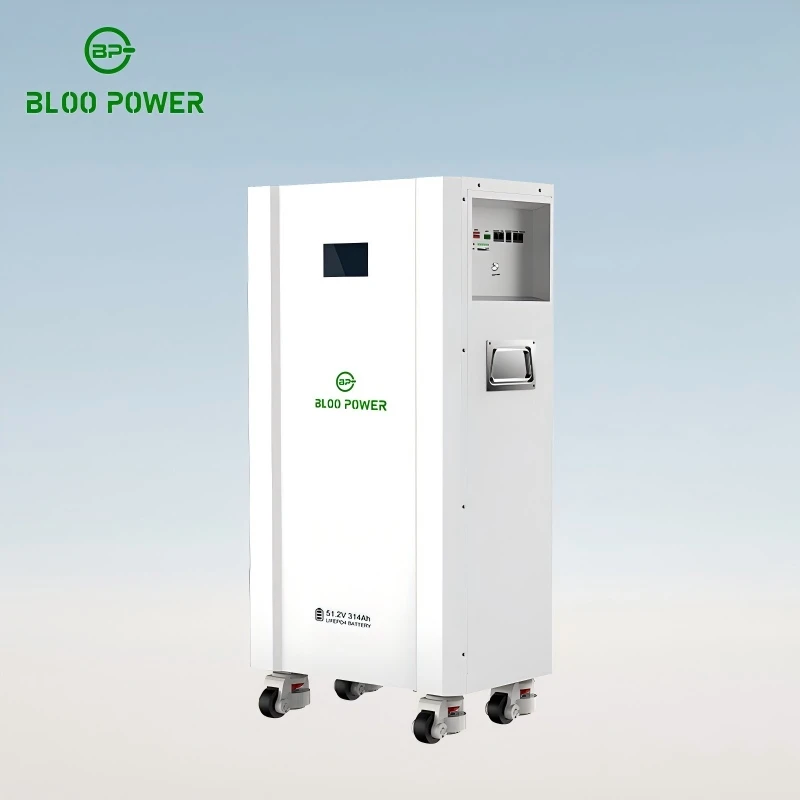
Wall-mounted energy storage battery
Features: Integrated ultra-slim design (160–200mm thick) with rear mounting points; minimalist, home-appliance-style aesthetic; mainstream single-unit capacities range from 5.12 kWh to 15 kWh.
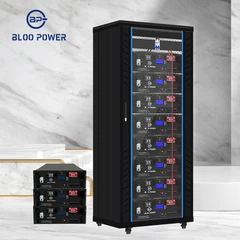
Rack-Mounted energy storage battery
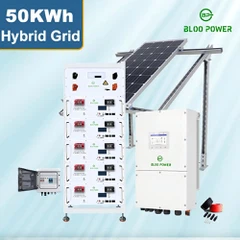
Features: Modular, split-unit structure with a dedicated metal floor-standing base; supports multi-layer stacking and parallel rack connections; flexible stacking of 5.12 kWh modules; supports large-capacity systems exceeding 50 kWh.

Space Requirements and Installation Environment
Wall-Mounted
● Advantages: Occupies no floor space, utilizing only vertical wall space; suitable for garages, balconies, utility rooms, and compact urban apartments where floor space is limited; can be mounted at a height to reduce the risk of accidental contact by children.
● Disadvantages: Extremely high requirements for wall load-bearing capacity (each unit weighs 45–120 kg); requires a solid concrete load-bearing wall-installation is not possible on lightweight foam or hollow walls; mounting multiple units side-by-side takes up a large wall area and creates visual clutter.
Rack-Mounted
● Advantages: Weight is supported by the floor, eliminating wall load-bearing constraints; occupies only a small, fixed floor area, freeing up wall space for other equipment; models with casters allow for easy relocation.
● Disadvantages: Requires dedicated floor space (approx. 0.6–1.2 m² per stand assembly), making it suitable primarily for basements or storage rooms with ample space; stacked configurations require clearance for heat dissipation and maintenance access (minimum 10 cm gap).
|
item |
Wall-mounted |
Rack-mounted |
|
Footprint area |
Small (utilizing wall space) |
Large (requires floor space/cabinet) |
|
Suitable Spaces |
Home Interior/Balcony/Storage Room |
Equipment Room / Garage / Energy Storage Cabinet |
|
Installation Requirements |
Wall load-bearing capacity |
Floor load-bearing capacity |
Conclusion:
● Small spaces → Wall-mounting is more suitable
● Projects/Capacity expansion → Brackets are more appropriate
Capacity and Scalability (Key Differentiators)
Wall-Mounted
● Rated capacity per unit: 5.12 kWh / 10.24 kWh / 15 kWh; supports parallel connection of 8–15 units, with a theoretical maximum of 150 kWh.
● Scalability limitations: Expansion requires adding an entire new unit, resulting in high procurement costs; parallel connection of multiple units leads to messy cabling and increased BMS balancing complexity; compatible only with single-phase residential PV systems; does not support high-power three-phase commercial or industrial loads.
Rack-Mounted
● Flexible modular stacking: Base unit is 5.12 kWh; a single rack tier accommodates 2–4 modules; supports unlimited multi-layer stacking and parallel rack connections.
● Scalability advantages: Future capacity expansion requires adding only individual battery modules rather than replacing the entire system; supports high-energy-demand scenarios such as high-power three-phase systems, off-grid villas, small-scale commercial/industrial applications, and PV peak-valley arbitrage; offers superior system balance and more stable circulating current control in multi-cluster parallel configurations.
|
item |
Wall-mounted |
Rack-mounted |
|
Capacity expansion method |
Parallel-connected finite |
Free module stacking |
|
Maximum capacity |
Typically limited (5–20 kWh) |
Scalable to tens or hundreds of kWh. |
|
flexibility |
Low |
high |
Key Takeaways:
● For a fixed setup → Wall-mounted
● To scale up as needed → Stand-mounted

Heat Dissipation and Operational Stability
Wall-Mounted Type
● Heat Dissipation Strategy: Relies entirely on passive natural air cooling, utilizing the convection gap between the unit's rear and the wall.
● Drawbacks: Poor heat dissipation in enclosed garages or high-temperature environments, leading to significant temperature differentials across battery cells; prolonged exposure to high temperatures reduces cycle life (standard cycle life: 3,500–5,000 cycles; system warranty: 5–10 years); prone to triggering high-temperature power-throttling protection during high-rate charging and discharging.
Rack-Mounted Type
● Heat Dissipation Strategy: Features a raised base and integrated airflow channels between modules; high-end models come standard with active rack-mounted cooling fans; ventilation gaps are maintained both vertically (between stacked units) and horizontally.
● Advantages: Cell temperature differentials are kept within 3–5°C, ensuring stable charge/discharge power; utilizes industrial-grade cells with a standard cycle life exceeding 6,000 cycles and a total system lifespan of 15–20 years; offers superior stability in hot southern regions and during scenarios involving continuous high-power discharge.
|
item |
Wall-mounted |
Rack-mounted |
|
Heat dissipation method |
Primarily relies on natural heat dissipation. |
Air cooling / Cabinet heat dissipation |
|
High load-bearing capacity |
medium |
Stronger |
|
Long-running |
good |
More stable |
Reasons:
● Stand-mounted models typically feature a more "industrial" design.
● Wall-mounted models lean towards an aesthetic better suited for the home.
Aesthetics and Home Integration
Wall-Mounted
● Advantages: Features a sleek, minimalist, appliance-like design with a flat white casing; blends seamlessly into garage or interior walls for a tidy look; visually appealing for home settings without bulky floor-standing equipment; slim IP65-rated models are suitable for outdoor wall mounting.
● Disadvantages: Mounting multiple units side-by-side or stacked creates visual clutter, detracting from the wall's overall aesthetics; removal or maintenance leaves behind mounting holes.
Rack-Mounted
● Disadvantages: Industrial appearance-metal racks combined with stacked battery modules create a heavy, mechanical look unsuitable for display in living rooms or on balconies.
● Advantages: Ideal for centralized placement in basements, utility rooms, or storage areas; concealed installation preserves home décor; perfectly suited for server rooms and industrial facilities.
|
item |
Wall-mounted |
Rack-mounted |
|
Appearance |
Simple and elegant |
Strong industrial aesthetic |
|
Home Integration |
Very strong |
generally |
|
Is it conspicuous? |
Low |
high |
Conclusion:
● Living room/residence → Wall hanging is more suitable
● Computer room/basement → The bracket is more reasonable

Installation and Maintenance Complexity
Wall-mounted (Integrated Unit)
● Maintenance Logic: Integrated design where the BMS, battery cells, and wiring are all enclosed within a single housing;
● Drawbacks: If a single cell fails or the BMS is damaged, the entire unit must be replaced, resulting in extremely high repair costs; servicing requires removing the entire wall-mounted unit-a complex process-and individual faulty modules cannot be replaced separately.
Rack-mounted (Modular/Split System)
● Maintenance Logic: Each battery module features an independent BMS and wiring, utilizing standardized plug-and-play connections;
● Advantages: Faulty modules can be replaced individually while the remaining batteries continue to operate, minimizing downtime; the rack structure allows for ground-level servicing, eliminating the need for high-altitude disassembly; lower total long-term O&M costs, making it suitable for long-term, high-power applications.
|
item |
Wall-mounted |
Rack-mounted |
|
Install |
Simple (wall-mounted) |
Complex (Racks/Cabling) |
|
Maintenance |
Requires disassembly of the device. |
Modular maintenance is more convenient. |
|
Replace the battery module. |
inconvenient |
Very convenient |
Key points:
● Stand-mounted models are better suited for "professional systems."
● Wall-mounted models are better suited for "plug-and-play" setups.
Cost and System Integration
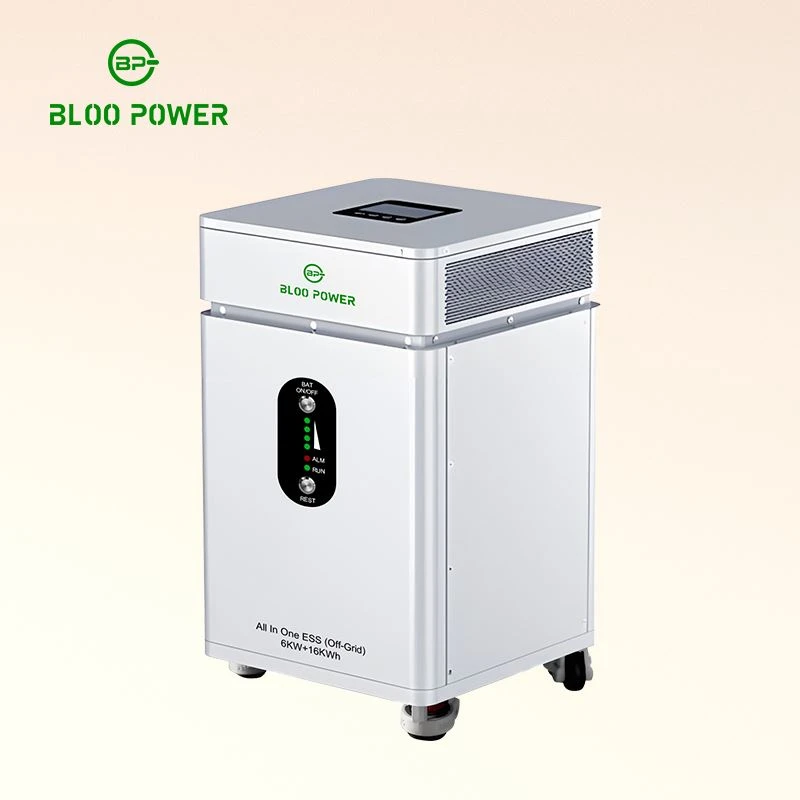
Wall-mounted (All-in-One Unit)
● Maintenance Logic: Integrated design; the BMS, battery cells, and wiring are all enclosed within a single housing.
● Disadvantages: If a single cell fails or the BMS is damaged, the entire unit must be replaced, resulting in extremely high repair costs; servicing requires removing the entire wall-mounted unit-a complex process-and individual faulty modules cannot be replaced separately.
Rack-mounted (Modular/Split Design)
● Maintenance Logic: Each battery module features an independent BMS and wiring, utilizing standardized plug-and-play connections.
● Advantages: Faulty modules can be replaced individually while the remaining batteries continue to operate, minimizing downtime; the rack structure allows for ground-level servicing, eliminating the need for high-altitude disassembly; lower total long-term O&M costs, making it suitable for long-term, high-power applications.
|
item |
Wall-mounted |
Rack-mounted |
|
Unit cost |
Relatively high |
Relatively lower |
|
System integration level |
High (Integrated) |
Additional cabinets/cables required |
|
Long-run expansion cost |
high |
Lower |
Applicable scenarios, power supply and safety protection
Wall-mounted adaptation scene
Urban small houses, apartments, and just-needed residences within 100 square meters; photovoltaic self-use, light peak and valley electricity consumption, and short-time power outage backup; single-phase 3~8kW small inverter supporting; Safety shortcomings: The heat dissipation space is limited after being installed on the wall, and the risk of thermal runaway in a closed high-temperature space is slightly higher; the height is limited, and high-power discharge is prone to overheating.
Rack-mounted adaptation scene
Villas, self-built houses, large-area duplexes, small shops, processing plants, off-grid photovoltaic power stations; high-power backup for the whole house, photovoltaic energy storage arbitrage, and long-term off-grid power supply; supports three-phase inverters above 10kW; Safety advantages: overhead ventilation at the bottom, independent protection of modules, single module failure does not affect the entire system; there is no risk of falling from high altitude when placed on the ground, and the waterproof bracket can be placed in the outdoor computer room.
Final Selection Recommendations
Choose a wall-mounted energy storage battery if you meet all the following conditions:
1. You live in a small urban apartment or unit with limited floor space in the garage or storage room;
2. Total energy storage needs are ≤15 kWh, with no plans for significant future capacity expansion;
3. You have a solid concrete load-bearing wall and want to maintain interior design aesthetics;
4. Usage is limited to daily PV self-consumption and short-term outage backup, requiring low discharge power.
Choose a bracket-mounted (rack-stackable) energy storage battery if you meet any of the following conditions:
1. You own a villa, a self-built house, or a commercial shop, and energy storage needs are ≥20 kWh;
2. You plan to expand energy storage capacity within the next 3–5 years;
3. The system operates in high-temperature regions, requires high-power discharge throughout the day, or provides long-term off-grid power;
4. No suitable load-bearing wall is available, or the equipment can be placed in a basement or utility room;
Small-scale commercial/industrial applications, PV peak-valley arbitrage, or a focus on long-term low-cost operation and maintenance.
Summary
1. For short-term use, small capacities, compact spaces, and a preference for aesthetics: Wall-mounted systems offer a better overall experience.
2. For long-term use, large capacities, scalability needs, high-power or C&I (commercial & industrial) applications, and a focus on durability and low maintenance: Rack-mounted energy storage systems hold the clear advantage.
3. Both types primarily utilize LFP (Lithium Iron Phosphate) cells; the core differences lie in mounting structure, scalability logic, and designs for heat dissipation and maintenance. There is no absolute superiority-simply choose the system that best matches your specific energy usage scenario.
Send Inquiry