












How Develops Advanced Battery Energy Storage Solutions in Mexico?
Jul 29, 2026
Leave a message

Transmission Constraints Drive Extreme Electricity Price Divergence Nationwide
The latest data from Mexico's National Energy Control Center (CENACE) reveals a significant divergence in electricity prices across the country caused primarily by transmission constraints. During the week of June 14–20, 2026, the average wholesale electricity price stood at 818.14 pesos per megawatt-hour (MWh). However, certain nodes recorded prices as high as 13,764 pesos per MWh-approximately 17 times the national average. Experts emphasize that these disparities stem from congestion in the national transmission grid rather than differences in generation costs themselves.
Southeastern Corridors Face the Heaviest Pressure from Shadow Prices
The report indicates that the southeastern region is under the greatest pressure on transmission lines. "Shadow prices" approached 10,000 pesos per MWh in several key corridors, including the Riviera Maya, Cozumel, Marpaso-Tabasco, Papalloapan, and the broader Yucatan Peninsula. Shadow prices serve as an economic indicator of the cost of grid bottlenecks; elevated values signal a greater urgency for infrastructure investment. The Cozumel node experienced a real-time market electricity price reaching 13,764 pesos per MWh, while other nodes recorded negative prices due to temporary overcapacity, underscoring the structural nature of the congestion.
Two-Year Trend Confirms Systemic Challenges on the Yucatan Peninsula
Data from the past two years show that regions such as the Yucatan Peninsula have consistently experienced high electricity price differentials. Transmission constraints have evolved into a systemic problem. Industrial electrification, rapid data-center growth, nearshoring (near-shore outsourcing) activities, and peak summer air-conditioning demand are further intensifying grid pressure. Without accelerated expansion of transmission lines, increased substation capacity, and large-scale deployment of energy storage facilities, new power-generation projects-including renewable energy installations-will continue to face difficulties in effectively delivering electricity to demand centers. A CENACE assessment confirms that transmission infrastructure is becoming the primary bottleneck limiting growth of Mexico's national power system.

Energy Storage Emerges as a Critical Tool for Congestion Relief and System Flexibility
In response to these challenges, Mexican authorities have accelerated regulatory frameworks supporting battery energy storage systems. The National Energy Commission approved a dedicated storage permitting regime that explicitly recognizes services such as congestion management, frequency regulation, and renewable integration. Under the National Electric System Development Program (PRODESEN 2024–2038), Mexico is projected to require approximately 8.4 GW of energy storage capacity by 2038 to maintain grid stability while integrating higher shares of variable renewable generation.
The Mexico renewable energy storage market itself reached USD 1.38 billion in 2025 and is forecast to grow to USD 3.54 billion by 2034 at a compound annual growth rate of 11 percent, driven by solar and wind expansion, industrial demand, and the need for grid reliability.
Selected Node Electricity Prices and Shadow-Price Indicators (Week of June 14–20, 2026)
|
Node / Corridor |
Real-Time Price (pesos/MWh) |
Approximate Shadow Price (pesos/MWh) |
Primary Issue |
|
National Average |
818.14 |
- |
Baseline |
|
Cozumel |
13,764 |
~10,000+ |
Severe transmission constraint |
|
Riviera Maya |
Elevated |
~10,000 |
Congestion |
|
Marpaso-Tabasco |
Elevated |
~10,000 |
Congestion |
|
Papalloapan |
Elevated |
~10,000 |
Congestion |
|
Yucatan Peninsula (selected) |
High differential |
High |
Systemic constraint |
|
Certain overcapacity nodes |
Negative |
Low / Negative |
Surplus generation |
High-Voltage LiFePO4 Technology Offers Practical Solutions for Both Utility and Distributed Applications
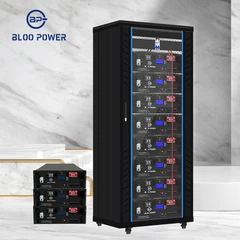
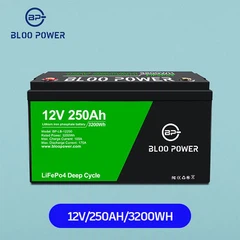
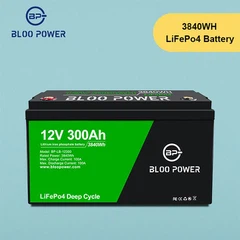
Among available technologies, high-voltage LiFePO4 batteries for solar energy storage stand out for their combination of safety, long cycle life (typically 5,000–6,000 cycles at 80 % depth of discharge under optimal conditions), thermal stability, and competitive cost. These characteristics make them particularly suitable for alleviating the congestion patterns observed in southeastern Mexico. Leading china solar battery energy storage system manufacturer BLOO POWER has developed modular high-voltage systems that can be deployed either as standalone BESS assets or co-located with solar plants to provide congestion relief, peak shaving, and renewable firming.
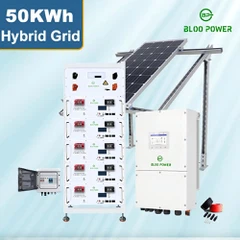
For residential and small commercial users facing high and volatile retail rates, home energy storage solar lithium ion battery systems based on the same LiFePO4 chemistry enable greater self-consumption of rooftop solar generation and protection against price spikes. The best solar energy battery storage configurations increasingly combine high-voltage architecture (often 100–800 V DC) with advanced battery management systems to maximize round-trip efficiency and minimize cabling losses.
Mexico Renewable Energy Storage Market Outlook
|
Metric |
2025 Value |
2034 Projection |
CAGR (2026–2034) |
|
Market Size |
USD 1.38 billion |
USD 3.54 billion |
11.0 % |
|
Projected Storage Capacity Need (PRODESEN) |
- |
8.4 GW by 2038 |
- |
|
Clean Energy Share Target |
~24 % (2023 baseline) |
62.4 % by 2038 |
- |
|
Leading Application |
Industrial (47.3 %) |
- |
- |
|
Leading Region |
Northern Mexico (39.6 %) |
- |
- |
Policy Momentum Supports Rapid Deployment of BESS Solar Battery Energy Storage System for Sale
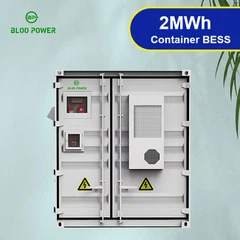
In 2025 Mexico introduced a pioneering requirement that new solar and wind plants integrate battery systems equivalent to 30 % of installed capacity with a minimum three-hour discharge duration, expected to add hundreds of megawatts of storage by 2028. In mid-2026 the Ministry of Energy launched a fast-track permitting window specifically for renewable and BESS projects that demonstrate benefits in reliability and congestion relief. These measures create clear commercial pathways for BESS solar battery energy storage system for sale offerings that meet Mexican grid codes and CENACE operational requirements.
Chinese manufacturers have become important suppliers in this emerging market because of competitive pricing, proven manufacturing scale, and continuous improvements in high-voltage LiFePO4 cell and system design. BLOO POWER, as one active china solar battery energy storage system manufacturer, focuses on both utility-scale high-voltage packages suitable for congestion-management contracts with CENACE and residential/commercial home energy storage solar lithium ion battery products that help end-users manage local price volatility.
Long-Term Benefits of Strategic Storage Deployment
Deploying best solar energy battery storage assets in high-shadow-price corridors can defer or reduce the need for certain transmission upgrades while simultaneously improving renewable energy utilization and system flexibility. Studies of isolated systems such as Baja California Sur have already shown that BESS can substitute for or complement limited transmission expansion under moderate renewable penetration scenarios. On a national scale, coordinated investment in high-voltage LiFePO4 batteries for solar energy storage, paired with accelerated line construction, offers the most cost-effective path to resolving the structural bottlenecks currently inflating electricity prices in southeastern Mexico.
Typical Performance Characteristics of High-Voltage LiFePO4 Systems for Energy Storage
|
Parameter |
Typical Range / Value |
Relevance to Mexican Grid Challenges |
|
Nominal Voltage |
100–800 V DC |
Higher efficiency, lower losses |
|
Cycle Life (80 % DoD, 25 °C) |
5,000–6,000 cycles |
10–15+ year operational life |
|
Round-Trip Efficiency |
90–95 % |
Maximizes economic value |
|
Safety Profile |
Excellent thermal stability |
Critical for indoor/outdoor siting |
|
Scalability |
Modular from tens of kWh to multi-MWh |
Fits residential to utility scale |
Conclusion: Storage Investment Is No Longer Optional
The extreme price differentials recorded by CENACE in June 2026 are a clear market signal. Transmission constraints have become a binding limit on Mexico's power-system growth. Accelerated deployment of high-quality BESS-particularly high-voltage LiFePO4 solutions offered by experienced china solar battery energy storage system manufacturer such as BLOO POWER-provides a practical, scalable, and increasingly economic response. Whether through large-scale BESS solar battery energy storage system for sale contracts aimed at congestion management or distributed home energy storage solar lithium ion battery installations that empower consumers, energy storage is now an essential component of a reliable and affordable Mexican electricity future.
Notes / Annotations
1. Shadow price: In electricity-market modeling, the shadow price of a transmission constraint represents the marginal economic cost of an additional unit of congestion. Higher values indicate greater system benefits from relieving that constraint through transmission expansion or storage deployment.
2. CENACE: Centro Nacional de Control de Energía – Mexico's independent system operator responsible for real-time operation of the national interconnected system and administration of the wholesale electricity market.
3. PRODESEN 2024–2038: Programa de Desarrollo del Sistema Eléctrico Nacional – the official 15-year planning document that sets capacity, transmission, and storage targets for the Mexican power system.
4. LiFePO4 (Lithium Iron Phosphate): A lithium-ion battery chemistry noted for superior thermal and chemical stability compared with nickel-manganese-cobalt (NMC) chemistries, longer cycle life under deep cycling, and absence of cobalt. Typical energy density is lower than NMC, but safety and longevity make it preferred for stationary storage.
5. Depth of Discharge (DoD): The percentage of a battery's rated capacity that is discharged in a given cycle. Cycle-life ratings are commonly quoted at 80 % DoD; shallower cycling extends calendar and cycle life.
6. Round-trip efficiency: The ratio of energy discharged to energy charged, accounting for conversion and standby losses. Modern high-voltage LiFePO4 BESS commonly achieve 90–95 %.
7. BESS: Battery Energy Storage System – a complete installation comprising battery modules, power conversion system (inverter), battery management system, thermal management, and grid interconnection equipment.
8. Market figures for the Mexico renewable energy storage sector (USD 1.38 billion in 2025, projected USD 3.54 billion by 2034 at 11 % CAGR) are drawn from industry analysis reports tracking solar- and wind-linked storage demand.
Send Inquiry