












What Are The Key Aspects Of US Energy Storage Solutions?
Aug 01, 2026
Leave a message

Projected US Power Capacity Growth Highlights the Critical Role of Advanced Energy Storage Solutions
Surging Electricity Demand and Capacity Additions Through 2030
The ICF projects that the US will add approximately 445 GW of nominal generating capacity between 2026 and 2030, mainly from solar and energy storage. However, due to differences in technological characteristics, only about 191 GW will be available to meet peak loads. According to the ICF report, "Electricity Demand Growth: How Can the Grid Keep Pace?", US electricity demand is projected to grow by 21% by 2030 compared to 2026, and by 39% by 2035; peak demand is expected to grow by 14% and 25% respectively during the same period.
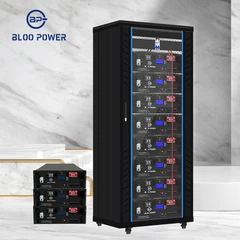
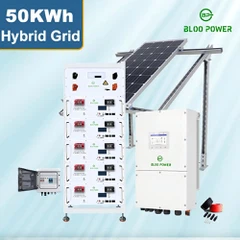
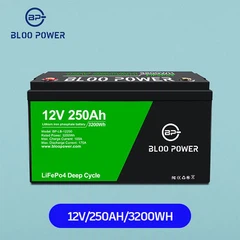
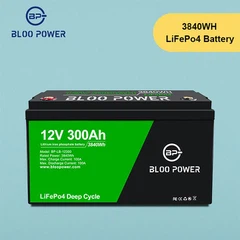
This rapid expansion underscores the growing importance of solar energy storage batteries and lithium ion battery for solar energy storage systems, which help convert intermittent renewable output into reliable power. Industry leaders such as BLOO POWER are positioning high-performance solutions to support both utility-scale and distributed applications as the grid faces these unprecedented pressures.

Regional Disparities in Demand Growth and Reserve Margins
Demand-side management and grid enhancement technologies are key tools for alleviating short-term supply and demand tensions, while generation and transmission lines are under construction. Currently, the US has approximately 26 GW of excess generating capacity as additional reserves, but supply and demand conditions vary significantly across regions. For example, demand in the PJM interconnected grid is projected to grow by 43% by 2035 compared to 2026, while the demand in the New York Independent System Operator (ISO) area is projected to grow by only 14% during the same period. In high-growth regions, there is almost no spare capacity to absorb new demand, and the grid connection of some large loads has been postponed until the infrastructure is operational.
In these constrained areas, customized solar energy storage batteries and energy storage batteries without solar become essential tools for bridging gaps. Residential lithium-ion solar energy storage systems, for instance, allow homeowners and businesses to shift loads and provide local resilience even when transmission upgrades lag.
Detailed Breakdown of Expected New Capacity by Technology
The ICF projects that 68 GW of new generating capacity will be added in 2026, 76 GW in 2027, and an average of approximately 100 GW per year thereafter. By 2030, the new capacity will include: 177 GW of solar power, 120 GW of battery storage, 77 GW of pre-metered gas-fired power, and 62 GW of onshore wind power. The ICF points out that 1 GW of solar power generates approximately 1 to 3 TWh of electricity annually, and 1 GW of combined cycle gas-fired power generates approximately 6 to 8 TWh of electricity annually. Existing resources can mitigate timing risks through capacity expansion, delayed retirement, extended lifespan, co-location, or post-metered generation, but these cannot replace investments in new generation, transmission, and distribution.
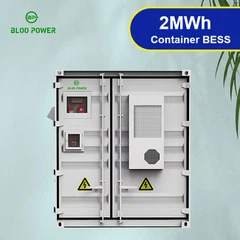
The 120 GW of battery storage projected is dominated by lithium-ion technology. High quality lithium-ion battery for solar energy storage systems deliver high round-trip efficiency (typically 85–95%) and rapid response times measured in milliseconds, making them ideal for peak shaving and frequency regulation. Commercial high capacity energy storage batteries for grid support are increasingly paired with solar farms or deployed standalone to firm variable renewable generation.
|
Technology |
Projected Capacity Additions by 2030 (GW) |
Approximate Annual Energy Output per GW |
Primary Role in Grid Support |
|
Solar |
177 |
1–3 TWh |
Daytime energy production |
|
Battery Storage |
120 |
Variable (depends on cycling) |
Peak shifting, reliability, renewable firming |
|
Gas-fired (front-of-meter) |
77 |
6–8 TWh |
Flexible baseload and peaking |
|
Onshore Wind |
62 |
2–4 TWh (typical) |
Complementary renewable generation |
The Expanding Role of Lithium-Ion Batteries in Meeting Peak Demand
Battery energy storage systems, particularly lithium-ion chemistries, are central to converting the 445 GW of nameplate capacity into usable peak contribution. BloombergNEF data show lithium-ion battery pack prices fell to a record low of $108/kWh in 2025, with stationary storage packs reaching approximately $70/kWh-a 45% decline from the prior year. This cost trajectory continues to improve project economics for both solar-paired and standalone installations.
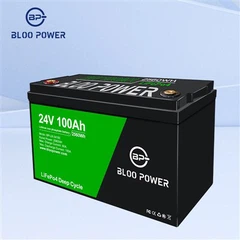
High quality lithium-ion battery for solar energy storage solutions excel in cycle life (often 6,000–10,000 cycles for lithium iron phosphate variants) and energy density. Providers such as BLOO POWER offer durable high quality lithium ion battery for solar energy storage applications that support residential, commercial, and industrial needs. Meanwhile, energy storage batteries without solar enable pure grid services-such as arbitrage, ancillary services, and backup-without requiring on-site photovoltaic arrays. Off-grid energy storage batteries without solar integration further expand options for remote or critical facilities seeking energy independence.
Addressing Timing Risks with Flexible Storage and Demand-Side Tools
While large-scale generation and transmission projects face multi-year lead times, demand-side management and advanced storage can relieve immediate pressure. Grid-enhancing technologies, virtual power plants, and distributed solar energy storage batteries allow faster deployment. BLOO POWER customized solar battery solutions for peak demand, for example, can be tailored for specific load profiles, whether for data centers, manufacturing, or residential communities facing interconnection delays in high-growth regions like PJM and ERCOT.
Recent market data indicate that stationary storage costs have declined faster than other segments, accelerating adoption. Industry analyses project continued modest price reductions into 2026 despite some raw-material pressure, supporting the ICF outlook of roughly 100 GW of annual capacity additions in later years of the decade.
|
Region / System Operator |
Projected Electricity Demand Growth 2026–2035 |
Relative Reserve Margin Status (per ICF) |
Key Constraint |
|
PJM Interconnection |
43% |
Little to no spare capacity beyond 2027 |
Data centers, industrial loads |
|
New York ISO |
~14% |
More moderate pressure |
Slower load growth |
|
ERCOT (Texas) |
High (exact figure varies by scenario) |
No spare capacity beyond 2027 |
Rapid load growth |
|
Southeast |
Rising toward similar limits |
Emerging tightness |
Manufacturing and electrification |
Broader Market Context and Technology Advancements Supporting Storage Deployment
Beyond the ICF projections, complementary analyses from the U.S. Energy Information Administration and other firms reinforce the trajectory of rising demand driven by data centers, electrification, and industrial expansion. Lithium-ion technology remains dominant for energy storage because of its proven performance, declining costs, and scalability. Lithium iron phosphate (LFP) chemistries, in particular, offer enhanced safety and longer calendar life, making them preferred for stationary applications.
Customized solar energy storage batteries enable optimized system sizing, while lithium ion battery for solar energy storage packs continue to improve in energy density and thermal management. BLOO POWER, with more than 17 years of experience in battery technology, supplies systems ranging from residential 12 V / 24 V / 48 V units to commercial-scale solutions, serving tens of thousands of customers. These products support both solar-integrated and standalone configurations, aligning directly with the need for flexible resources identified by ICF.
Residential lithium-ion solar energy storage systems further democratize participation in grid services through net metering and demand-response programs, while commercial high capacity energy storage batteries for grid support help utilities manage local congestion.
Looking Ahead: Integrating Storage to Sustain Reliability and Growth
The combination of 177 GW of new solar and 120 GW of battery storage by 2030 represents a structural shift toward a more flexible, cleaner grid. Yet the effective peak contribution of only about 191 GW from the total 445 GW nameplate capacity highlights the ongoing need for complementary firm resources and accelerated storage deployment. Investments in high-quality lithium-ion systems, demand-side flexibility, and targeted transmission will be essential to convert projected capacity into reliable service for new loads.
As costs continue to fall and manufacturing scales, solutions such as those from BLOO POWER-spanning customized solar energy storage batteries, energy storage batteries without solar, and high quality lithium-ion battery for solar energy storage-will play an increasingly central role in matching supply with the 21% demand growth expected by 2030 and the 39% rise projected by 2035.
|
Battery Application Type |
Typical Use Case |
Key Advantages |
Example Technology Focus |
|
Solar-paired storage |
Residential / commercial self-consumption |
Maximizes renewable utilization, bill savings |
Lithium-ion (LFP preferred) |
|
Standalone / without solar |
Grid services, backup, arbitrage |
Pure flexibility, no solar dependency |
High-cycle lithium-ion packs |
|
Customized / high-capacity systems |
Data centers, industrial peak shaving |
Tailored capacity, rapid response |
Modular BLOO POWER-style solutions |
Send Inquiry