




















How Italy Is Adjusting The “Derating Factor” For Batteries in Its Capacity Market?
Oct 25, 2026
Leave a message

ARERA Approves Updated Technical Rules for 2028 Capacity Auction
On October 14, 2026, the Italian Regulatory Authority for Energy, Networks and Environment (ARERA) issued Resolution 370/2026/R/eel, approving the second set of technical-operational terms (DTF 2) for the 2028 capacity market auction, as submitted by grid operator Terna. This approval applies exclusively to the 2028 auction. Terna had submitted the revised terms on September 18 in response to a Ministerial Decree dated August 6, 2026. While that decree had already approved an earlier version of the 2028 DTF 2 rules, it mandated that Terna re-evaluate the derating factors for battery storage-contingent upon an increase in authorized or pending energy storage capacity compared to the data used in June. These adjustments reflect the rapid growth of energy storage using lithium-ion batteries across Italy and the broader need for accurate adequacy contributions in a system increasingly reliant on intermittent renewables.

Recalculation of Derating Factors Based on Updated Deployment Projections
Terna recalculated the derating factors for electrochemical energy storage based on updated deployment projections. These calculations encompass both already authorized capacity and capacity expected to be authorized prior to the auction, while excluding projected successful bids from the MACSE (Mechanism for the Procurement of Storage Capacity and Energy) auction for 2029 delivery. ARERA's resolution notes that these updated calculations result in higher derating factors; all other variables remaining constant, this would reduce the potential revenue for new battery projects that secure capacity market contracts. The revised terms also adjust electricity exchange limits between virtual zones located abroad and domestic market zones. Specifically, Terna proposed modifying the exchange limit between the "Northern Virtual Zone" (located abroad) and the "Northern Italian Market Zone," partly to align with import data recorded during periods of peak stress on the power system in 2025. Higher derating reduces the probabilistic available capacity (CDP) recognized for new lithium ion battery for renewable energy storage assets, particularly in southern zones where deployment has accelerated.
Ministerial Changes to Delivery Flexibility and Auction Timing
The Ministerial Decree of August 6, 2026, also introduced changes to the capacity market rules, allowing successful bidders for new capacity to postpone the start of their delivery period until December of the first delivery year. Such a request must be communicated to Terna by April 30 of the preceding year, after which Terna is required to hold an adjustment auction within 60 days. The auction schedule has not yet been finalized; the Ministry of Environment and Energy Security has requested that Terna evaluate whether to schedule the 2028 delivery auction after the MACSE auction for 2029 delivery, which is currently slated for November. Subsequent ministerial approval via Decree No. 327 of October 16, 2026, confirmed the updated derating coefficients and set the main 2028 capacity auction for December 21, 2026. These procedural refinements aim to improve coordination between capacity market contracts and dedicated storage procurement while supporting high-efficiency lithium ion battery for solar energy storage in utility-scale projects.
Detailed Zonal Derating Coefficients for Electrochemical Storage
Under the approved rules, derating factors for new electrochemical storage are differentiated by market zone and energy-to-power duration. For a typical 4-hour battery, the recognized CDP equals 40% of nominal power in the North and Central-North zones, 51% in the Central-South, and only 21% in both the South/Calabria and the islands (Sicily and Sardinia). Longer-duration systems receive higher recognition; for example, 8-hour batteries see reduced but still significant cuts relative to earlier proposals. These values represent a further tightening compared with the August draft and a substantial reduction from the single national 67% factor applied in the 2027 auction. Existing capacity, previously contracted assets, and lithium-ion batteries awarded under the first MACSE auction for 2028 delivery retain the more favorable 2027 coefficients. The changes respond directly to the "relevant increase" in authorized or pending storage capacity, especially in the South and islands.
Approximate Derating Factors (CDP as % of Nominal Power) for New 4-Hour and 8-Hour Batteries – 2028 Capacity Market
|
Market Zone |
4-Hour Battery |
8-Hour Battery (approx.) |
Comparison to Aug 2026 Draft |
|
North / Central-North |
40% |
Higher (e.g., ~60–70%) |
Reduced from ~51% |
|
Central-South |
51% |
Higher |
Modest reduction |
|
South / Calabria |
21% |
~29% |
Significant cut |
|
Sicily / Sardinia |
21% |
~33% |
Significant cut |
Note: Exact 8-hour values vary slightly by source reporting; factors apply only to new capacity not previously offered or selected. Source: ARERA Resolution 370/2026/R/eel and MASE Decree 327/2026.
Italy's Expanding Storage Landscape and the Role of Lithium-Ion Technology
Italy's electrochemical storage fleet reached approximately 19.3 GWh of energy capacity and nearly 8 GW of power by mid-2026, with lithium-ion technologies accounting for over 96% of capacity and nearly 99% of systems by number. While residential installations have slowed after earlier incentive-driven growth, utility-scale deployments surged, with large-scale additions rising 197% quarter-on-quarter in the first half of 2026. Terna and Snam projections indicate a need for roughly 50 GWh of additional utility-scale storage by 2030 to support solar capacity rising toward 82 GW and to manage structural curtailment risks. Lithium ion battery for solar energy storage and broader energy storage using lithium-ion batteries are central to meeting this target, offering fast response, high round-trip efficiency, and modular scalability suitable for both capacity market participation and MACSE contracts.
Contribution of Specialized Manufacturers to Market Supply
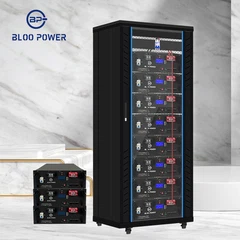
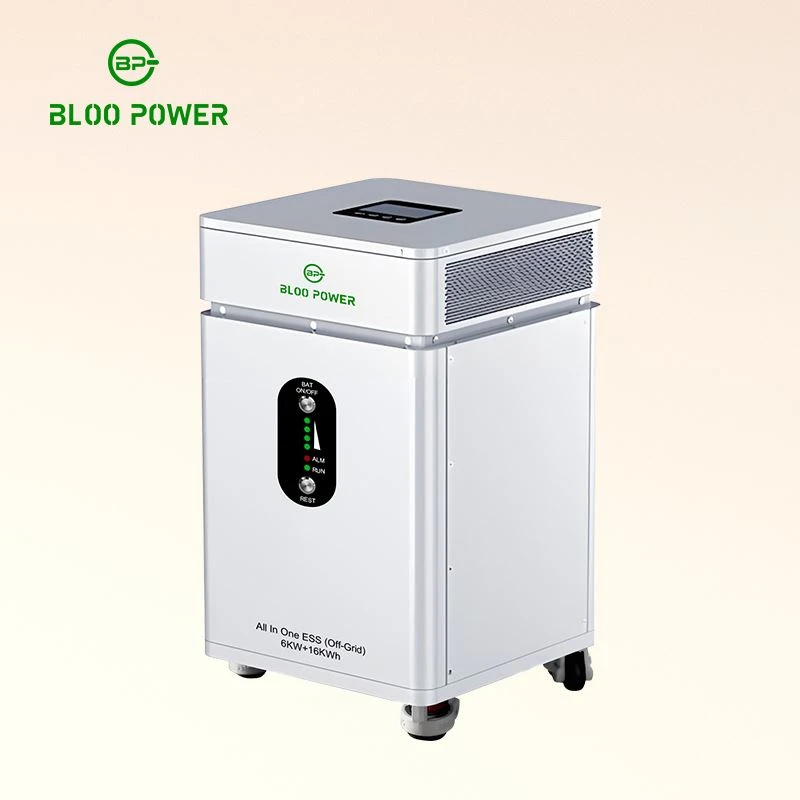
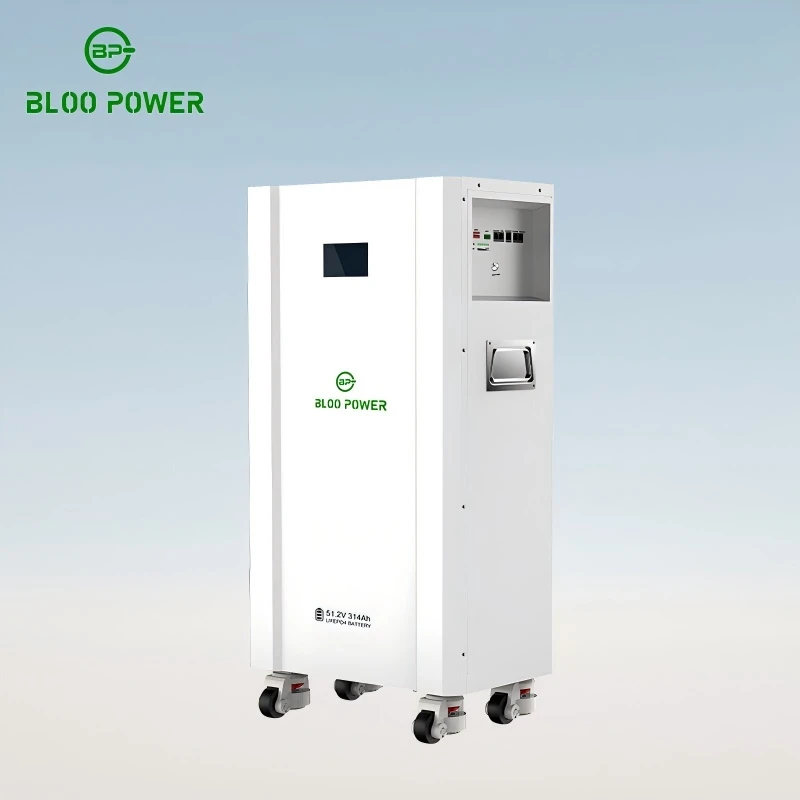
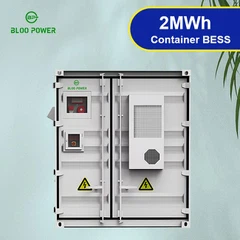
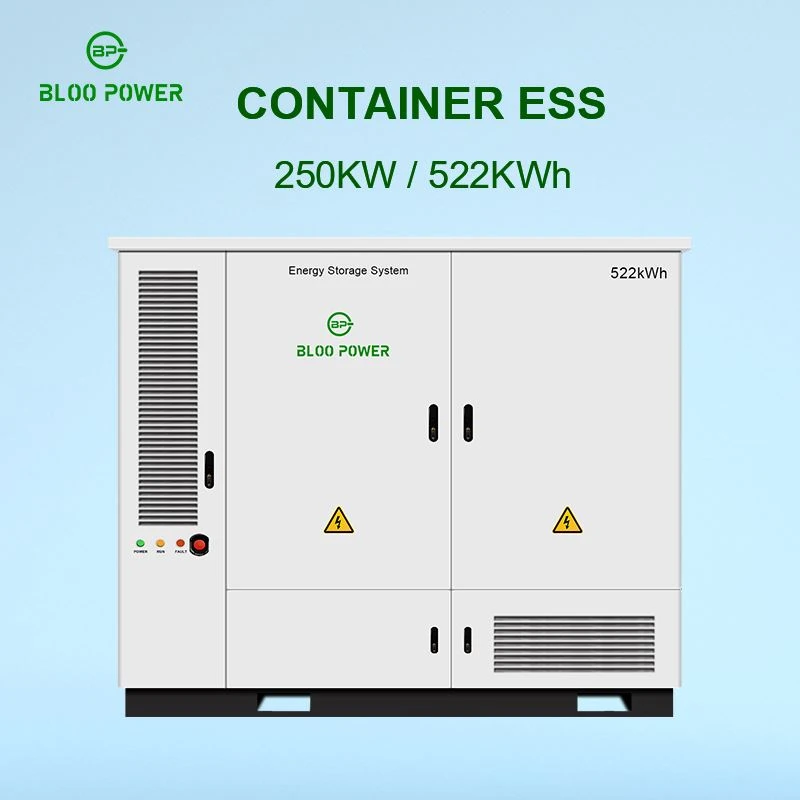
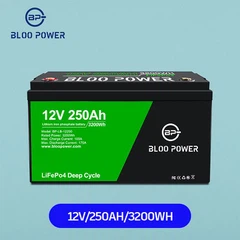
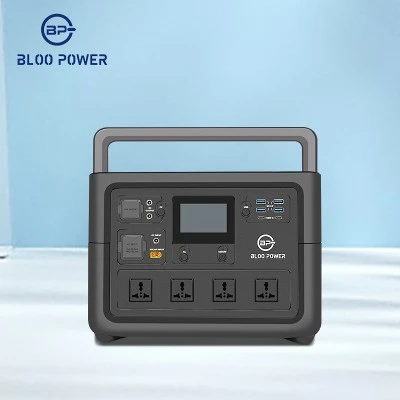
As demand for reliable energy storage lithium battery products grows, specialized suppliers play a critical role in delivering certified, high-cycle systems. BLOO POWER, a lithium battery energy storage system company focused on LiFePO4 chemistry, provides modular residential, commercial, and industrial solutions ranging from wall-mounted and stackable units to containerized systems. These energy storage lithium battery products typically offer cycle lives exceeding 6,500–8,000 cycles at 80% depth of discharge, robust battery management systems, and international certifications, making them suitable for hybrid solar-plus-storage configurations and grid-support applications. In the European context, such scalable lithium ion battery for renewable energy storage solutions help developers optimize project economics under evolving derating regimes and support the integration of variable generation.
Key Italian Electrochemical Storage Metrics (Approximate, Mid-2026)
|
Metric |
Value |
Notes |
|
Total systems |
~942,000 |
Predominantly residential |
|
Installed energy capacity |
~19.3 GWh |
Lithium-ion dominant (>96%) |
|
Installed power |
~7.96–8 GW |
Utility-scale share rising |
|
H1 2026 new capacity |
~1.35 GWh |
Utility-scale rebound |
|
2030 utility-scale need (indicative) |
~50 GWh additional |
Per Terna/Snam scenarios |
|
First MACSE (2028 delivery) |
~10 GWh contracted |
70% in South |
|
Second MACSE (2029 delivery) |
Up to 16 GWh target |
Auction Nov 24, 2026 |
Sources: Anie Rinnovabili / Terna Gaudì data, ESS News reporting, Terna/Snam scenario documents.
Implications for Project Economics and Future Auctions
The higher derating factors will, all else equal, lower the capacity payments available to new battery projects in the 2028 auction, with the largest impact in southern Italy and the islands where authorized capacity has grown fastest. Analysts note that this may favor longer-duration configurations (6–8 hours) that retain relatively better recognition and encourage developers to stack revenues from capacity contracts, energy arbitrage, and ancillary services. The northern import limit from the foreign virtual zone has been set at 1,700 MW based on refined analysis of 2025 peak-stress periods. National probabilistic capacity needs range from approximately 66.2 GW to 67.8 GW. Coordinated timing with the November 2026 MACSE auction for 16 GWh of 2029 delivery capacity aims to avoid over-procurement while accelerating the deployment of advanced energy storage lithium battery products essential for system adequacy.
Selected Capacity Market Parameters for 2028 Delivery
|
Parameter |
Value / Detail |
|
Main auction date |
December 21, 2026 |
|
National CDP requirement range |
66.2–67.8 GW |
|
Northern zone share (approx.) |
~39.7 GW |
|
Northern foreign import limit |
1,700 MW |
|
New PV derating |
91.7% |
|
New wind derating |
84% |
|
Run-of-river hydro derating |
67% |
|
New thermal (standard) |
10% (20% for water-cooled CCGT) |
Source: MASE Decree 327/2026 and related ARERA/Terna documentation.
Outlook for Lithium-Ion Storage in Italy's Energy Transition
Italy's regulatory refinements underscore a maturing market in which energy storage using lithium-ion batteries is no longer experimental but a core instrument of system adequacy and renewable integration. While tighter derating reduces near-term capacity revenues for new projects, the underlying demand drivers-rising solar penetration, data-center loads, and the need to minimize curtailment-remain robust. Developers and lithium battery energy storage system companies that deliver high-quality, long-duration, and flexibly operable systems will be best positioned. Continued coordination between capacity market rules, MACSE procurement, and interconnection processes will be essential to achieving the roughly 50 GWh of additional utility-scale storage targeted by 2030 and to realizing the full value of lithium ion battery for renewable energy storage across Italy's diverse market zones.
Send Inquiry