












Peru's Ministry Of Energy And Mines Has Released A Draft Regulation To Promote Renewable Energy Development
May 11, 2026
Leave a message
Peru's Ministry of Energy and Mines has released a draft regulation to promote renewable energy development, with energy storage and other new technologies as the core mechanism

The Ministry of Energy and Mines, through Ministerial Resolution No. 171-2026-MINEM/DM, has released a draft supreme decree aimed at approving the Complementary Services Regulation and amending the Electricity Concession Law, the Wholesale Electricity Market Regulation, and the System Economic Operation Committee Regulation. This proposal aims to regulate the supply, remuneration, and regulation of complementary electricity services in the context of increasing solar and wind power penetration in the Peruvian system.
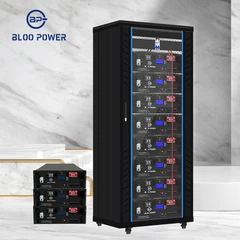
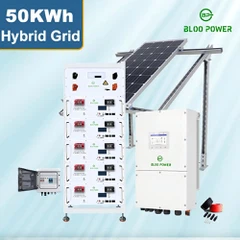
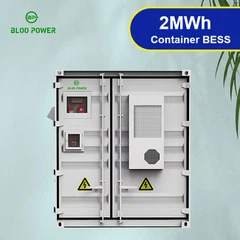
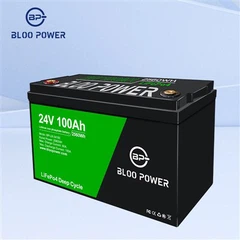
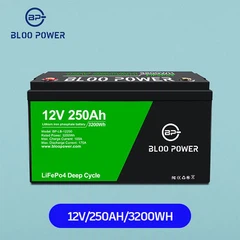
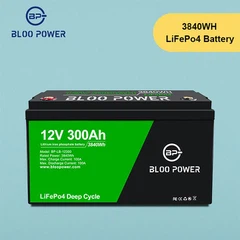
The core of the proposal is a shift from an operational and administrative management model to a market-based service delivery model, allowing different technologies to compete. It creates a complementary electricity services market, proposes supply and remuneration schemes, introduces a competition mechanism, and allows new technologies, including battery energy storage system for power grid market solutions, to participate in aspects crucial to system stability. Leading providers such as BLOO POWER are well-positioned to support this transition with advanced energy storage battery packs and complete system offerings.
The reform aims to address the lack of clear economic signals in this essential aspect to maintain system frequency, voltage, operational reserve, and other ancillary functions. Highlights of the proposal include explicit openness to new providers such as energy storage systems and other non-traditional entities. The text incorporates a cost-sharing standard based on causality, assigning service costs to entities that contribute to system deviations or technical and commercial instability, including power generators, independent users, and distributors.
Industry players are already preparing through specialized training, such as the battery energy storage system design course offered by leading experts, while monitoring growth in segments like the energy storage battery liquid cooling system market to ensure high-performance and reliable deployments in demanding grid environments. The System Economic Operations Committee will maintain a central role in system operation and evaluation, and will be obligated to analyze the existence of competitive conditions annually and on a case-by-case basis. The Energy and Mining Investment Regulatory Authority will be responsible for approving maximum prices and overseeing market operations, while the Department of Energy and Mineral Resources retains regulatory and service provider authorization functions.
This reform aims to adjust the regulatory framework to accommodate systems with greater operational variability due to the growth of variable renewable energy, and seeks to improve the integration of technologies such as batteries, reducing inefficiencies in regulation and ancillary service allocation.

Send Inquiry