




















Cost Comparison Between Lithium Batteries And Lead-Acid Batteries
Aug 17, 2026
Leave a message

Cost comparison between lithium batteries and lead-acid batteries: From purchase price to total life cycle cost, which one is more cost-effective?
In applications such as solar energy storage, home backup power, off-grid systems, communication base stations, and industrial and commercial energy storage, lithium-ion batteries and lead-acid batteries have always been two key energy storage technologies compared by users. Many purchasers initially focus on "how much per battery" or "how much per kilowatt-hour," easily concluding that "lead-acid batteries are cheaper." However, the true determinant of the economics of an energy storage project is not just the initial purchase price, but also factors such as available capacity, cycle life, charge/discharge efficiency, replacement frequency, maintenance costs, installation space, system integration costs, and the actual output of electricity over the entire lifespan.
Data on energy storage technologies and costs published by the U.S. Department of Energy indicates that while lead-acid systems typically have lower initial capital costs, their total lifespan cost can be comparable to that of lithium-ion battery systems when factors such as lifespan, cycle life, and efficiency are considered in a full lifespan analysis. Meanwhile, energy storage technology data from NREL/NLR shows that lithium-ion batteries have become one of the core technologies for stationary energy storage, with lithium iron phosphate (LFP) emerging as an important stationary energy storage chemistry in recent years.
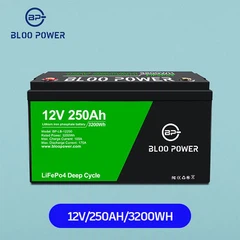
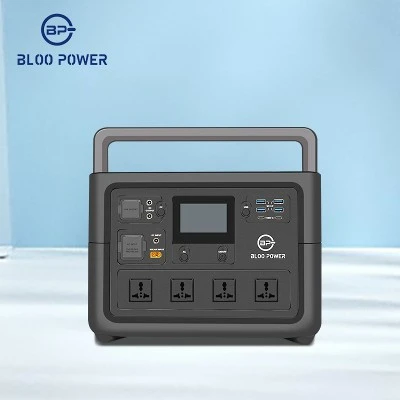
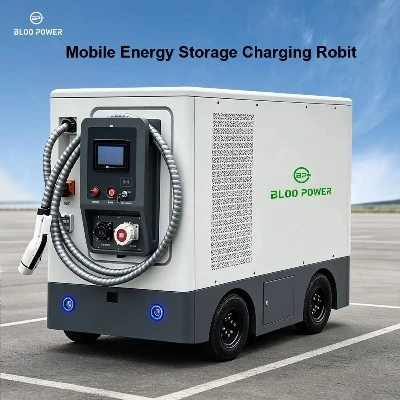
This article will analyze the differences between lithium batteries and lead-acid batteries in detail from 12 core cost dimensions, and combine them with the LiFePO4 residential and commercial energy storage products on the BLOO POWER official website to help home users, solar installers, distributors and project investors establish a more comprehensive cost judgment system.
Comparison of core economic advantages between lithium batteries and lead-acid batteries
|
Comparison Projects |
Lithium-ion batteries (taking LiFePO4 as an example) |
lead-acid batteries |
|
Initial procurement cost |
Usually higher |
Typically lower |
|
Available depth of discharge |
Generally higher, depending on the product design. |
Deep discharge significantly affects Lifespan. |
|
Cycle life |
Usually longer |
Usually shorter |
|
Charge and discharge efficiency |
Usually higher |
Typically lower |
|
Number of replacements during use |
Less |
Maybe more |
|
Routine maintenance |
Typically lower |
Some types require more maintenance. |
|
Capacity available per unit installation space |
Higher |
Lower |
|
Long-term manual maintenance costs |
Lower |
Higher |
|
Long-term comprehensive cost |
More likely to be more advantageous |
Initially low, but may increase in the long term. |
|
Suitable scenarios |
High-frequency cycling, solar energy storage, long-term backup |
Budget-sensitive, low-frequency backup, etc. |
Note: There are significant differences in brand, structure, lead-acid type, lithium battery chemistry system, and actual operating conditions. The table provides a general comparison of technical routes. Specific items should be calculated based on actual product data, local electricity prices, and usage frequency. Data from the U.S. Department of Energy shows significant differences in cycle life, lifespan, and efficiency among different lead-acid battery products; therefore, a single figure cannot be used to evaluate all lead-acid batteries.

Initial Purchase Cost: Lead-acid Batteries are Cheap, But Don't Just Look at the "First Payment"
From a one-time purchase price perspective, lead-acid batteries typically have a significant price advantage, which is a key reason why they have maintained a large market share in car starting, UPS, low-frequency backup, and some traditional off-grid systems for a long time. For users with extremely limited budgets and low usage frequency, the lower initial investment can indeed lower the barrier to entry into the energy storage market. However, comparing only "how much does it cost to buy a 10kWh battery set" without comparing the actual usable capacity and future replacement costs can easily lead to incorrect judgments. Data from the U.S. Department of Energy clearly indicates that while the initial capital cost of lead-acid systems is lower, their cost over the entire lifecycle can be comparable to that of lithium-ion battery systems.
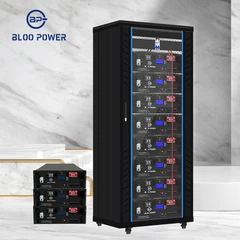
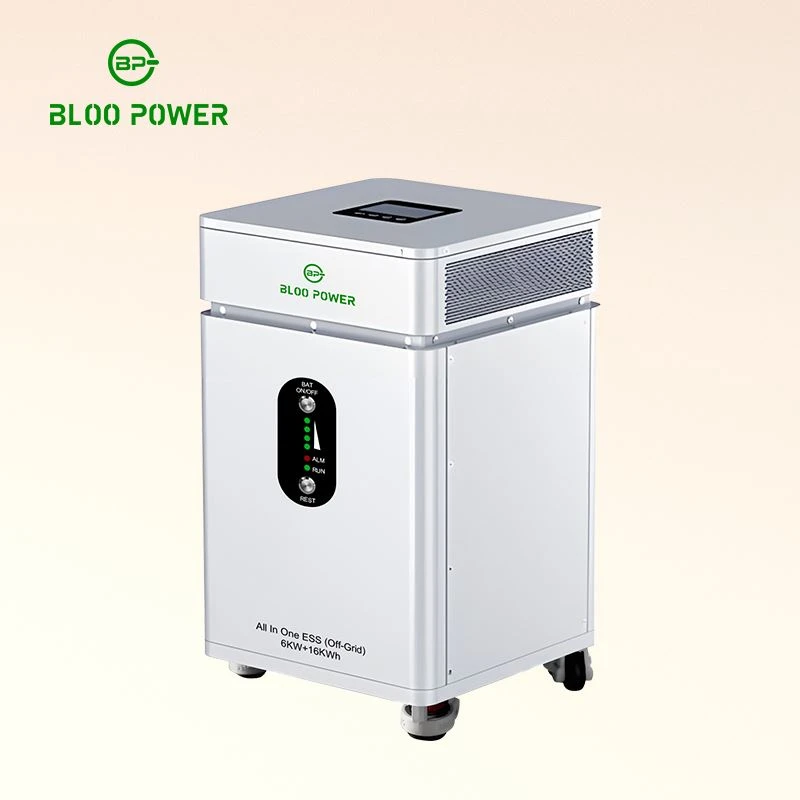
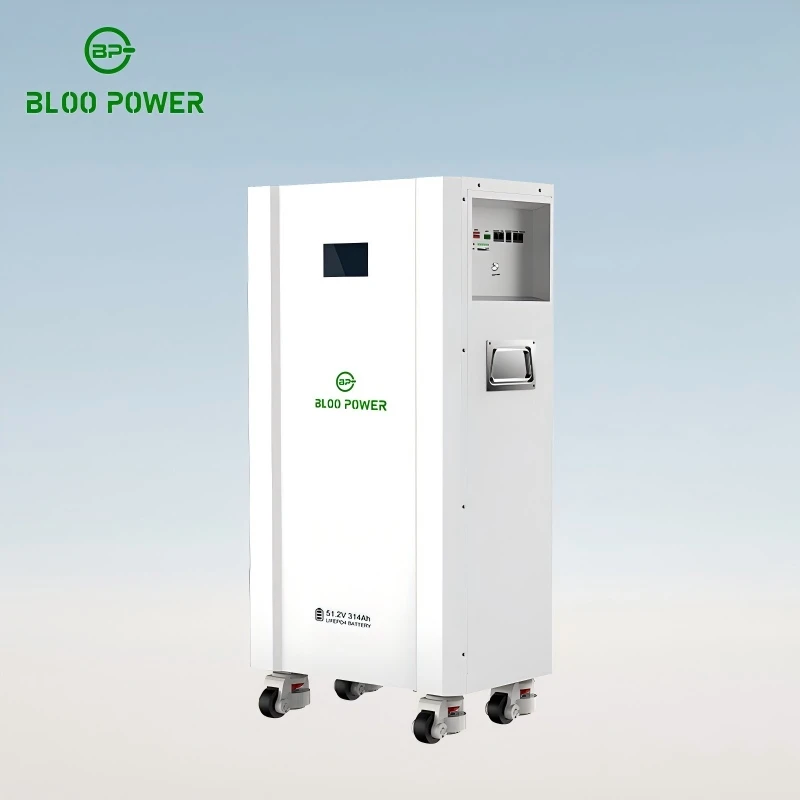
For home energy storage projects that utilize solar energy for daily charging and discharging, users are not purchasing a one-time "battery casing," but rather the ability to continuously obtain energy storage services for many years to come. Therefore, the initial purchase price is only the first item in the total cost model. Taking BLOO POWER's LiFePO4 products as an example, its residential products cover capacities of 5kWh, 10kWh, 14.34kWh, 15kWh, and 20kWh, offering wall-mounted, rack-mounted, stacked, and integrated solutions. While the initial investment for LiFePO4 is typically higher than traditional lead-acid solutions, modular capacity selection can reduce the waste of funds caused by insufficient system capacity or severe over-configuration.
Key judgment points:
● A low initial price does not necessarily mean the lowest cost per kilowatt-hour;
● Compare the "total system price," not just the price of a single battery;
● High-frequency cycling users should focus more on long-term replacement costs;
● Purchasing decisions should include the operating costs over the next 5-15 years.
Cost of Usable Capacity: Identical Rated Capacity Does Not Equal Actual Economic Value
When comparing battery costs, the second easily overlooked metric is usable capacity. Assuming two systems both have a nameplate capacity of 10kWh, if one battery can only utilize a conservative depth of discharge over long-term use, while the other can provide a greater usable capacity within the product specifications, then the cost per usable 1kWh of electricity will differ significantly. Data from the U.S. Department of Energy shows that lead-acid battery performance is often closely related to cycle life and depth of discharge. For example, the data includes 500 cycles (50% DoD), 600 cycles (80% DoD), and other different conditions, indicating that battery life and cost cannot be discussed in isolation from DoD.
This means that energy storage projects cannot be simply compared using "total capacity × purchase price," but should further calculate the effective energy storage capacity. For example, if a user wants approximately 8kWh of overnight backup power per day, different battery technologies may require different rated capacities to achieve this goal. BLOO POWER explicitly labels some of its rack-mount LiFePO4 products with 80% DoD and 85,000 cycle life parameters. Models such as the 5.12kWh, 6.91kWh, and 10.24kWh employ a modular design. These parameters help installers configure systems according to their target available capacity.
Key Judgment Points
● Don't just look at the total kWh on the battery nameplate;
● Focus on calculating the effective capacity that can be used long-term;
● The higher the depth of discharge, the more important it is to assess its impact on cycle life;
● Project quotations should be compared using "cost per unit available kWh".
Cycle Life Cost: The High Initial Investment in Lithium-ion Batteries Can Be Amortized Through More Cycles
Cycle life is one of the most significant sources of cost difference between lithium-ion and lead-acid batteries. For energy storage systems that utilize solar energy for daily charging and nighttime discharging, a single battery may undergo hundreds of charge-discharge cycles per year. Therefore, cycle life directly determines how often the equipment needs to be replaced. Data from the U.S. Department of Energy's energy storage data shows significant variations in the number of cycles for lead-acid batteries, including approximately 500, 600, 1,250, and 2,000 cycles, influenced by product technology, depth of discharge, and operating conditions. Overall, the report indicates that traditional lead-acid technology has a lower calendar life and cycle life compared to mainstream lithium-ion technology, especially under higher DoD conditions.
In contrast, some LiFePO4 energy storage products listed on BLOO POWER's official website are designed for 8,000 cycles. For example, their 51.2V rack-mount 5kWh, 7kWh, and 10kWh products are all listed as achieving 6,500 cycles under 80% DoD conditions. Assuming users complete approximately one full energy storage cycle per day on average, a longer cycle life means that the system may require fewer battery replacements over a longer project operation period, thus reducing costs associated with repurchase, downtime, and manual installation. It's important to note that actual lifespan is still affected by factors such as temperature, charge/discharge rate, and maintenance methods.
Key Judgment Points:
● High-frequency usage scenarios must prioritize comparing cycle counts;
● The economic value of "total cycle counts ÷ initial investment" should be compared;
● Longer battery life generally means lower future replacement costs;
● Daily solar cycle scenarios typically better demonstrate the value of long-life batteries.
Total Life Cycle Cost: The Real Comparison Should Be Based on LCOS Thinking, Not Unit Price
From an investment perspective, the most scientific comparison is not asking "How much more expensive is lithium-ion battery per kWh compared to lead-acid?", but rather "How much does it cost to provide 1 kWh of effective energy storage service over the entire lifespan of the system?" This approach aligns with the Levelized Cost of Storage (LCOS) commonly used in the energy storage industry, comprehensively considering equipment procurement, installation, operation and maintenance, efficiency degradation, lifespan, replacement, and capital costs. Technical and cost data from the U.S. Department of Energy has indicated that while lead-acid batteries have lower initial capital costs, their total life cycle cost can be comparable to that of lithium-ion battery systems due to factors such as lifespan, cycle performance, and efficiency.
NREL/NLR's 2024 energy storage data also demonstrates that stationary energy storage cost research increasingly focuses on modeling lithium-ion technology, and LFP has become one of the important technological routes for stationary energy storage. Their utility-grade energy storage cost models consider parameters such as system lifespan, operation and maintenance, and efficiency simultaneously, rather than solely relying on battery purchase prices
For example, a lead-acid system with a low initial cost may accumulate significant investment if it requires multiple replacements during the project lifecycle, each incurring costs for labor, transportation, downtime, and disposal of old batteries. Conversely, a LiFePO4 system with a higher initial cost, if it can operate stably over a long period, can have its initial cost spread across more cycles and greater actual output.
Key considerations:
● The total cost of procurement, installation, maintenance, replacement, and disposal should be calculated;
● The actual kWh output over the entire lifecycle should be calculated;
● The initial purchase price should not be used as the sole basis for investment;
● High-frequency projects are better suited to a life-cycle cost model.
Cost Structure Analysis Framework Taking a 10-Year Project Cycle as an Example:
| Cost items | LiFePO4 batteries | lead-acid batteries | Impact on total cost |
| First purchase | Higher | Lower | Significant differences in initial investment |
| Subsequent replacement | Usually less | There may be more | Impact on long-term total investment |
| Routine maintenance | Typically lower | Depending on the product type, it may be higher. | Increase labor costs |
| Charge and discharge losses | Typically lower | Typically higher | Impact on actual electricity purchase and generation utilization |
| Installation space | Usually more economical | Usually more space is needed | Impact on site costs |
| Transportation and handling | High energy density | Low energy density | Impact on logistics and labor |
| System downtime risk | The number of replacements can be reduced. | Multiple replacements may increase downtime. | Impact on the value of continuous power supply |
| Final economics | Depends on usage frequency and lifespan | Depends on initial price and replacement cycle | Project-based calculation is required. |
Charge/Discharge Efficiency Costs: Efficiency Losses Ultimately Become "Invisible Electricity Costs"
Energy storage batteries cannot return 100% of the input electrical energy to the user; therefore, charge/discharge efficiency directly impacts long-term economics. If a user generates 100 kWh of electricity through solar panels and stores it, the amount of electricity that can ultimately be retrieved depends on the efficiency of the battery, inverter, and the entire system. Lower efficiency means that more solar power generation or more off-peak electricity charging is required to obtain the same effective output. This loss accumulates over time in a system that cycles daily.
Data from the U.S. Department of Energy includes examples of round-trip efficiencies of approximately 75% and 79%–84% for some lead-acid technologies. It also shows differences between various lead-acid product technologies; therefore, a single fixed figure cannot be used for specific projects. NREL/NLR's 2024 utility-grade battery energy storage data uses approximately 85% round-trip efficiency as one of its model assumptions, indicating that efficiency is a crucial variable in calculating the cost of energy storage systems.
For BLOO POWER LiFePO4 energy storage systems, in addition to the battery cells themselves, the design should also consider the inverter and overall system efficiency. Especially in peak-valley electricity price arbitrage or solar self-consumption models, every percentage point difference in system efficiency will affect long-term electricity cost savings. Therefore, purchasers should not only compare battery prices but also request suppliers to provide complete system operating parameters and actual testing conditions.
Key judgment points:
● Low efficiency means a longer-term need to purchase or generate more input electricity;
● The more frequent the daily cycling, the more significant the cumulative efficiency difference;
● Battery efficiency should be distinguished from overall system efficiency;
● Project benefit calculations should include charging and discharging losses in the electricity cost model.
Replacement Costs: Low-Priced Batteries May Require "Second and Third Purchases"
Many users overlook a crucial issue when initially purchasing energy storage equipment: what happens to the batteries at the end of their lifespan? If a project is expected to operate for 10 or even 15 years, but a particular battery has a short actual cycle and calendar life, users may need to purchase new battery packs in the future. A second purchase involves more than just "buying another battery"; it can also include costs for transportation, dismantling, reinstallation, system commissioning, downtime losses, and disposal of the old batteries. Therefore, replacement costs are one of the most easily underestimated aspects of low initial-price solutions.
US Department of Energy data emphasizes the relatively low cycle life of lead-acid batteries at high DoD, while the NREL/NLR stationary energy storage model incorporates long-term operation and maintenance and lifespan factors into its cost analysis. For solar energy storage projects aiming for long-term operation, longer battery life means purchasers have the opportunity to reduce the frequency of large-scale equipment replacements.
BLOO POWER's website states that some of its LiFePO4 residential energy storage products are designed for approximately 8,000 cycles and offer various modular capacity specifications. For installers, modular design also offers the potential convenience of future expansion or system maintenance on individual modules; however, the specific replacement method will still depend on the system architecture and product after-sales policy.
Key judgment points:
● The number of battery purchases that may be needed during the project cycle should be predicted;
● Replacement costs must include labor and downtime costs;
● Long-life solutions may reduce future cash flow pressure;
● Commercial projects should incorporate battery replacement plans into their financial models in advance.
Maintenance Costs: The "Cheapness" of Lead-Acid Batteries May Come with Higher Labor Costs
Maintenance costs are also a significant difference between the two technologies. The maintenance requirements for different types of lead-acid batteries are not entirely the same. For example, some sealed products have lower maintenance requirements than traditional open-type designs. Therefore, it cannot be simply assumed that all lead-acid batteries require the same maintenance. However, in general, lead-acid systems may require more attention to terminal corrosion, connection status, environmental ventilation, charging status, and liquid levels in some products during long-term use. This means that companies or users need to invest more human resources in management.
A report from the U.S. Department of Energy points out that traditional lead-acid technology has advantages such as maturity and lower initial costs, but its cycle life and performance limitations affect long-term costs. For unattended home energy storage systems, overseas residential projects, and large-scale deployment projects by installers, reducing on-site maintenance work is economically valuable.
BLOO POWER's LiFePO4 product page shows that some products are equipped with a smart BMS and provide protection against overcharge, over-discharge, overvoltage, overtemperature, overcurrent, and short circuits. A smart BMS doesn't mean the system requires no inspection at all, but it helps energy storage systems achieve more automated condition monitoring and protection. For installers, if there are many after-sales projects, lower daily maintenance requirements may reduce long-term labor service costs.
Key considerations:
● Maintenance costs include labor time, not just repair materials;
● The more batteries there are, the more complex the long-term inspection work usually becomes;
● Unattended projects should pay special attention to automatic protection and monitoring capabilities;
● Purchase quotations should compare the "total cost after maintenance".
Installation Space Costs: Energy Density Affects Home and Project Site Value
While the physical volume of a battery doesn't directly appear on the "battery unit price" quote, space translates directly into cost for actual projects. Home garages, equipment rooms, basements, telecommunications rooms, farm equipment rooms, and commercial buildings typically have limited installation space. If a lead-acid system requires more space to achieve the same effective energy storage capacity, users may need to increase battery room area, brackets, ventilation facilities, and building modification costs.
According to U.S. Department of Energy data on energy storage technologies, traditional lead-acid batteries have limitations such as lower energy density compared to lithium-ion technology, which is one reason why they face competitive pressure in high-energy-density stationary energy storage applications. For residential users, higher energy density allows for larger energy storage capacity within limited space; for commercial projects, it can reduce equipment footprint.
BLOO POWER offers wall-mounted, rack-mounted, stacked, and integrated LiFePO4 energy storage solutions, with residential products covering capacities of 5kWh, 10kWh, 14.34kWh, 15kWh, and 20kWh. Different installation structures allow projects to choose based on wall space, rack space, and future expansion needs.
Key considerations:
● Compare the effective energy storage capacity deployed per square meter;
● Residential buildings with limited space should focus on energy density;
● Commercial projects should include data center and building costs in their comparisons;
● Modular design allows for flexible configuration according to space constraints.
Transportation, Installation, and Labor Costs: Heavier and More Numerous Batteries Increase Project Costs.
Battery system costs don't just occur at the factory quote stage. From the production site to the installation site, and then through handling, securing, wiring, and commissioning, each step incurs costs. For large-scale energy storage systems, logistics and installation costs are particularly significant. If a technology requires more and heavier battery cells to achieve the same effective energy storage capacity, then transportation weight, manual handling, and installation complexity may all increase.
From a technical perspective, lithium-ion batteries typically have higher energy density, while lead-acid batteries often require more weight and volume to provide the same energy storage capacity. The U.S. Department of Energy's energy storage technology cost data also uses energy density, lifespan, and efficiency as important comparative parameters for different energy storage technologies. Therefore, in international trade and overseas projects, purchasers should not only inquire about FOB battery prices but also simultaneously calculate transportation volume, container loading rates, local installation labor costs, and equipment handling costs.
BLOO POWER's products cover various voltage levels and capacities, including low-voltage 12V, 24V, 48V, and 96V series, as well as higher voltage series, offering both residential and commercial energy storage solutions. For project purchasers, appropriately selecting single-module capacity and system structure can reduce the amount of cabling, connectors, and installation work caused by excessive parallel connection of small batteries.
Key considerations:
● The transport weight and volume per kWh should be calculated;
● Increasing the number of batteries will increase wiring and installation complexity;
● Local labor costs must be calculated for overseas projects;
● The more reasonable the system integration, the easier it is to control project construction costs.
Solar Energy Utilization Costs: Batteries Better Suitable for High-Frequency Cycling Can Improve the Value of Photovoltaic Investments
For "solar panel + energy storage battery" projects, the battery is not an independent entity; it directly affects how much of the solar power generated can actually be utilized by households or businesses. If a large amount of surplus solar energy is generated at midday, but the battery capacity is insufficient, the usable capacity is limited, the efficiency is low, or the long-term cycle performance is inadequate, users may have to sell electricity to the grid at a lower price, or simply lose some generation opportunities.
NREL/NLR's energy storage research has long regarded lithium-ion batteries as an important stationary energy storage technology, pointing out that LFP has become one of the main technical routes in stationary energy storage. The economic logic behind this is that as solar installations grow, energy storage increasingly needs to undertake high-frequency charging and discharging, peak-valley shifting, and renewable energy consumption tasks, and the battery's lifespan and efficiency directly affect the economic returns of the entire solar system.
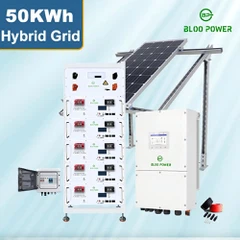
BLOO POWER's LiFePO4 home energy storage system can be used to store surplus or off-peak solar power for use during high-demand periods at night or during power outages. Some of their product pages also explicitly describe application methods for system integration with solar panels, hybrid inverters, and different inverter brands. For households that regularly charge and discharge daily, long-term cycle capability is often more important than "buying at a low price."
Key judgment points:
● Batteries affect the utilization rate of remaining photovoltaic power;
● Daily cycle scenarios prioritize lifespan and efficiency;
● The benefits of increased solar self-consumption should be included in cost analysis;
● Battery selection must match photovoltaic power and average daily electricity consumption.
Cost Selection Recommendations for Different Application Scenarios
|
Application scenarios |
More attention to cost factors |
Technology selection approach |
|
Occasionally, backup power |
Initial procurement cost |
Comparable low initial investment options |
|
Daily solar cycle |
Cycle life, efficiency, available capacity |
LiFePO4 is usually more suitable for focused evaluation. |
|
Family peak-valley arbitrage |
Efficiency, number of cycles, electricity price difference |
It is necessary to calculate the long-term revenue per kilowatt-hour. |
|
Off-grid residential |
Lifespan, maintenance, reliability |
The focus should be on comparing the total lifecycle costs. |
|
Overseas residential projects |
Transportation, after-sales service, and replacement costs |
High integration and long lifespan are more important |
|
Commercial high-frequency energy storage |
LCOS,Downtime and replacement costs |
A complete financial model should be established. |
|
Space-limited projects |
Energy density, volume |
Lithium batteries usually have space advantages |
|
Extremely low budget, low frequency of use |
Initial cost |
Lead-acid batteries may still have some economic viability. |
Residual Value and Battery Technology Upgrade Costs: Don't Ignore Future System Upgrade Issues
Energy storage projects rarely end on the day of purchase; they are often an asset operation process lasting 5, 10 years, or even longer. Therefore, future expansion, maintenance, replacement, and technology upgrades are also part of cost management. If the battery system initially chosen by the user has a short lifespan, future replacements may face issues such as model discontinuation, specification incompatibility, or the need for a complete system redesign.
The International Energy Agency (IEA) battery price data shows the price trends of lithium-ion batteries and related materials from 2015 to 2024, illustrating the continuous changes in the cost and supply chain of the lithium battery industry. Meanwhile, the National Energy Administration (NLR), in its 2025 update to its utility-scale lithium-ion energy storage cost forecast, continues to analyze the cost reduction paths of lithium battery energy storage under different future scenarios, showing that long-term energy storage investment needs to consider both current purchase prices and future technology cost changes.
BLOO POWER offers a variety of modular LiFePO4 capacity options. For users looking to increase energy storage capacity in the future, communication compatibility, the number of inverters supported, and module expansion capabilities should be prioritized during the project design phase. However, any expansion must be based on the specific parallel connection rules, voltage platform, and BMS communication requirements of the battery models; different battery models cannot be simply mixed and matched.
Key considerations:
● Long-term projects need to consider future expansion costs;
● Changes in battery specifications may increase the cost of later system modifications;
● The maximum parallel connection capacity of modular systems should be confirmed in advance;
● Future compatibility risks should not be ignored simply because of current low prices.
Final Conclusion: Lithium-ion batteries may not be the "cheapest to buy," but they may be "more cost-effective in the long run."
Considering initial purchase price, available capacity, cycle life, efficiency, maintenance, space, transportation, installation, and replacement cycles, there is no absolute answer for lithium-ion batteries versus lead-acid batteries that applies to all projects. The biggest economic advantage of lead-acid batteries remains their lower initial purchase threshold. Therefore, for projects with very low usage frequency, extremely sensitive budgets, and only short-term backup needs, lead-acid technology may still have practical value. However, for projects involving daily solar charging and discharging, long-term peak-valley arbitrage, off-grid operation, or those aiming to maintain good economics for many years, comparing initial prices alone is usually insufficient.
Data from the U.S. Department of Energy has indicated that while lead-acid batteries have lower initial capital costs, their total lifecycle costs may be comparable to lithium-ion battery systems. NREL/NLR energy storage data shows that lithium-ion technology, especially LFP, has become an important route for stationary energy storage. From a long-term investment perspective, the core value of LiFePO4 typically lies in its longer cycle life, higher space utilization efficiency, and lower replacement and maintenance burden.
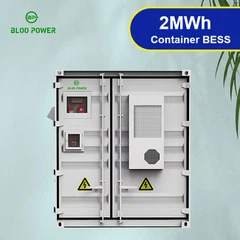
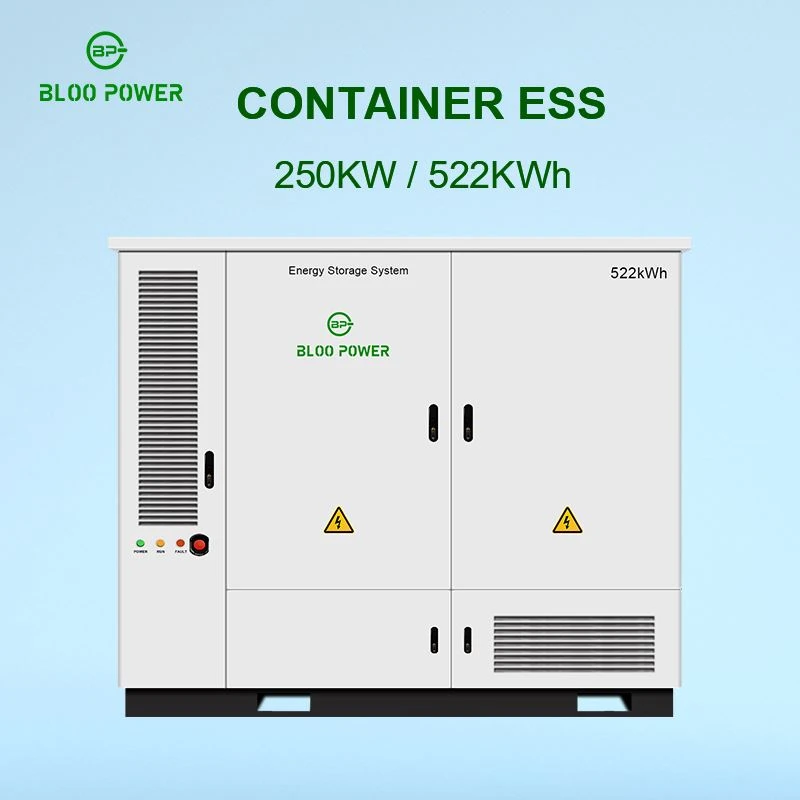
For users looking to build residential, off-grid, or small-scale commercial/industrial energy storage systems, BLOO POWER's LiFePO4 energy storage solutions are worth considering. Their website offers wall-mounted, rack-mounted, stacked, and integrated energy storage products, with residential capacities covering 5kWh, 10kWh, 14.34kWh, 15kWh, and 20kWh; some rack-mounted products are rated for 6,500 cycles at 80% DoD. In actual procurement, system-level calculations should be performed based on average daily electricity consumption, solar power generation, outage needs, local electricity prices, inverter parameters, and expected cycle counts, rather than simply comparing the price of a single battery.
Final Procurement Recommendation
If your core objective is to minimize your initial budget:
You can prioritize researching lead-acid battery solutions, but you must confirm the actual usable capacity, expected cycle life, and future replacement plans.
If your core objective is daily solar energy storage:
It is recommended to focus on comparing the cycle life, system efficiency, and output capacity per unit life of LiFePO4 batteries.
If your core objective is long-term use of 10 years or more:
Don't just look at the purchase price; focus on calculating the total lifecycle cost and the number of future battery replacements.
If your core objective is to save installation space and reduce maintenance:
Generally, you should focus on evaluating LiFePO4 energy storage solutions with high energy density, modular design, and intelligent BMS.
If you are a solar installer or energy storage project investor:
It is recommended to build a complete model encompassing "initial CAPEX + installation cost + O&M + battery replacement + efficiency losses + actual output capacity," comparing two technology approaches using real-world project data, rather than using a single purchase price per kWh as the final decision-making basis.
Send Inquiry