




















How to Choose A Suitable Energy Storage Battery From An Economic Perspective?
Aug 14, 2026
Leave a message

With the increasing prevalence of solar power systems, rising electricity prices, widening peak-valley electricity price differences, and growing demand for backup power from households and small and medium-sized businesses, energy storage batteries are no longer just devices that provide "electricity," but are gradually becoming energy assets that require careful evaluation from the perspectives of return on investment, total lifecycle cost, and cash flow. The International Energy Agency (IEA) points out that the cost of lithium-ion batteries has decreased by approximately 90% since 2010, and the average price of lithium-ion batteries in 2023 has fallen below $140 per kilowatt-hour. Meanwhile, LFP (lithium iron phosphate) batteries accounted for a significant share of new energy storage batteries in 2023, particularly suitable for stationary energy storage scenarios. The IEA also predicts that battery costs will continue to decline as technology and manufacturing scale up.
Therefore, when selecting energy storage batteries from an economic perspective, one should not only compare "how much each battery costs," but also calculate the value that the entire system can create over the next 10 years or even longer. A truly economical energy storage solution should achieve a reasonable balance between initial purchase cost, available capacity, cycle life, conversion efficiency, installation cost, maintenance cost, compatibility, electricity price arbitrage capability, and future expansion capability.
Don't Just Look at the Purchase Price; Calculate the "Total Life Cycle Cost" First
The most common mistake when choosing energy storage batteries from an economic perspective is comparing only prices. For example, a lower-priced battery may seem to reduce initial investment, but if its actual usable capacity is small, its cycle life is short, its capacity decays significantly after a few years, or it needs to be replaced prematurely, then the long-term total cost may actually be higher than a slightly more expensive but longer-lasting product. What's truly worth comparing is the total cost of the battery, from purchase, transportation, installation, operation to potential repairs or replacements-the total life cycle cost. IEA research shows that long-term declines in battery prices have significantly improved the economics of energy storage, but system-level costs cannot be simply replaced by cell prices in different application scenarios. For residential users, inverters, installation, protection devices, communication equipment, and potential after-sales costs should also be included in the calculation. NREL's energy storage cost benchmark study also emphasizes that the cost of residential energy storage projects is composed of multiple costs, including equipment and system installation, not just the battery itself.
● Calculate the total equipment price: including batteries, inverters, brackets or cabinets, BMS, cabling, and protection equipment.
● Calculate installation costs: Different installation locations and system complexity will significantly impact the final investment.
● Calculate service life: Spread the total investment over the expected number of years of use or the cumulative output power.
● Compare long-term costs rather than unit price: Lower-priced products may have higher long-term costs if replaced prematurely.
Economic Comparison of Different Procurement Approaches:
| Comparison Methods | Initial Investment | Long-term Risks | Recommendation Level |
| Choose only the lowest priced battery | Low | High lifespan, degradation, and after-sales risks. | Lower |
| Compare the nominal price per kWh | Medium | DoD, efficiency, and lifespan are easily overlooked. | Medium |
| Compare the price per kWh of available capacity | More scientific | This can reduce the problem of inflated capacity. | Higher |
| Compare total lifecycle costs | More comprehensive | Best suited for long-term investment decisions | Very high |
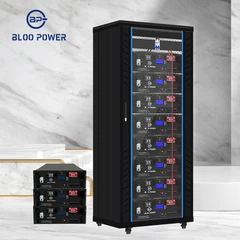
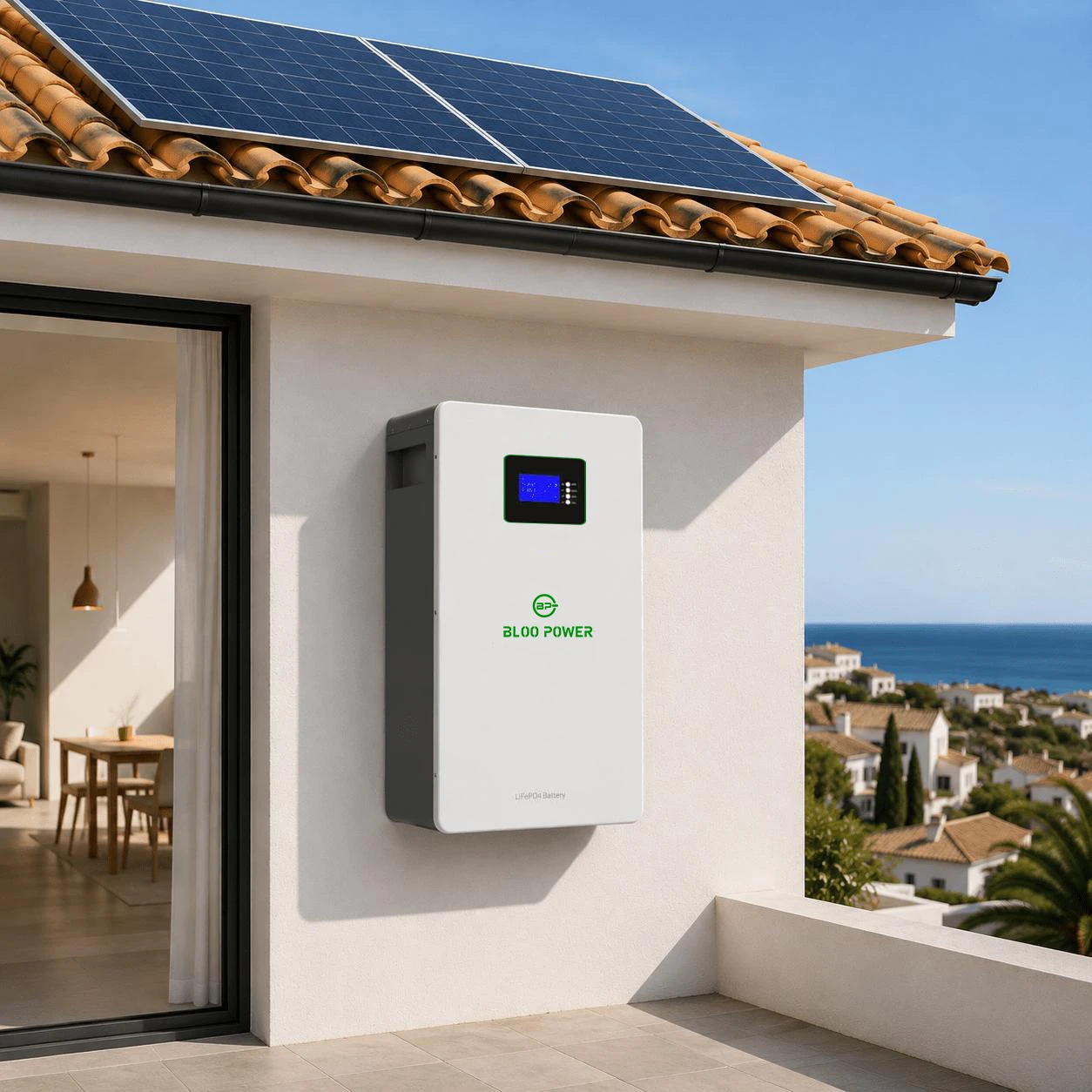
For BLOO POWER project solutions, customers are advised not to simply ask "how much do 5kWh, 10kWh, or 15kWh batteries cost," but rather to further compare the available capacity of the entire system, the estimated cycle life, and future expansion costs. BLOO POWER's official data shows that its residential energy storage products cover different capacities of approximately 5kWh, 10kWh, 14.34kWh, 15kWh, and 20kWh, and offer options such as wall-mounted, rack-mounted, stacked, and integrated systems.
Choose Capacity Based on Actual Electricity Demand to Avoid Over-Buying Batteries
Larger battery capacity does not necessarily equate to greater economic efficiency. Many users believe that since they are installing an energy storage system, they should purchase the largest possible capacity. However, if a household only needs to transfer 8kWh of electricity daily via batteries but purchases a 30kWh battery, a large portion of the capacity will remain idle, resulting in a lower actual utilization rate. The economic benefits of an energy storage system typically come from self-consumption of surplus solar power, charging at low electricity prices and discharging at high electricity prices, reducing peak-hour electricity purchases, and improving power supply reliability during power outages. Therefore, capacity should be determined based on actual load curves and charging/discharging needs. The IEA also emphasizes "right-sizing," avoiding unnecessary over-configuration of batteries, as proper configuration can reduce the demand for critical materials and system investment.
When selecting capacity, it is recommended to track electricity consumption for at least 12 consecutive months, paying particular attention to surplus solar power during the day, household electricity consumption at night, and peak-hour electricity consumption. For example, if a household actually needs 10kWh of electricity from the battery each night, choosing a 10-15kWh energy storage solution that considers both actual DoD and efficiency is generally more likely to improve investment utilization than blindly choosing a 30kWh solution.
● Calculate average daily power consumption: Don't rely solely on one month's electricity bill.
● Analyze nighttime power consumption: This is one of the most important capacity references for solar energy storage.
● Calculate surplus solar power: An oversized battery may not be able to fully charge if there isn't enough surplus power.
● Reserve reasonable expansion capacity: Generally, reserve capacity for future load growth, but avoid excessive over-sizing.
BLOO POWER's modular product structure offers a certain economic advantage in this regard. For example, users can choose 5kWh, 7kWh, 10kWh, or higher capacity products based on current needs and expand in parallel according to the actual system design, rather than purchasing a capacity far exceeding actual needs from day one. Some of its 51.2V wall-mounted products come in specifications of 5.12kWh, 6.91kWh, and 10.24kWh, and support capacity expansion.
Focus on Comparing "Usable Capacity," Not Just Nominal Capacity
From an economic perspective, a 10kWh nominal capacity does not necessarily mean that a user can stably use the full 10kWh long-term. The actual capacity a battery can be used for daily charging and discharging is also affected by the maximum depth of discharge (DoD), BMS protection strategies, and system control methods. For example, a battery with a nominal capacity of 10kWh, if the system recommends a maximum depth of use of 80%, has a theoretically usable daily capacity of approximately 8kWh; while another system, although with a similar nominal capacity, allows for a higher effective utilization rate, and its investment value per unit of usable capacity may be higher. Therefore, when purchasing, focus on inquiring about the "rated capacity," "recommended usable capacity," and "permissible operating range under warranty conditions."
For long-term economics, excessive deep discharge can also affect battery life, so it is not simply a matter of assuming that a higher DoD is always better. The most economical choice is to calculate based on a comprehensive consideration of lifespan, usable capacity, and cycle conditions. For example, BLOO POWER's official product datasheets for some rack-mount and wall-mounted LFP units indicate a cycle life of approximately 6,500 cycles under 80% DoD conditions. Cycle life and warranty terms may vary depending on the specific model; please refer to the corresponding product datasheet and contract terms when purchasing.
● Confirm rated capacity: e.g., 5.12kWh, 10.24kWh, 15.36kWh.
● Confirm recommended DoD: Do not rely solely on the maximum theoretical discharge range.
● Compare actual usable capacity: It is recommended to use "how many kWh can actually be used per day" as a reference.
● Verify cycle test conditions: The number of cycles must be understood in conjunction with DoD, temperature, and test standards.
Methods for Determining Nominal Capacity and Economic Capacity:
| Item | The Significance Of Procurement | Economic Impact |
| Nominal capacity kWh | Theoretical energy storage capacity of batteries | It cannot directly represent the actual usable revenue. |
| Available capacity kWh | Actual amount of electricity available for daily dispatch | Directly affects the ability to save on electricity bills |
| DoD | Per-use capacity ratio | Impact on daily available power and cycle life |
| Cycle life | Number of recharge/discharge cycles | Impact on long-term depreciation costs |
| Capacity decay | Long-term capacity retention capability | Impact on later investment returns |
| Warranty conditions | Manufacturer's warranty coverage | Reduce long-term investment risks |
Using "Cost Per Kilowatt-Hour" to Determine if a Battery is Truly Cost-Effective
To more accurately compare different energy storage batteries, the cost per kilowatt-hour (kWh) over their lifecycle can be calculated. This involves dividing the total system investment by the total expected output over the entire lifecycle. A simplified approach is:
Lifecycle unit energy storage cost ≈ Total system investment ÷ Cumulative output over lifecycle
The cumulative output over lifecycle needs to consider actual usable capacity, cycle life, system efficiency, and capacity degradation. For example, if two batteries cost $5,000 and $6,000 respectively, the first has a lower theoretical cycle life, while the second has a significantly longer cycle life. Although the second battery has a higher purchase price, the cost per kilowatt-hour (kWh) may be lower over the long term. Therefore, cost-effective purchasing should not only consider CAPEX (initial capital expenditure) but also the long-term "cost per delivered kWh".
The IEA points out that the rapid cost reduction and performance improvement of lithium-ion battery technology have made it a core technology for modern energy storage, and LFP (Lithium-ion Photovoltaic Facility) occupies an important position in new energy storage applications due to factors such as cost, lifespan, and adaptability to stationary energy storage. For stationary home energy storage, energy density is usually not the sole priority metric as it is for electric vehicles; long-term lifespan and system cost are often more important.
● Total investment must be fully calculated: do not omit installation and associated costs.
● Use actual available capacity: do not calculate entirely based on nominal kWh.
● Consider system efficiency losses: 1 kWh charged may not necessarily output 1 kWh.
● Consider long-term degradation: after many years of use, the capacity will usually not be exactly the same as the initial state.
For BLOO POWER's LFP solutions, such as some 51.2V rack-mount products with a cycle life of approximately 6,500 cycles, and wall-mount products also offering different capacity levels, purchasers can further calculate the deliverable capacity over the total lifespan based on their expected daily cycle count, and then compare the cost per unit of delivered capacity.
Determining Sufficient Cash Flow from Energy Storage Based on Peak-Valley Electricity Price Differences
One of the most typical economic values of energy storage batteries is the ability to transfer electricity over time by utilizing peak-valley electricity price differences. Assuming a nighttime or off-peak electricity price of $0.10 per kWh, while the peak price reaches $0.30 per kWh, the theoretical price difference is $0.20/kWh. Batteries can be charged during low-price periods and discharged during high-price periods, thus reducing the need to purchase high-priced electricity. However, actual revenue calculations must deduct charging and discharging losses and equipment depreciation.
For example, assuming a battery charges 10 kWh from the grid, after system losses, only a small portion of the electricity can actually be delivered to the load. Therefore, the actual arbitrage profit should be calculated based on the final output electricity. Thus, the larger the peak-valley price difference, the greater the daily effective cycling capacity, and the higher the system efficiency, the better the economics of energy storage. Conversely, if the local electricity price is relatively consistent throughout the day, and there is no surplus solar power, purchasing large-capacity batteries solely to save on electricity costs may significantly extend the investment payback period.
● Check local time-of-use (TOU) electricity prices: Focus on understanding peak, off-peak, and low-peak prices.
● Calculate the effective price difference: Calculate the actual revenue after deducting system losses.
● Statistics on load during high-price periods: Determine how much high-priced electricity the battery can replace each day.
● Monitor policy changes: Electricity prices and subsidies in different regions will affect project profitability.
Some of BLOO POWER's integrated energy storage products explicitly support load shifting and improved self-consumption operation strategies, suitable for charging and discharging scheduling based on different rates from local power companies. In markets with significant TOU time-of-use pricing, this type of control can help users improve battery utilization.
The more surplus solar power, the easier it is for energy storage investments to demonstrate economic value.
If a user already has a solar system and frequently experiences significant amounts of low-value grid-connected electricity or unused surplus power during the day, the economic logic of energy storage batteries becomes clearer: storing this low-value solar power for use at night when the household needs electricity increases the self-consumption rate of solar power. Energy storage doesn't create electricity out of thin air; it enhances the value of existing electricity resources by "changing the timing of electricity use." Therefore, before choosing a capacity, it's essential to know the actual daily surplus of solar power.
For example, a solar system might generate an average of 30 kWh per day, with households directly consuming 18 kWh during the day, leaving approximately 12 kWh remaining. If the battery capacity reaches 30 kWh, but only about 12 kWh of surplus power can be charged daily, the large-capacity system will be underutilized in the long run. Conversely, choosing a capacity close to the actual surplus power and considering weather and seasonal fluctuations typically results in higher investment utilization. The IEA believes that as battery costs decrease, combining off-meter storage with rooftop solar power is becoming increasingly attractive.
● Analyze solar power generation: Analyze real-time data for at least different seasons.
● Calculate the proportion of electricity used for immediate self-consumption during the day: Determine the true surplus power.
● Calculate the value of surplus power: Compare the revenue from grid connection with the value of storing electricity to replace purchased electricity.
● Avoid severe over-sizing: Battery capacity should match the actual rechargeable energy.
BLOO POWER's residential products cover wall-mounted, rack-mounted, stacked, and integrated energy storage structures, allowing for the design of different capacity solutions based on the scale of rooftop solar power. For households already having a photovoltaic system, the initial capacity can be determined from the current daily surplus power, and then expanded through a modular approach.
Prioritize High Cycle Life, But Must Confirm Cycle Testing Conditions
Battery cycle life directly impacts long-term economics. If a household completes approximately one full equivalent cycle per day, then theoretically, about 3,650 equivalent cycles are needed over 10 years. If there is more frequent peak-valley arbitrage or multiple partial charge-discharge cycles daily, the cumulative cycle requirement will increase further. Therefore, when selecting a battery, focus on whether the cycle life can cover actual operating cycles. However, it is crucial to note that a manufacturer's stated "6,000 cycles" or "8,000 cycles" does not guarantee the same results under all usage conditions, as testing is typically related to DoD, temperature, charge/discharge rate, and testing conditions.
The cycle specifications given on different BLOO POWER product pages vary by model. For example, some 51.2V rack-mount and wall-mount LFP products are labeled with approximately 8,000 cycles under 80% DoD testing conditions; therefore, purchasing personnel should not directly apply the parameters of one model to all products but should verify the product datasheets one by one.
● Consider the cycle life: Determine if it's suitable for long-term, high-frequency use.
● Consider the Test DoD: The same number of cycles has different meanings under different DoDs.
● Consider the capacity retention conditions: Understand the definition of end-of-life.
● Consider the warranty period: Cycle life and commercial warranty should be compared together.
From an economic model perspective, it's recommended to choose a solution with a moderate initial price and a cycle life that meets project needs, rather than endlessly pursuing the highest possible cycle life. If a user only needs about 100-200 cycles per year, purchasing expensive products specifically designed for extremely high-frequency cycling may result in wasted performance; conversely, if a user needs to frequently arbitrage or utilize solar energy daily, products with low cycle life may lead to premature replacement risks in the future.
Higher system efficiency leads to a more significant economic gap due to long-term losses.
Energy storage systems do not store and release all charged electricity without loss. Battery charging and discharging, the BMS, the inverter, and the wiring all incur losses. Therefore, the focus should be on the round-trip efficiency of the entire system, not just a single parameter of the battery itself. For systems that cycle daily, even a difference of only a few percentage points in efficiency can result in a significant cumulative difference in capacity after thousands of cycles.
For example, assuming the system needs to transfer 4,000 kWh of electricity annually via batteries, a few percentage points improvement in actual round-trip efficiency would increase the effective capacity available to household loads in the long term, while also reducing the need for additional electricity purchases. In markets with higher electricity prices, the economic value of this efficiency difference is even more pronounced. Therefore, when inquiring about prices, you should ask about battery efficiency, inverter efficiency, and the actual efficiency of the entire AC-coupled or DC-coupled system separately.
● Compare system-level efficiency: Don't just look at the theoretical cell efficiency.
● Confirm test conditions: Efficiency may vary under different power levels and temperatures.
● Calculate annual loss costs: Convert losses into local electricity price amounts.
● Pay attention to standby power consumption: Prolonged low-load operation can also affect economics.
The IEA points out that battery storage is particularly suitable for short-term flexibility adjustments and power time shifting, typically covering approximately 1 to 8 hours of continuous power supply. Therefore, the actual efficiency of the system and the usage strategy are crucial to its economic value.
For BLOO POWER projects, it is recommended to evaluate the battery and hybrid inverter as a whole during the product selection phase, focusing on verifying communication protocols, maximum charge/discharge current, system operating voltage, and actual operating modes. Purchasing a high-performance battery alone, but one that cannot efficiently coordinate with the inverter, will also reduce the final investment value.
Choosing scalable products can reduce the risk of "over-investment at once."
From a cash flow perspective, modular energy storage systems typically offer a significant advantage. A user may currently only need 10kWh, but may add electric vehicles, heat pumps, swimming pool equipment, or other high-power-consuming devices in the future. Installing 30kWh at once, while solving future expansion issues, incurs greater capital expenditure today; installing only small-capacity products that cannot be expanded at all may require a complete replacement when increasing capacity in the future.
Therefore, a more economical strategy is usually "rational configuration based on current needs + reserving future expansion capacity." This approach reduces initial capital commitment, allowing users to generate actual benefits from the system first, and then adding modules as electricity consumption increases. Modular design is particularly suitable for homes, villas, small commercial projects, and solar installer projects where demand is uncertain.
● Confirm the maximum number of parallel connections: Determines the maximum future scalable capacity.
● Confirm expansion conditions: Compatibility between different batches of batteries needs to be confirmed in advance.
● Confirm inverter capacity: Inverter power must match the added battery capacity.
● Avoid one-time severe over-provisioning: Reduce idle assets and capital tied up.
BLOO POWER's official data shows that some of its residential LFP products support multi-module parallel expansion. For example, some wall-mounted and rack-mounted products indicate support for up to 16 modules in parallel; the specific maximum capacity should be confirmed based on the model, BMS architecture, and inverter compatibility. Standard residential capacities also include 5kWh, 10kWh, 14.34kWh, 15kWh, and 20kWh, suitable for phased construction.
Economical Capacity Configuration Strategies for Different Electricity Demands:
| User Situation | Recommended Capacity Strategies | Main Economic Objectives |
| Small family, basic backup | Approximately 5–10 kWh | Reduce initial investment |
| Typical solar-powered households | Approximately 10–20 kWh | Increase solar energy self-consumption rate |
| Households with higher nighttime load | Based on actual nighttime electricity consumption, a configuration of 15kWh or more is required. | Reduce high electricity prices |
| Future additions may include EVs and other loads. | Configure appropriately first, then expand modularly. | Reduce one-time funding pressure |
| Small business users | Calculated based on load curve and peak-valley arbitrage | Optimize electricity bill and demand management |
Note: The above is a capacity configuration approach, not a fixed selection standard. The final calculation should be based on the actual load, surplus solar power, electricity price, and local regulations.
Inverter compatibility directly impacts project installation costs and future returns.
A low-priced battery that cannot communicate properly with an existing inverter may require the user to replace the inverter, add control equipment, or fail to achieve optimal charging and discharging strategies, ultimately significantly increasing project costs. Therefore, when selecting energy storage batteries from an economic perspective, it is essential to confirm the voltage platform, CAN or RS485 communication protocol, BMS compatibility, maximum charging and discharging current, and inverter certification list in advance.
Especially in retrofitting existing solar systems, compatibility issues may determine whether the project simply involves adding batteries or requires a complete system redesign. The latter not only increases equipment procurement costs but also labor, electrical modifications, and downtime costs. While some BLOO POWER products offer CAN and RS485 communication interfaces and state compatibility with various off-grid or hybrid inverters in their product documentation, actual project implementation must still be confirmed based on the specific model, software version, and communication protocol. Installation should not be based solely on claims of "supporting most inverters."
● Confirm DC voltage range: For example, is the platform compatible with 48V, 51.2V, etc.?
● Confirm communication protocol: The specific protocols for CAN and RS485 must be compatible.
● Confirm maximum current: This affects the system's maximum charge and discharge power.
● Confirm manufacturer compatibility list: Written or official technical confirmation should be obtained before project implementation.
The core of an economical project is not "the lowest battery price," but rather minimizing redundant purchases and system modifications. For users with existing inverters, prioritizing battery solutions compatible with existing equipment may save significant upfront investment compared to replacing the entire system.
Incorporate Installation, Certification, Safety, and After-Sales Costs into the Economic Model
While safety features may seem to increase procurement costs, from a long-term investment perspective, products lacking proper certification, with unclear installation requirements, or with insufficient after-sales support may pose higher risks. If an energy storage system requires reinstallation or modification, or fails acceptance testing due to non-compliance with local regulations, the user's initial procurement savings may be quickly offset. UL Solutions points out that installation specifications for residential stationary energy storage systems in the United States typically involve UL 9540, while relevant residential ESS requirements are also related to UL 9540A testing and installation specifications; NFPA 855 is one of the important standards for stationary energy storage system installation. Specific requirements should be confirmed based on the version used at the installation location, local authorities, and the actual project situation.
From an economic perspective, certification and compliance should be viewed as "risk cost control." This is especially true for export projects, as target countries may have different requirements for CE, UN38.3, IEC, UL, etc. BLOO POWER's specific product certifications should be verified according to the corresponding model's datasheet and official documents. The presence of a certification on other models should not be used to assume all products meet the same requirements.
● Confirm local regulatory requirements: Requirements vary by country and region.
● Confirm product certification scope: Specific models must be verified.
● Calculate installation and rectification risks: Non-compliant products may increase secondary construction costs.
● Assess after-sales service capabilities: Long-term failure costs are also part of project costs.
BLOO POWER's official website states that it has OEM/ODM service capabilities and offers a variety of residential and commercial energy storage products; some product pages also list features such as smart BMS, LFP batteries, communication interfaces, and different installation methods. For purchasers, it is recommended to further clarify the warranty period, capacity retention conditions, fault response methods, spare parts supply, and scope of technical support in the contract.
Calculate the payback period, but don't rely solely on a "how many years to break even" figure.
Finally, choosing an energy storage battery requires establishing your own payback model. The simplest calculation is:
Static Payback Period ≈ Total Investment in Energy Storage System ÷ Annual Net Income
Annual net income can include the following components: savings from purchasing electricity through surplus solar power transfer, peak-valley electricity price arbitrage profits, revenue from reduced peak-hour electricity purchases, and potential revenue from other electricity services in certain markets. At the same time, battery charging and discharging losses, maintenance costs, possible insurance costs, and the impact of future performance degradation must be deducted.
However, in reality, electricity prices, policies, and household electricity consumption all fluctuate, so it's impossible to simply promise that all energy storage projects will break even within a fixed period. A more scientific approach is to simultaneously establish "conservative, neutral, and optimistic" scenarios. For example, in a conservative scenario, calculations are based on a smaller peak-valley price difference and a lower daily cycle count; in a neutral scenario, current normal data is used; and in an optimistic scenario, future electricity price increases or increased self-consumption value of solar energy are considered. This allows for a more realistic assessment of investment risk.
● Conservative Scenario: Low price difference, low utilization rate, high losses.
● Neutral Scenario: Calculated based on current average load and electricity prices.
● Optimistic Scenario: Considers higher peak-to-off-peak loads and higher solar utilization rates.
● Set Minimum Return Requirements: Decide whether to invest based on your own cost of capital.
IAA analysis shows that the economic competitiveness of combining battery storage with solar energy is continuously increasing as costs decline; meanwhile, global battery storage continued its rapid growth in 2024. The IEA, in its "Electricity 2026" report, points out that the cost of utility-scale energy storage projects will decrease by approximately 40% in 2024, to around $150/kWh. However, this figure represents project costs at a specific scale and market level and cannot be directly applied to individual residential energy storage projects. Residential systems also need to consider installation, soft costs, and local market prices; therefore, users must use their own actual quotes for calculations.
How to Choose BLOO POWER Energy Storage Batteries from an Economic Perspective?
Based on the principles mentioned above, when choosing a BLOO POWER energy storage solution, you can follow the approach of "demand first, capacity second; benefit first, configuration second; compatibility first, procurement second." For users with limited budgets and low daily backup needs, wall-mounted or rack-mounted LFP products in the 5kWh–10kWh range should be prioritized. For households with significant surplus solar power and high nighttime loads, higher capacity solutions can be considered. For users whose future electricity demand may increase, products with modular expansion capabilities are more suitable.
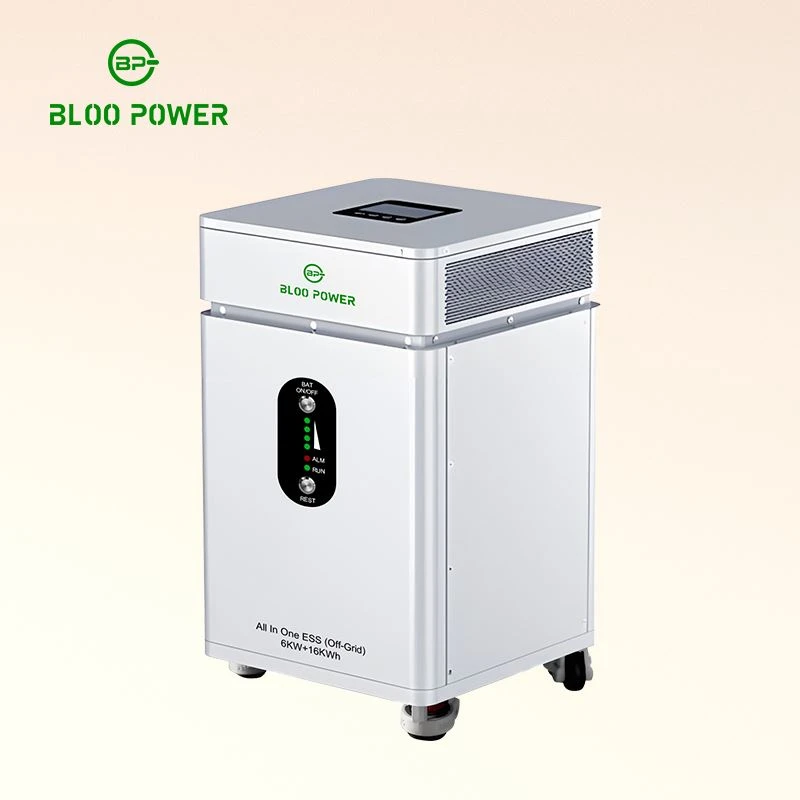
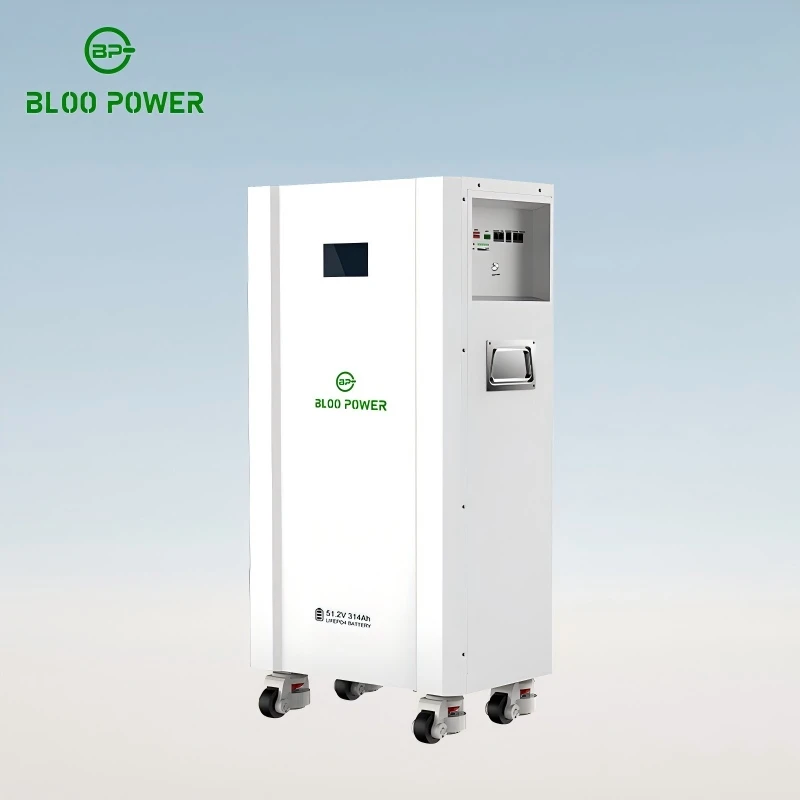
BLOO POWER's official data shows that its residential energy storage products include capacities of approximately 5kWh, 10kWh, 14.34kWh, 15kWh, and 20kWh, and offer wall-mounted, rack-mounted, stacked, and integrated designs. Some products use 51.2V LFP batteries and a smart BMS, while some models feature IP65 protection. Specific cycle life, maximum parallel capacity, and operating conditions vary by model; please refer to the actual product specifications.
A more reasonable and economical selection process is as follows:
● Step 1: Analyze 12 months of electricity bills and load data to determine the actual power consumption structure.
● Step 2: Analyze surplus solar power and nighttime load to determine a reasonable energy storage capacity.
● Step 3: Compare the available capacity per kWh and the lifecycle cost, rather than just comparing equipment prices.
● Step 4: Confirm inverter compatibility, certifications, installation costs, and future expansion capabilities.
For example, BLOO POWER's 15.36kWh wall-mounted product specifications list parameters such as 51.2V, 300Ah, and 15,360Wh, suitable for residential energy storage scenarios requiring larger single-unit capacity; its smaller capacity wall-mounted and rack-mounted products can be used for more flexible modular configurations. For different national markets, specific designs should be made in conjunction with local grid voltage, inverter models, installation regulations, and electricity pricing mechanisms.
Conclusion: The cheapest energy storage battery is not necessarily the most economical.
From an economic perspective, choosing the right energy storage battery essentially means finding the lowest long-term unit cost of electricity and the most reasonable return on investment. The real comparison shouldn't be based on a simple "price per unit," but rather on how much usable electricity the total investment can provide in the future, how long it can last, how much energy is lost per cycle, how much high-priced electricity can be saved, and whether future investment in expansion or replacement will be needed.
In summary, users should prioritize the following principles when choosing energy storage batteries: no excessive overcapacity, clear available capacity, LFP (Liquid Photovoltaic Fuel Cell) technology suitable for stationary energy storage, cycle life meeting actual needs, high system efficiency, ability to utilize peak and off-peak electricity prices and surplus solar power, compatibility with existing inverters, support for reasonable expansion, and certifications and clear after-sales guarantees that meet local requirements.
For users wishing to configure residential solar energy storage systems, BLOO POWER residential energy storage products and solutions offer a variety of capacity and structure options. For practical projects, it is recommended to first calculate the revenue based on local electricity prices, annual household electricity consumption, solar power generation, peak and off-peak load, and backup time, and then determine the configuration of 5kWh, 10kWh, 15kWh, or larger capacity. Only by truly matching battery capacity, usage frequency, and revenue model can we avoid "buying too large and resulting in idle funds" or "buying too small and failing to fully realize the system's value," ultimately achieving a more reasonable long-term economic return.
Send Inquiry