












What Are The Differences Between Household Rnergy Storage Batteries And Ordinary Household Batteries?
Aug 24, 2026
Leave a message

What is a residential energy storage battery? How does it differ from a regular household battery?
With the continuous development of residential solar power, peak-valley electricity pricing, backup power, and independent energy needs in homes, home energy storage batteries are gradually evolving from "new energy supporting equipment" into an important component of home energy systems. Many consumers, when first encountering energy storage, have a very intuitive question: Isn't a home energy storage battery just a battery? What's the difference between it and the AA batteries, rechargeable batteries, and car batteries we use daily?
In reality, although they all utilize electrochemical reactions to store and release electrical energy, their design goals are completely different. Ordinary household batteries primarily address the low-power, short-duration power needs of remote controls, toys, flashlights, and small electronic devices; while home energy storage batteries are "large-scale rechargeable energy devices" designed for home power systems, requiring collaboration with solar panels, hybrid inverters, home distribution systems, the power grid, and smart energy management systems.
The International Energy Agency (IEA) points out that the global power system will add more than 40 GW of battery storage capacity in 2023, and behind-the-meter energy storage has become an important application form of battery energy storage; at the same time, the cost of lithium-ion batteries has dropped by about 90% compared to 2010, driving the rapid expansion of battery energy storage applications in homes, businesses and power systems.

What is a Residential Energy Storage Battery?
Residential energy storage batteries, simply put, are rechargeable battery systems specifically designed for storing, managing, and providing backup power for household electricity. They are typically installed in residential garages, utility rooms, basements, on walls, outdoor equipment areas, or other locations that meet local installation requirements, and are connected to photovoltaic modules, energy storage inverters, household loads, and the power grid. During the day, when solar power generation exceeds the household's immediate electricity consumption, the excess energy can be stored in the battery; at night, on cloudy days, or during power outages, the energy storage battery releases the energy for household use. The U.S. Department of Energy's basic definition of a battery is also a device that "accepts, stores, and releases electrical energy on demand," but residential energy storage adds complex battery management, power conversion, and system control functions.
Unlike a simple battery pack, modern residential energy storage systems typically consist of battery cells, battery modules, a battery management system (BMS), protection devices, communication interfaces, a casing, and a control system that works in conjunction with the inverter. Therefore, judging whether a product is a true residential energy storage battery cannot be based solely on its "Ah capacity." It's also crucial to consider its suitability for long-term cyclic operation and its integration with the home energy system.
● Core Function: Storing and releasing household electrical energy.
● Typical Applications: Self-consumption of solar power, backup power, peak-valley arbitrage, off-grid power supply.
● Main Voltage: Commonly used for low-voltage systems (approximately 48V/51.2V), high-voltage residential energy storage solutions are also available.
● Typical Capacities: Approximately 5kWh, 10kWh, 15kWh, 20kWh, and higher.
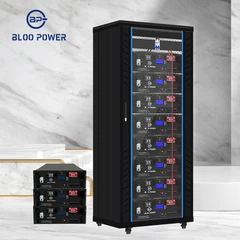
BLOO POWER currently offers various residential energy storage capacities including 5kWh, 10kWh, 14.34kWh, 15kWh, and 20kWh, covering wall-mounted, rack-mounted, stacked, integrated, and floor-standing products.
What is the biggest difference between residential energy storage batteries and ordinary household batteries?
Many people mistakenly believe that "ordinary household batteries" and "residential energy storage batteries" are simply larger versions of the same product, but this is inaccurate. Ordinary household batteries are typically designed for simplicity, portability, low cost, and immediate power supply. For example, AA or AAA batteries may only need to provide a few watts or even less power to a remote control, clock, or small toy. Residential energy storage batteries, on the other hand, are designed to handle household energy management tasks. Their capacity is usually measured in kWh, and they may undergo one or more charge-discharge cycles per day. Therefore, there are significant differences in capacity, output power, cycle life, BMS, communication, installation methods, and safety protection. IEA data shows that lithium-ion batteries have become one of the mainstream technologies for modern energy storage, with LFP (lithium iron phosphate) being particularly suitable for energy storage applications that are sensitive to lifespan, safety, and cost.
● Ordinary household batteries: Typically measured in Wh or even smaller.
● Residential energy storage batteries: Typically measured in kWh.
● Ordinary batteries: Primarily serve a single small device.
● Residential energy storage: Serve the entire household energy system.
Comparison between ordinary household batteries and household energy storage batteries
|
Comparison items |
Ordinary household batteries |
Household energy storage batteries |
|
Typical uses |
Remote controls, toys, clocks, etc. |
Photovoltaic energy storage, home backup power |
|
Unit of capacity |
mAh,Wh |
kWh |
|
Common chemical systems |
Alkaline, nickel-metal hydride, and lithium primary batteries, etc. |
Lithium-ion systems such as LiFePO4 |
|
Cycle life |
One-time or finite cycle |
Designed for long-term repeated charge and discharge. |
|
BMS |
Typically, there is no complex BMS. |
Typically configured with a smart BMS |
|
Output capability |
Low power |
It can support a large household load. |
|
Communication function |
Almost none |
CAN,RS485, etc. |
|
Installation method |
Plug and play |
Wall-mounted, rack-mounted, stackable, floor-standing, etc. |
|
System Collaboration |
Working alone |
Synergy with inverters, photovoltaics, and power grids |
Why are LiFePO4 Batteries Typically Used in Residential Energy Storage?
Currently, a large number of residential energy storage systems use **lithium iron phosphate (LiFePO4/LFP)** batteries, rather than simply ordinary disposable lithium batteries or traditional lead-acid batteries. The main reason is that residential energy storage requires batteries to undergo frequent and extensive charge-discharge cycles over a long period, while also demanding good safety, stability, and lifespan. IEA data shows that in 2023, LFP already accounted for approximately 80% of batteries used in newly built energy storage applications. One reason for this is that energy storage systems have relatively lower requirements for extreme energy density compared to new energy vehicles, thus allowing for priority consideration of cost, lifespan, and safety performance.
This is especially important for home users. For example, using stored solar energy every night and recharging it the next day constitutes a continuous cycle. If the battery can only withstand a few cycles, capacity degradation after a few years will significantly impact its usability. Therefore, residential energy storage prioritizes the usable capacity throughout its entire lifecycle, not just the initial capacity seen at the time of purchase.
● Safety: LFP has good thermal stability.
● Lifespan: Suitable for long-term, frequent charge-discharge cycles.
● Cost: Offers a cost advantage compared to some high-nickel systems.
● Energy Storage Compatibility: Home energy storage does not have the same extreme energy density requirements as new energy vehicles.
BLOO POWER's 15.36kWh and 20.48kWh home energy storage products both use LiFePO4 battery systems and offer communication methods such as CAN, RS485, and RS232. Their publicly available data indicates a cycle life of 8000 cycles.
Why do residential energy storage batteries need a BMS, while ordinary batteries typically don't?
A BMS (Battery Management System) is one of the key differences between residential energy storage batteries and ordinary household batteries. A large energy storage battery contains numerous cells. If there are differences in voltage, temperature, or SOC between different cells, some cells may experience overcharging, over-discharging, overheating, or performance degradation during long-term operation. Therefore, energy storage batteries need a BMS to monitor the cell status in real time and perform protection, balancing, and communication operations based on the system status. Ordinary AA batteries only need to be installed in the device to output power normally and do not require complex management of dozens or even hundreds of cells.
In actual residential energy storage systems, the BMS also needs to communicate with the inverter, allowing the inverter to understand information such as the battery's SOC, allowable charging current, allowable discharging current, and abnormal states, thereby dynamically adjusting operating parameters. In other words, the BMS effectively transforms the "battery" into an intelligent energy storage device that can be understood and controlled by the energy system.
● Voltage Monitoring: Detecting the voltage of individual cells and the system.
● Temperature monitoring: Detects abnormal temperature rises.
● Overcharge/over-discharge protection: Reduces the risk of abnormal operation.
● Communication control: Exchanges data with the inverter via CAN, RS485, etc.
Why are household energy storage batteries typically labeled in kWh, while ordinary batteries use mAh?
Ordinary household batteries are often labeled "2000mAh" or "3000mAh," while household energy storage products are often labeled "5kWh," "10kWh," or "15kWh." This is because they are designed for different applications. mAh primarily expresses how much charge a battery can provide, but for household energy storage, users are truly concerned with "how much electrical energy this battery can store." Therefore, kWh is more intuitive than simply Ah. For example, a 51.2V, 100Ah energy storage battery has a theoretical rated energy of approximately 5.12kWh; if increased to 51.2V, 300Ah, the theoretical rated energy is approximately 15.36kWh.
Ultimately, household users need to address not "how many ampere-hours the battery has," but rather "how much electricity can be used at night," "how long can it support the refrigerator during a power outage," and "how much household load can it power." Therefore, energy storage products must comprehensively consider parameters such as rated capacity, available capacity, DoD, inverter efficiency, and load power.
● Ah: Represents charge capacity.
● V: Represents voltage.
● kWh: Represents stored energy.
● Available capacity: Typically less than or equal to rated capacity.
Examples of Capacity Concepts
|
Battery Specifications |
Theoretical rated energy |
Typical positioning |
|
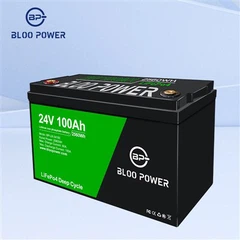
12V 100Ah |
1.2kWh |
Small standby/offline system |
|
24V 100Ah |
2.4kWh |
Small solar energy system |
|
48V 100Ah |
4.8kWh |
Home small energy storage |
|
51.2V 100Ah |
5.12kWh |
Common Specifications of Residential Energy Storage |
|
51.2V 300Ah |
15.36kWh |
Medium to large-sized home energy storage |
The above is an example of rated energy calculation. The actual available power is also affected by factors such as DoD, BMS protection, temperature, inverter efficiency, and system operation strategy.
Residential Energy Storage Batteries Not Only Store Electricity, But Also Work in Sync with Solar Power and Inverters
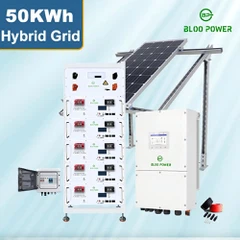
While ordinary batteries typically only need to be connected to one load to operate, residential energy storage batteries are actually part of the entire home energy system. A typical solar energy storage system usually includes solar modules, a photovoltaic inverter/hybrid inverter, energy storage batteries, home loads, and the power grid. During the day, after the photovoltaic system generates electricity, it prioritizes the home load, with excess energy going into the battery. When solar power is insufficient, the energy storage battery supplies power to the home load through the inverter. If the battery's charge is low, the system can purchase electricity from the grid according to the local grid and control strategies.
This means that residential energy storage batteries are not as simple as "buying a large battery and putting it in the house." It requires consideration of the voltage range between the battery and the inverter, maximum charge/discharge current, communication protocols, power ratings, and certification requirements. BLOO POWER's integrated home energy storage products have integrated the functions of the battery, inverter, and MPPT (Multi-Level Photovoltaic Power), reducing some of the system configuration complexity. Publicly available product information shows that the 15.36kWh integrated product uses a 51.2V LFP battery and is equipped with CAN, RS485, and RS232 communication.
● Solar panel: Responsible for generating electricity.
● Inverter: Responsible for power conversion and system control.
● Energy storage battery: Responsible for storing electrical energy.
● Household load: Actual electrical energy consumption.
What household electricity problems can residential energy storage batteries solve?
The value of residential energy storage goes beyond simply providing electricity during power outages. For households with solar panels, batteries can extend the use of solar energy generated during the day to the evening, thereby increasing the household's self-consumption rate of solar power. If local peak-valley electricity pricing exists, batteries can also be charged during low-price periods and discharged during high-price periods, optimizing electricity costs while complying with local regulations and pricing policies. Furthermore, in areas with poor grid stability, energy storage can serve as a backup power source, providing power for lighting, refrigerators, network equipment, communication equipment, and some essential appliances during power outages.
The IEA points out that battery energy storage can provide energy transfer on short timescales and can serve as an important backup power source during grid failures, which is a key reason for the continuous development of residential energy storage.
● Increase solar self-consumption rate: Save excess solar energy from the daytime to the nighttime.
● Reduce peak-hour electricity purchases: Optimize charging and discharging according to local electricity pricing policies.
● Power outage backup: Ensure critical household loads are protected.
● Increase energy self-sufficiency: Reduce reliance on the grid for immediate power supply.
Why are residential energy storage batteries heavier and larger than ordinary household batteries?
Increasing capacity naturally leads to a significant increase in battery size and weight. However, the reason residential energy storage batteries "look particularly large" is not solely due to capacity. Large energy storage products also require the installation of cell modules, BMS, relays, fuses, communication modules, protection structures, and casings that meet the requirements of the installation environment. Therefore, a residential energy storage battery of around 15kWh may already be a large device, rather than a small, portable battery.
For example, BLOO POWER's publicly disclosed 15.36kWh residential energy storage battery has a rated voltage of 51.2V and a rated capacity of 300Ah, weighing approximately 135kg; the 20.48kWh version weighs approximately 180kg. This illustrates that residential energy storage batteries cannot be installed using the same approach as ordinary household batteries; factors such as wall load-bearing capacity, mounting brackets, transport access, maintenance space, electrical protection, and fire safety must be considered.
● Larger capacity: Reaching several kWh or even tens of kWh.
● More complex structure: Includes battery cells, BMS, and protection components.
● Greater weight: Load-bearing capacity assessment required before installation.
● Higher installation requirements: Should be performed by professionals according to local regulations.
Why is cycle life emphasized for residential energy storage batteries?
While ordinary household batteries may only need replacing every few months or even years, residential energy storage batteries typically undergo numerous charge-discharge cycles. Assuming a household completes one full charge-discharge cycle daily, theoretically, this amounts to approximately 365 cycles per year. Therefore, the lifespan of an energy storage battery cannot be simply judged by "how many years it has been used." It requires evaluation considering factors such as cycle count, depth of discharge (DoD), temperature, charge/discharge rate, and operating strategy.
For example, BLOO POWER's publicly available data states that its 15.36kWh and 20.48kWh LFP products have a claimed cycle life of 8000 cycles. However, it's crucial to note that 8000 cycles does not guarantee that every household will achieve 8000 complete cycles under all conditions. Actual lifespan also depends on testing conditions and usage environment. Therefore, when choosing energy storage batteries, consumers should simultaneously focus on the testing conditions for cycle life, warranty period, DoD, and capacity retention, rather than simply comparing the "cycle count" figure.
● Cycle Count: Measures how many charge-discharge cycles a battery can withstand.
● DoD: Indicates the depth of battery capacity used per cycle.
● Temperature: Both high and low temperatures can affect performance and lifespan.
● Rate: High-rate operation may result in a greater heat load.
Why Do Residential Energy Storage Batteries Require More Rigorous Safety Design?
The capacity of residential energy storage batteries is far greater than that of ordinary remote control batteries, therefore the importance of safety design is entirely different. Even a small AA battery, with its limited capacity, is difficult to compare in terms of safety level with a residential energy storage system of tens of kWh or even hundreds of kWh. Residential energy storage systems require systematic design from multiple aspects, including cell selection, module design, BMS, overcurrent protection, short-circuit protection, temperature monitoring, mechanical structure, and installation environment.
LFP batteries have gained a high adoption rate in the energy storage field due to their safety, lifespan, and cost characteristics. The IEA points out that LFP batteries are nickel- and cobalt-free, have low flammability, and a long lifespan, thus their share in battery energy storage is rapidly increasing. However, regardless of the lithium battery technology used, proper installation, reasonable charging and discharging, use of compliant equipment, and adherence to local fire and electrical regulations remain crucial.
● Cell Safety: Selecting a cell system suitable for energy storage applications.
● BMS Protection: Monitoring voltage, current, and temperature.
● Electrical protection: Provide necessary circuit breaking, overcurrent, and short-circuit protection.
● Proper installation: Comply with local electrical, fire, and building requirements.
What are the differences between residential energy storage batteries and lead-acid batteries?
If the user's use of "ordinary household battery" actually refers to traditional lead-acid batteries, then the differences between residential energy storage batteries and lead-acid batteries become even more worthy of discussion. Lead-acid batteries have long been widely used in UPS systems, car jump starters, and backup power supplies. However, for modern residential photovoltaic energy storage systems that require daily deep charge-discharge cycles, LiFePO4 is generally more suitable. Its advantages mainly lie in its higher cycle life, higher usable energy ratio, lighter weight, and better system integration capabilities.
However, it cannot be simply stated that "lithium batteries are always better than lead-acid batteries in all scenarios." If the user only needs a very low-cost, short-term backup power supply, lead-acid batteries may still have applicable scenarios. The true choice should be made based on usage frequency, space, battery life, initial investment, maintenance requirements, and total lifespan cost.
● Lead-acid: Initial cost may be lower.
● LiFePO4: More suitable for frequent cycling.
● Weight: For the same energy storage needs, LFP is generally more compact.
● Lifespan: Should be compared in conjunction with actual DoD and usage conditions.
Comparison of LFP residential energy storage and traditional lead-acid energy storage
|
item |
LiFePO4 Residential Energy Storage |
Traditional lead-acid batteries |
|
Cycle life |
Usually higher |
Typically lower |
|
Deep discharge adaptability |
Better |
Relatively limited |
|
Energy density |
Higher |
Lower |
|
Weight |
Relatively light |
Relatively heavy |
|
BMS |
Typical configuration |
Traditional systems typically do not have a BMS of the same level. |
|
Maintenance |
Relatively simple |
Some types require more maintenance. |
|
Photovoltaic energy storage adaptation |
Very suitable |
It is usable but requires proper design. |
|
Initial investment |
Usually higher |
Typically lower |
|
Long-term use |
More suitable for high-frequency cycling |
More suitable for some low-frequency backup scenarios |
What residential energy storage batteries does BLOO POWER offer?
Energy storage needs vary from household to household. Some households only need to maintain their refrigerators, lighting, and internet devices during power outages; others want to store surplus electricity generated by their entire rooftop solar system; still others have high-power appliances such as heat pumps, electric vehicles, and air conditioners, requiring larger storage capacity and higher continuous discharge power. Therefore, residential energy storage products need to be modular and offer multiple installation options.
BLOO POWER currently offers residential energy storage products in wall-mounted, rack-mounted, stacked, integrated, and floor-standing configurations, with standard residential energy storage capacities covering 5kWh, 10kWh, 14.34kWh, 15kWh, and 20kWh. For example, the 15.36kWh LFP product uses a 51.2V, 300Ah configuration, is rated for 6500 cycles, and supports CAN, RS485, and RS232 communication; the 15.36kWh integrated product also integrates the battery with inverter, MPPT, and other functions.

Suitable for homes with limited space

Facilitates standardized installation and capacity expansion

Suitable for modular capacity expansion

Reduces the complexity of connections between multiple devices
How to Choose a Residential Energy Storage Battery Based on Household Electricity Consumption?
When choosing a residential energy storage battery, it's not simply a matter of "the bigger the house, the bigger the battery." A more reasonable approach is to analyze the household's daily electricity consumption, solar power generation, nighttime electricity consumption, backup time during power outages, and local electricity prices. For example, a household using 10 kWh of electricity daily may not necessarily need a 20 kWh battery; if the primary goal is to store daytime solar energy for nighttime use, 5-10 kWh may be sufficient to cover a significant portion of the demand. If the household faces the risk of prolonged power outages, further capacity is required, taking into account the continuous and peak power of critical loads.
It's also important to note that capacity and power are not the same concept. 15 kWh indicates "how much electricity can be stored," while 10 kW indicates "how quickly electricity can be output." A large-capacity battery may not be able to simultaneously power high-power devices such as air conditioners, water heaters, and heat pumps if the inverter's power is insufficient.
● Step 1: Calculate the household's average daily electricity consumption.
● Step 2: Calculate the amount of electricity needed at night.
● Step 3: Determine the backup power time during power outages.
● Step 4: Select the inverter and battery power based on the maximum load.
A simple estimation approach is:
Required battery capacity ≈ Target backup capacity ÷ Overall system availability ratio
For example, if a household wants approximately 8kWh of usable power overnight, it needs to select a rated capacity higher than 8kWh based on DoD, conversion losses, and system reserve capacity. It's not sufficient to simply buy an "8kWh" battery and assume that the entire 8kWh can be output unconditionally.
Why Will Residential Energy Storage Batteries Become Increasingly Important in the Future?
Residential energy storage is not simply a "backup battery" market, but a crucial component of future home energy management systems. With the continuous development of rooftop solar PV, electric vehicles, heat pumps, smart appliances, and dynamic pricing, household electricity consumption will increasingly exhibit characteristics of "production-storage-consumption-dispatch." Energy storage batteries can move electrical energy at different times, enabling households to utilize solar and grid power more flexibly.
The IEA believes that by 2030, under its net-zero emissions scenario, global energy storage capacity needs to increase significantly to approximately 1500GW, of which battery storage will account for approximately 1200GW, representing the vast majority of new energy storage growth.
Simultaneously, the combination of aftermarket energy storage and rooftop solar PV will become an increasingly important consumer-side energy solution. This means that future residential energy storage will not only be "backup during power outages" but may also further participate in applications such as demand response, virtual power plants, and home energy optimization.
● PV + Energy Storage: Improves the utilization rate of renewable energy.
● Energy Storage + Smart Pricing: Optimizes household electricity purchasing strategies.
● Energy storage + electric vehicles: forming a comprehensive home energy system.
● Energy storage + virtual power plants: enabling participation in broader grid services in the future.
How should we understand the difference between residential energy storage batteries and ordinary household batteries?
In short, ordinary household batteries solve the problem of "how a small device obtains electricity," while residential energy storage batteries solve the problem of "how a family stores, manages, and uses electrical energy."
Ordinary household batteries may be small power sources weighing only a few hundred grams or even tens of grams, while residential energy storage batteries are typically large energy devices ranging from several kWh to tens of kWh. Ordinary batteries focus on whether they can supply electricity normally, while residential energy storage requires comprehensive consideration of capacity, power, cycle life, DoD, BMS, communication, inverter compatibility, safety, installation environment, and overall lifecycle cost.
From a technological development perspective, LiFePO4 has become an important technology route in the energy storage field. IEA data shows that in 2023, LFP accounted for approximately 80% of new battery energy storage applications globally, and the average cost of lithium-ion batteries has decreased by about 90% since 2010. This is also an important technological and economic foundation for the rapid development of residential energy storage.
For users looking to build a home solar energy storage system, choosing a battery shouldn't solely focus on "large capacity" and "low price." Instead, they should prioritize:
1. Whether the battery chemistry is suitable for energy storage;
2. The difference between rated capacity and actual usable capacity;
3. The maximum continuous charge/discharge power;
4. The cycle life testing conditions;
5. Whether a comprehensive Battery Management System (BMS) is included;
6. Whether it supports CAN/RS485 communication;
7. Compatibility with the target inverter;
8. Whether it has certifications and safety designs suitable for the local market;
9. Whether the installation method is suitable for the home space;
10. Whether it supports future capacity expansion.
For example, BLOO POWER's home energy storage products cover various capacities from 5kWh to 20kWh, and offer different product forms such as wall-mounted, rack-mounted, stacked, and integrated units, allowing selection based on different residential spaces, electricity needs, and system architectures.
Therefore, household energy storage batteries are not simply "larger versions of ordinary batteries," but rather integrated home energy devices that combine battery cells, BMS, electrical protection, communication, energy management, and system integration. This is the most fundamental difference between them and ordinary household batteries.
Send Inquiry