












What Challenges Does Australia's Renewable Energy Transition Face?
Jul 06, 2026
Leave a message

Renewable Generation Hits Record Highs Amid Storage Boom
The Clean Energy Council of Australia (CEC) report, "Clean Energy Australia 2026," highlights robust growth in renewables. Renewable energy generation accounted for 42.7% of Australia's total electricity generation in 2025, rising from 38.9% in 2024. Rooftop solar PV contributed 13.9%, while large-scale ground-mounted solar PV reached 7.7% (up from 6.8% in 2024). In Q4 2025, renewable supply in the National Electricity Market (NEM) first exceeded 50%.
This progress relies heavily on energy battery storage systems to manage intermittency from solar and wind. These systems store excess renewable energy for dispatch during peak demand or low generation periods, enhancing grid stability and reliability.

Defining BESS and Its Growing Importance
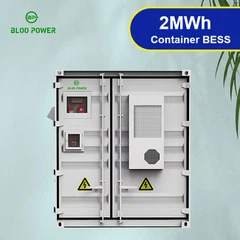
A battery energy storage system BESS definition refers to an integrated setup of rechargeable batteries, power conversion systems (PCS), transformers, and control software that captures, stores, and releases electrical energy. BESS can range from residential units to utility-scale installations providing grid services like frequency regulation, arbitrage, and backup power.
In 2025, Australia's energy storage market surged. Residential battery sales increased 260%, and large-scale battery capacity grew 233%, positioning Australia as the world's third-largest large-scale energy storage market after China and the United States. The NEM and Southwest Interconnected Systems commissioned 12 large-scale battery projects totaling 2 GW (up from 600 MW in 2024), with 268,675 residential battery units sold.
BLOO POWER's Contributions to Residential and Commercial Storage
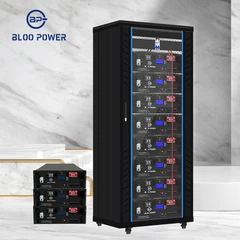
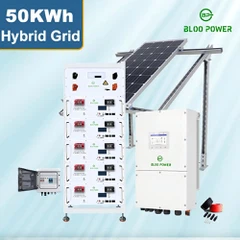
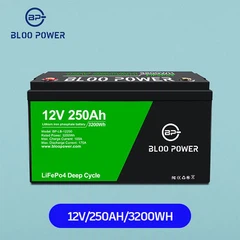
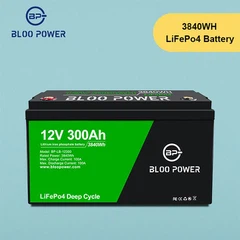
Companies like BLOO POWER, a leading provider of home energy battery and commercial energy storage solutions with over 17 years in battery technology, are supporting this growth. BLOO POWER offers LiFePO4-based systems, including wall-mounted, rack-mounted, stackable, and all-in-one batteries suited for residential and industrial applications. Their products emphasize safety, modularity, and integration with solar PV, helping households and businesses maximize self-consumption and resilience.
Challenges in Financing and Investment Trends
Despite accelerated renewable transition, environmental and regulatory challenges impact new generation investment. Only 2.3 GW of large-scale renewable projects completed financing closures in 2025 (down from 4.4 GW in 2024). Large-scale ground-mounted PV financing slowed to 1.4 GW, though costs declined 8%. In contrast, energy storage investment remained strong, with 20 projects totaling 4.3 GW/13.5 GWh of large-scale battery capacity reaching financial close-on par with prior years-and capital costs dropping approximately 20%.
A record 64 GW of generation and storage capacity awaits grid connection, but bottlenecks persist in approvals and economics. CEC CEO Jackie Treid emphasized priorities for 2026: addressing grid delays, planning issues, curtailment, and policy gaps.
Key Renewable and Storage Metrics in Australia (2024 vs 2025)
|
Metric |
2024 |
2025 |
Change |
|
Renewables Share of Generation |
38.9% |
42.7% |
+3.8% |
|
Large-scale Solar PV |
6.8% |
7.7% |
+0.9% |
|
New Renewable Capacity Installed |
~4.6 GW |
5.9 GW |
+28.3% |
|
Large-scale BESS Commissioned |
600 MW |
2 GW |
+233% |
|
Residential Batteries Sold |
74,582 |
268,675 |
+260% |
Fire Protection for Battery Energy Storage Systems: Ensuring Safety at Scale
As deployments scale, fire protection for battery energy storage systems has become a priority. Lithium-ion BESS risks include thermal runaway, where overheating can lead to fire or gas release. Industry standards like NFPA 855 (Standard for the Installation of Stationary Energy Storage Systems) mandate hazard mitigation analyses, fire detection, suppression systems (e.g., water-based or clean agents), ventilation, and spacing requirements.
Best practices include advanced battery management systems (BMS) for real-time monitoring of temperature, voltage, and state of charge; fire-resistant barriers; and collaboration with fire safety experts. BLOO POWER and similar providers incorporate LFP (Lithium Iron Phosphate) chemistry, which offers higher thermal stability and lower fire risk compared to other lithium-ion variants.
Technical Design: Battery Energy Storage System Single Line Diagram
Effective implementation requires detailed engineering, often illustrated in a battery energy storage system single line diagram. This schematic simplifies the electrical architecture, showing connections from battery racks (DC side) through the power conversion system (PCS/inverter), transformers, switchgear, protection devices, and grid interconnection point. It defines power flow, voltage levels, and protection schemes critical for safe, efficient operation.
Typical components in such diagrams include DC combiners, bidirectional inverters for AC/DC conversion, and energy management systems (EMS) for optimization.
Recent News and Market Developments
Recent projects underscore momentum. In South Australia, the Bungama Best battery near Port Pirie opened, aiding peak shifting and price stability. Western Australia expanded with multiple big batteries in Collie and Kwinana, significantly boosting state capacity. Victoria's Wooreen battery (350 MW/1.4 GWh) reached financial close as part of the Capacity Investment Scheme.
Globally aligned trends show BESS providing essential services, with Australia's pipeline exceeding 16 GW in the NEM by 2027 projections.
Large-Scale Battery Financing and Costs (Recent Trends)
|
Year/Period |
Financial Close (GW/GWh) |
Investment Value |
Capital Cost Trend |
|
2024 |
Comparable baseline |
Strong |
Declining |
|
2025 |
4.3 GW / 13.5 GWh |
~$4.8 billion |
-20% |
Global Context - Top Large-Scale BESS Markets Australia ranks third after China and the United States, driven by policy support and falling costs.
Future
Outlook Energy battery storage systems, supported by robust fire protection measures, clear BESS definitions, and detailed single line diagrams, are pivotal to Australia's clean energy future. With innovators like BLOO POWER enabling accessible solutions and strong investment in utility-scale projects, the sector is poised for continued expansion despite challenges. Sustained policy action will be key to unlocking the full 64 GW pipeline.
Send Inquiry