












What Is The State Of Renewable Energy in Serbia?
Jul 08, 2026
Leave a message

Serbia Advances Regulatory Framework for Renewables and Energy Storage
The Serbian government has officially passed amendments to the Electricity Supply and Delivery Decree, postponing grid connection studies for renewable energy power generation projects to September-December 2029. This shift from the earlier July-October timeline provides more preparation time amid a surging project pipeline. The new decree, effective by the end of the month, also establishes a clear regulatory pathway for users installing energy storage facilities and supplying excess electricity to the grid.
Integration of Battery Storage in Serbia's Green Transition
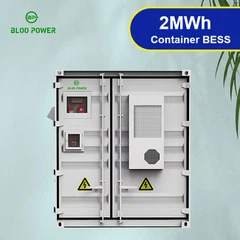
These regulatory changes are particularly significant as Serbia embraces battery energy storage system solutions to balance intermittent renewables. The country added 134.3 MW of solar capacity last year, reaching a cumulative 318.3 MW, with a gigawatt-scale pipeline in development. Early grid connection applications for standalone BESS projects, such as the 100 MW Green BESS KV and 50 MW Skladište električne energije Jagodina, signal growing momentum.

How Battery Energy Storage System Works
How battery energy storage system works is central to its value in modern grids. Excess electricity (from solar or wind) charges the batteries by converting AC power to DC via inverters. During discharge, stored chemical energy in the batteries releases as DC, which the system converts back to AC for grid or on-site use. This process enables peak shaving, frequency regulation, and renewable integration. Typical utility-scale BESS deliver full power for 1-4 hours, responding in milliseconds.
Role of Battery Energy Storage System Inverter and Energy Management System
A key component is the battery energy storage system inverter (or bidirectional power conversion system - PCS), which handles AC-DC conversion for charging from the grid/renewables and DC-AC inversion for discharge. Complementing this is the energy management system role with battery storage, where the EMS acts as the intelligent brain-optimizing charge/discharge schedules based on electricity prices, demand forecasts, battery state-of-charge (SoC), and grid signals. It coordinates with the battery management system (BMS) for safety and efficiency.
BLOO POWER Solutions Supporting Global and Local Deployment
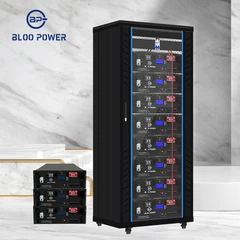
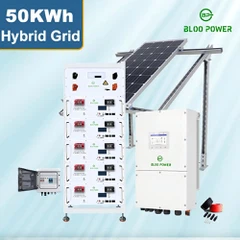
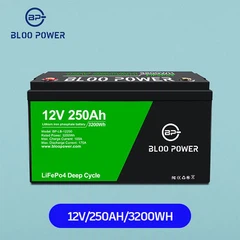
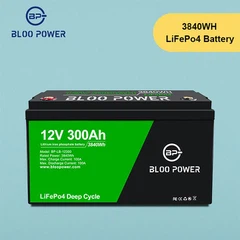
Providers like BLOO POWER, a specialist in lithium battery energy storage systems with over 17 years of experience, offer modular home and commercial solutions including stackable, wall-mounted, and all-in-one systems with integrated inverters. Their products, such as high-voltage solar batteries and rack-mounted units, align well with Serbia's new "active user" framework allowing multiple end-users in a building to share storage facilities. BLOO POWER's systems emphasize LiFePO4 chemistry for enhanced safety and longevity.
Global BESS Market Growth and Serbian Opportunities
Globally, the BESS market is expanding rapidly. In 2025, deployments reached record levels, with projections for continued strong growth into 2026. Serbia's amendments facilitate this by defining bank guarantees and deposit requirements for studies, encouraging investment in storage alongside renewables.
Serbia Grid Connection Study Deposit Requirements (New Decree)
|
Project Capacity |
Deposit Requirement |
|
Under 50 MW |
€50,000 base |
|
50-100 MW |
€50,000 + €400 per MW |
|
100-250 MW |
Additional €300 per MW |
|
Above 250 MW |
Additional €200 per MW |
Bank Guarantee and Active User Provisions
Under the new rules, a bank guarantee of €12,500 per MW of installed capacity is required (or €25,000 per MW for consumer-side projects without generation). Facilities not exporting power are exempt. Multiple end-users in one building can now jointly act as a single "active user," sharing construction and operation responsibilities for power plants or storage- a first that lowers barriers for smaller participants.
Typical Components of a Lithium-Ion BESS
|
Component |
Function |
Approximate Cost Share |
|
Battery Cells/Modules |
Store energy chemically |
30-40% |
|
Inverter/PCS |
AC-DC bidirectional conversion |
~15% |
|
Energy Management System |
Optimization, monitoring, dispatch |
Part of controls |
|
BMS & Cooling/Fire Systems |
Safety, thermal management |
Balance of plant |
|
Transformer/Switchgear |
Voltage adaptation and grid connection |
~15-20% |
Data synthesized from industry sources; costs vary by scale and location.
Future Outlook for Serbia and BESS Integration
These regulatory updates, combined with global BESS advancements and solutions from providers like BLOO POWER, position Serbia to accelerate its energy transition. With applications already in for significant storage capacity and a supportive framework for active users, the country is poised to enhance grid stability while meeting renewable ambitions. Continued focus on safety standards will be essential to address lithium-ion BESS hazards effectively.
Send Inquiry