












By The End Of 2022, The Scale Of Large-scale Battery Energy Storage Projects Under Construction in Australia Will Exceed 2GWh
Apr 24, 2023
Leave a message
The research shows that the capacity of large-scale battery storage systems under construction in Australia will almost double in 2022 compared to the previous year.
According to the latest annual report released by the Clean Energy Council, an Australian industry association, the 19 battery energy storage projects under construction in the country last year had a total installed capacity of 1380MW and a storage capacity of 2004MWh.
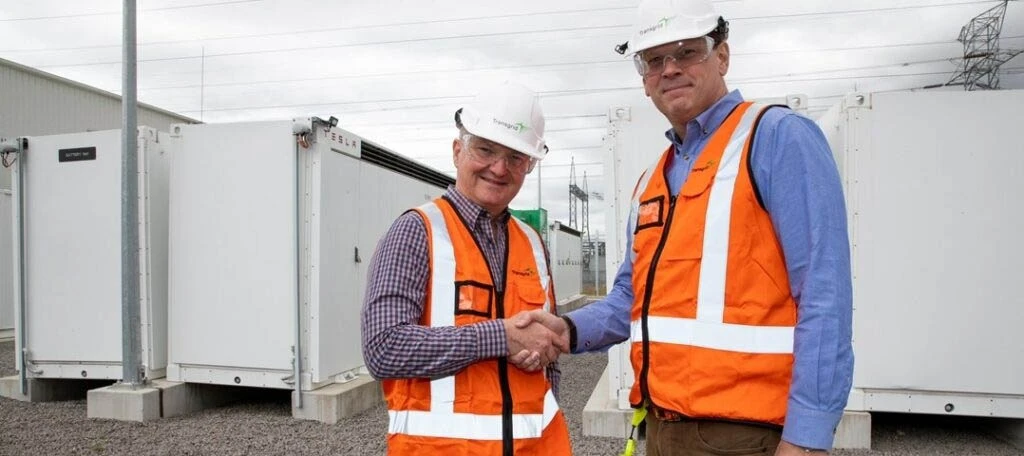
Australian Energy Minister Chris Bowen (left) visited the 50MW/75MWh battery energy storage project deployed in Sydney
At the end of 2021, these figures will be 921MW and 1169MWh respectively. Meanwhile, Australia received A$6.2 billion ($4.17 billion) in investment in large-scale wind, solar and energy storage in 2022, a 17% increase compared to 2021.
However, in the foreword to the 2023 Australia's Clean Energy Development Report, Clean Energy Council (CEC) chief executive Kane Thornton noted that, overall, Australia was actually moving slightly slower in developing clean energy last year compared to 2021. slow down.
This is due in part to a slowdown in rooftop solar deployments, from 3.3GW in 2021 to 2.7GW in 2022, due to supply chain disruptions and labor constraints. However, for the first time in 2022, the share of installed capacity of rooftop photovoltaic power generation systems will account for more than a quarter of the installed capacity of all renewable energy generation facilities deployed in Australia.
The number of new wind power projects has also declined, from 1.7GW in 2021 to 1.4GW in 2022, but the average size of its projects has increased.
The installed capacity of large-scale solar power facilities has also fallen sharply, from 1683MW in 2021 to 860MW last year. There were 48 large-scale solar installations being deployed in Australia at the end of last year, compared to 42 at the end of 2021, and with average project sizes getting larger, the Clean Energy Council says it believes total utility-scale solar capacity will be deployed over the next few years. Installed capacity will rise.
A similar dynamic exists for utility-scale battery storage, where average project size dwarfs 2021 deployments, although there are 30 projects to be deployed in 2021, compared to 19 last year.
In its report, the Clean Energy Council estimated that Australia will have about 50,000 residential battery storage systems deployed in 2022, a significant increase from an estimated 34,731 in 2021, which is consistent with a report by solar consultancy Sunwiz a few weeks ago. The market size of 47,100 rooftop photovoltaic systems estimated in the report is roughly in line.
Prospects are good, but the pace of large-scale deployment needs to be accelerated
Thornton said the survey showed that despite a slowdown in some regions, Australia's energy transition remained strong, particularly as the retirement of coal-fired power plants accelerated.
Australia's Labor government has voted to set a 43 per cent emissions reduction target by 2030 and has announced initiatives such as a $20 billion national grid upgrade and an upcoming tender for large-scale battery storage systems, Clean Energy Council executives said.
The Clean Energy Council said Australia would generate 35.9 percent of its electricity from renewable sources in 2022, up from 32.5 percent in 2021 and more than double the 16.9 percent in 2017. Last year, 2,257MW of large-scale renewable energy generation facilities were added, and by the end of 2022, the country is building 500MW of large-scale wind power generation facilities and solar power generation facilities.
However Thornton said the continued growth of renewable energy could not be taken for granted. Even if the industry now enjoys greater policy clarity, the deployment of large-scale renewable energy projects will need to at least double to meet the government’s target of an 82% share of renewable energy generation.
The Australian Scientific and Industrial Research Organization (CSIRO) recently released a renewable energy storage roadmap, which states that between 2025 and 2030, the energy storage capacity of Australia's National Electricity Market (NEM) will be Need to increase by 10 to 14 times.
Send Inquiry