















Renewable Energy Curtailment Continues in Rajasthan
Feb 08, 2026
Leave a message
Renewable Energy Curtailment Continues in Rajasthan, Over 4 GW of Installed Capacity Faces Shutdown During Peak Hours
Renewable energy projects in Rajasthan are facing severe curtailment issues, with over 4 GW of operational capacity experiencing near-total shutdowns during peak solar generation hours (typically 11 AM to 2 PM). The situation has not improved despite the recent commissioning of the 765 kV Khetri-Narela transmission line.

A stakeholder meeting on December 15, 2025, revealed that renewable energy projects operating under a temporary general network access mechanism face nearly 100% curtailment during these peak hours. The curtailment worsened after the Khetri-Narela line was commissioned on December 12. Power Grid Corporation of India (PGCIL) informed the meeting that before the line's commissioning, approximately 3.8 GW of renewable energy capacity was allowed to connect to the grid during peak hours under the T-GNA mechanism. After the line's commissioning, PGCIL approved the connection of approximately 4.8 GW of renewable energy capacity, but approximately 4 GW of operational capacity still faces restrictions during peak hours, only being allowed to connect during off-peak hours.
The Association of Sustainable Project Developers stated that PGCIL data shows the Khetri-Narela line only added approximately 600 MW of effective transmission capacity. The association pointed out that while approximately 5.2 GW of projects have received connection approval, only about 4.4 GW are operational, and nearly 850 MW of connection eligibility has been revoked, meaning there should be approximately 1.5 GW of available capacity in the system. PGCIL cited several technical constraints limiting renewable energy evacuation from Rajasthan, including voltage oscillations at renewable energy complex sites, low short-circuit ratios at pooling stations, load constraints on the Bhadla-Bikaner 400 kV corridor, and high loading on the 765 kV Bikaner-Khetri line.
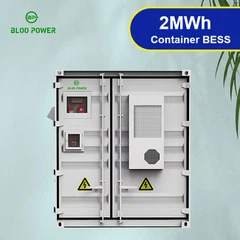
Developers warned that the continued curtailment poses significant risks to project viability, debt repayment, and investor confidence. Utility scale battery energy storage systems and stand alone battery energy storage system deployments are increasingly seen as critical solutions to mitigate such curtailment by storing excess solar generation during peak production hours and discharging it during higher demand or off-peak periods, thereby enhancing grid stability and maximizing renewable utilization. The utility scale battery energy storage systems market in India, particularly in Rajasthan, is experiencing rapid growth, with multiple large tenders (such as those for hundreds of MW/MWh capacities) and declining tariffs making these systems more viable for addressing transmission bottlenecks.
Energy storage battery technology, including advanced lithium-ion solutions like LiFePO4, continues to evolve with improvements in cycle life, efficiency, and cost, supporting both grid-scale and hybrid applications to reduce curtailment risks. For commercial entities, battery energy storage system for business options enable better energy management, peak shaving, and integration with onsite renewables, though the current challenges in Rajasthan highlight the broader need for utility-driven interventions.

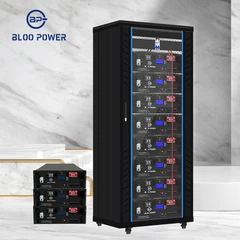
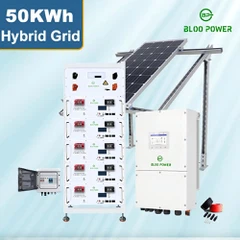
To address this situation, authorities agreed on several key action points, including sharing phasor measurement unit data with affected developers to mitigate voltage oscillations, providing clear commissioning timelines for transmission projects under construction, and accelerating the upgrade of the Bhadla-Bikaner 400 kV line. Power Grid Corporation of India and Central Transmission Utility of India will jointly study additional transmission enhancement measures, including the use of dynamic line rating. The Sustainable Project Developers Association has sought urgent policy and operational interventions, with many stakeholders advocating for accelerated deployment of storage solutions like those from providers such as BLOOPOWER, which offers scalable energy storage battery systems for commercial and larger applications.
Stakeholders warn that without swift corrective measures-including expanded adoption of battery storage-the ongoing power curtailments in Rajasthan could slow renewable energy capacity growth, create distressed assets, and jeopardize India's goal of achieving 500 GW of non-fossil fuel energy capacity by 2030.
Send Inquiry