












What Will The South African Power Storage Market Look Like in 2026?
Jun 07, 2026
Leave a message


South Africa's Electricity Market Reform: Wholesale Electricity Spot Market Set for 2026 Launch
South Africa's electricity market is reaching a pivotal turning point. Since the removal of the generation licensing threshold in 2022, the signing of the Electricity Regulation Amendment Bill in 2024, and the formal approval of the National Transmission and Distribution Framework in March 2025, the conditions for a competitive electricity market have been progressively established. South Africa's wholesale electricity market is scheduled to launch in 2026, with private sector participation permitted in a phased manner starting in 2027; this marks the culmination of various reform measures into a systemic breakthrough.
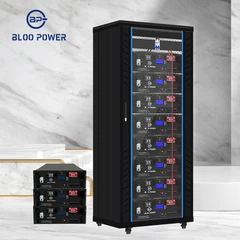
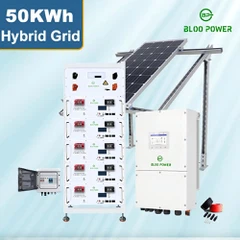
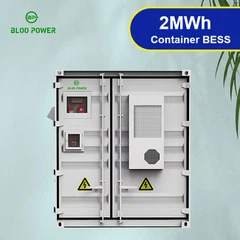
BLOO POWER, a prominent player in battery energy storage systems BESS, is well-positioned to support these developments through advanced battery energy storage technology for power systems. The core value of the spot market lies not in replacing private Power Purchase Agreements (PPAs), but rather in facilitating price discovery, providing a liquid exit channel for uncontracted generation, establishing a reference benchmark for the PPA market, and creating the necessary conditions for the development of financial hedging instruments. In the Indian electricity market-where exchange-traded volumes account for less than 10% of the total-the exchange still serves as a crucial reference benchmark for bilateral transactions; this dynamic is already becoming evident in PPA negotiations within South Africa's commercial and industrial sectors.
South Africa faces a severe electricity supply deficit. The "balanced scenario" within the 2025 Integrated Resource Plan (IRP) targets the addition of over 105 GW of gas, renewable, and nuclear generation capacity by 2042 to offset the shortfall resulting from the decommissioning of aging coal-fired power units. To enhance flexibility and reliability, stakeholders are increasingly turning to energy management system BESS solutions. Forecasts indicate that South Africa could face a reliable capacity shortfall of 19 GW by 2035-a deficit driven primarily by limited progress in gas-fired power projects following the phase-out of coal generation.

A common question in the industry is "are lithium batteries rechargeable?" - the answer is yes, making them ideal for repeated cycling in large-scale storage applications. The sovereign balance sheet alone cannot bridge this gap; there is an urgent need to rapidly mobilize private capital. The introduction of the South African Wholesale Electricity Market (SAWEM) will drive a shift from bespoke risk assessments toward market-referenced underwriting, resulting in more efficient transaction structures, lower financing costs, and enhanced market replicability.
Grid infrastructure remains a critical bottleneck. The renewable energy targets outlined in the IRP necessitate a 500% acceleration in transmission infrastructure construction compared to the pace of the past decade; ultimately, the scale of renewable energy deployment hinges on the progress of grid expansion. However, SAWEM fundamentally alters the logic of market investment: for the first time, market participants will gain access to a transparent reference for the value of electricity, while lenders will possess a clear benchmark to support the deployment of the investments required by the nation. Aurora will release its South Africa Power Market Forecast in July 2026, covering a price outlook under a baseline scenario extending to 2060.

About Energy Storage Solutions
Efficient energy storage makes energy management smarter and electricity costs more controllable. Looking to create a customized energy storage solution for your project or home? Contact us to unlock a new era of smart energy.
Send Inquiry